Pyrgo Park: A Tudor Royal Estate near Romford
Site at a Glance
- Rating
- 4
- Popularity
- Low
- Country
- United Kingdom
- Primary era
- Early Modern
- Eras represented
- Early Modern
- Civilizations
- English
- Site type
- Domestic
- Remains
- Palace
On this page9 sections
History
Henry VIII and the Tudor estate
Pyrgo Park, a former royal estate near Romford in the United Kingdom, was laid out in 1537 by Sir Brian Tuke, Henry VIII’s steward, an official of the royal household. Henry VIII, who ruled England from 1509 to 1547, made the park his personal property. A residence had been built there before 1540, and it became a royal home in 1541. After Tuke’s tenure ended around 1541, Henry ordered repairs to the mansion and completion of the park’s enclosure.
The place-name first appears as Purgore in 1490 and probably combines Old English elements for pear tree and triangular plot of land. Pergore is recorded by 1544, alongside sixteenth-century forms including Portegore and Portegoo. Pergo was in use by 1805, while Pirgo, Purgo and Pyrgo also appear in historical records. Ordnance Survey maps have used Pyrgo for at least a century.
In 1542, Henry summoned his estranged daughters Mary and Elizabeth to Pirgo. Pleased with their conduct, he decided to restore them to the succession. The estate lay near Havering Palace, within the liberty of Havering-atte-Bower, a district with its own local jurisdiction. The wider Havering area had more than six centuries of royal association: successive monarchs used Havering Palace until 1638, and Havering Park remained Crown property until 1828.
Later ownership and the old mansion
In 1559, Elizabeth I granted the manor and royal residence to her second cousin Lord John Grey, who had pleaded poverty. His son Henry inherited the estate and became the first Baron Grey of Groby, a British peerage rank. Henry’s grandson, also named Henry, later became Earl of Stamford, a rank above baron, and sold Pirgo Palace to Sir Thomas Cheek in 1621.
The manor later passed through Cheek family descendants to Ann, Thomas Cheeke’s granddaughter and the wife of Sir Thomas Tipping. Thomas Cheeke’s younger daughter Katherine had married Thomas Archer, 1st Baron Archer. In 1790, trustees for the four granddaughters of Katherine and Thomas Archer sold Pyrgo to Edward R. Howe.
The Archer family dismantled parts of the old residence in stages. Its chapel and wings were demolished between about 1771 and 1778, while the main residence remained in use briefly. The rest of the former royal residence appears to have been demolished by about 1814.
Nineteenth and twentieth centuries
A new mansion was built on the site in 1852. In 1873, the house and 600 acres of neighbouring farms were sold to Albert Fytche. Later residents included Fytche and Alice Towneley, Baroness O’Hagan. The house had been demolished by 1941, and the site later fell within London’s metropolitan green belt, protected open land intended to limit urban expansion. The palace site was partly excavated in 1972.
Remains
Park and residential buildings
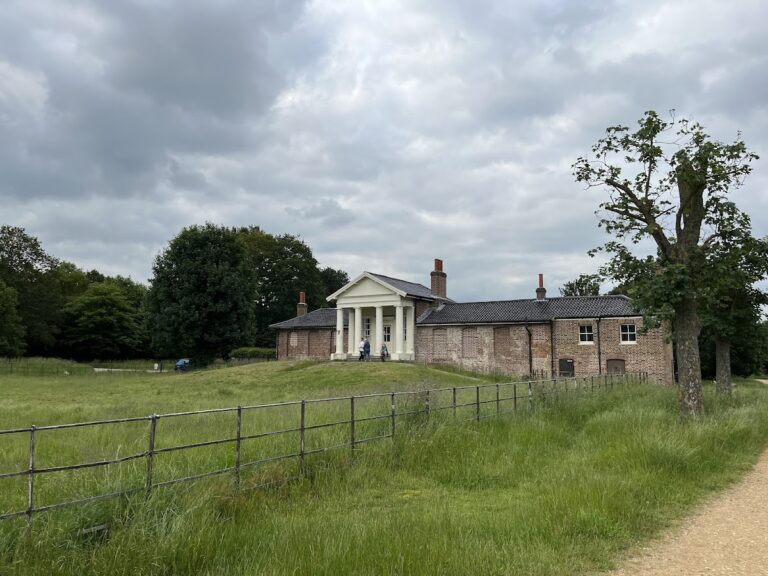
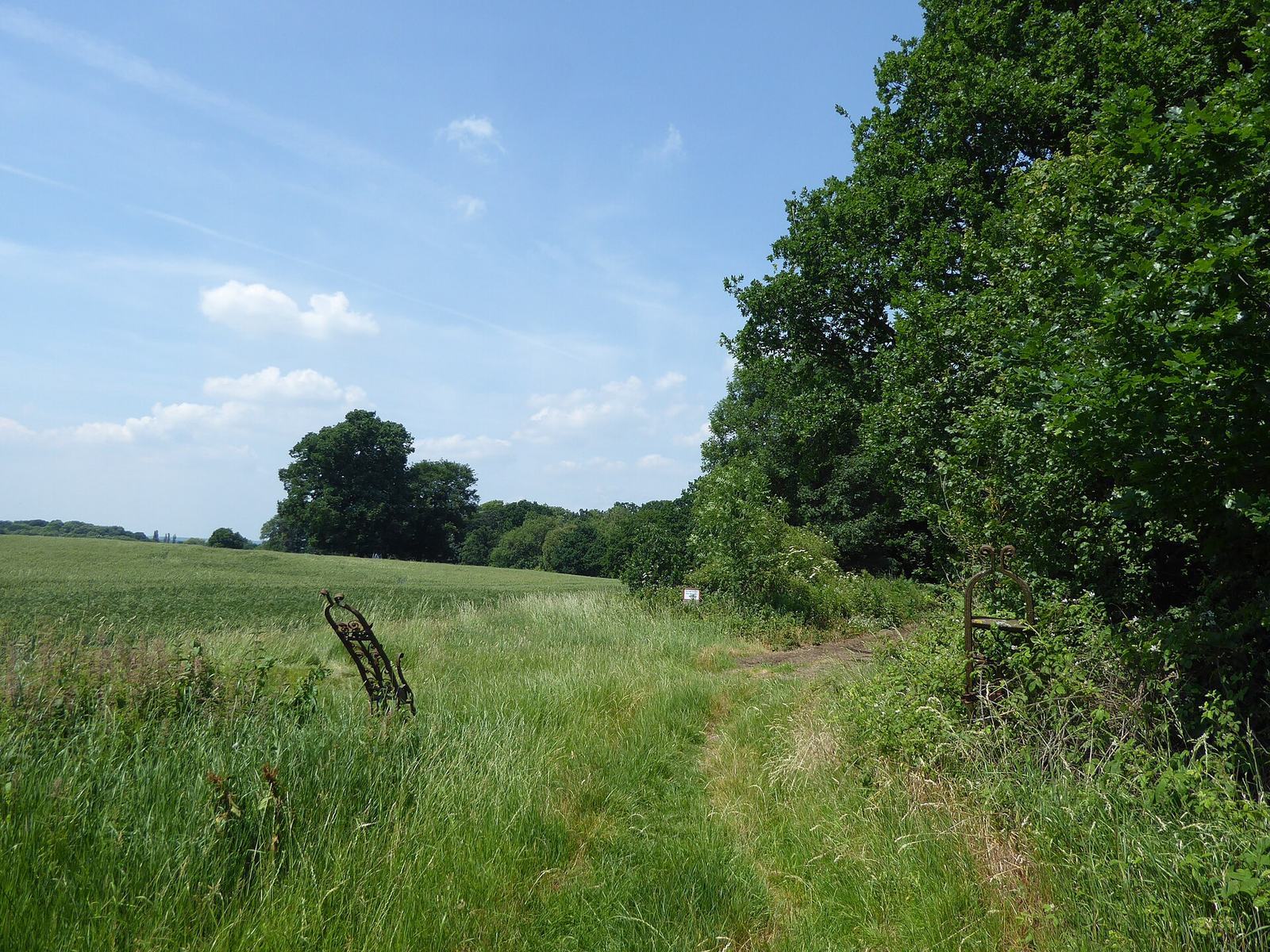
The park occupied a gentle ridge northeast of Havering village, with broad views to the west. Its 1537 layout comprised 200 acres of open land and 100 acres of woodland. The palace site lay northwest of farm buildings that survive today. Terracing from the palace gardens could still be seen after the First World War.
The royal residence
The residence, built before 1540 and repaired under Henry VIII, served as a royal home from 1541. It was described in 1594 as a fine house. A map made about 25 years later depicts a large building with gables, and tax records show that its household was assessed on 30 hearths in 1670. A hearth was a fireplace counted for taxation.
The chapel and memorials
The estate chapel held tombs of the Grey family and memorials to several members of the Cheke family. One tomb showed a kneeling knight with four sons opposite a kneeling lady with four daughters, among numerous coats of arms and family emblems. The Cheke remains were transferred to the parish church at Havering-atte-Bower around 1768.
The nineteenth-century mansion
The mansion built in 1852 occupied the former palace site. It was later demolished, and the house was gone by 1941.