Stockau Castle: A Groschlag Summer Residence in Dieburg, Germany
Site at a Glance
- Rating
- 4.5
- Popularity
- High
- Country
- Germany
- Primary era
- Early Modern
- External website
- Open
- Eras represented
- Early Modern
- Civilizations
- Electorate of Mainz, Holy Roman Empire
- Site type
- Domestic
- Remains
- Park
On this page6 sections
History
Stockau Castle, also known as Groschlag Castle after its owners, was a summer residence in Dieburg, Germany, completed in 1699 for the Groschlag family. Philipp von Groschlag commissioned it after acquiring a mill in the Stockau area in 1687. The estate later became known for its garden and its prominent guests.
Foundation and the garden
The name Stockau came from an abandoned settlement whose recorded names included Stocken in 1379, Stockenau in 1429, Stockhaw in 1545, and Stockaw in 1593. The Groschlag family moved into the completed castle in 1699.
The eighteenth-century garden attracted visitors from beyond the region. On New Year’s Eve in 1779, writer Johann Wolfgang Goethe spent the turn of the year there with Duke Karl August of Saxe-Weimar-Eisenach, a ruler and arts patron, and Karl Theodor von Dalberg, an ecclesiastical prince and statesman, among others. Correspondence about the garden followed, and Groschlag probably drew on Goethe’s advice as he enlarged it.
Inheritance and industrial reuse
When Friedrich Carl Willibald von Groschlag zu Dieburg died on 25 May 1799, he was the last of his family and an Electoral minister of state, a senior official serving a prince-elector. The castle passed through his daughter Maria Anna Philippine Walburga von Lerchenfeld-Köfering, born Groschlag, to her husband, Count Maximilian Emanuel von Lerchenfeld-Köfering.
In 1840, Baron von Gemmingen, then the owner, commissioned a new mill about 100 metres downstream along the Gersprenz. In 1854 he sold the castle, its other buildings, and the fields to Austrian Colonel von Brüselle, then moved to an estate in Hungary. The new owner never visited Dieburg. In 1857, his steward, Kraft von Dieburg, had the castle demolished after its materials were sold. Its extensive library went to Darmstadt, with part probably reaching Frankfurt.
The mill entered industrial use in 1857, when the Stern brothers of Mannheim established a potato-flour factory there. Raiser operated a sewing-machine factory from the mid-1870s. Manufacturer Ganß bought the entire estate in autumn 1882 and opened a coconut-mat factory on 1 January 1883.
Remains
The estate lay between the Gersprenz and its park. The castle’s rear stood close to the river, its front faced the grounds, and the mill was about 100 metres downstream. The large, plain castle was an unfortified, four-storey building of brick and timber.
Garden
The garden combined French, Dutch, and English sections, with an English landscape garden as its main character. This style uses designed scenery to evoke natural landscapes rather than relying solely on geometric layouts. Sculptures, statues, and buildings were arranged to create changing views, while small temples, pleasure houses, and antique-looking ruins also adorned the grounds. The garden was among the earliest parks of this kind in Germany.
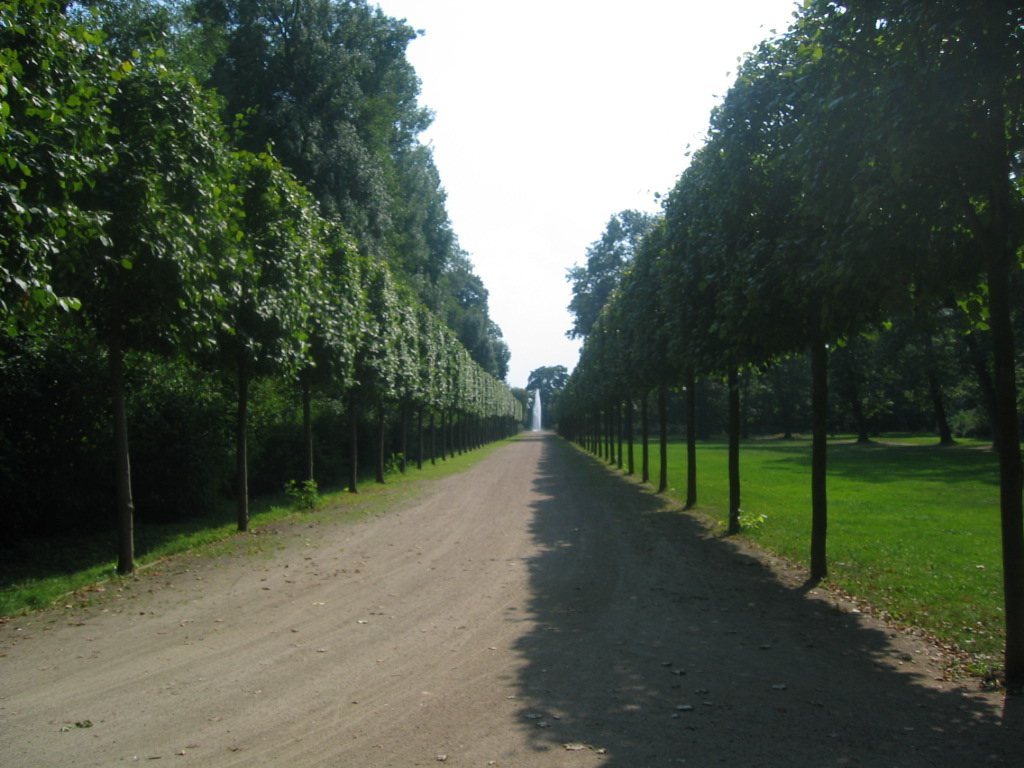
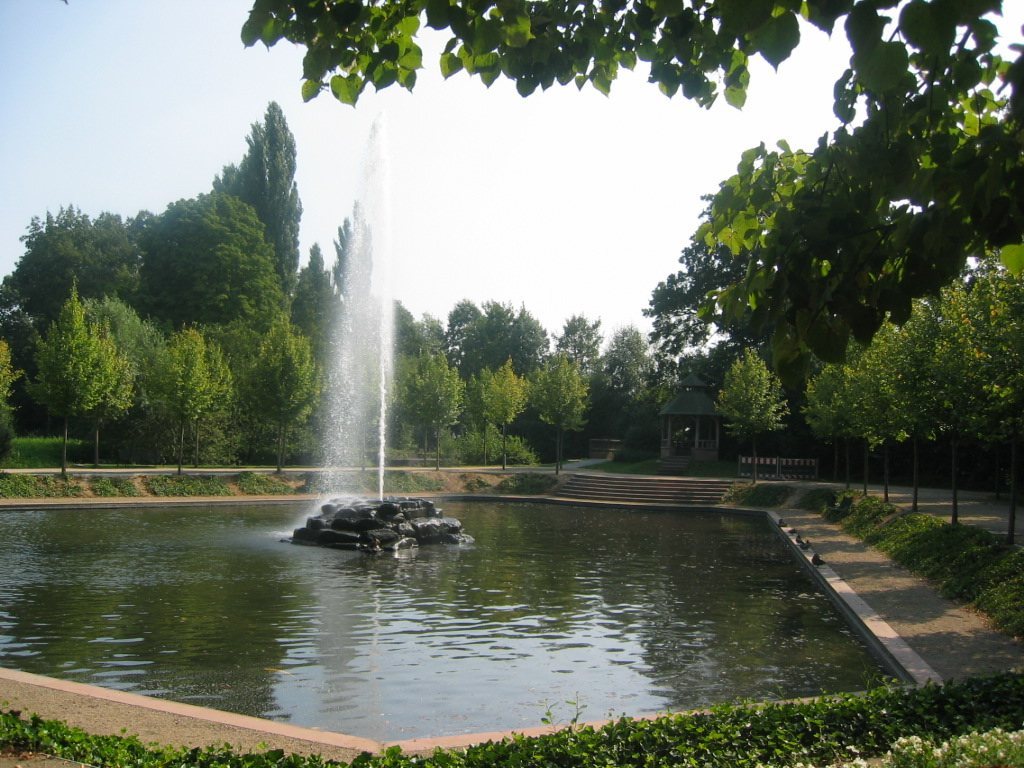
Parts of the former garden survive and have been restored using old plans. A fountain marks its entrance. Behind the Dieburg fairground, an avenue of linden trees nearly 200 metres long ends at a pond with a trapezoid outline, a larger fountain, and a small temple. Historical garden plans are displayed at the Dieburg District and City Museum in Fechenbach Castle.
Former mill
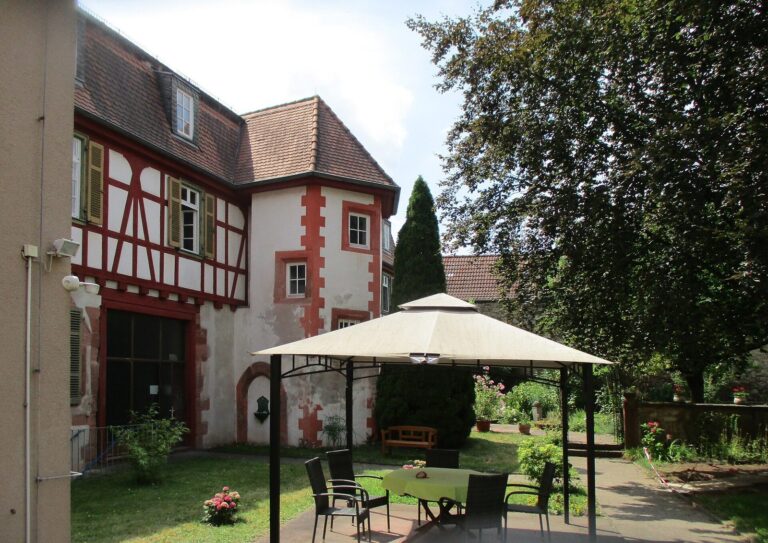
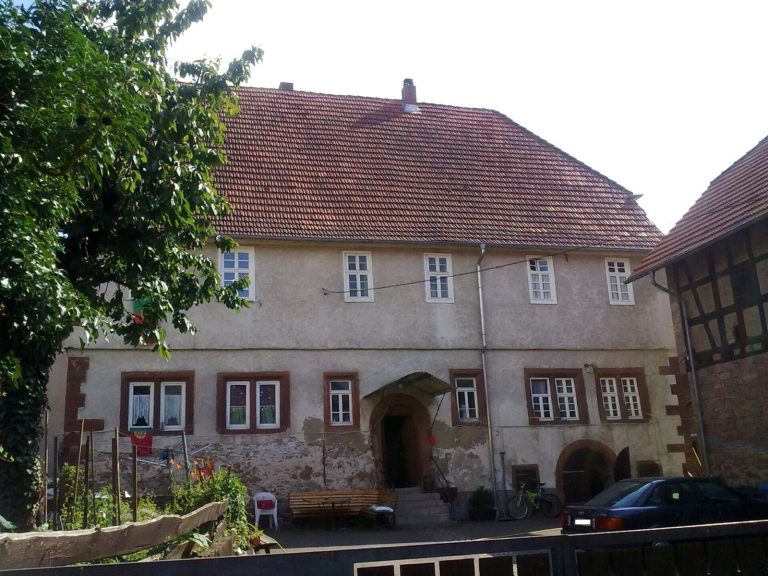
The surviving building is the former mill, not the castle. After serving as a factory, it became a residence.