Álava Archaeology Museum: A Public Museum of Álava’s Archaeological Heritage
Site at a Glance
- Rating
- 4.4
- Popularity
- Medium
- Country
- Spain
- Primary era
- Stone Age
- External website
- Open
- Eras represented
- Stone Age, Bronze Age, Iron Age, Classical, Medieval
- Civilizations
- Roman
- Site type
- Museum
On this page8 sections
History
The Álava Archaeology Museum is a public museum in Vitoria-Gasteiz, Álava, Spain, devoted to the province’s archaeological heritage. Founded by the Provincial Council of Álava in 1975, it became the official repository for archaeological materials from the territory under the 1990 Basque Cultural Heritage Law.
Early collections and museum beginnings
The museum’s roots reach back to eighteenth-century private collections formed by local scholars Lorenzo Prestamero and Joaquín José Landázuri. Both belonged to the Royal Basque Society of Friends of the Country, an Enlightenment association that promoted learning and improvement in the Basque region. During the nineteenth century, historian and archaeologist Federico Baráibar gathered archaeological finds from sites across Álava. In the early twentieth century, he established what he called the Nascent Museum in Vitoria’s former Ramiro de Maeztu Institute, now the seat of the Basque Parliament.
In the first decades of the twentieth century, finds from excavations by archaeologists José Miguel de Barandiarán and Enrique Eguren were placed at Vitoria’s School of Arts and Crafts. After the Spanish Civil War, the Provincial Council asked archaeologist Domingo Fernández Medrano to bring together collections dispersed across the province. He assembled them at Agustín Palace in what became known as the House of Álava.
Consolidation and public foundation
In 1965, the growing volume of excavation material led to its transfer to the Gobeo-Guevara family armory. For about a decade, the archaeological collections shared the building with weapons, uniforms, and other military objects from private collections. When the Provincial Council founded the public museum in 1975, the archaeological collections remained there. The military objects moved to facilities beside Ajuria Enea Palace, which the council had acquired for a museum of Basque art. That transfer led to the creation of the Álava Armory Museum.
Official role and new premises
The 1990 Basque Cultural Heritage Law gave the museum its official role as repository for Álava’s archaeological material. Its responsibilities include conserving, cataloguing, exhibiting, and sharing knowledge of the territory’s archaeological heritage.
At the start of the twenty-first century, limited space prompted plans for a new building beside Bendaña Palace, home to the Fournier Playing Card Museum since 1994. The Archaeology Museum opened in its new premises on 26 March 2009. The two museums became the BiBat complex, a name combining Basque words for “two” and “one” to express the idea of two museums and collections forming a single heritage complex. In September 2009, the building received the fourteenth European Copper in Architecture Award, which recognizes the use of copper in architecture.
Remains
Museum building and galleries
The present museum is a bronze-and-glass building beside Bendaña Palace, designed as a protective case for Álava’s past. Its ground floor contains an auditorium and temporary-exhibition spaces; the permanent galleries occupy the three floors above. Their chronological arrangement takes visitors from early prehistory through the Middle Ages.
Collections and displays
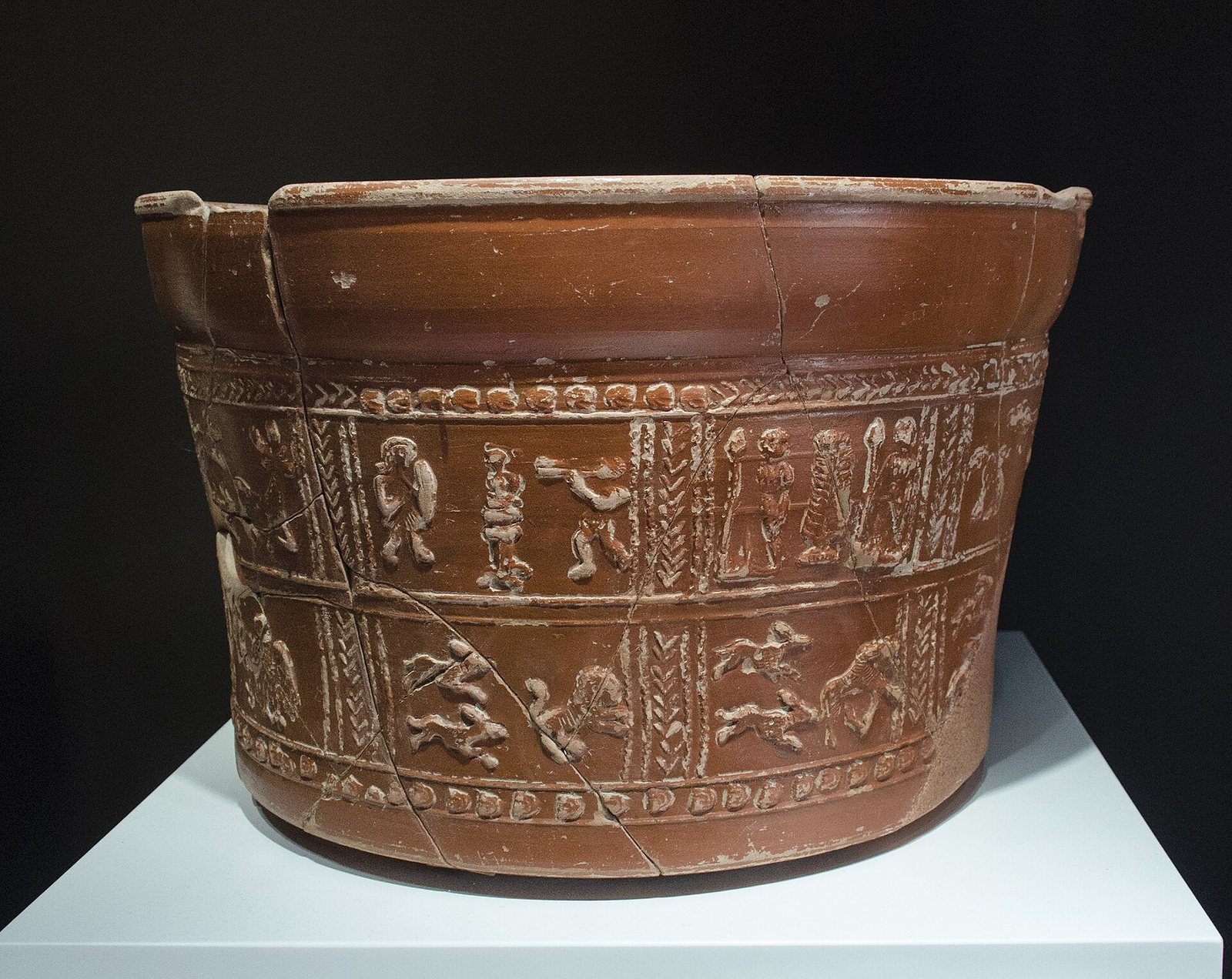
The permanent collection comprises about 1,500 objects. The first upper floor covers the Paleolithic, Mesolithic, Neolithic, Copper Age, and Bronze Age, including the Chalcolithic period, when copper was used before bronze became widespread. The second floor is devoted to the Iron Age, while the top floor presents the Roman world and the Middle Ages. The museum’s stores contain close to 10,000 boxes of objects recovered in excavations and surveys across Álava. Among the displayed works is the Lady of Iruña, a white-marble female figure from the Roman archaeological site of Iruña-Veleia. A farmer found it in 1845, and it may represent Ceres, the Roman goddess associated with agriculture and the harvest.
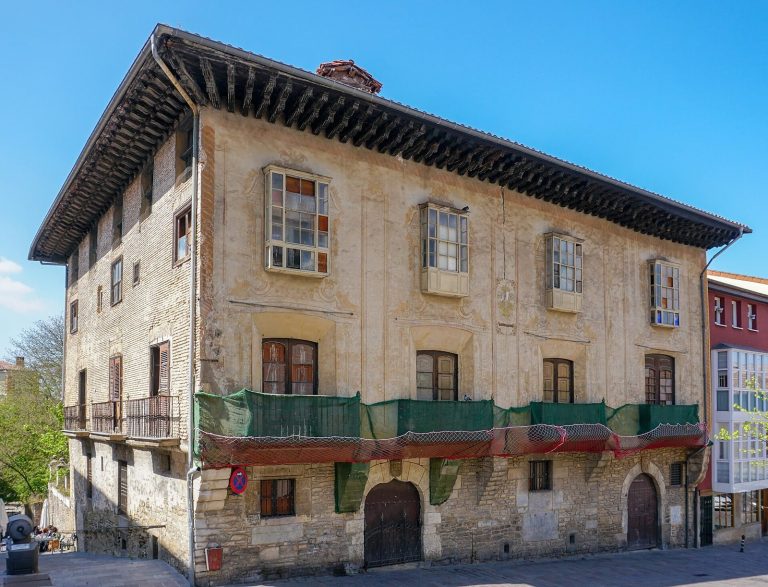
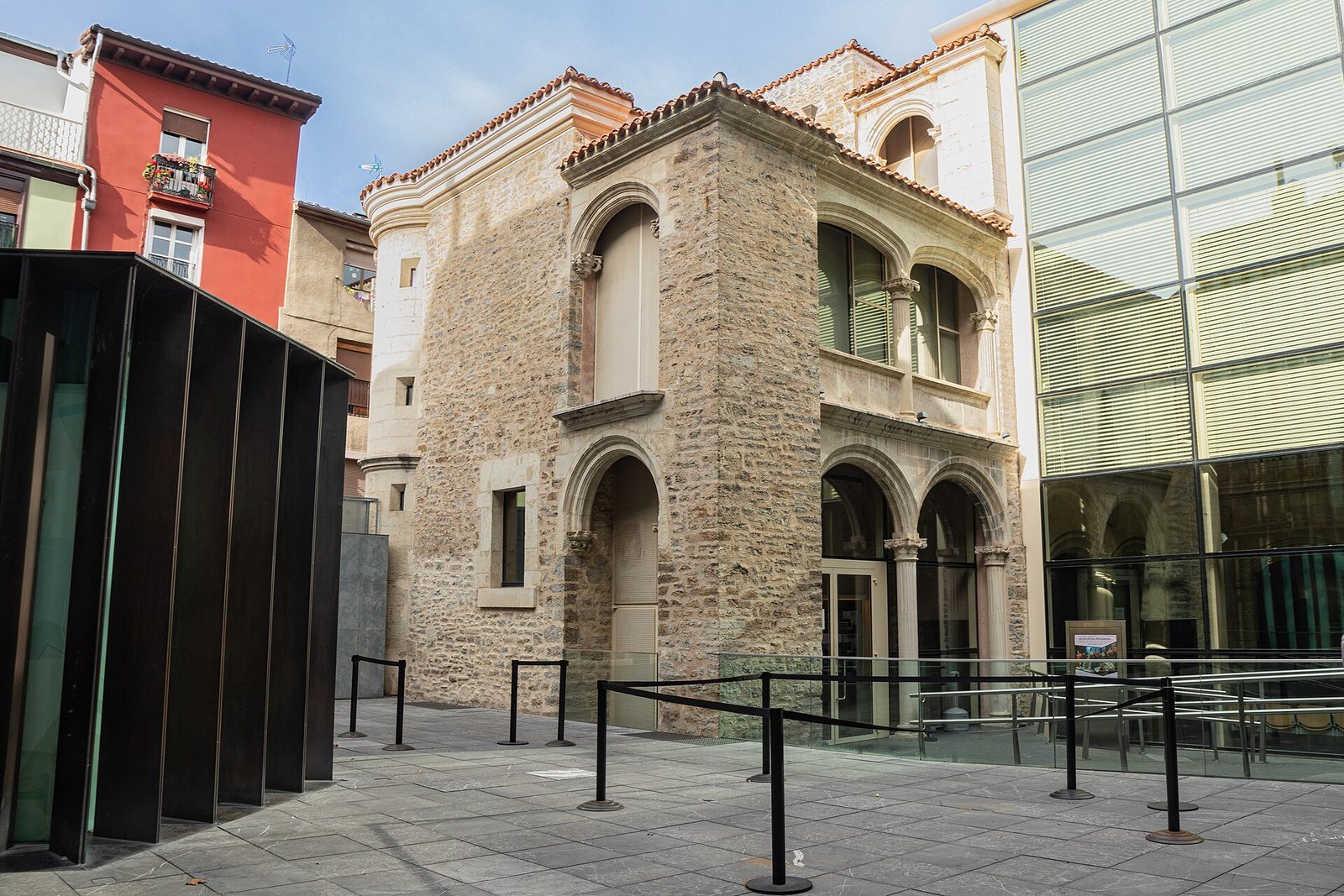
Former Gobeo-Landázuri-Guevara Palace
The former Gobeo-Guevara family armory, now known as Gobeo-Landázuri-Guevara Palace, dates to the late sixteenth century. It stands in Vitoria’s historic center near the Cathedral of Santa María.