Seibersdorf Castle: A Renaissance Palace in Austria
Site at a Glance
- Rating
- 5
- Popularity
- Very Low
- Country
- Austria
- Primary era
- Early Modern
- Eras represented
- Early Modern
- Civilizations
- Habsburg, Holy Roman Empire
- Site type
- Domestic
- Remains
- Castle
On this page9 sections
History
Seibersdorf Castle is a Renaissance palace in the centre of Seibersdorf, Austria, probably built in the sixteenth century. It served a defensive purpose and sheltered local people during two Ottoman invasions. A medieval predecessor with a moat has been proposed, but its existence remains uncertain.
Early ownership and Ottoman conflicts
The town of Seibersdorf is first mentioned in 1260, a date that does not establish when the castle was built. The property may earlier have belonged to the Babenbergs, a medieval dynasty that ruled territories in what is now Austria. The surrounding area was once Hungarian territory, and Hungarian noble families held the estate for extended periods.
Georg Leonhard and Rudolf von Stoitzing owned the castle in 1594. During the seventeenth century it belonged to Count Franz Nadasdy von Pottendorf. After Nadasdy’s execution, the property passed to Niklas Palffy, Count of Erdőd, and a few years later to Julius Friedrich, Count Busselini. The castle was not captured during the Ottoman invasions, including the conflicts around 1683. The Ottoman wars were struggles between the Ottoman Empire and European powers, including the Habsburg monarchy.
Baroque remodelling and later owners
In 1709 the estate passed to Christoph Ernst, Count Fuchs von Bimbach. His widow sold it in 1715 to Leopold Carl, Count Cavriani, who commissioned a remodelling in the Baroque style, an architectural period known for more elaborate forms and decoration. The Cavriani family retained the property until selling it to the Riedemann-Ledebur couple in 1932.
Postwar damage and restoration
The castle suffered severe damage after the Second World War, and its contents were lost. The building was sold to a hotel company, separately from the estate operation. Since 1971 it has been privately owned by a commercial enterprise and has undergone restoration. The castle is protected as a listed monument and under the 1954 Hague Convention, which concerns the protection of cultural property during armed conflict. Its surrounding park is designated a natural monument.
Remains
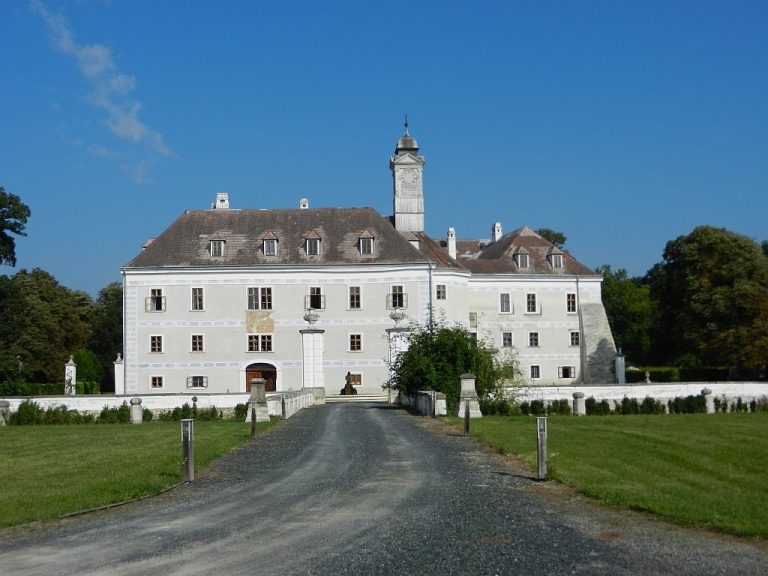
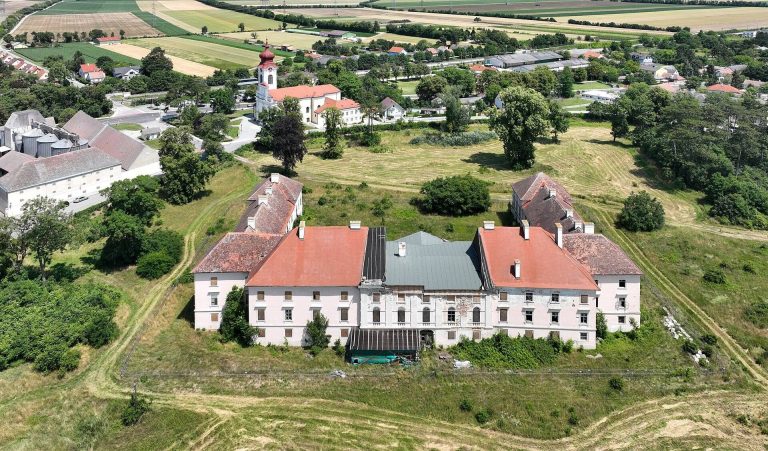
The three-storey palace has a roughly square central courtyard and a castle-like outline. Its Renaissance appearance is close to the form shown in a 1672 view by Georg Matthäus Vischer, an Austrian cartographer and artist.
Plan and entrance
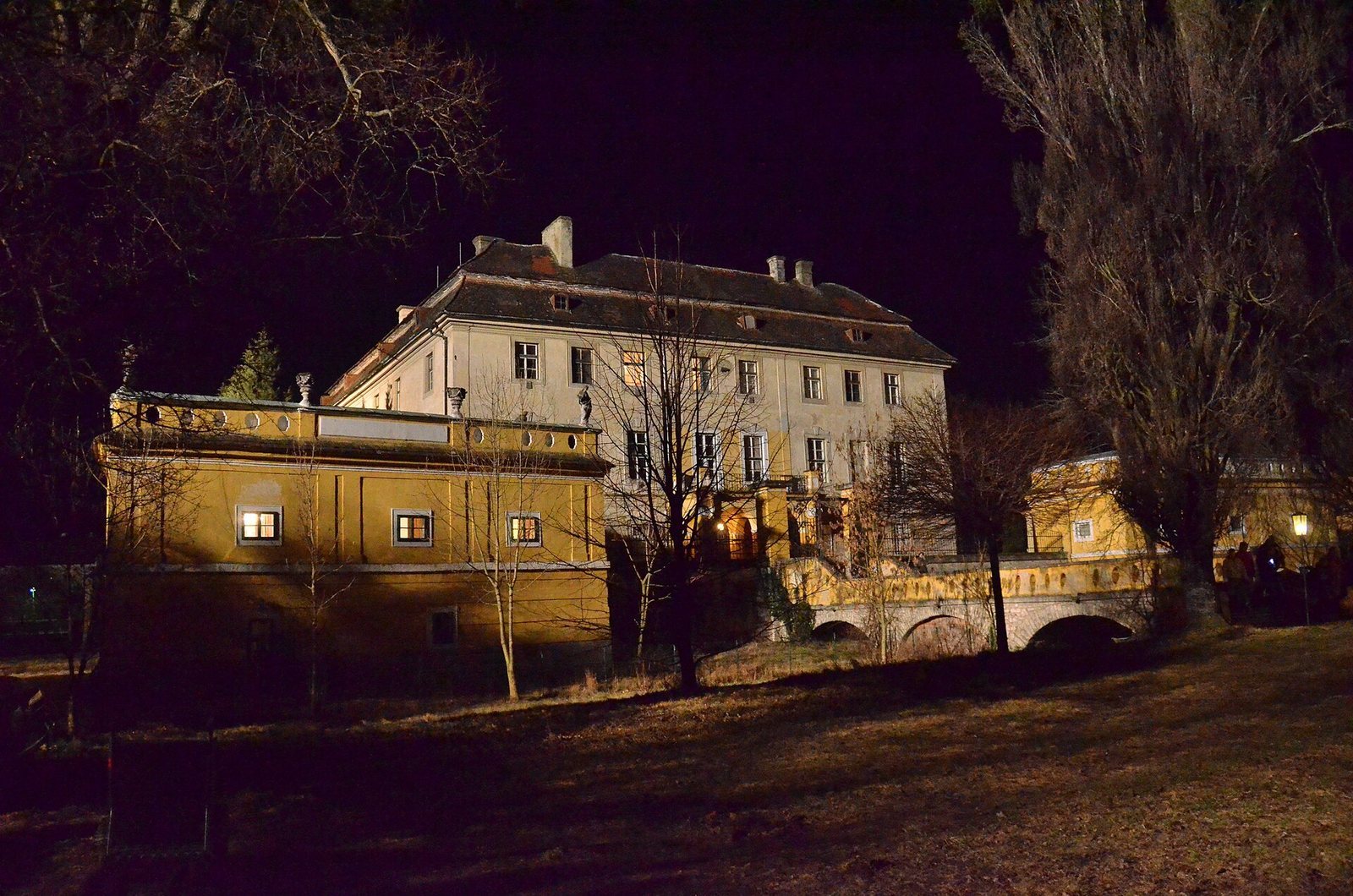
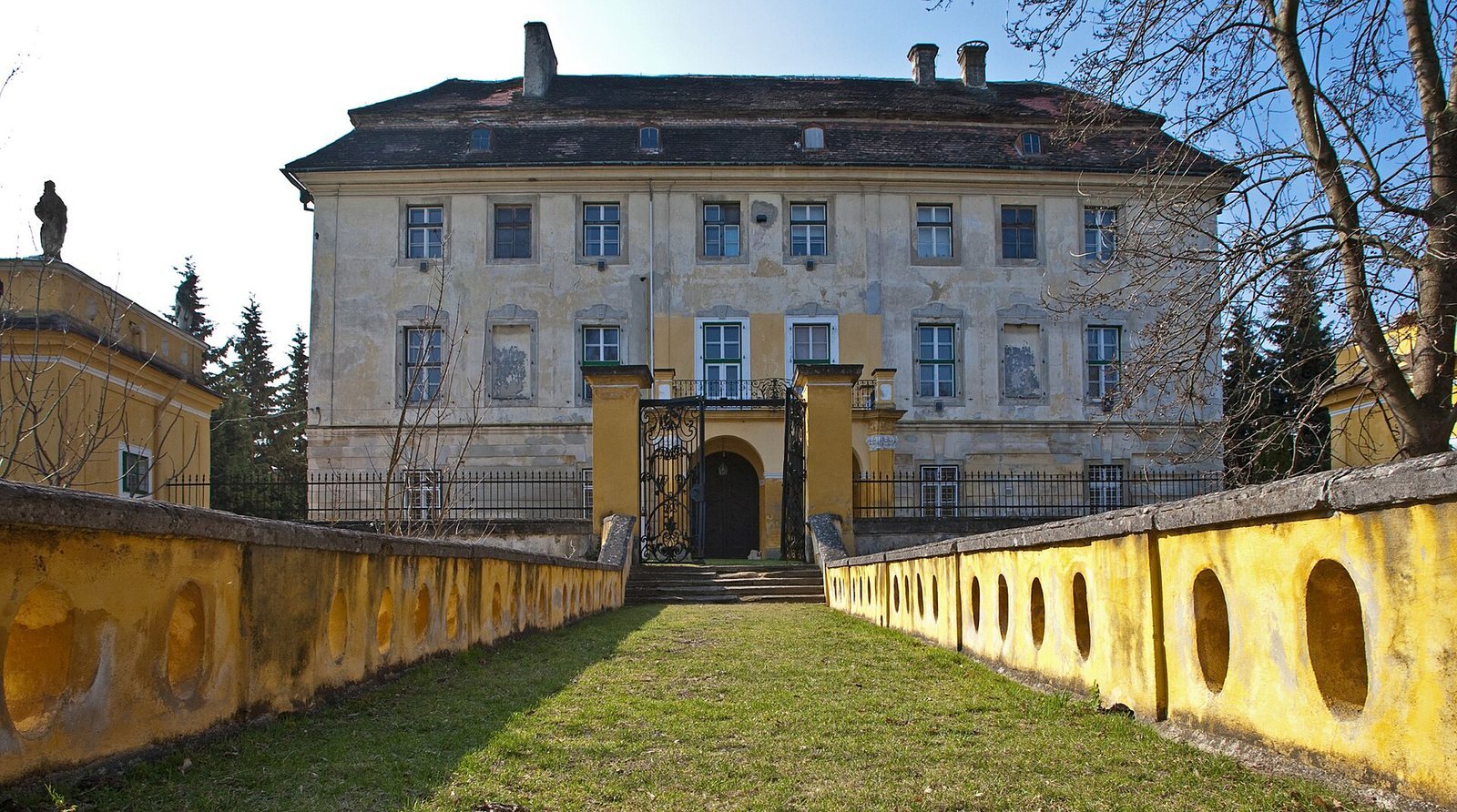
The castle stands north of Seibersdorf’s parish church and is surrounded by a former water moat. A stone bridge provides access to an ornamental entrance, where a wrought-iron gate is flanked by two obelisks.
Corner bastions and pavilions
Four old bastions, projecting defensive works at the building’s corners, each support a single-storey pavilion. Some of the pavilions have modern-style furnishings.
Courtyard and reception rooms
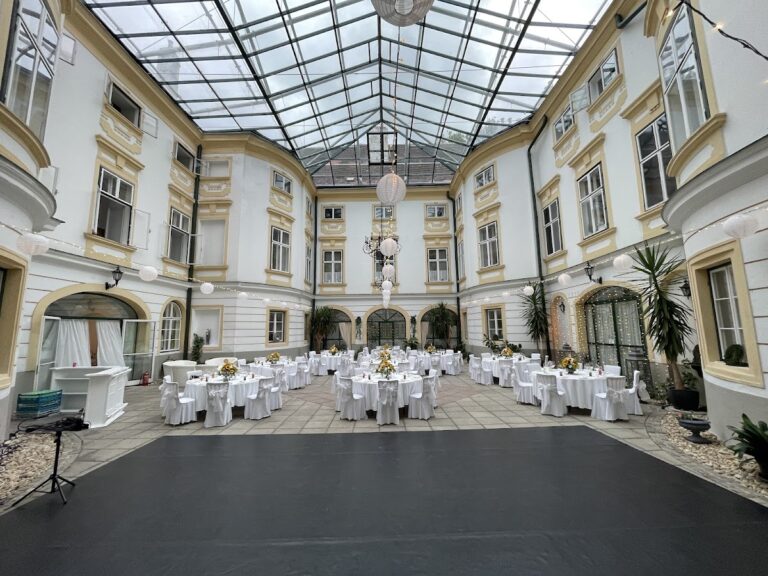
The almost square inner courtyard has a passage along its south side at first-floor level. Added during the Baroque remodelling, this feature resembles a bay window and gives separate access to the reception rooms, including a large ballroom.
Surrounding park
A park surrounds the castle.