Léran Castle: A Fortified Residence in France
Site at a Glance
- Rating
- 5
- Popularity
- Very Low
- Country
- France
- Primary era
- Modern
- Eras represented
- Medieval, Early Modern, Modern
- Civilizations
- French
- Site type
- Domestic
- Remains
- Castle
On this page12 sections
History
Léran Castle is a fortified residence north of the village of Léran in France. A castle here is attested by 1163, when it was held by the House of Lévis, a French noble family. In the thirteenth century, Simon IV de Montfort granted the lordship of Mirepoix to Guy I de Lévis-Mirepoix after Guy took part in the Albigensian Crusade, a campaign in southern France against Catharism and its supporters. The castle became a fief, or land held under the feudal system, of a junior branch of the Lévis family.
Medieval lordship
In 1329, the Mirepoix lordship was divided between the Lévis-Mirepoix family and its junior line, the Lévis-Léran. An agreement made in 1380 between Gaston II de Lévis-Léran and the villagers provided for enlarging and fortifying the castle and arranging its guard.
Destruction and repair
The castle was damaged during the sixteenth-century Wars of Religion, conflicts in France between Catholics and Protestants. Louis XIII later ordered its destruction, but in 1633 only part of the enclosure was demolished. Catherine de Lévis began repairs and further building work in 1640.
Family ownership and nineteenth-century rebuilding
During the French Revolution, the castle was confiscated and sold as national property. The Lévis family bought it back in 1805 through Athanase de Lévis. After the senior Mirepoix line became extinct, the Léran branch inherited through Louis-Marie-François-Gaston de Lévis-Léran, following the death of the Marshal of Lévis in September 1757. The branch resumed the Mirepoix name.
Between 1875 and 1883, Guy de Lévis, duke of San Fernando Luis, and his wife Marie-Josèphe de Mérode-Westerloo commissioned Clément Parent to restore and rebuild much of the castle. Its archives, belonging to the duke of Lévis-Mirepoix, form one of Languedoc’s richest collections of charters and other legal records. Édouard Privat began publishing them in installments in Toulouse in 1903.
Modern changes
The castle was listed as a historic monument, a protected status under France’s historic-building system, in 1959 for its Louis XIII-style grand staircase and great hall fireplace. A 1986 listing covered the façades and roofs, the second-floor library and its fittings, and the second-floor great hall of honor. After Antoine de Lévis-Mirepoix died in 1981, the property was sold and divided into apartments. It is now privately co-owned.
Remains
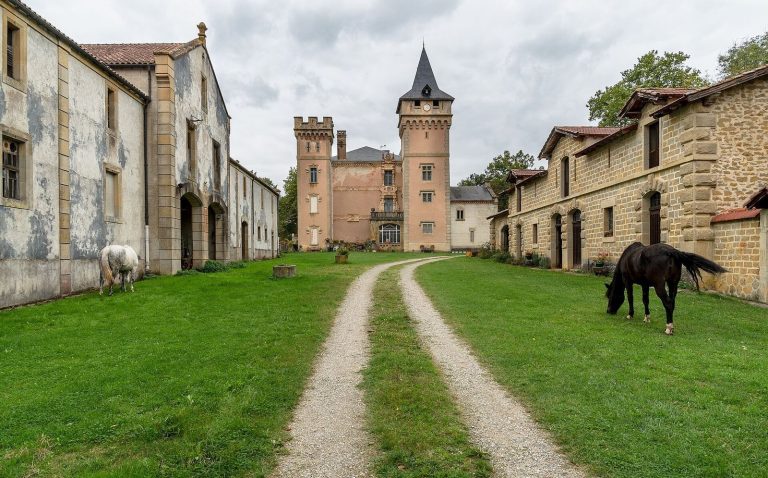
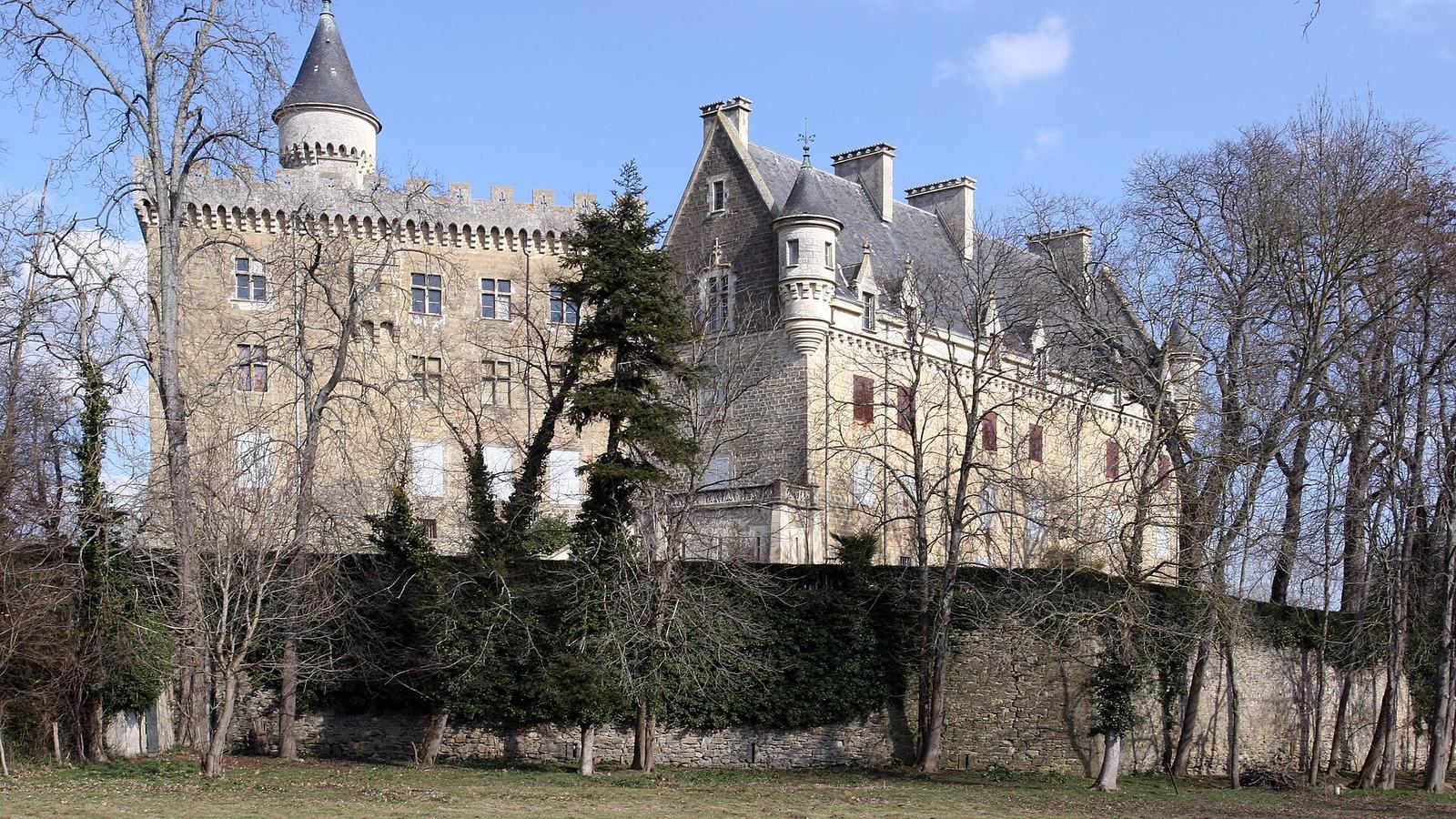
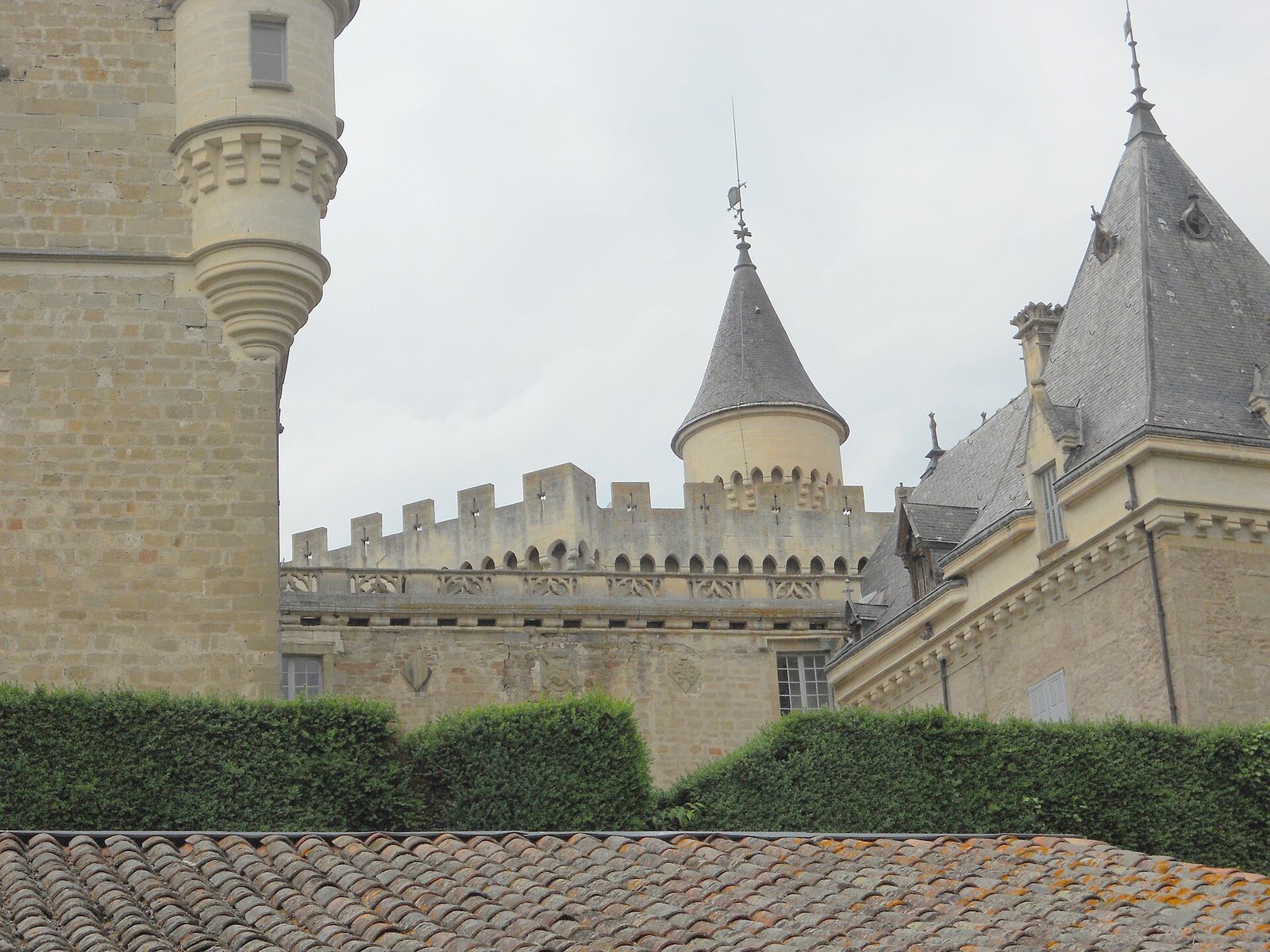
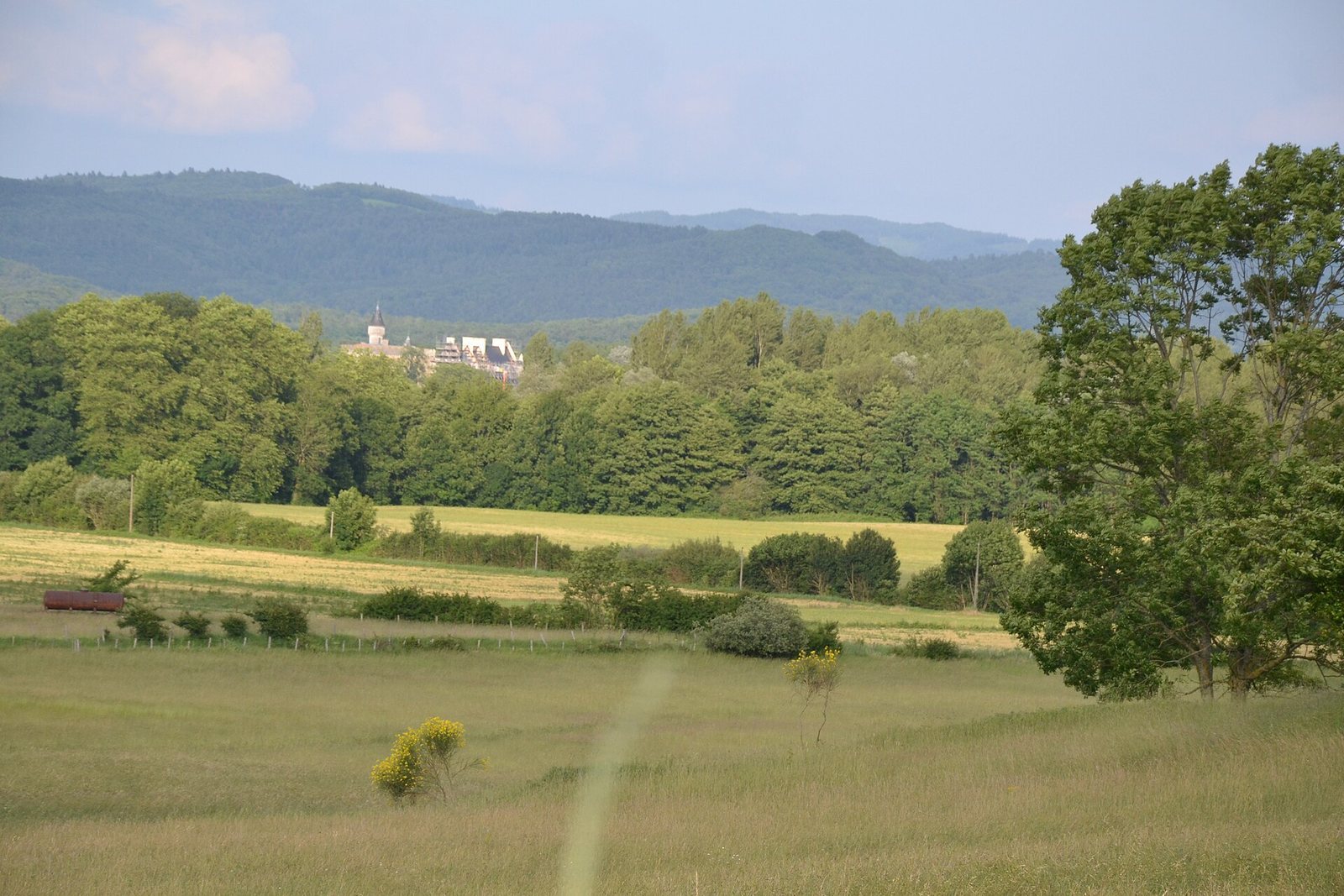
The castle stands north of Léran, near the Touyre and about two kilometres west of Lake Montbel. Its surviving fabric combines medieval foundations with later building, while its nineteenth-century reconstruction brings together medieval, Gothic, Renaissance, and classical features.
Structure and interiors
Medieval foundations and later rebuilding
Foundations of the medieval castle survive, particularly those of the western keep, incorporated into building work dating from the fifteenth through nineteenth centuries. The later composition combines features from several periods rather than preserving a historically authentic design from a single era.
Grand staircase and second-floor rooms
A seventeenth-century grand staircase in the Louis XIII style is among the castle’s identified features. On the second floor, the library retains woodwork, display cases, and a fireplace. The same floor contains the great hall of honor.
Hall of Arms and chapel
The first-floor Hall of Arms is dedicated to the Lévis lords. Its ceiling carries their mottoes and coats of arms, while stained-glass windows made in 1883 by the Saint-Blancat workshop in Toulouse depict events from the family’s history. In the chapel, Louis XV-style woodwork, a decorative style associated with the reign of Louis XV, was brought from Château de Lagarde, the fief of the senior Lévis-Mirepoix line.
Monumental fireplace
A monumental fireplace, first installed in the episcopal palace at Mirepoix, was reassembled at Léran in the nineteenth century. It bears the arms of Philippe de Lévis, bishop of Mirepoix from 1493 to 1537.
Left wing
A fire in late July 2013 destroyed the upper part of the castle’s left wing.