Palazzo Ricci-Altoviti: A Sixteenth-Century Palace in Florence
Site at a Glance
- Rating
- 5
- Popularity
- Very Low
- Country
- Italy
- Primary era
- Early Modern
- Eras represented
- Medieval, Early Modern, Modern
- Civilizations
- Duchy of Florence, Holy Roman Empire, Italian, Republic of Florence
- Site type
- Domestic
- Remains
- Elite Residence
On this page10 sections
History
Agli, Ricci, and Altoviti
Palazzo Ricci-Altoviti stands in Florence, Italy. The Ricci commissioned the palace, which was in existence by 1538 and retains a substantially sixteenth-century character. Before its construction, Agli family houses occupied the site, and their tower was incorporated into the residence.
Some early commentators on Dante identified Lotto degli Agli with the unnamed Florentine suicide in the Inferno, the first part of the medieval poet’s Divine Comedy. In this interpretation, Lotto hanged himself in the tower from remorse over an unjust sentence he had issued as podestà, a chief magistrate in a medieval Italian commune.
The palace later passed to the Altoviti. After the exile of Bindo Altoviti, a Florentine banker and patron of the arts, his family branch was readmitted to Florence. The Altoviti enlarged the palace by adding adjoining properties that had belonged to the Panciatichi and Arrigucci.
Later owners and modern use
The Altoviti family became extinct in 1853, and its properties passed first to Luca Medici Tornaquinci and later to the Rosselli Del Turco. The palace now belongs to the Flaccomio Nardi Dei, heirs of the Rosselli Del Turco.
During the renewal of Florence’s historic center, work in 1895 involved restoration and integration. The building retained much of its sixteenth-century character, and work on the Via del Campidoglio side uncovered the tower’s pointed foundation arch. In 1901, the palace entered Italy’s national list of monumental buildings considered part of the country’s artistic heritage. A memorial to the district’s First World War dead was added to the façade in 1926. Since 2024, the principal floor has housed the Free Academy of Fine Arts of Florence (LABA).
Remains
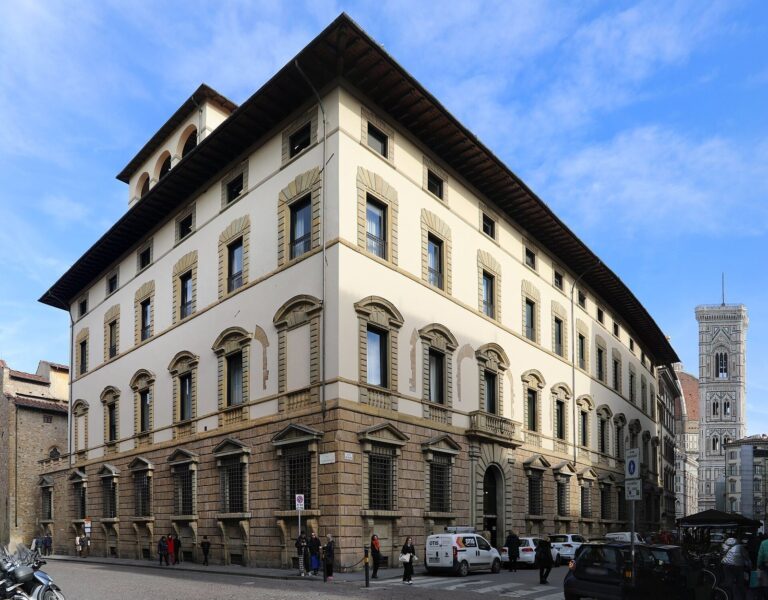
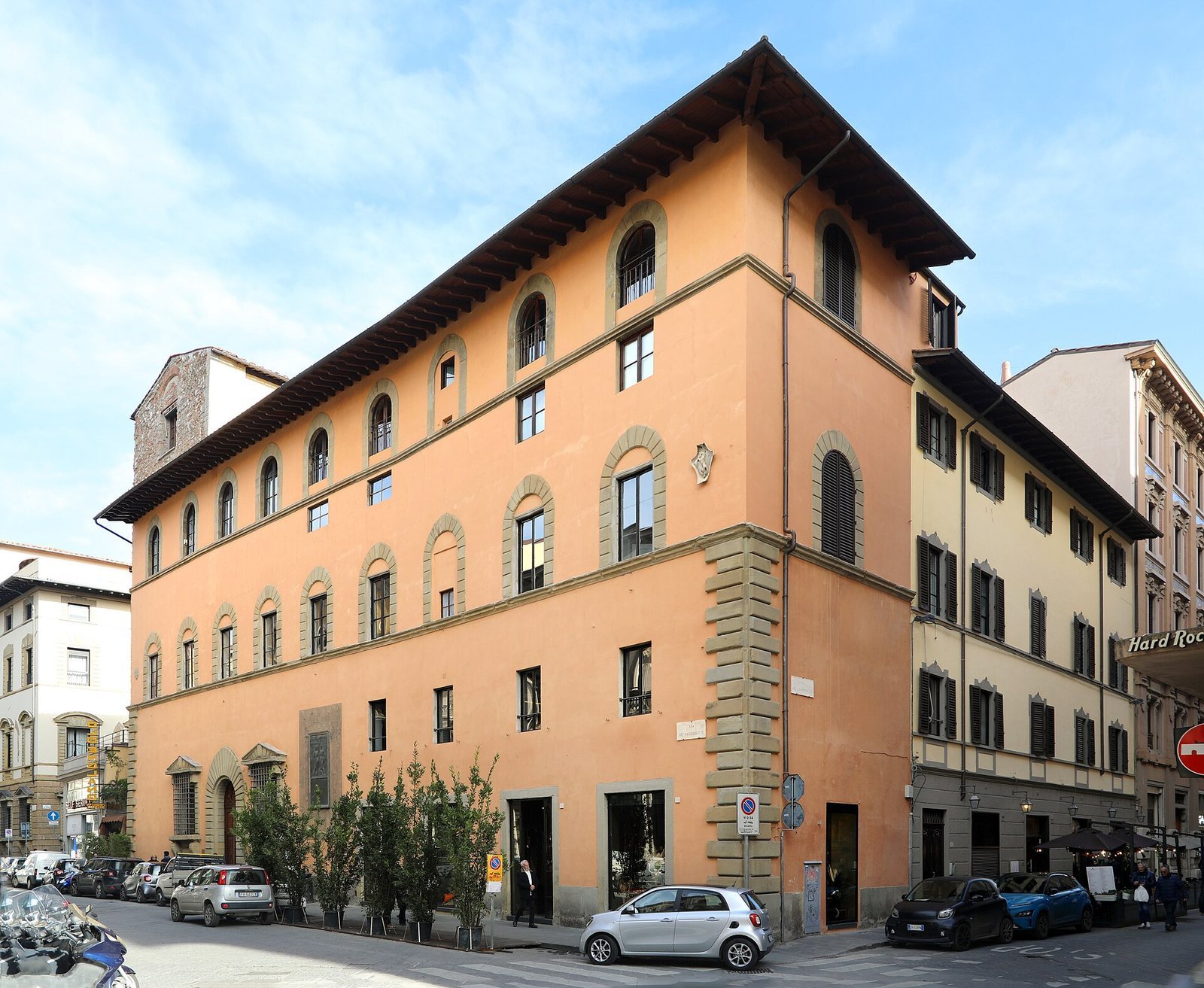
The palace has plastered elevations with a predominantly horizontal arrangement, set alongside the taller stone Agli tower. It stands at the corner of Via de’ Vecchietti and Via del Campidoglio; the tower is visible from Via de’ Pecori.
Palace elevations
Front on Via de’ Vecchietti
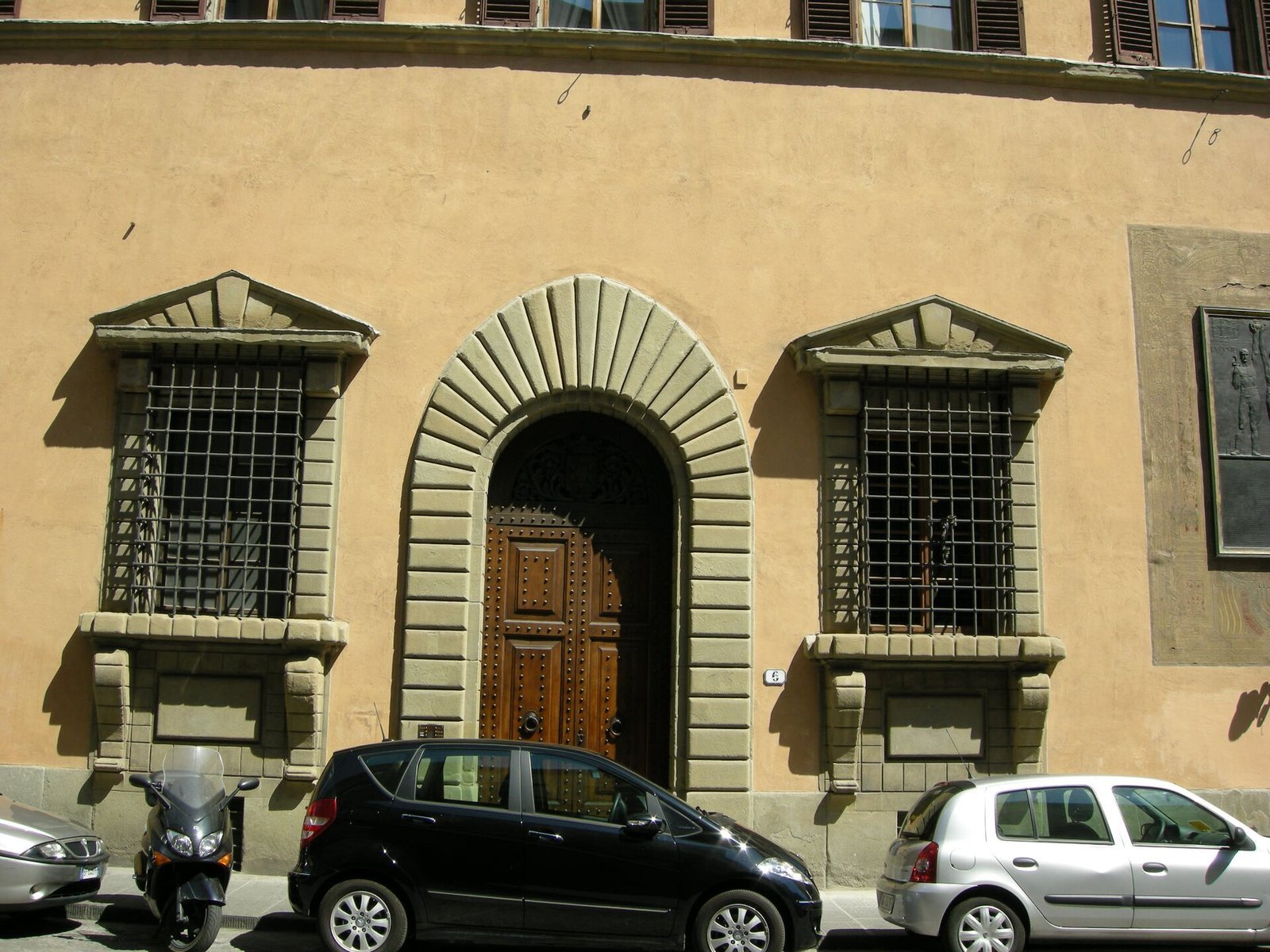
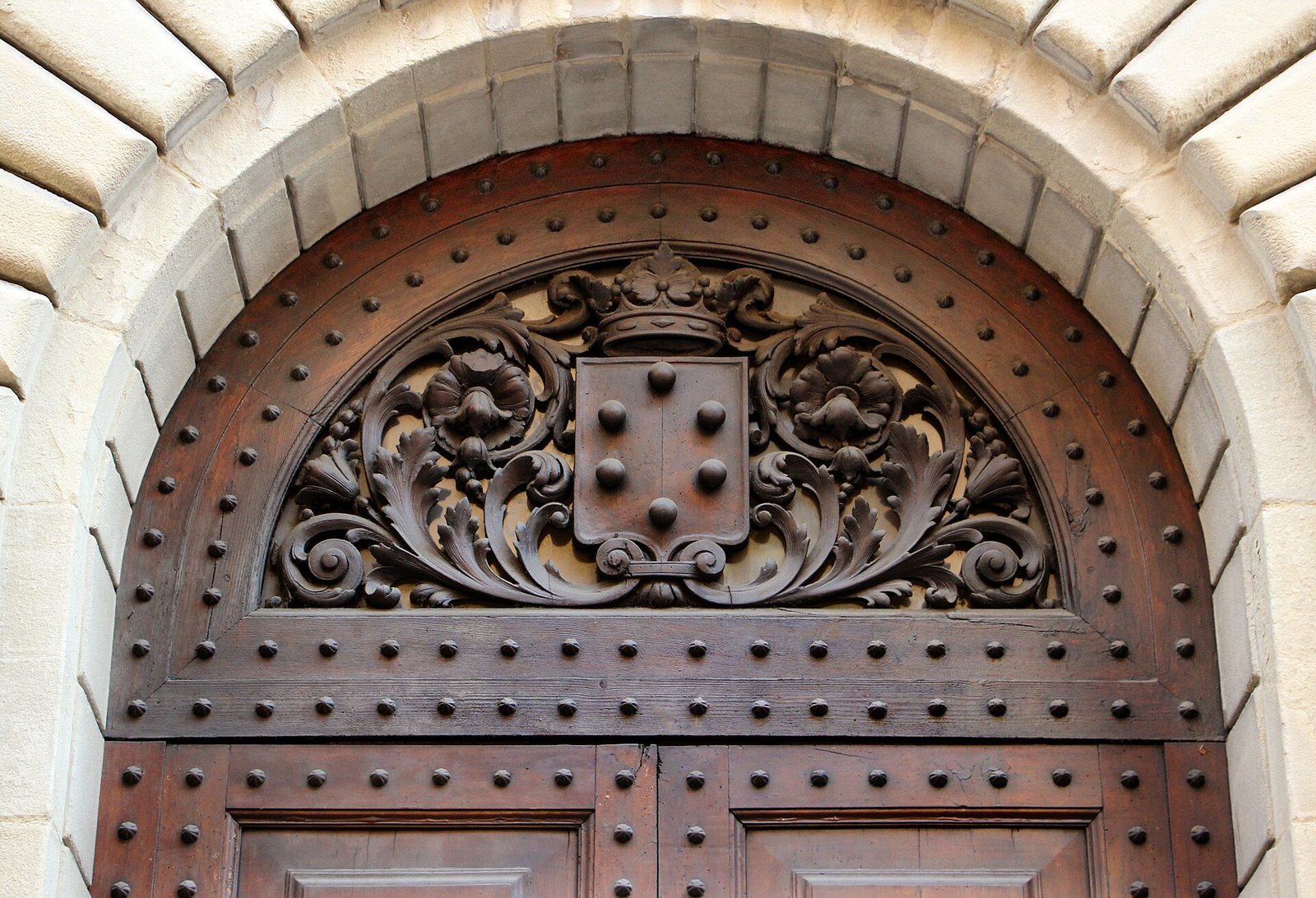
The façade is divided by simple horizontal bands marking the floors, with rough-faced blocks at the corners and framing around the semicircular windows. Steps lead to an off-center doorway, flanked by two low windows with projecting supports beneath their sills. A shield at the left bears the Ricci arms: a blue field with seven gold hedgehogs shown walking. A shield at the right displays the Altoviti arms, a silver predatory wolf on black. The Medici arms are carved in wood on the doorway.
Side on Via del Campidoglio
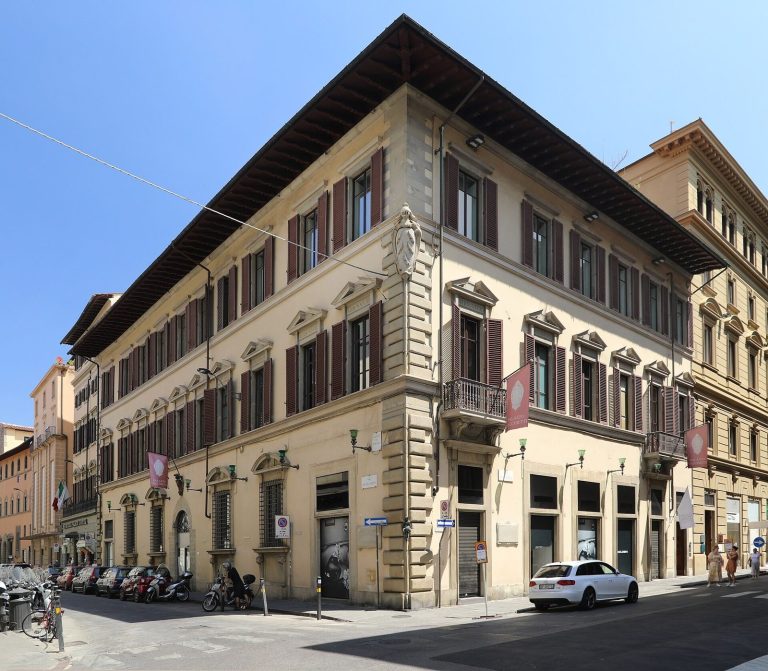
This side, which extends as far as Piazza di San Leo, was remodeled in a more bourgeois style. Its five vertical divisions and three upper floors have framed windows and two horizontal bands at sill level.
Agli tower
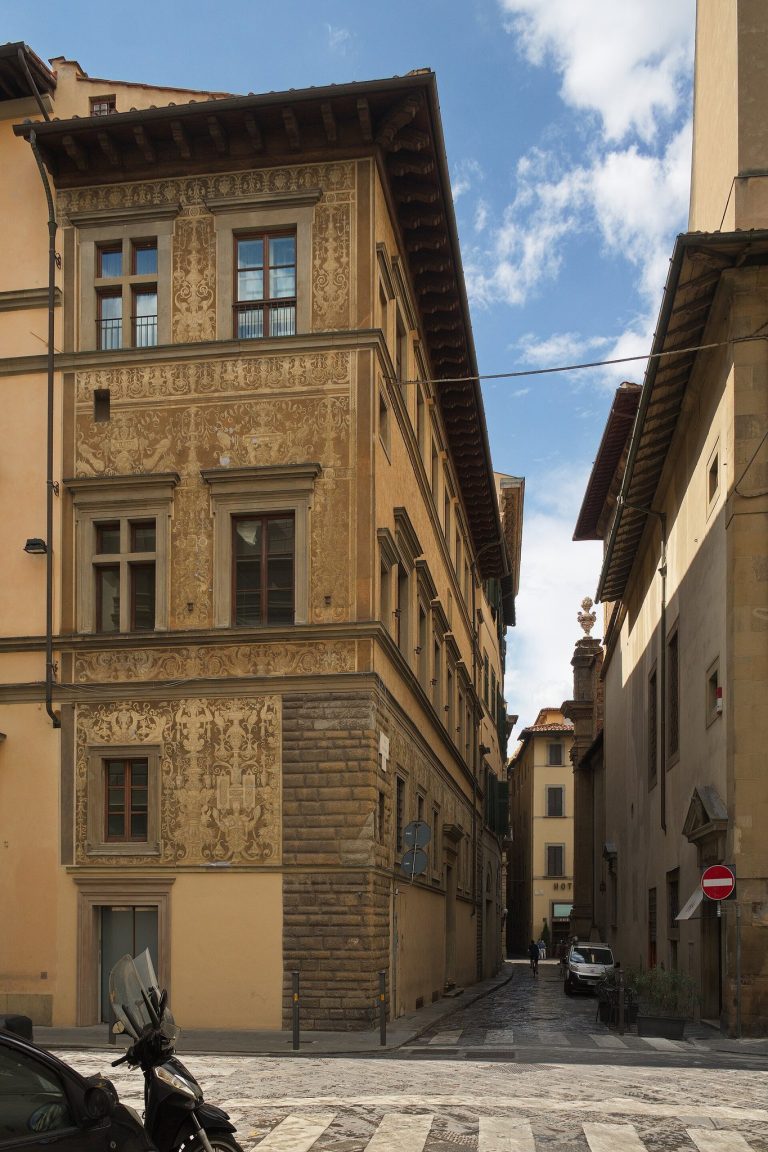
The tower’s stonework is laid in regular courses, and one side retains its older stone facing. Because the adjoining building is low, the tower’s full depth can be made out from Via de’ Pecori. It rises one storey above the palace roofline, has a pitched roof, and was reduced in height in the past. Its limited openings follow a form customary in twelfth- and thirteenth-century towers. On the uppermost floor, windows facing Via de’ Pecori have lintels resting on corbels, projecting supports built into a wall; this treatment is associated with the fourteenth century.
Former street layout
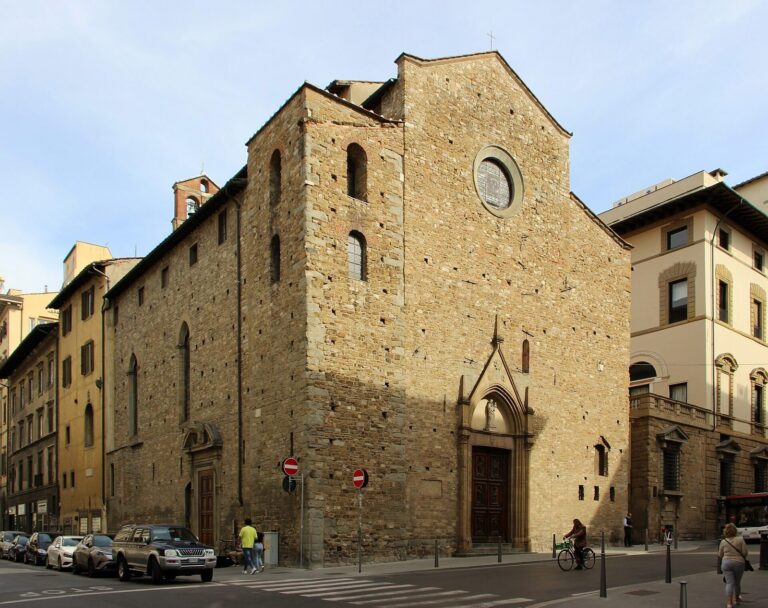
A funnel-shaped square once stood in front of the palace, first called Piazza degli Agli and later Piazza dei Ricci. The Agli had a loggia at its corner. An alley beside the tower is still discernible in a low building now used as a clothing shop. The alley met another lane linking the former Via dei Guidalotti, now Via dei Pescori, with the flank of San Leo church. The church faced the now-vanished Piazza dei Brunelleschi, whose site is occupied by Palazzo Pola e Todescan.
First World War memorial
The façade memorial includes a large bronze relief by sculptor Italo Amerigo Passani. Two bare-chested soldiers support a lit votive lamp, with the Loggia del Bigallo and the Baptistery represented at the sides. Painter Umberto Bargellini made the surrounding decorative band using sgraffito, a technique that exposes a contrasting layer by scratching the surface. The City of Florence restored the memorial in 2011 and 2012.