Montflaux Castle: A Seventeenth-Century Aristocratic Residence in France
Site at a Glance
- Rating
- 3.5
- Popularity
- Very Low
- Country
- France
- Primary era
- Early Modern
- Eras represented
- Early Modern
- Civilizations
- French
- Site type
- Domestic
- Remains
- Castle
On this page9 sections
History
Montflaux Castle is a seventeenth-century aristocratic residence in Saint-Denis-de-Gastines, France, rebuilt by Charles de Froullay around the middle of that century. It replaced an earlier manor and served as the seat of a lordship that became a county in 1670, with additional lands attached.
The lordship and its early holders
The estate was known as “I. de Montflaut” in 1367, the manor of Montflaux in 1592, and a lord’s residence in 1603. In 1669 it was described as the land and lordship of Montflaux, while the name Château de Montflaux was used in 1686. By 1782, it was known as the County of Montflaux. The lordship depended on Mayenne through Charné-Bazeille and owed simple homage, a formal acknowledgment of dependence on a superior lord. It also held the lordship of the parish.
Isabeau de Montflaux left six deniers, a small coin denomination, to the church of Saint-Denis-de-Gastines before 1367. Michel de Froullay married Jeanne de la Ferrière in 1371. Guillaume de Froullay, husband of Marguerite Le Sénéchal, was killed at the Battle of Castillon in 1453. Later lords included Jean de Froullay in 1486, Guillaume de Froullay, who married Catherine de Chauvigné, in 1494, and Jean de Froullay, who married Catherine de Brée in 1517. Louis de Froullay married Louise de la Vairie in 1540 and, in 1551, granted the fiefs of Bas-Maigné to Catherine d’Anthenaise, wife of Jean de Fromentières.
André de Froullay and Thomasse de la Ferrière were associated with the foundation of a collegiate church at Saint-Denis-de-Gastines in André’s will of 6 March 1616. A collegiate church is served by a chapter of clergy. Jean de la Ferrière, André’s father-in-law, was at Montflaux suffering from gout when he swore fidelity to Henri IV, king of France from 1589 to 1610.
A county and the seventeenth-century château
Charles de Froullay replaced the sixteenth-century manor and lord’s residence with the present château around the middle of the seventeenth century. On 28 October 1670, the lordship was raised to a county, giving its lord comital rank. The lands of Champorin, l’Outagerie, Ivoy, and Carelles were attached to it.
René de Froullay and Marie d’Escoubleau de Sourdis had ten children, including Gabriel-Philippe de Froulay, bishop of Avranches from 1669 to 1689. Their younger son Charles established the branch of the counts of Froullay. He married Angélique de Baudéan, a lady-in-waiting to Anne of Austria, queen consort of France and mother of Louis XIV, and died on 26 November 1671. Philippe-Charles de Froullay, who married Anne de Mégaudais, died aged 34 in 1696; the marriage brought him the neighboring lordship of Marolles. Charles-François de Froullay was another later lord.
Inheritance, revolution, and later ownership
Renée-Caroline-Victoire de Froulay became the sole heir to the Count of Froullay after her brother Charles-Elisabeth died in 1747. Through her marriage to Louis de Blanchefort de Créquy, she was known as the Marquise de Créquy. She left Montflaux by will to Louis-Auguste Le Tonnelier de Breteuil and continued to visit the château occasionally in the years leading up to the French Revolution.
In a later generation, Marie-Elisabeth Le Tonnelier de Breteuil married Louis-Charles-Auguste de Goyon, Count of Matignon. Their daughter married Anne-Charles-François de Montmorency, Duke of Montmorency. Vincent Charles Henri d’Etchegoyen later became an owner of Montflaux through marriage to a daughter of Napoléon-Louis de Talleyrand-Périgord, Duke of Valençay. Napoléon-Louis had married Alix Anne Louise Charlotte de Montmorency in 1829. She was the daughter of Charles de Montmorency, fourth Duke of Montmorency, and Anne Louise Caroline Goyon de Matignon, and died in Paris in September 1858.
On 1 June 1790, about one hundred people entered the château to demand grain left after the lady of the house had distributed supplies. They threatened to split the head of M. Testard-Maisonneuve, a royal tax farmer who collected certain royal taxes under contract, or throw him into the pond. They also threatened to burn the château.
During the Chouannerie, a royalist insurgency in western France during the Revolution and its aftermath, Châteauneuf was in the area around Montaudin in October 1798 and stayed at Montflaux and in Saint-Denis-de-Gastines. Jean-Baptiste Le Dauphin, known as Le Vengeur, may also have taken refuge at the château and in the village. On 15 December 1799, between 400 and 500 Chouans stayed at Montflaux for twenty days and took 1,400 pounds of lead.
Montflaux was listed as a historic monument in 1929 and remains privately owned.
Remains
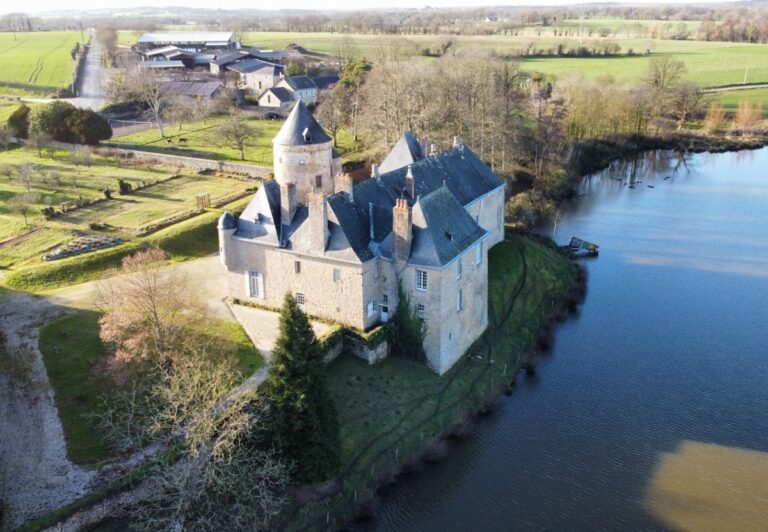
The estate’s layout brought together a regularly coursed granite residence, a chapel within the moat enclosure, a courtyard, and grounds that included a pond, mill, groves, and long avenues. The château stands about three kilometres west-northwest of Saint-Denis-de-Gastines, on the road to Carelles. A stream associated with the estate is a 3,220-metre tributary of the Tête-de-Louvine.
Estate grounds
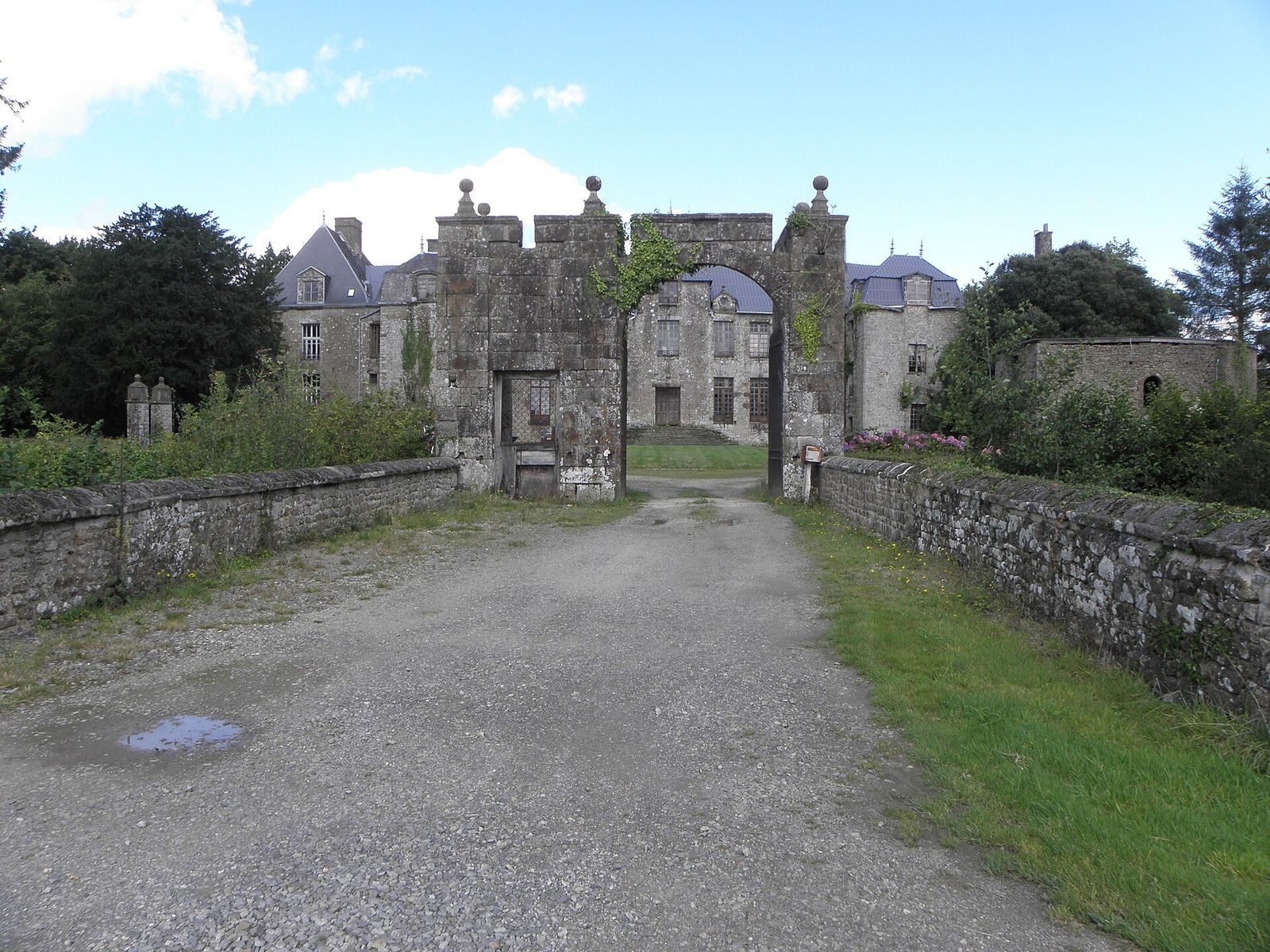
Three avenues led toward Saint-Denis-de-Gastines, La Censive, and Carelles. An 1780 description notes moats surrounding the château and a drawbridge leading into the courtyard. The grounds also included a labyrinth-like feature, an orangery, a building for growing citrus trees, and groves.
Buildings
Main residence
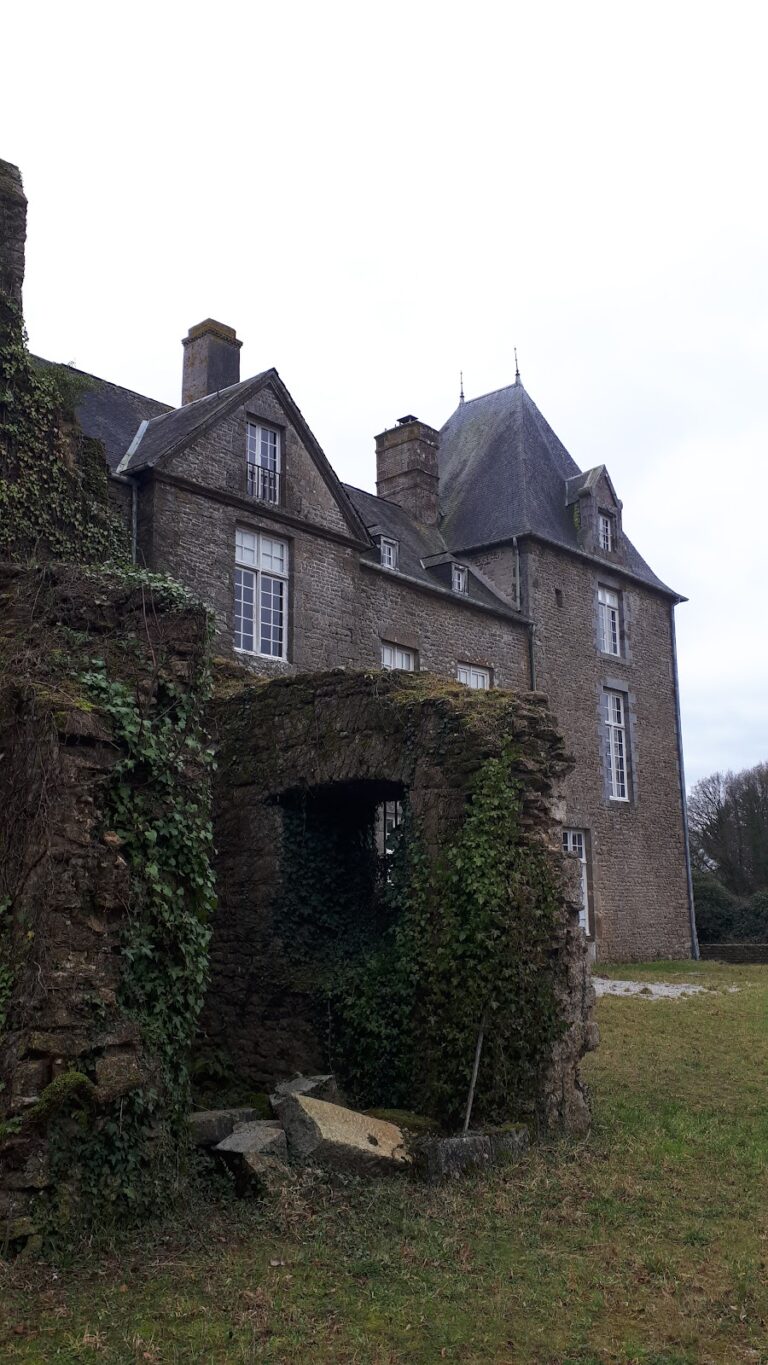
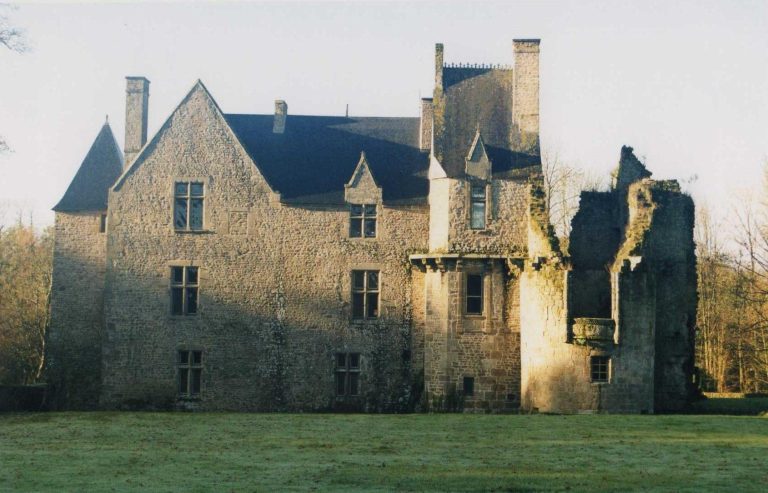
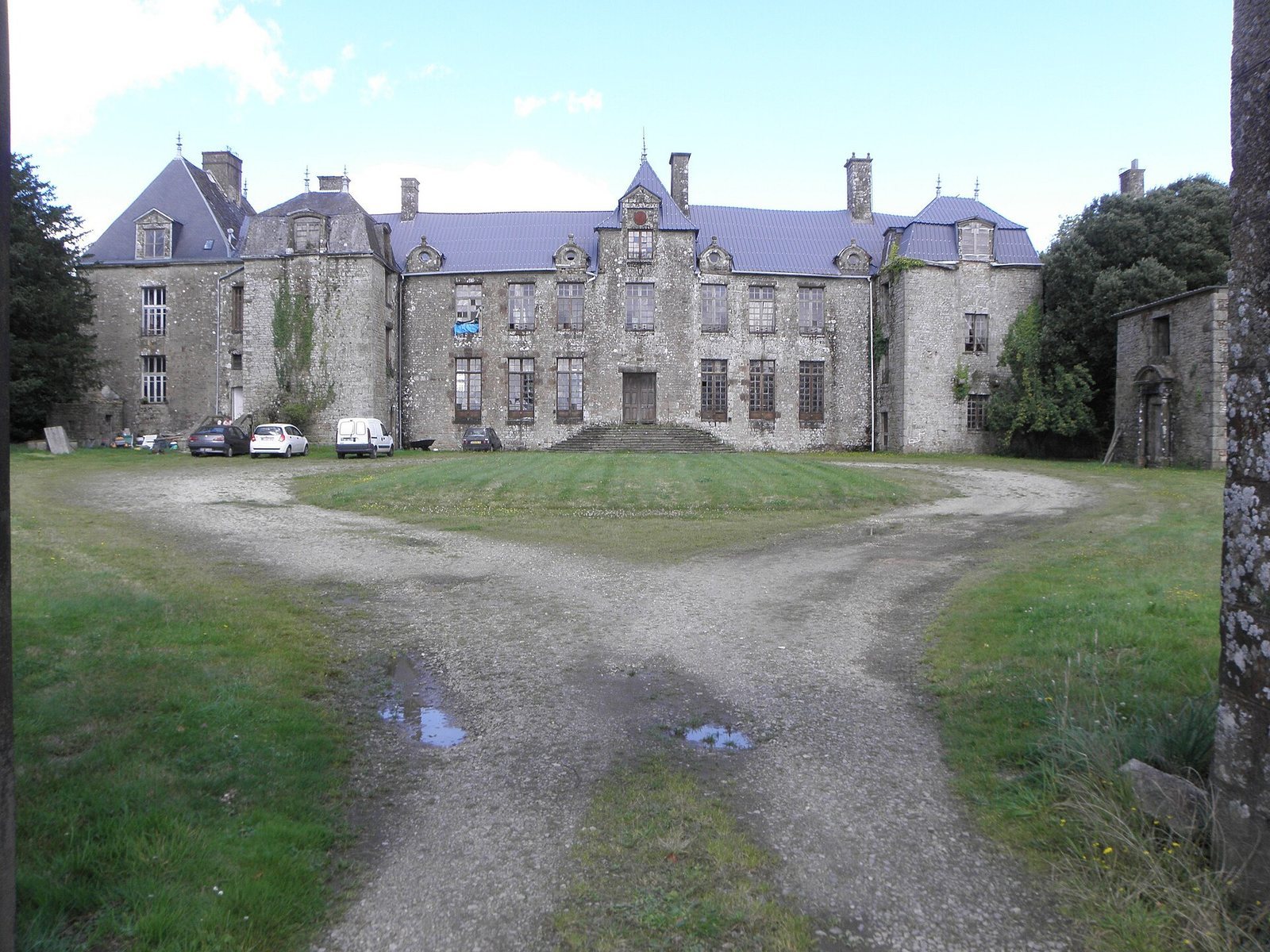
The large granite residence has two shallow wings. At the inner angles are two corner blocks, each beneath its own roof, while a further projecting block rises beneath a pointed roof topped by a clock. Dormer windows, which project from the roof, alternate with circular bull’s-eye windows above the windows on both storeys.
In the early twentieth century, the château’s gallery held Froullay family portraits alongside portraits of republican figures, including politician Ledru-Rollin and General and politician Cavaignac. The gallery also contained other paintings, Talleyrand-Périgord family memorabilia, and a table identified as the one on which Napoleon I’s deposition was signed.
Chapel
The chapel stands within the moat enclosure, in the courtyard. Its worship area ends in a semicircular apse, a rounded sanctuary end, and a small, slender bellcote, a roof structure that holds a bell, rises above it. A decree of 21 August 1723 transferred religious services from the chapel at Ivoy to Montflaux. Mass was held there on Sundays and feast days for people in the surrounding area. Charles Louis de Froulay also held an ordination there around that time, a rite admitting someone to the clergy or a higher order of ministry.