Cefnllys Castle: A Mortimer Stronghold in the Welsh Marches
Site at a Glance
- Rating
- 5
- Popularity
- Very Low
- Country
- United Kingdom
- Primary era
- Medieval
- External website
- Open
- Eras represented
- Medieval
- Civilizations
- Norman
- Site type
- City
On this page11 sections
History
Cefnllys Castle is a medieval stronghold at Penybont, near Llandrindod Wells in Wales, United Kingdom. The name combines the Welsh words cefn, meaning ridge, and llys, meaning mansion or court. Cefnllys became the administrative centre of the lordship and cantref of Maelienydd, a Welsh territorial district, in the Welsh Marches, the borderlands where Welsh rulers and English lords contested authority. Its position on routes into central Wales made it a strategic focus of conflict between the Mortimer family and Welsh rulers. The first castle was a timber motte-and-bailey, a raised earth mound paired with an enclosed yard, probably built around 1093–95 by the Anglo-Norman baron Ralph Mortimer of Wigmore.
Early fortifications and contested rule
An earlier name, Dinieithon, was associated with the first fortress and also applied to a commote, a smaller district within Maelienydd. The forms Keventhles in 1246 and Kevenlleece by 1679 reflect later changes in the name, with the latter becoming standard in the nineteenth century. Tradition connects Cefnllys with Elystan Glodrydd, a tenth-century Welsh prince, and suggests that a Welsh ruler’s court may have been nearby. The court’s date and location remain uncertain.
After Ralph Mortimer died around 1104, the Welsh retook the area. Control remained contested through the twelfth century. Dinieithon was last mentioned in 1179, but its status then is unclear: the earlier fortress may have been destroyed or abandoned, or the site may have been used again as a Welsh court.
Llywelyn the Great established authority over southern Powys between 1208 and 1216. The origins of the later castle on Castle Bank are not certain. It was probably a Mortimer foundation, although building may have begun under Llywelyn’s direction between 1216 and 1234.
Mortimer castles and Welsh conflict
Around 1242, Ralph Mortimer II ordered the strengthening of a castle in Maelienydd. Work was carried out in his absence in the name of his young son, Roger Mortimer, and is associated with the first stone castle on Castle Bank. The project followed regional unrest after Llywelyn the Great’s death in 1240 and Henry III’s campaign in Wales in 1241. It also helped Ralph reinforce Mortimer control. When Ralph died in 1246, the Crown took custody of the castle until Roger came of age.
From 1256, Llywelyn ap Gruffudd led a Welsh uprising against English rule. By 1260, Cefnllys had become Roger Mortimer’s most advanced outpost. In November 1262, Welsh attackers gained entry through treachery, seized the constable, Hywel ap Meurig, and his family, and set the castle on fire. Roger returned with a force of Marcher troops to repair it, but Llywelyn’s larger army then besieged him for three weeks. Roger negotiated safe passage, after which Llywelyn destroyed the remaining defences. The same campaign also brought attacks on Roger’s castles at Bleddfa and Knucklas.
The 1267 Treaty of Montgomery recognized Llywelyn as Prince of Wales and permitted Roger to rebuild Cefnllys. It left control of the castle and surrounding land unsettled: Roger was to hold the territory provisionally on Llywelyn’s behalf, pending a later decision on Llywelyn’s claims. Roger built a stronger second stone castle on the southern part of Castle Bank. Llywelyn considered this an unauthorized new fortress rather than a repair and protested to Edward I in a letter dated 1273 or 1274. The dispute added to tensions before Llywelyn refused to pay homage to Edward in 1275 and the English king’s campaigns to conquer Wales between 1277 and 1283.
Cefnllys was not directly attacked during Edward I’s conquest, but it belonged to a chain of garrisoned castles used to contain Llywelyn’s territory. After Roger Mortimer died in 1282, his heir Edmund kept eight horsemen and twenty foot soldiers there during the fighting of 1282–83. Cefnllys was listed among castles taken during Madog ap Llywelyn’s revolt against English rule in 1294, although its capture is uncertain.
The lordship, town and later medieval castle
In 1306, Cefnllys passed to Roger Mortimer, 1st Earl of March. Edward II confiscated his lands, including the castle, after Roger rebelled in 1322. Roger returned from exile and helped overthrow Edward II in 1326, then wielded power alongside Queen Isabella. Edward III ordered his execution in 1330, and Cefnllys was forfeited before returning to the Mortimers in 1331.
The Mortimers encouraged a town at Cefnllys as a means of extending their authority over Maelienydd. Its precise foundation date is unknown, but it developed during the thirteenth century. A market charter is recorded in 1297, and by 1304 the settlement had borough status, a legal standing that carried recognized civic privileges. It had twenty-five burgesses and a church. The Mortimers also established an upland manor, an estate and system of local authority that was unusual in Maelienydd. After Welsh residents complained to Edward I in 1297, Edmund Mortimer restored the traditional court at nearby Cymaron as an alternative to the manor court at Cefnllys. Mortimer control remained limited beyond the area around the castle, and the wider Welsh community paid limited tribute rather than rent.
Repairs to the castle and its hall took place in 1356–57. The town’s expansion had already stalled before 1332. Plague outbreaks in 1349, 1361–62 and 1369, its remote position, limited commercial prospects and the continuing risk of frontier conflict contributed to its decline. By 1383, only ten people lived there. The settlement later disappeared, though its borough status persisted into the nineteenth century.
At the beginning of Owain Glyndŵr’s revolt against English rule in 1400, Cefnllys was temporarily under royal control and defended by twelve spearmen and thirty archers. A detailed supply register survives from 1403. A grant made in 1405 described the lordship as burned and wasted by Welsh rebels, but it is uncertain whether the castle itself was attacked or the damage was restricted to the surrounding lands.
After Edmund Mortimer, 5th Earl of March, died of plague in 1425, the inheritance passed to his nephew Richard, Duke of York. Richard funded repairs and appointed Welsh officials to manage the estate. During the mid-fifteenth century, local Welsh office-holders increasingly favoured timber halls over stone castles as warfare and social conditions changed. The Welsh poet Lewys Glyn Cothi wrote four poems about Cefnllys, probably between 1432 and 1459; they survive in a manuscript dated 1468. The poems praise Ieuan ap Phylip, the castle’s constable and the lordship’s receiver, and name Rhosier ab Owain as master carpenter.
When Richard’s son Edward became king in 1461, Cefnllys passed to the Crown. In 1493 Henry VII granted the castle, then among a group described as largely ruined, to Prince Arthur, and the garrison was withdrawn. In the first half of the sixteenth century, John Leland described the castle as already fallen into ruin; a deed of 1687 also refers to its ruins. The castle’s declining strategic value, changing military conditions and the Mortimers’ waning influence contributed to its deterioration. By 1831, Cefnllys comprised the church and castle ruins, three farmhouses and a small cottage, with a population of sixteen.
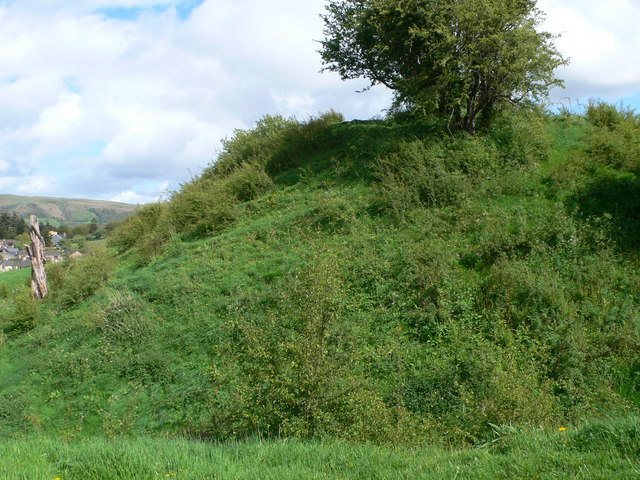
A topographical survey and a photogrammetric study, which uses photographs to map and measure features, were completed in 1985, followed by an appraisal in 2006. The castle, the old castle mound and the medieval settlement are protected as Scheduled Monuments, a formal category of protection under UK law.
Remains
Castle Bank and the castle sites
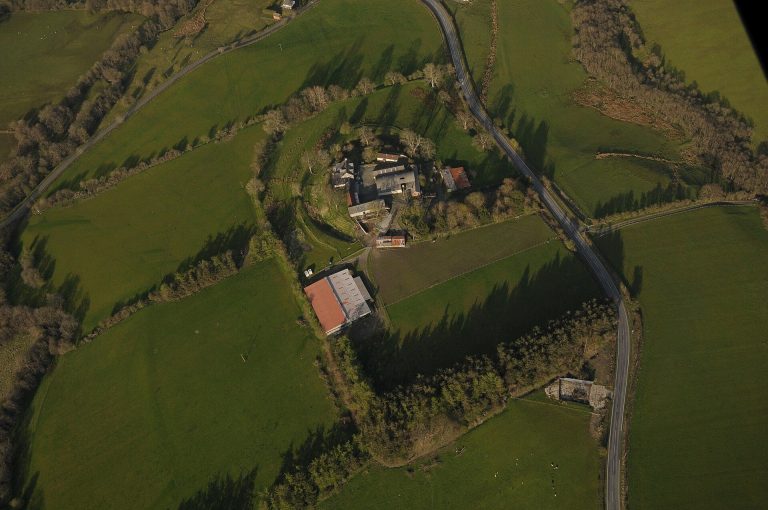
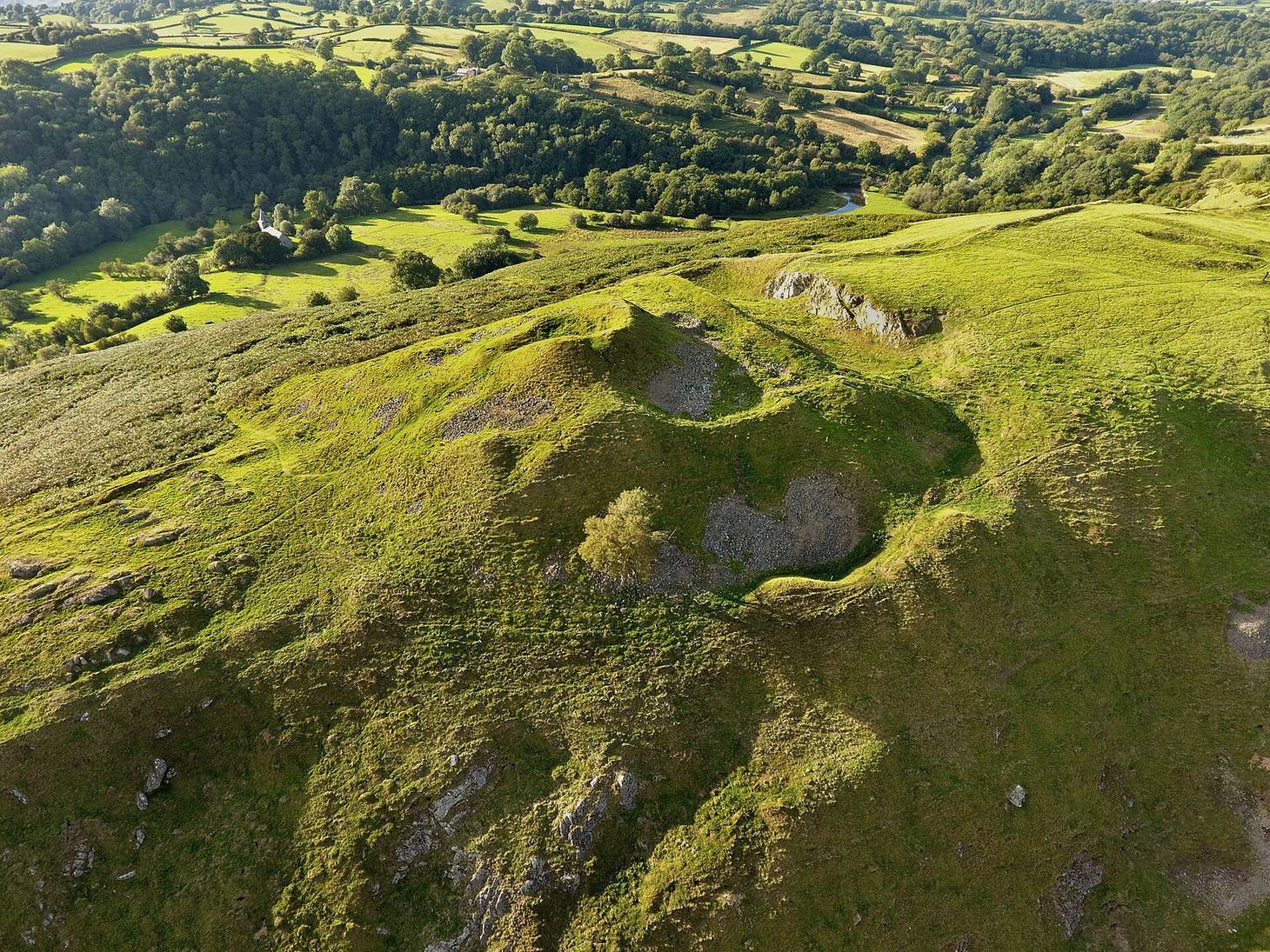
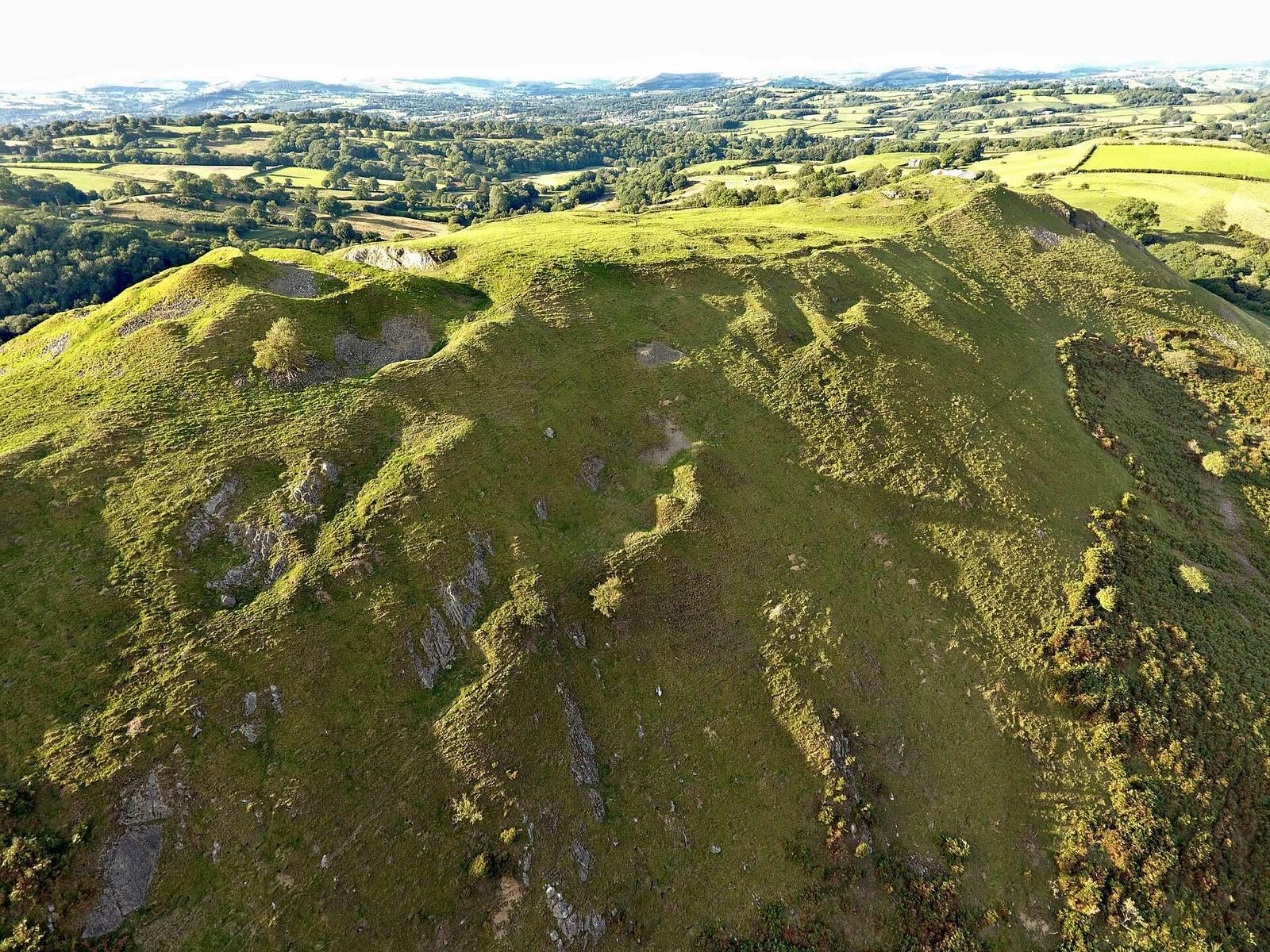
Castle Bank is a ridge about 2.7 kilometres east of Llandrindod Wells, rising to 304 metres above sea level above the River Ithon and the meeting of tributary valleys. A loop of the river shields the hill on three sides. The castle remains extend for roughly 300 metres along the ridge from northeast to southwest, across an area about 356 metres long and 102 metres wide. The two castle sites occupy opposite ends of the hill. Their original forms have been heavily altered, and much of what survives is rubble-covered.
Possible Iron Age use of the ridge has been proposed from an enclosure estimated at about ten hectares, along with banks, a hollow-way and other earthworks. Later farming and quarrying changed the earthworks, and the interpretation remains uncertain. A silver thumb-ring found on Castle Bank may belong to an early medieval period of Welsh occupation. The first timber motte-and-bailey castle stood beside the Ithon about 1.6 kilometres north of the ridge-top complex.
Northern castle
The northern stone castle had a keep within an elevated, triangular inner bailey. An outer bailey lay beyond it and may have had a gatehouse at its northeastern corner. These earthwork and structural traces define the known arrangement, though the castle is now heavily altered.
Southern castle
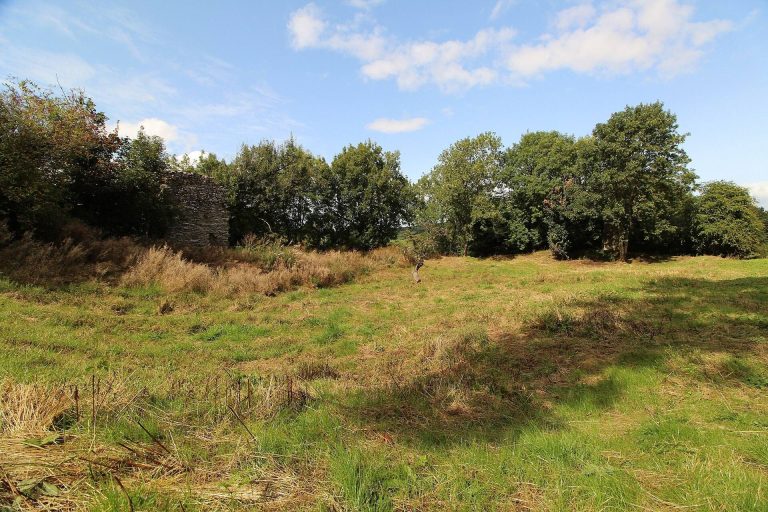
At the southern end of Castle Bank, the principal tower may have been circular or octagonal, enclosed within a walled court that appears to have been rectangular. A rock-cut ditch, about five metres deep, separated this castle from a lower bailey to the north. A small bailey may have extended southwest, while a scarp crossing the ridge may indicate a larger northern bailey. A stone curtain wall and rampart followed much of the hilltop rim. Only a few remains of the southern castle survive, with possible additional buildings along its northwest wall.
Timber hall
An outline on the southern part of the ridge probably marks the oak hall associated with Cefnllys in the fifteenth century. The two-storey building was used to receive and entertain guests. Its position within the castle area links the hall to the later use of the site.
St Michael’s Church
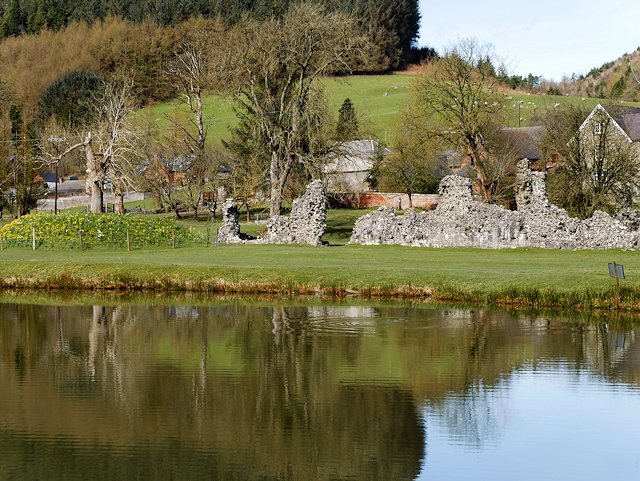
St Michael’s Church stands beside the Ithon at the foot of the hill, about 300 metres west of Castle Bank. The surviving structure dates to the thirteenth century, although its foundation date is unknown. Its circular churchyard, edged with yew trees, may point to an origin before the Norman period.
Medieval settlement and surrounding features
The town’s exact location is uncertain. Earthworks near St Michael’s may represent raised causeways, sunken roads and house platforms; finds from this area mostly date to the Tudor period, 1485–1603, or later. The town may instead have occupied the enclosure on Castle Bank, where the stone wall could have formed part of its defences, or its people may have lived in scattered settlements along the valley. The settlement had a mill and a toll bridge, and a deer park was recorded in 1360.