Square Castan: An Archaeological Garden in Besançon, France
Site at a Glance
- Popularity
- Medium
- Country
- France
- Primary era
- Classical
- Eras represented
- Classical
- Civilizations
- Roman
- Site type
- Civic
- Remains
- Park
On this page7 sections
History
Roman and early Christian Besançon
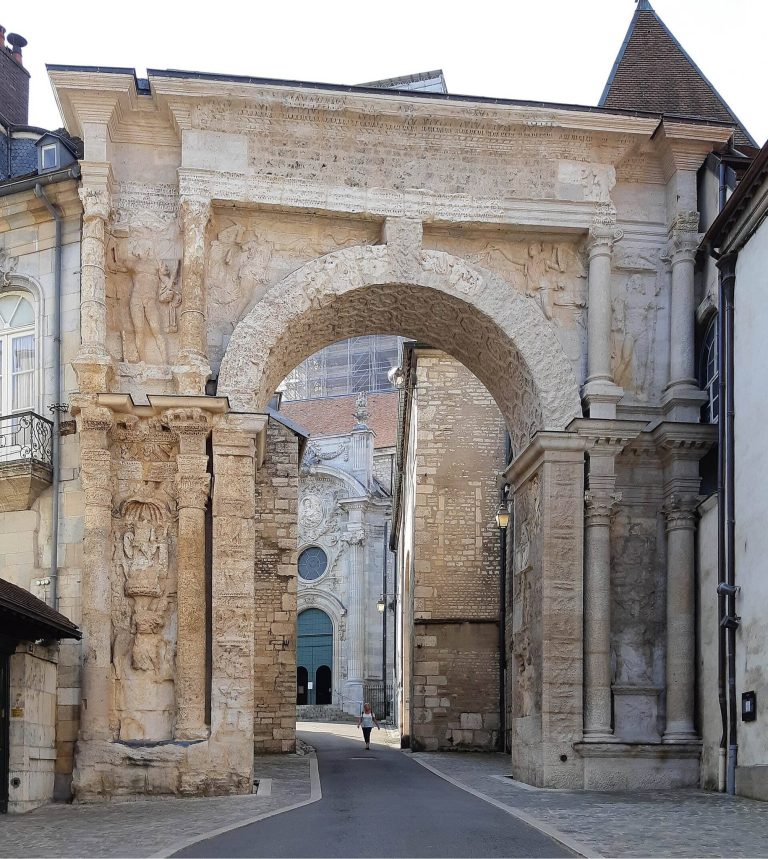
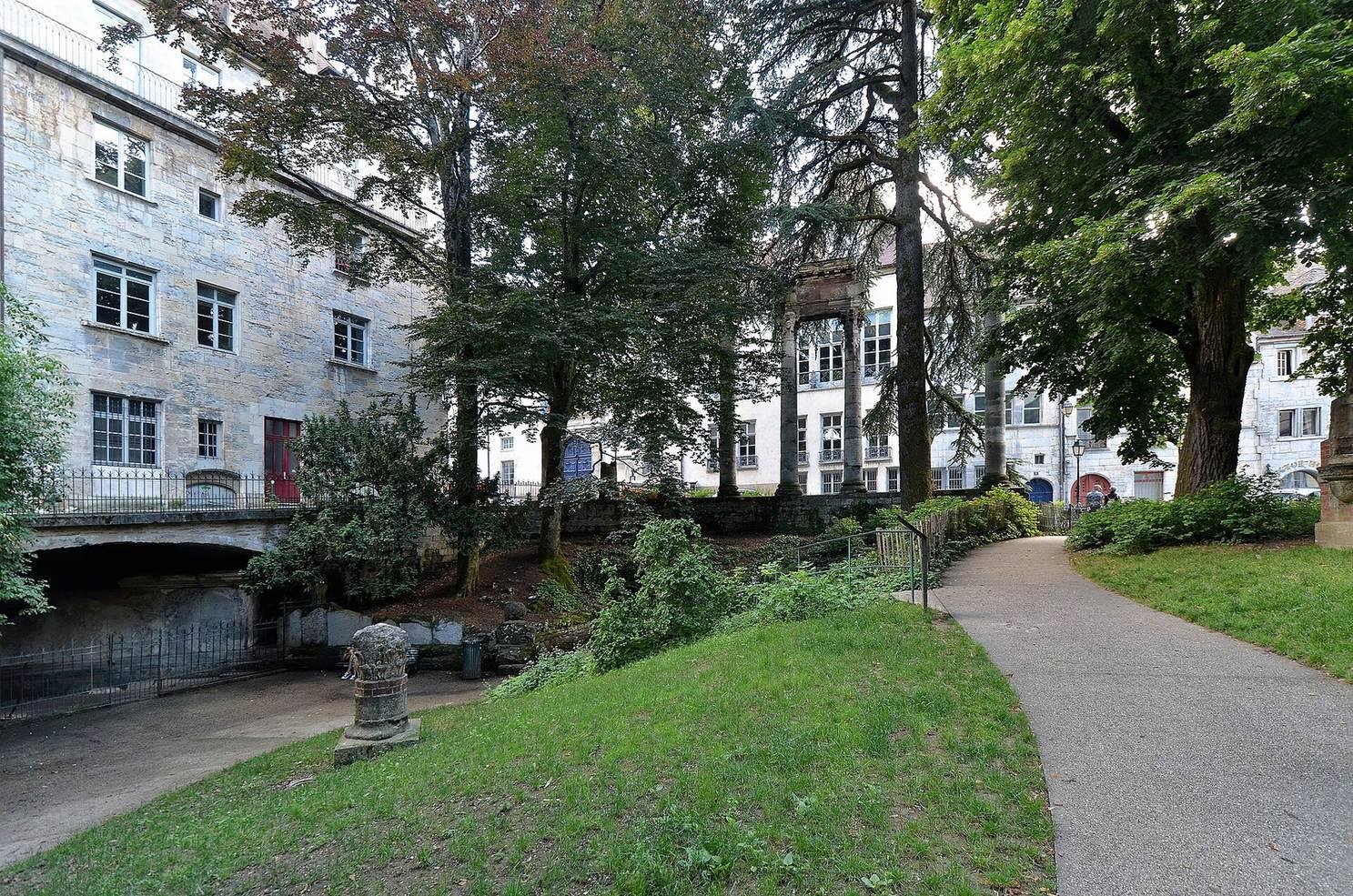
Square Castan is an archaeological garden in Besançon, France. Its ancient remains probably date to the second or third century, when the city was known as Vesontio, a Gallo-Roman settlement shaped by Roman rule and local traditions. The large semicircular structure has an uncertain purpose. Auguste Castan, an archaeologist and city librarian, excavated it in 1870 and identified it as a Roman theatre; it is now interpreted as part of a covered portico surrounding a raised open space.
Besançon’s first baptistery, a place for Christian baptism, was founded in the fourth century. It developed from a house on Rue du Chapitre that the Roman tribune Onnasius, a civic or military official, assigned to Lin, a third-century bishop of Besançon. The house was adapted for baptism by immersion, using water from the nearby Arcier basin.
Church and later uses
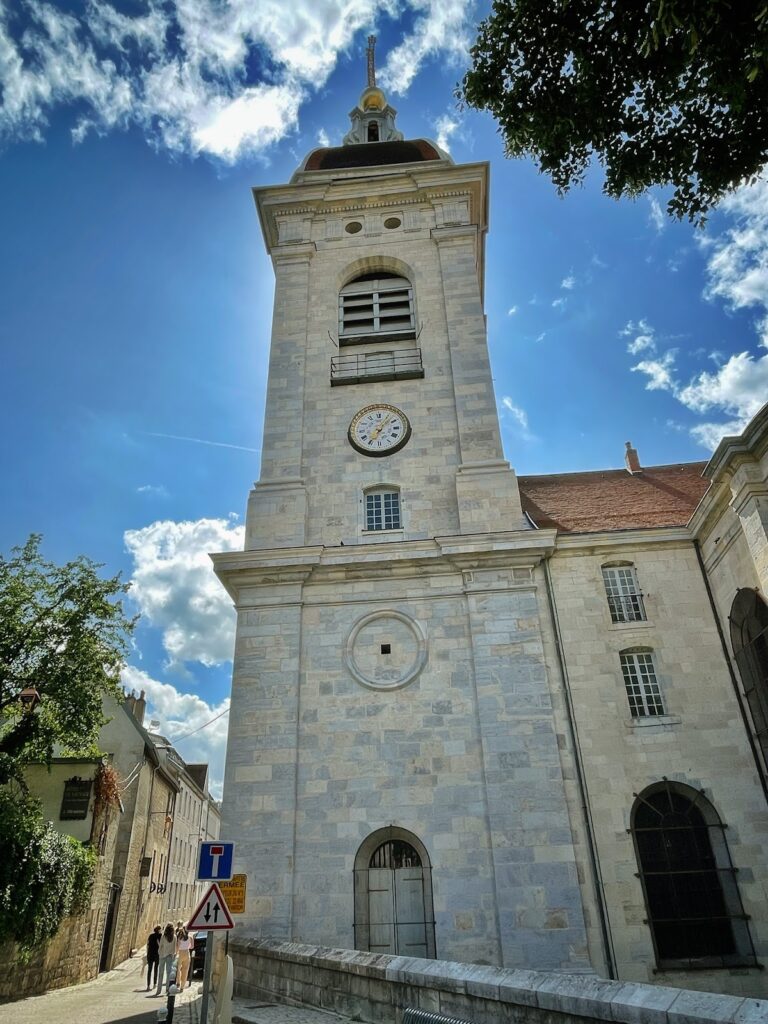
Until the French Revolution, Saint-Jean-Baptiste Church stood at the site, beside the former baptistery. The baptistery building later served as the original chapel of Sainte-Eugène, then as a cathedral canon’s residence, meaning a cleric attached to a cathedral chapter, and finally as a private home. The church went out of use in 1789 and was demolished between 1794 and 1797.
Excavation and garden
An archaeological garden was begun in June 1870, with its design by architect Alfred Ducat and landscape architect Brice Michel. It opened in 1874 and received the name Square Castan in 1898. Restoration work in 2004–2006 sought to return the garden to its nineteenth-century appearance. The ancient remains were classified as historic monuments in 1886, the garden was registered in 1945, and protection was extended to the Arcier aqueduct in 2021.
Remains
Semicircular structure
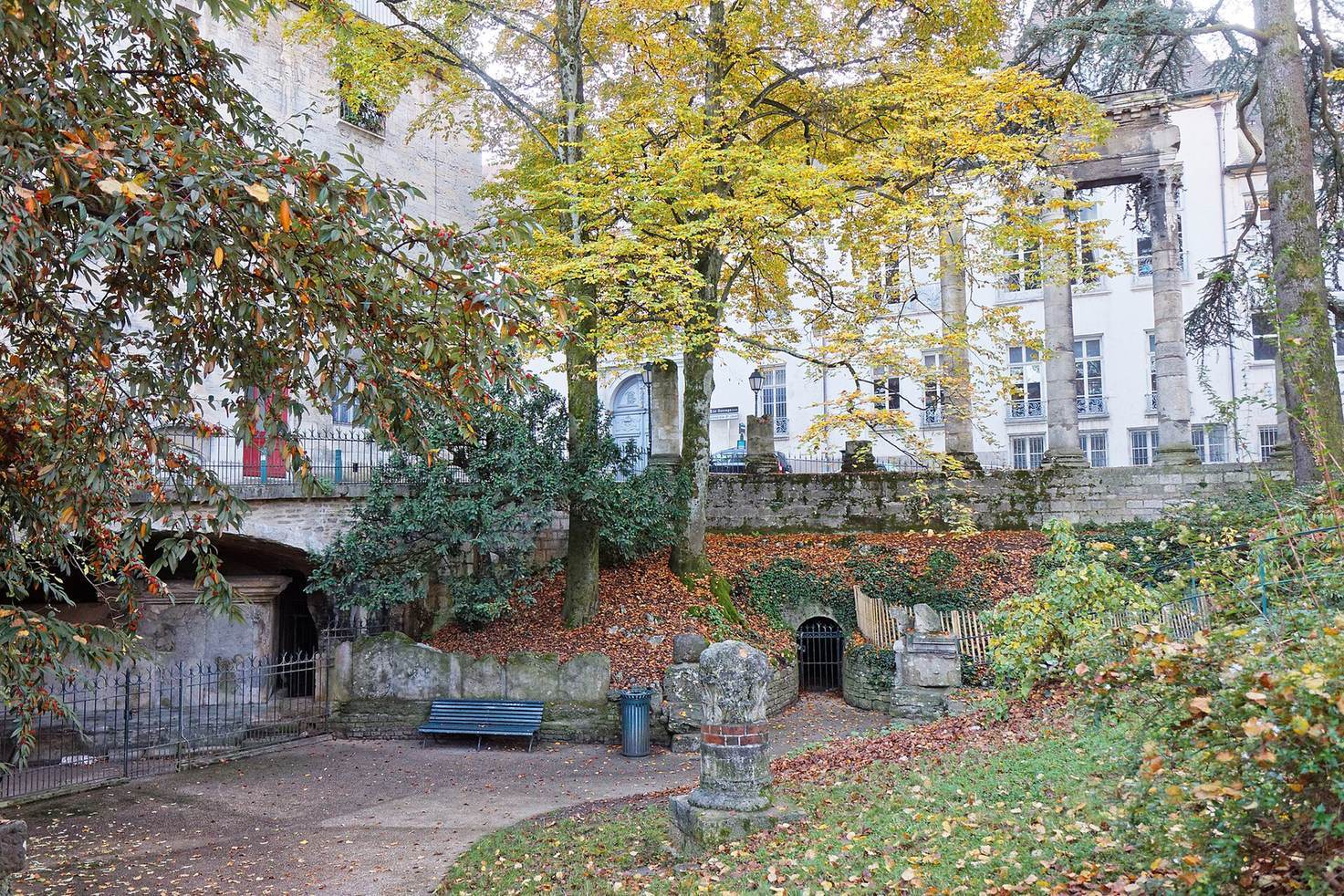
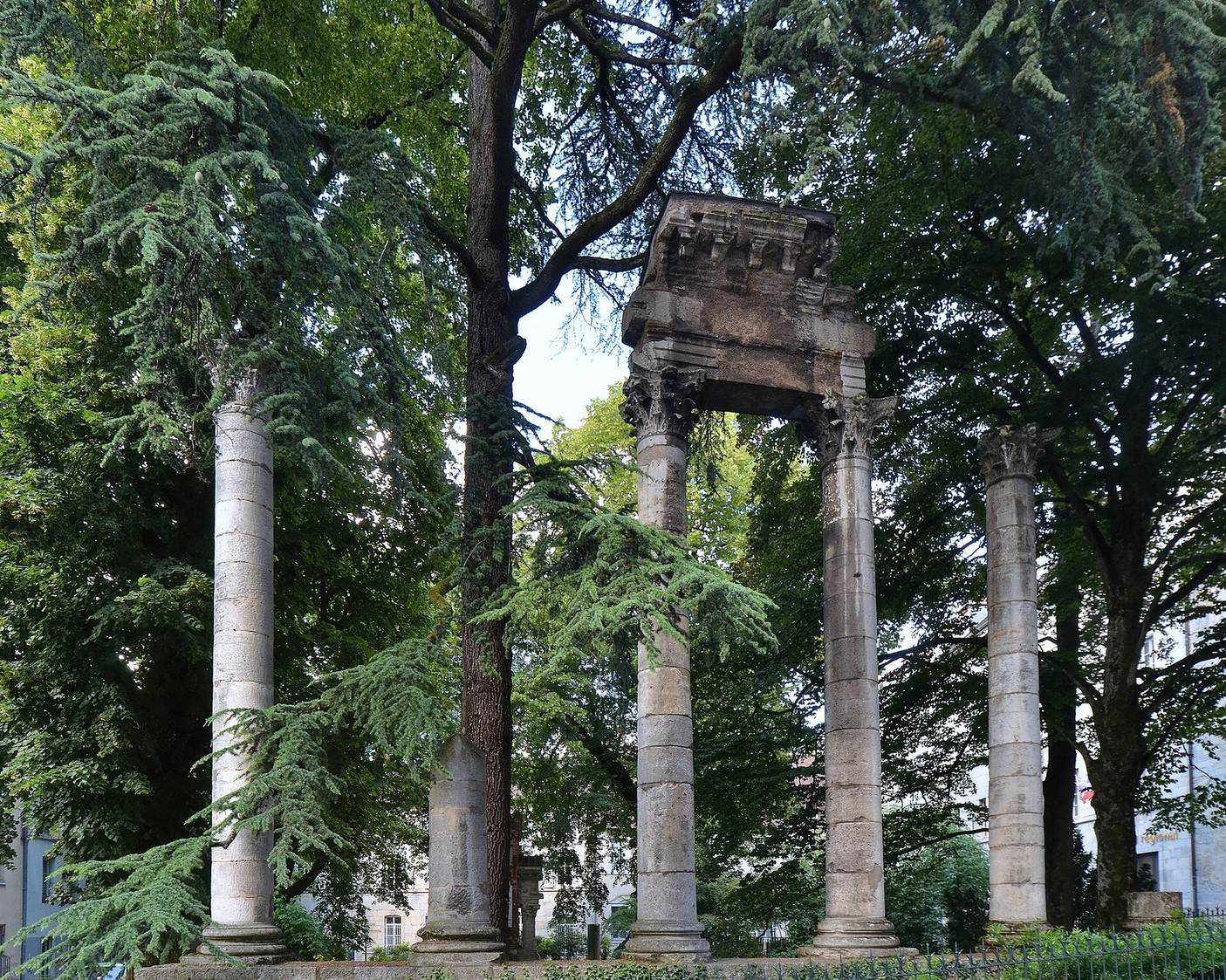
The main ancient feature is a semicircular structure with an interior diameter of nearly 54 metres. It is understood as a raised base that supported a roofed walkway lined with columns and enclosed an elevated open area, although its precise function remains uncertain. Eight Corinthian columns, a classical form with capitals commonly decorated with leafy shapes, were excavated and re-erected at the site.
Aqueduct and garden
Remains of a water-distribution basin belong to the Roman aqueduct from Arcier, about 15 kilometres away, which supplied water to Vesontio. These archaeological features stand within a garden laid out in the English landscape style.