Palacio Mutiloa: An Eighteenth-Century Baroque Palace in Pamplona
Site at a Glance
- Rating
- 4
- Popularity
- Very Low
- Country
- Spain
- Primary era
- Early Modern
- Eras represented
- Early Modern
- Civilizations
- Kingdom of Navarre, Spanish
- Site type
- Domestic
- Remains
- Elite Residence
On this page7 sections
History
Palacio Mutiloa is an eighteenth-century Baroque palace in Pamplona, Spain, begun in 1748 as the Mutiloa family’s new residence and apparently complete by mid-1749. It replaced an earlier family house on the same site.
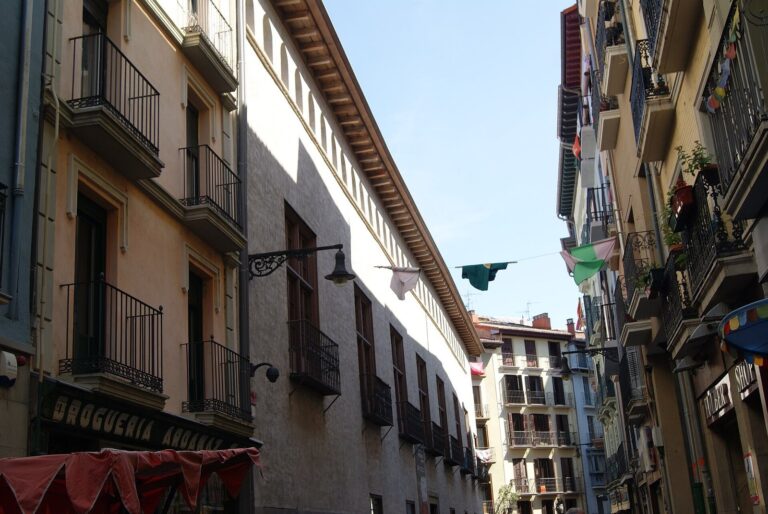
The palace stands on Calle Zapatería, once the principal street of the settlement of San Nicolás. After Pamplona’s neighborhoods were united under the Privilege of the Union, the 1423 agreement that established a single municipal framework, the street took a different name but retained its activity and importance.
Family estates and noble standing
The Mutiloa family, originally from Mutilva Alta, had held property on the site for generations. Income from its holdings helped it acquire lordships, estates, and entails, inheritance arrangements that passed property according to fixed succession rules. These included the Palace of Egüés, while marriage alliances brought further property, among it the Palace of Andueza in the Araiz Valley. In 1546, Francisco de Mutiloa y Beraiz obtained a judgment recognizing his noble status as a native of Mutilva Alta, then known as Mutiloa de Suso. He lived in San Sebastián, outside the Kingdom of Navarre, and needed formal proof of his status. His brother Juan held the family entail, whose principal house stood on the present palace site.
Vicente Ignacio and the family estates
When his father died in 1688, Vicente Ignacio inherited the family estate while still a minor. His mother, Margarita de Lodosa y Andueza, managed it until her death in July 1694. Vicente Ignacio brought together the Mutiloa, Daoiz, Erdara, Andueza, and Urnieta entails. He served as treasurer and deputy, attended the Cortes of Navarre, the kingdom’s representative assembly, and was mayor of Pamplona six times between 1693 and 1699. He also served four times as a municipal council member. Several of his descendants later held municipal offices.
After Vicente Ignacio died in 1726, his wife, Manuela Salcedo y Beaumont, managed the estate until her death in 1743. Their son and heir, Vicente Pedro Mutiloa y Salcedo, then became head of the family.
Rebuilding under Vicente Pedro
Vicente Ignacio’s brother, Juan José Mutiloa y Andueza, served as a magistrate in Madrid’s royal court from 1710 to 1716. In 1730 he joined the Council of the Inquisition, which oversaw its administration, and the Council of Castile, a central governing and advisory body of the Spanish monarchy. His private business connected him to the so-called Navarrese hour, a period when Navarrese businesspeople were prominent in Madrid’s commercial and financial life. His substantial inheritance passed to his nephew Vicente Pedro, who was mayor of Pamplona eight times and a municipal council member on eleven occasions.
On 21 January 1748, Vicente Pedro engaged Manuel de Olóriz to build a new house, with the stonemason Juan Miguel de Goyeneta. The work appears to have been finished by mid-1749. The replacement house retained an older family heraldic feature, presenting the lineage as long established at a time when newly wealthy families were also seeking noble standing.
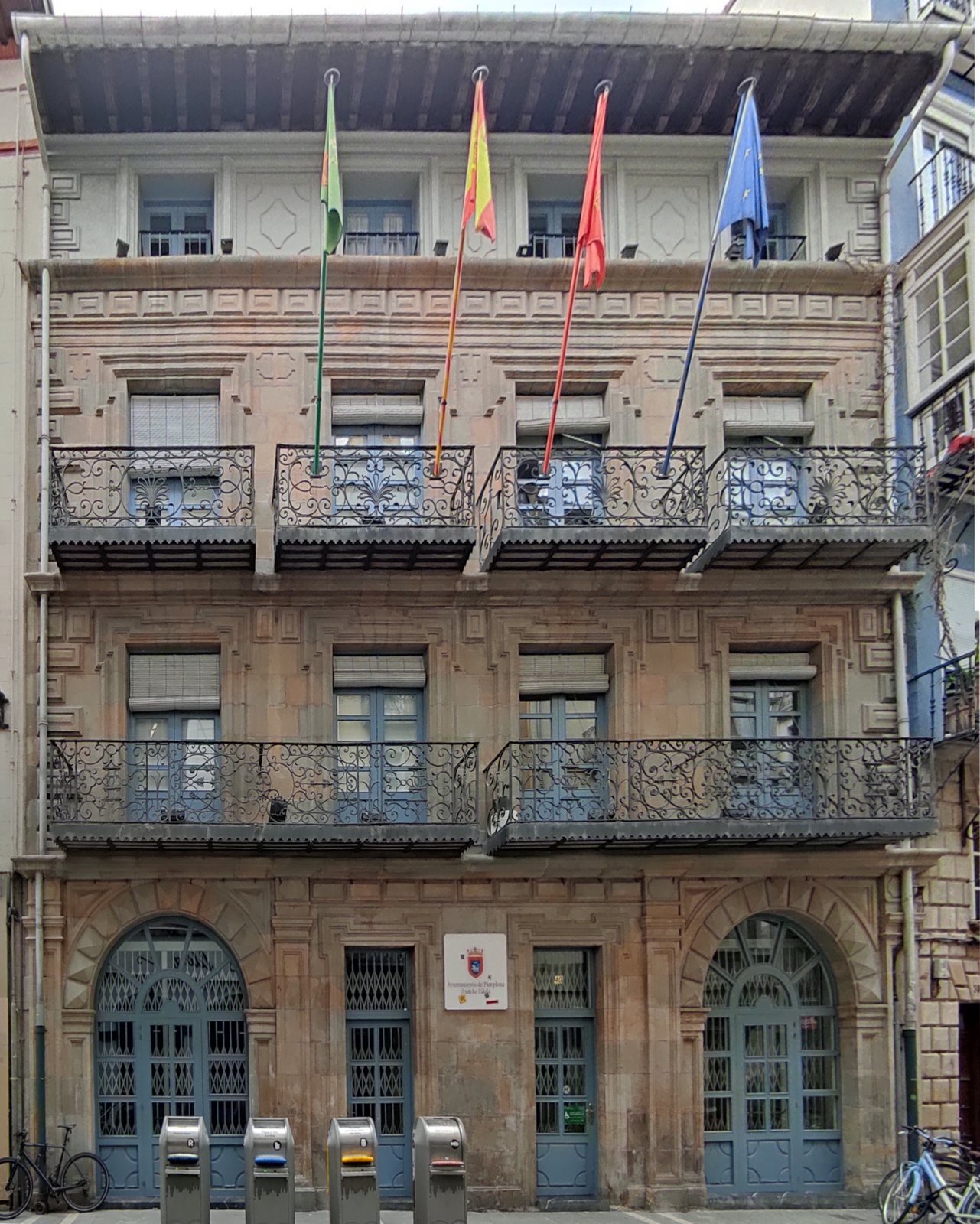
Vicente Pedro’s first marriage, in 1739, produced no surviving children. In 1754 he married Manuela Arizcun y Beaumont, and their eldest son, Manuel Vicente Mutiloa y Arizcun, inherited the family property. After Vicente Pedro’s death, his widow arranged for a third floor to be added in 1765. José Pablo Olóriz, son of Manuel, and the carpenter Miguel Antonio Olasagarre carried out the work. Manuel Vicente, later count consort of Agramonte, appears to have commissioned the palace’s stone façade. The building now houses the Social Services Area of Pamplona City Council.
Remains
Palace fabric
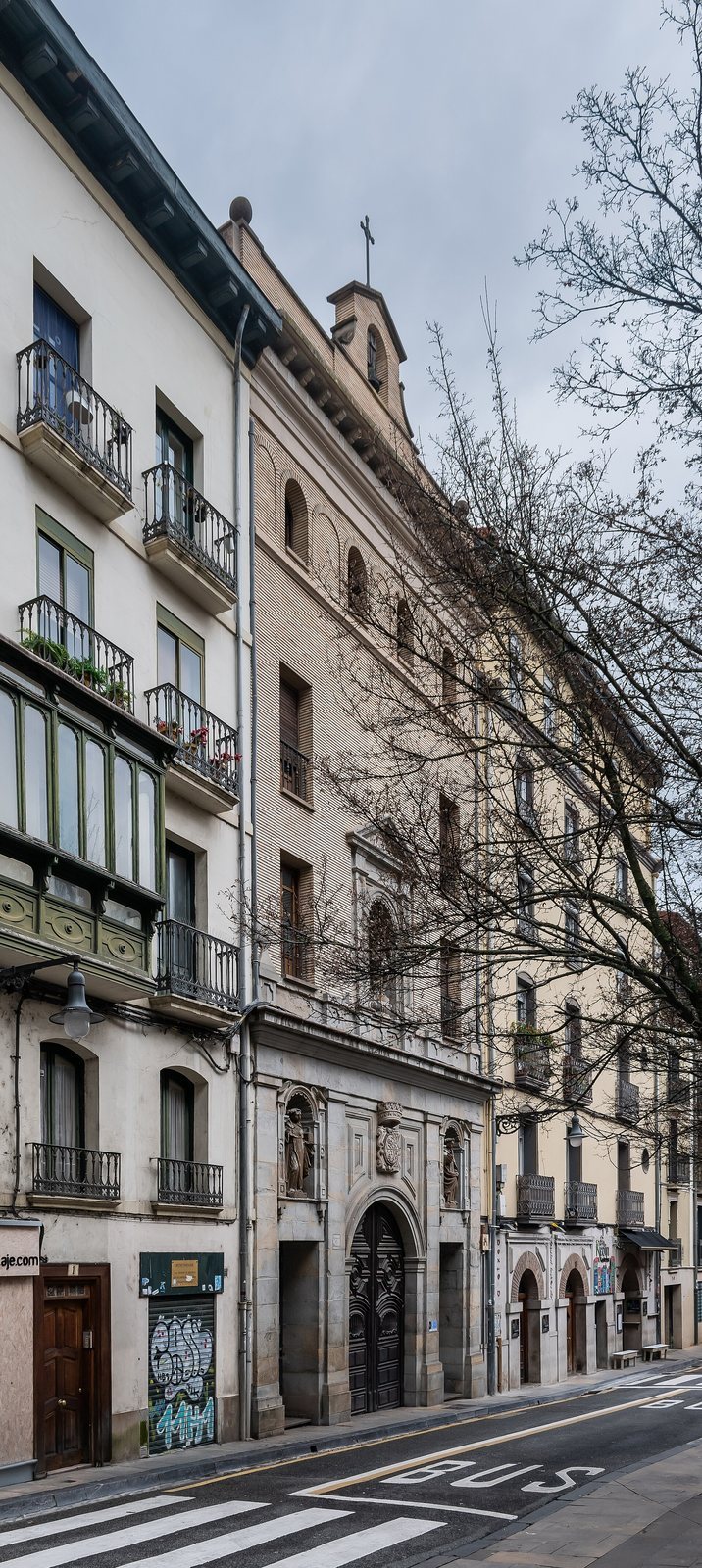
The palace’s urban form includes a stone façade on Calle Zapatería and a third floor added in 1765. The façade appears to date from the second half of the eighteenth century. At the rear, on Calle Nueva 41, the building has a coat of arms dating to the sixteenth century.
Surrounding urban fabric
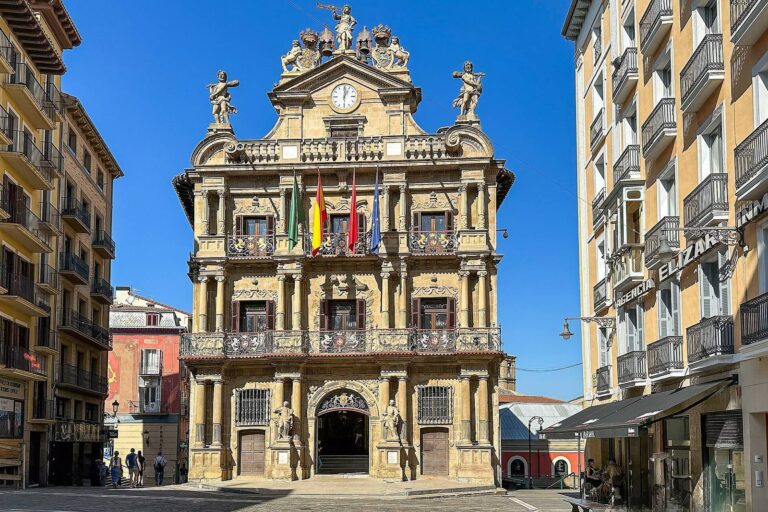
Palacio Mutiloa is close to Palacio Navarro Tafalla. The surrounding urban setting also includes the eighteenth-century palaces of Urtasun and the Marqués de la Real Defensa, also known as Guenduláin, as well as Pamplona’s city hall, whose façade from that period survives.