Rotenburg Castle: A Landgrave Residence in Hesse
Site at a Glance
- Rating
- 5
- Popularity
- Very Low
- Country
- Germany
- Primary era
- Early Modern
- Eras represented
- Medieval, Early Modern
- Civilizations
- Holy Roman Empire, Landgraviate of Hesse
- Site type
- Domestic
- Remains
- Palace
On this page7 sections
History
Foundation and Renaissance residence
Rotenburg Castle stands on the left bank of the Fulda in Rotenburg an der Fulda, Germany; its first fortified structure was built in 1470 for Landgrave Ludwig II of Lower Hesse, a territorial ruler in the German lands. A major fire destroyed that first castle in 1478, and a stone castle was built afterward. The residence became a favored summer home for the landgraves and, at times, a home for widowed landgravines. In 1540, Philip of Hesse contracted a bigamous marriage with Margarethe von der Saale there, meaning that he married her while a previous marriage remained in force.
Between 1571 and 1607, Landgrave William IV of Hesse-Kassel and his son Maurice built a new Renaissance residence. Hessian court artists Caspar van der Borcht and Wilhelm Vernuken contributed to its decoration.
Hesse-Rotenburg and later alterations
From 1627 to 1834, the castle served as the residence of the Hesse-Rotenburg line, a junior branch of the House of Hesse-Kassel. The branch governed the Rotenburger Quart, a territorial division within Hesse. During the Thirty Years’ War, the major European conflict of 1618–1648, the castle was plundered several times but not destroyed. In 1750, Landgrave Constantine of Hesse-Rotenburg had the west wing remodeled. In 1790, his son and successor, Landgrave Charles Emanuel, ordered the north wing rebuilt and the east wing demolished.
Transfer and modern uses
When the Hesse-Rotenburg line ended in 1834, the castle and the Rotenburger Quart returned to the Electorate of Hesse, a German state ruled by an elector. Court officials later lived in the castle. After Prussia annexed Hesse-Kassel in 1866, the property became Prussian. Following lengthy negotiations, it was assigned to the Hesse-Philippsthal-Barchfeld branch for use as a residence for widows.
The city of Rotenburg bought the castle and its associated outbuildings in 1932. From 1933 to 1945, some rooms housed a school for troop leaders of the Reich Labour Service, a German state labor organization active during the Nazi period. After 1945, the castle provided emergency accommodation for refugee families. It passed into state ownership in 1953, and the State Finance School of Hesse has occupied the complex since then.
Remains
Residence and wings
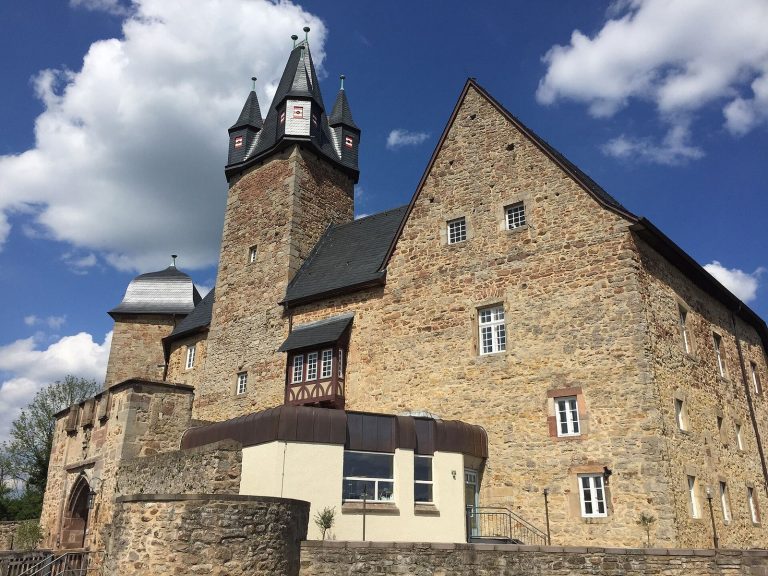
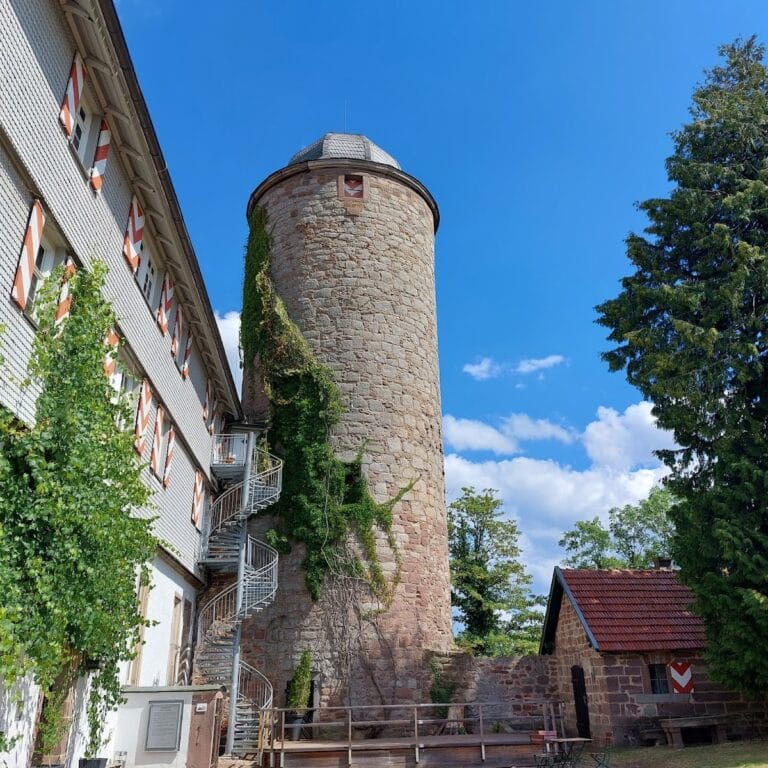
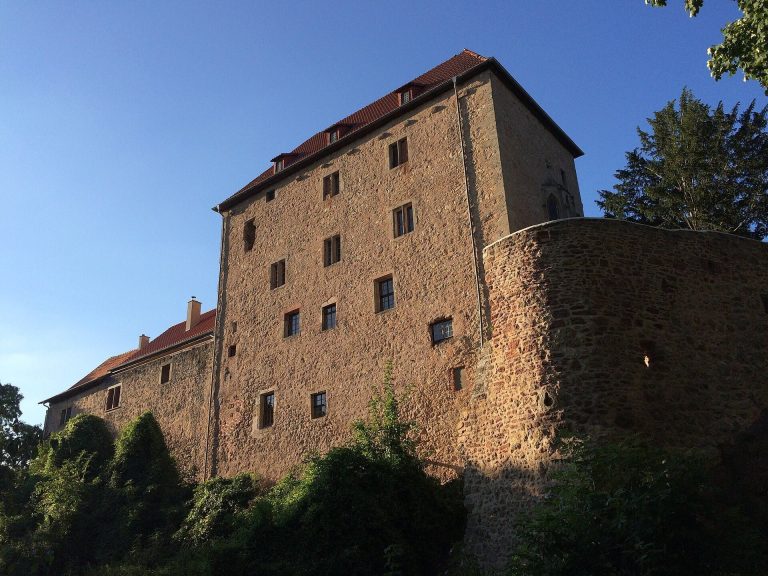
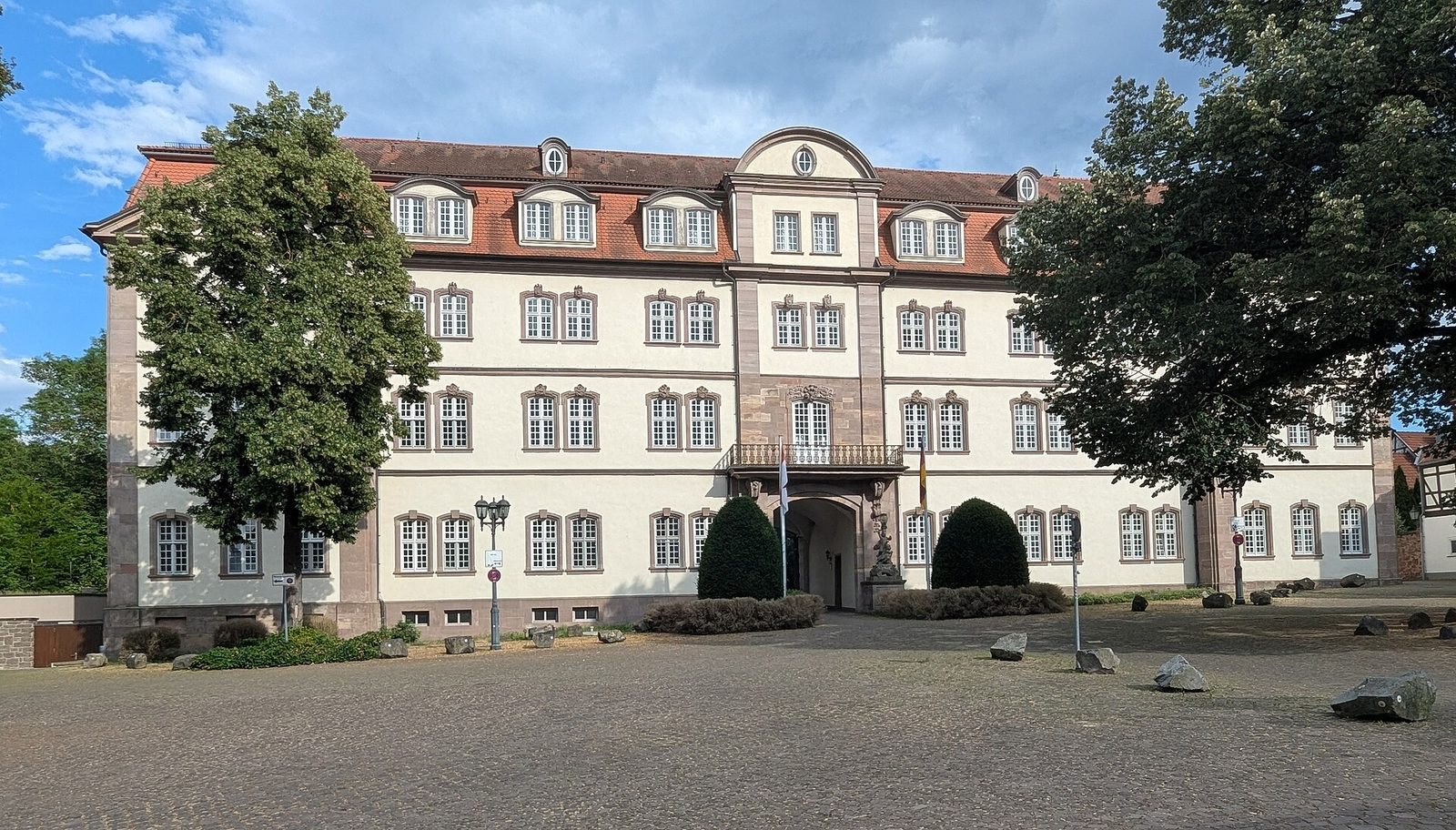
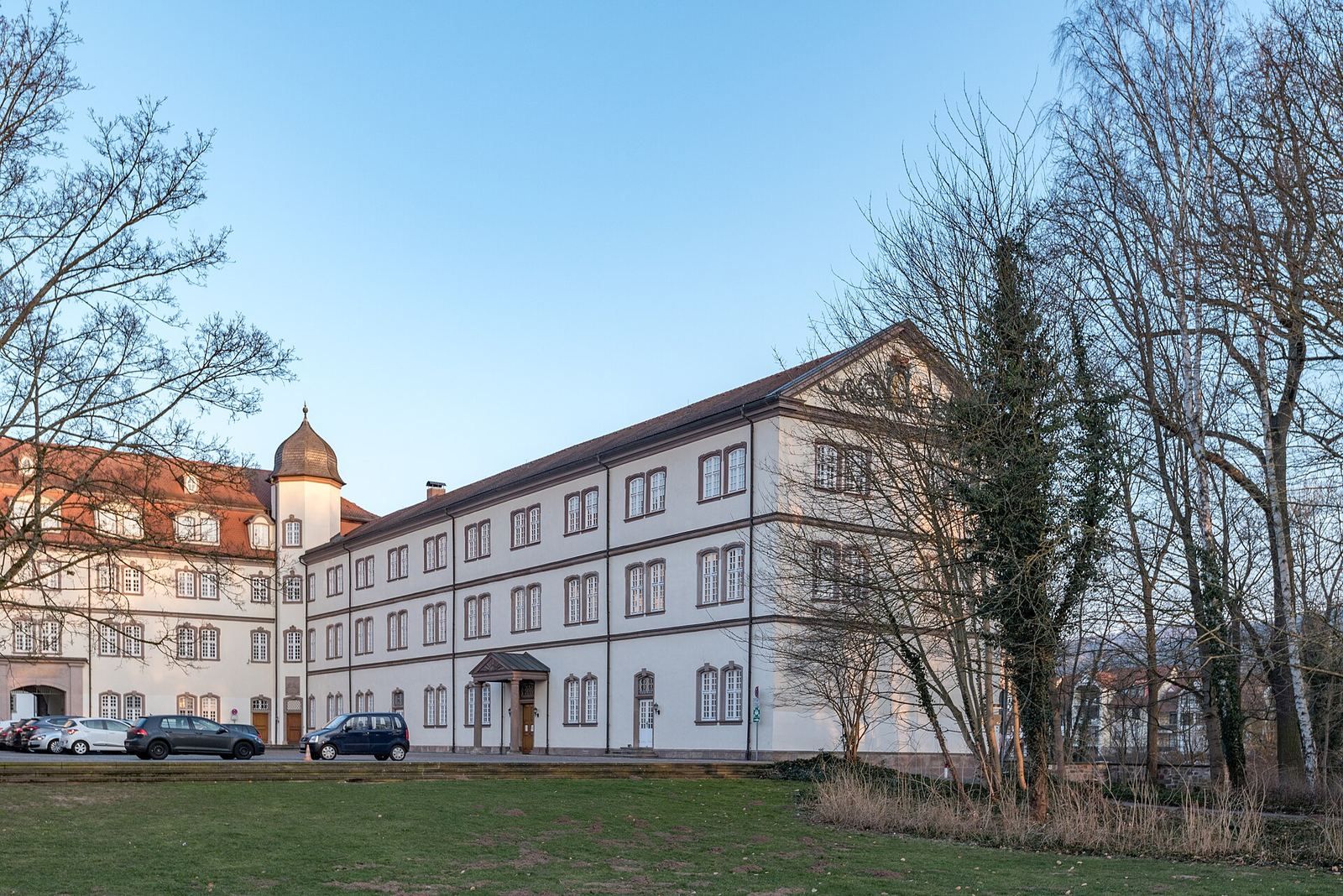
The castle developed from a two-storey, four-wing Renaissance residence with a stair tower at each corner. Its south wing survives, along with the west and north wings, leaving a three-wing complex whose courtyard opens east toward the castle park. The west wing has Baroque remodeling, while the rebuilt north wing is in the Empire style, a neoclassical style associated with the early nineteenth century. The original east wing contained a chapel arranged so its main worship space ran across the building rather than along its length.
A 1646 copper engraving by Matthäus Merian depicts the castle as a square, wholly stone-built structure. Its accompanying description compared its perimeter and height with Kassel Castle, describing Rotenburg as larger in perimeter but lower in height, and called it the foremost princely residence after Kassel.
Service buildings
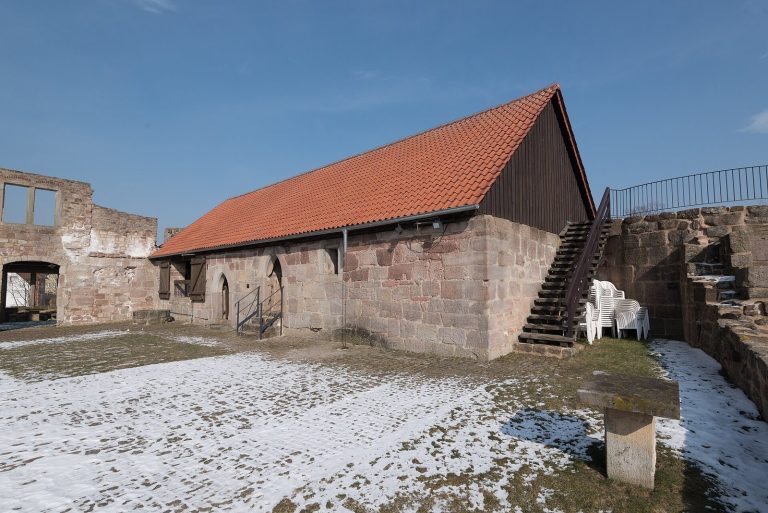
Former service buildings stand in front of the castle. The surviving stable block now forms the base of Hessen Mobil’s training and professional-development facility for road and traffic management.