Schengen Castle: A Medieval Fortress Transformed into a Manor House
Site at a Glance
- Popularity
- Medium
- Country
- Luxembourg
- Primary era
- Modern
- Eras represented
- Medieval, Modern
- Civilizations
- French, Holy Roman Empire
- Site type
- Domestic
- Remains
- Elite Residence
On this page11 sections
History
Medieval origins
Schengen Castle is a medieval fortress in Luxembourg, protected by water and first mentioned in writing on 5 May 1350. Its exact foundation date is unknown. The castle changed hands several times before the industrialist Jean-Nicolas Collart acquired it in 1793.
The Collart period
After Collart took ownership, most of the medieval complex was demolished and a residential manor replaced it. Victor Hugo, the French writer and artist, stayed with the Collart family and sketched the old tower on 13 September 1871.
Later uses and protection
The Sisters of Saint Elizabeth took over the castle in 1939, using it as a holiday centre, conference venue, rest home, and residence for older people. Hotel and conference-centre use began in April 2010. Goeres operated a hotel there until 2014, after which the buildings stood vacant. Regus acquired the property in 2016. The surviving tower received separate heritage protection before the castle and park were classified as Luxembourg national monuments in 2018.
Remains
The property brings together a residential manor, the surviving tower of the medieval castle, surrounding buildings, and a formal garden. At the time of its 2016 sale, the grounds covered 1.3 hectares and the property contained 5,000 square metres of residential floor space. Meeting rooms in the castle and surrounding buildings could accommodate up to 100 conference participants.
Buildings
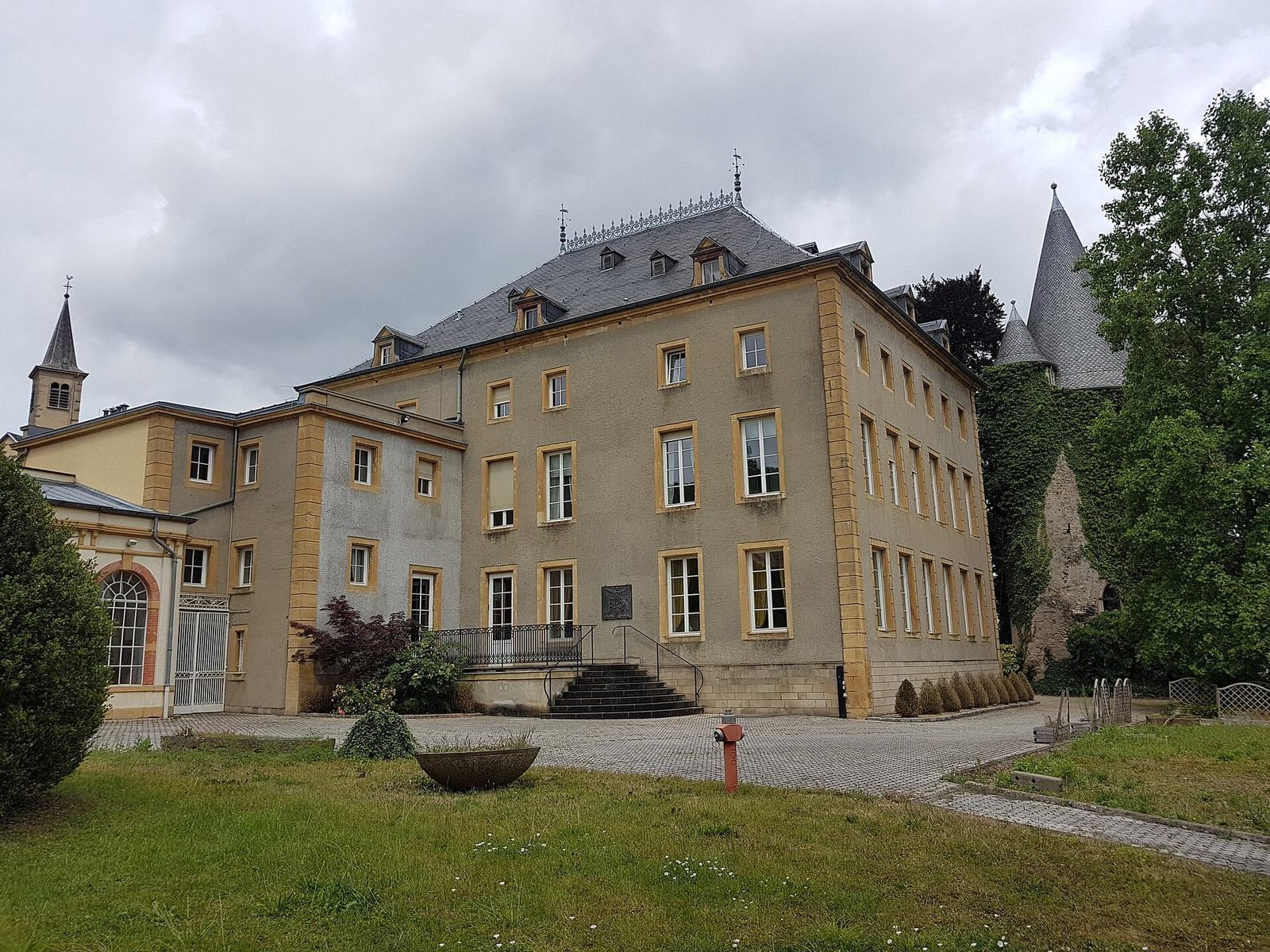
Manor house
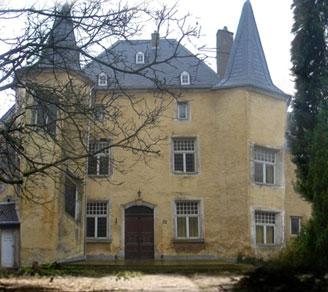
Built in 1812 largely from materials taken from the earlier complex, the present residential building is more accurately described as a manor house than a castle. Its façade has three symmetrical rows of nine windows, with additional windows at an intermediate level. The initials “JNC,” taken from Jean-Nicolas Collart’s name, appear on the façade, whose ordered arrangement gives the building a castle-like appearance.
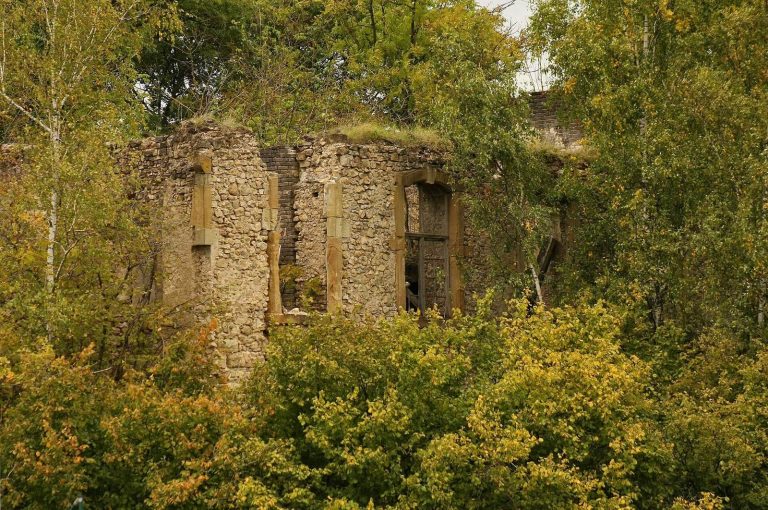
Medieval tower
The medieval castle had four massive round towers. Only the central tower survives.
Riverbank and garden
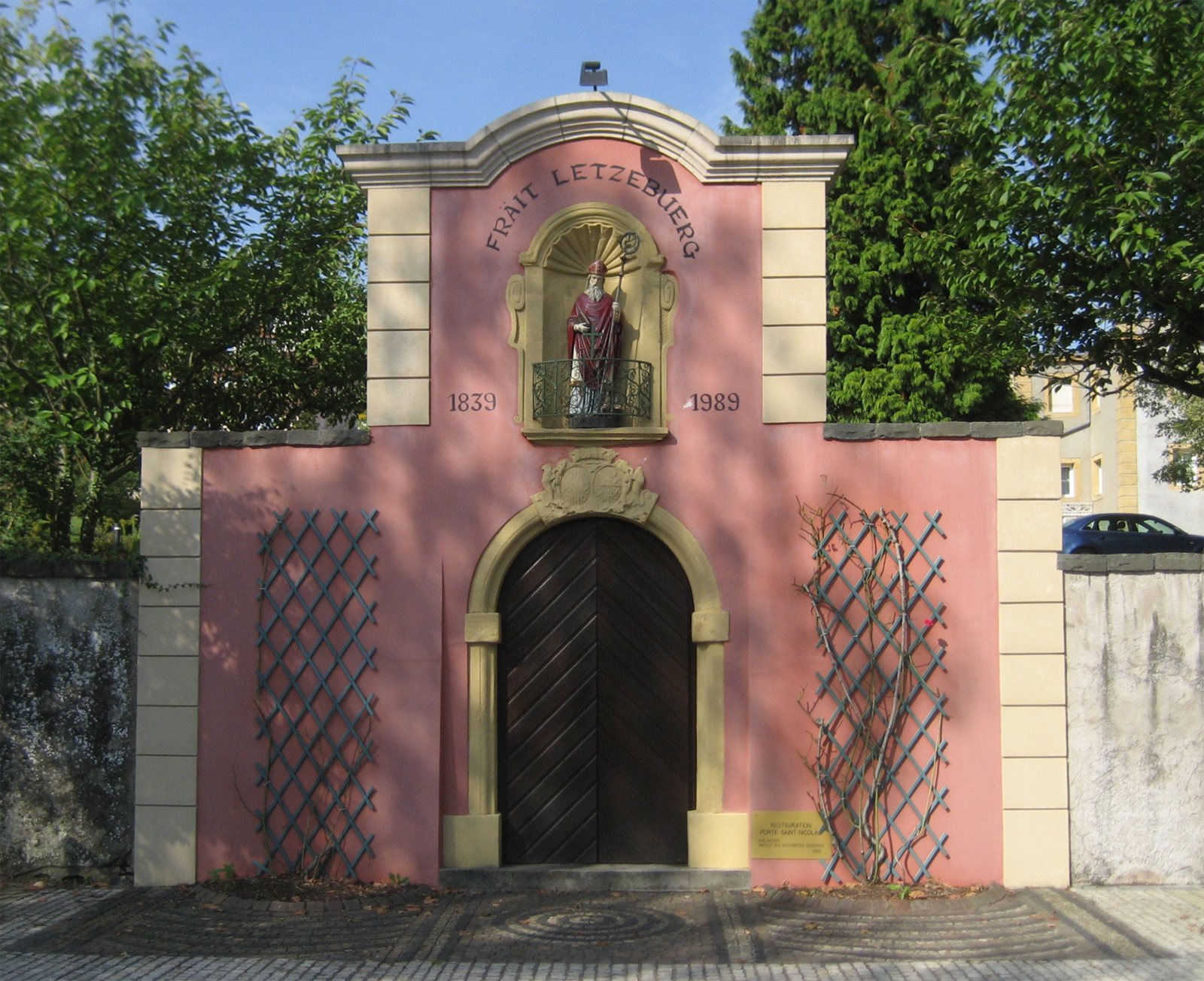
Riverbank exit
An exit leading toward the Moselle riverbank is first recorded in 1451. It bears a statue of Saint Nicholas, traditionally associated with protecting fishermen and sailors, as well as the castle’s coats of arms.
Baroque garden
The castle garden follows the formal, highly ordered style associated with the Baroque period. It forms part of the Gardens without Borders project.