Broughton House: Georgian Town House and Museum of Edward Atkinson Hornel
Site at a Glance
- Popularity
- Medium
- Country
- United Kingdom
- Primary era
- Early Modern
- Eras represented
- Early Modern, Modern
- Civilizations
- British
- Site type
- Domestic
- Remains
- Elite Residence
On this page8 sections
History
Origins and early owners
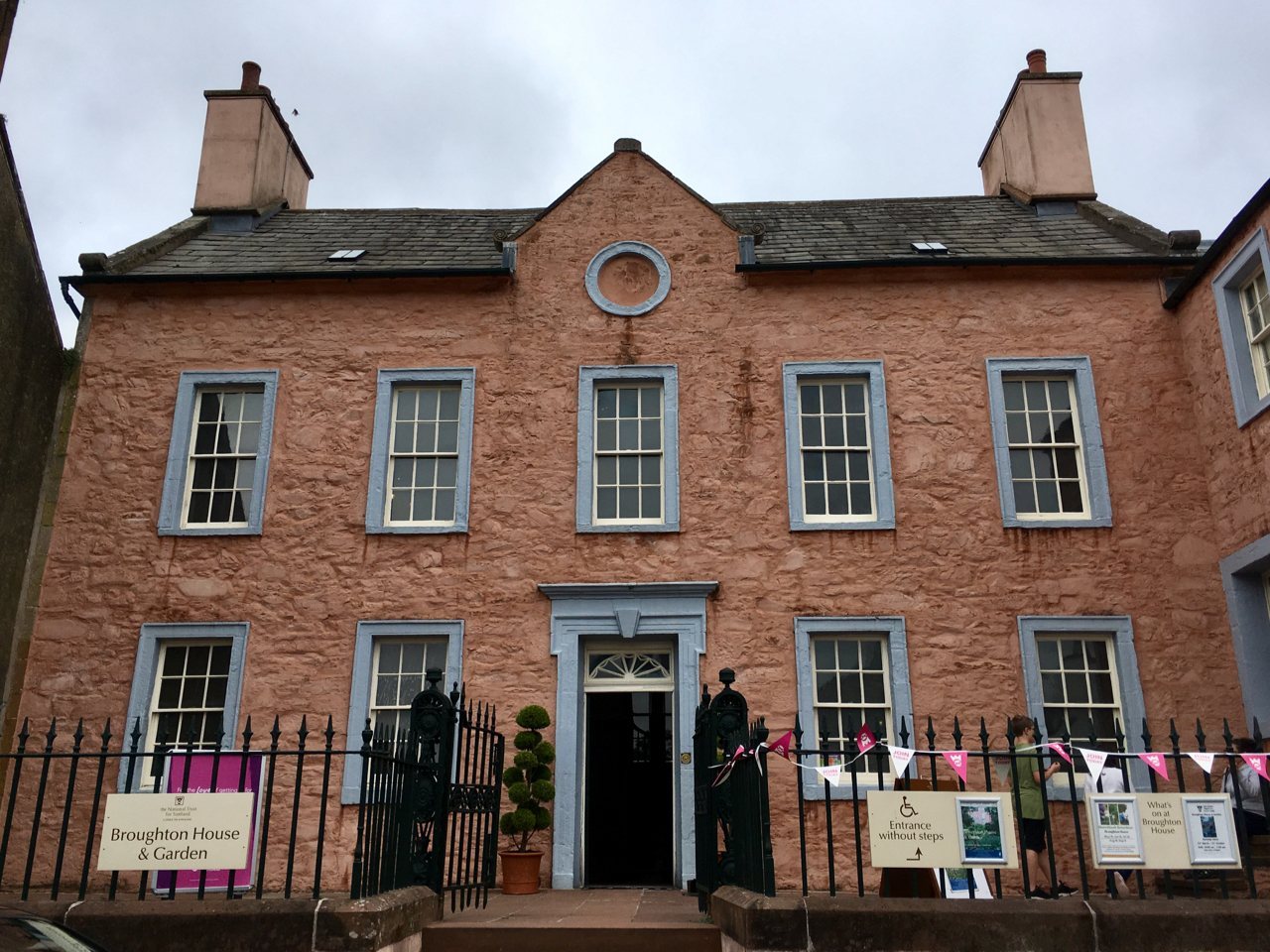
Broughton House is a Georgian town house in Kirkcudbright, Scotland, United Kingdom, formed in 1740 when two houses built there in 1734 were remodelled as one. It later became the home and working place of artist Edward Atkinson Hornel, and is maintained as a museum of his life and work.
In 1740, Alexander Murray of Broughton bought the houses. Murray was Provost, the chief civic officer of a Scottish burgh, and a Member of Parliament representing a constituency in the Parliament of Great Britain. He had the two properties made into one residence, which took its present name. After his death in 1751, his son James inherited the house. The family sold it in 1756, and later owners included the 5th Earl of Selkirk.
Hornel’s home and studio
Hornel, who grew up in Kirkcudbright, bought the house in 1901 for £650. He was associated with the Glasgow Boys, a group of Scottish artists active in the late 19th century who helped bring newer approaches to painting. Money from paintings he made during a stay of more than a year in Japan helped fund the purchase; about 30 of those works had been exhibited in Glasgow in 1895. Hornel lived there with his sister Elizabeth, known as Tizzy, until his death in 1933. He remodelled the house and asked his friend, Glasgow architect John Keppie, to design a studio. Keppie designed the gallery in 1910. Hornel also travelled in the Far East and collected rare books.
Preservation as a museum
In his will, Hornel asked that the house be preserved as a public art gallery for people in the Stewartry and its visitors. His sister continued living there until her death in 1950. The Broughton House Trust managed the property afterward, and it passed into the care of the National Trust for Scotland in 1997. Broughton House received Category A listing, Scotland’s highest category for listed buildings, in 1971. Its garden entered the Inventory of Gardens and Designed Landscapes in Scotland, which records important designed landscapes, in 1987.
Remains
House and studio
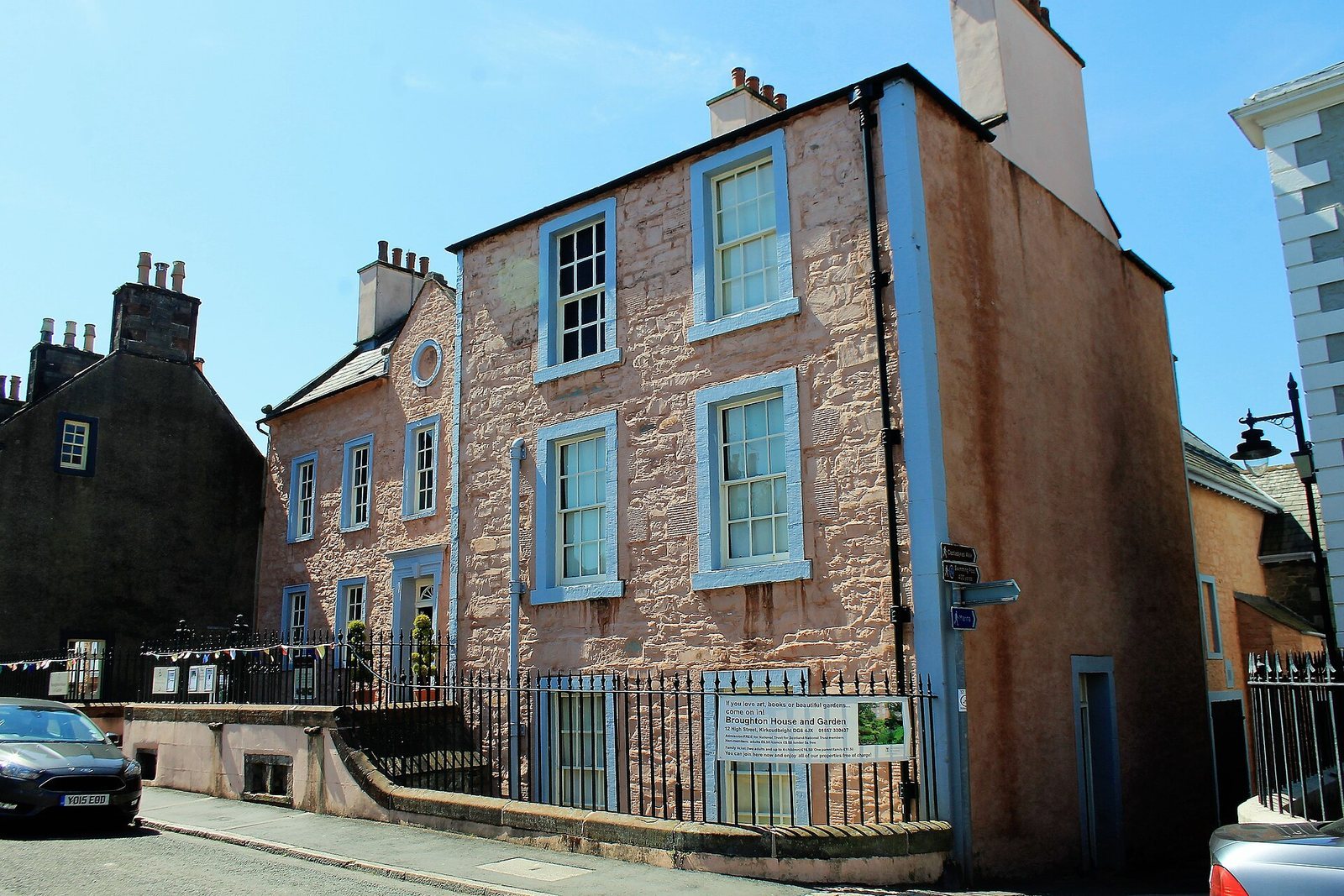
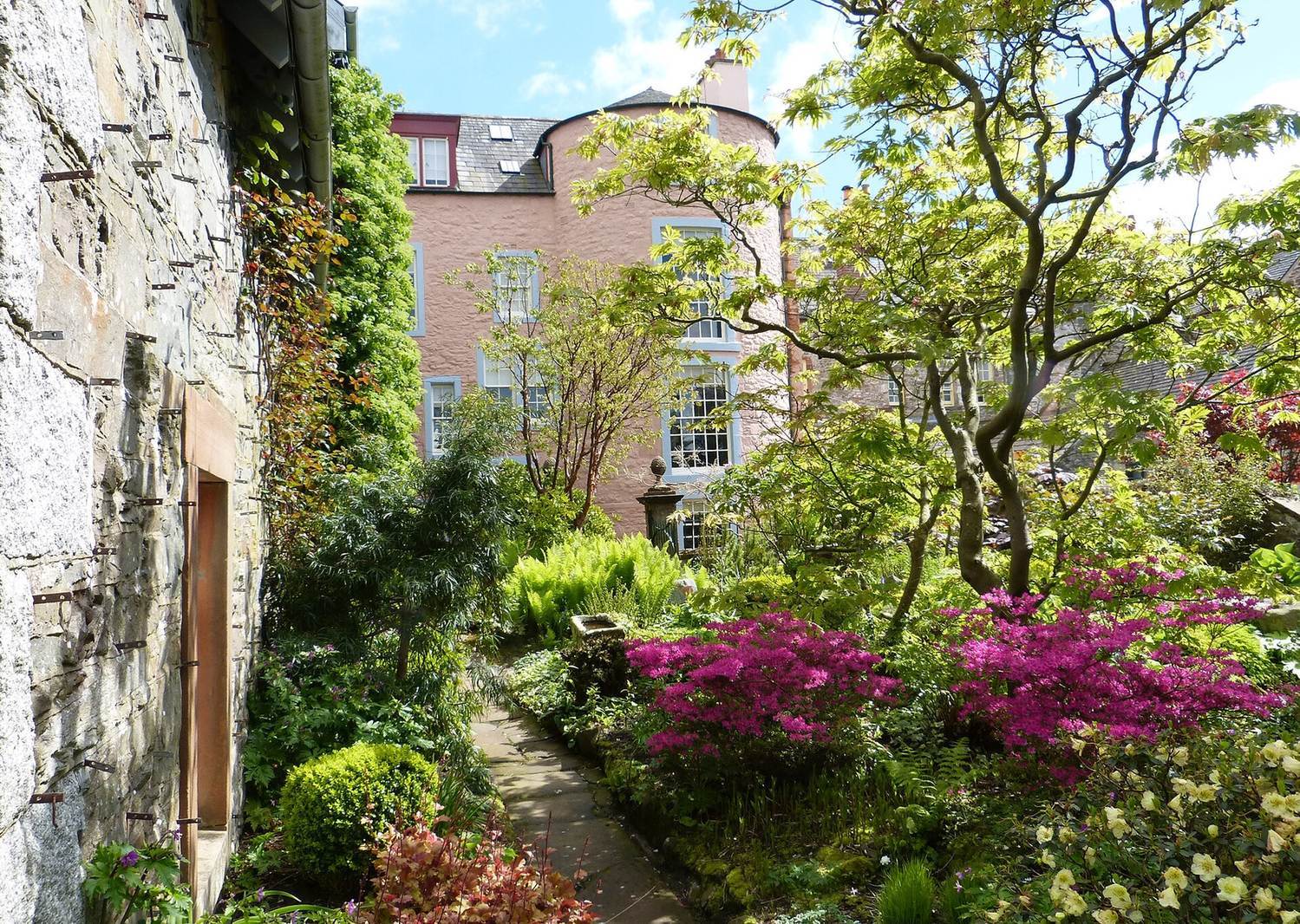
The Georgian house stands on High Street and is built into a slope, so its east-facing front has two storeys while the rear has three. The front is five window bays across, with rubble-stone walls, contrasting surrounds around the openings, and twelve-pane windows. Its central doorway has a horizontal window above it, a decorative band, and a projecting cornice. A two-storey wing extends on the right and a longer wing on the left. A curved, projecting section of four storeys was added on the right in the mid-19th century; an enclosing cast-iron fence dates from the early 19th century. The studio is kept to resemble its appearance when Hornel worked there. In the gallery, a horizontal frieze imitates sculptures from the Parthenon in Athens, known as the Elgin Marbles.
Interiors and collections
The house contains period furniture and works by Hornel and his contemporaries. Its reference library holds about 15,000 books, including 2,500 works by or about Robert Burns, the influential 18th-century Scottish poet. Hornel’s archive there includes newspaper clippings, letters, and other material.
Garden
Hornel and his sister laid out the garden, which covers about two acres behind the house and reaches the River Dee. Its Japanese style includes a rockery and a pond crossed by stepping stones. Closer to the river, box hedges divide a series of garden beds. The grounds also contain sundials dating from the 17th and 18th centuries, along with carved stone gateposts designed in a late-17th-century style and topped with pineapple sculptures.