Höfe: A Probable Early Medieval Castle in Germany
Site at a Glance
- Popularity
- Very Low
- Country
- Germany
- Primary era
- Medieval
- Eras represented
- Medieval
- Civilizations
- Carolingian
- Site type
- Military
- Remains
- Castle
On this page7 sections
History
Carolingian origins
Höfe is a former spur castle, built on projecting high ground, in Germany, about 1.5 km south of Dreihausen and west of Roßberg. It probably began as a castle during the eighth or ninth century, under the Carolingians, the Frankish ruling dynasty prominent from the eighth century. Ceramic finds show that people lived there during this period, but do not establish when construction began.
Possible royal connection and decline
Höfe’s status as a royal palace remains uncertain. Royal property was situated around Ebsdorf, and the castle may have belonged to that estate. A possible connection has been proposed with King Henry IV’s visits to Ebsdorf in 1054, 1057, and 1066. Henry was a German king of the Salian dynasty, a later line of German kings and emperors, and subsequently became Holy Roman Emperor.
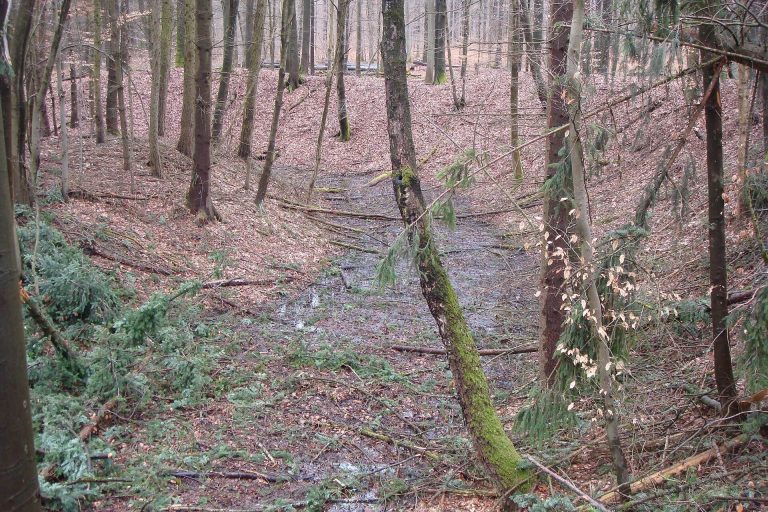
The castle eventually fell largely into ruin. Construction of a road for hauling timber damaged part of the lower castle.
Remains
Enclosure and layout
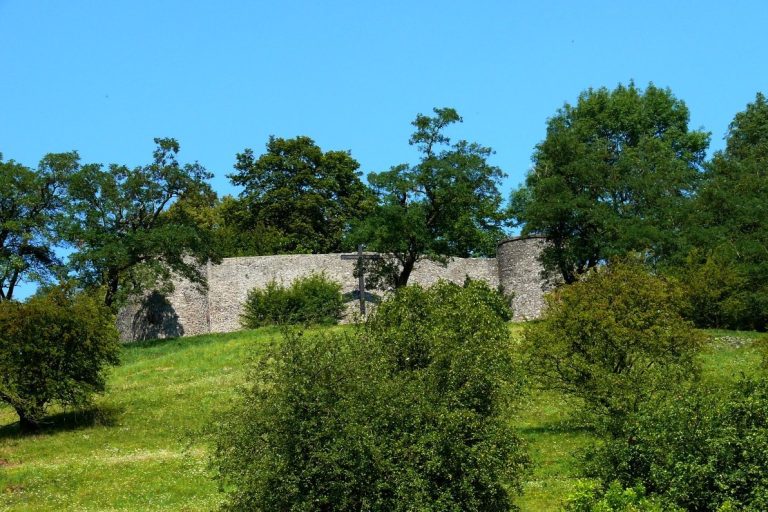
The remains occupy a high plateau that descends gently from west to east. The enclosed complex covered about two hectares, with a lower castle of approximately 1.25 hectares and an upper castle of about 0.75 hectares. A defensive ring wall enclosed the site. Steep slopes protected its northern and eastern sides, while a ditch defended the west and south. The original entrance passed through a gate in the northern wall, and access to the upper castle was through the lower one.
Upper-castle buildings
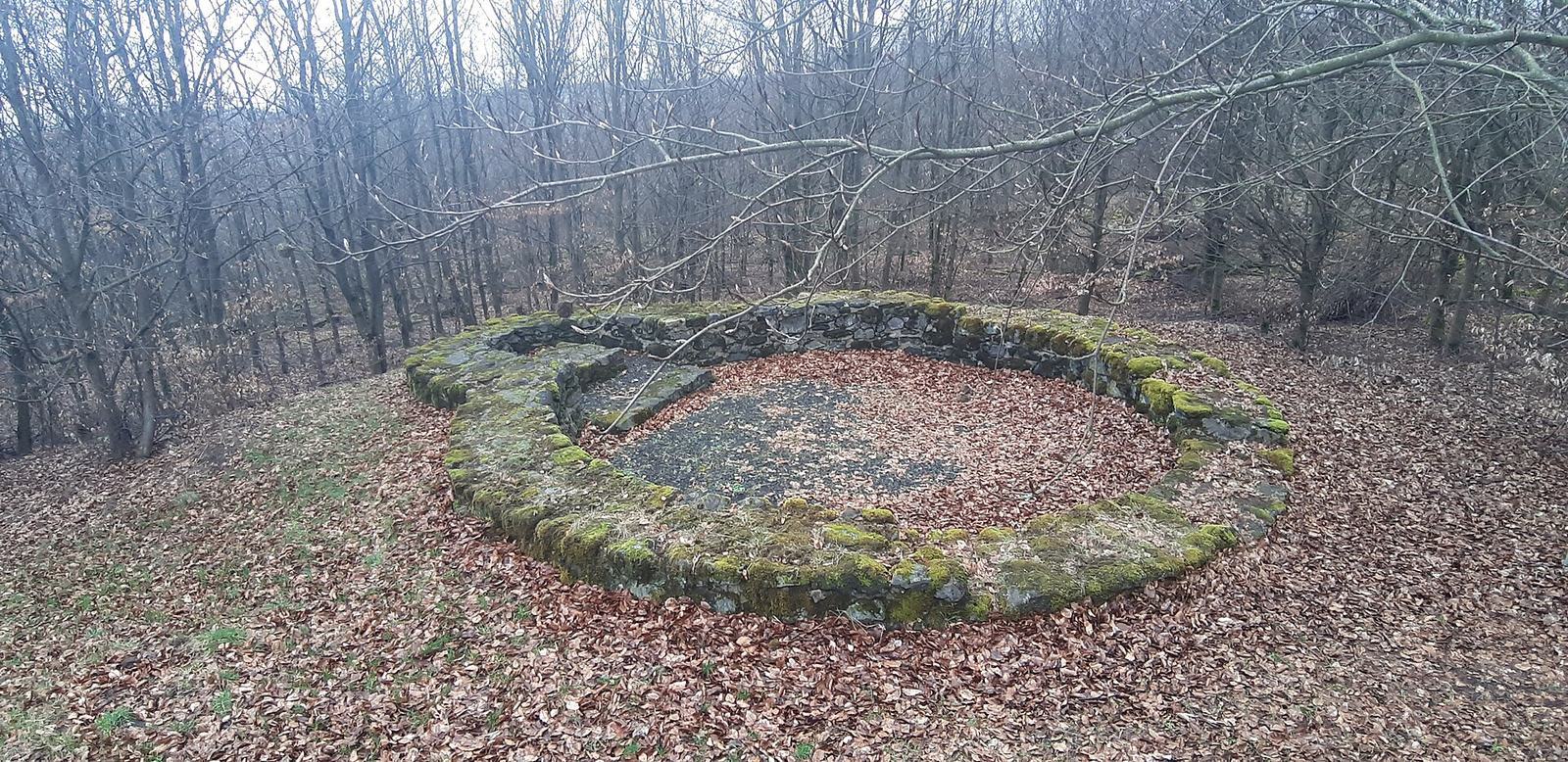
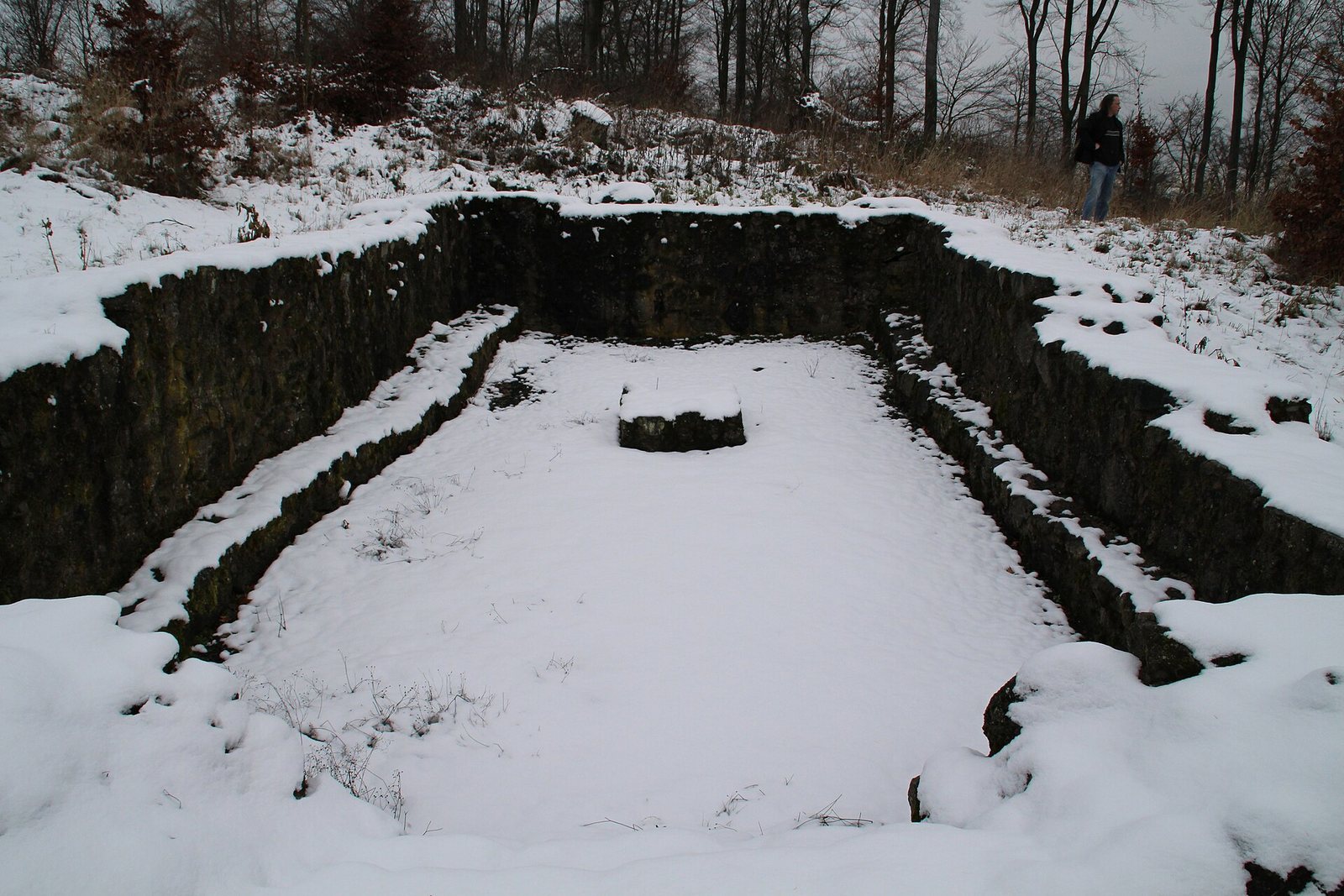
Several buildings stood in the upper castle. They included a stone house measuring 9.8 by 4.8 metres and a round church about six metres across, with a projecting apse, or end of the building, on its northern side. Elaborate painted decoration and finds of a small piece of porphyry and green marble from Laconia point to occupation by a small privileged group.
Buildings beyond the wall
Geophysical measurements indicate building activity on the plateau outside the ring wall.