Gunnebo House: An Eighteenth-Century Summer Residence in Sweden
Site at a Glance
- Popularity
- High
- Country
- Sweden
- Primary era
- Early Modern
- Eras represented
- Early Modern
- Civilizations
- Swedish
- Site type
- Domestic
- Remains
- Elite Residence
On this page7 sections
History
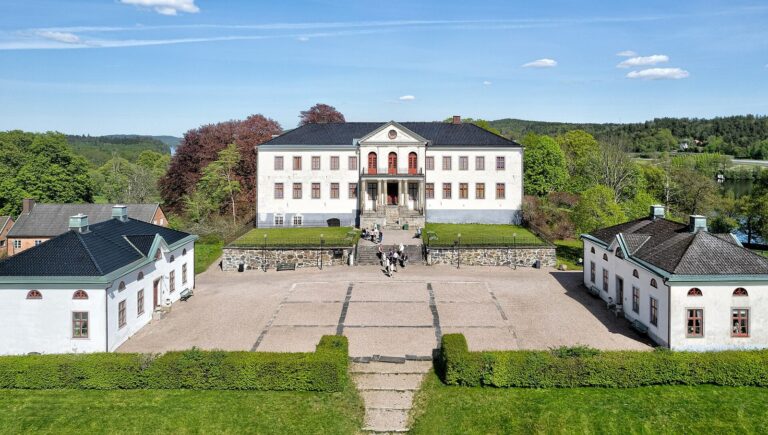
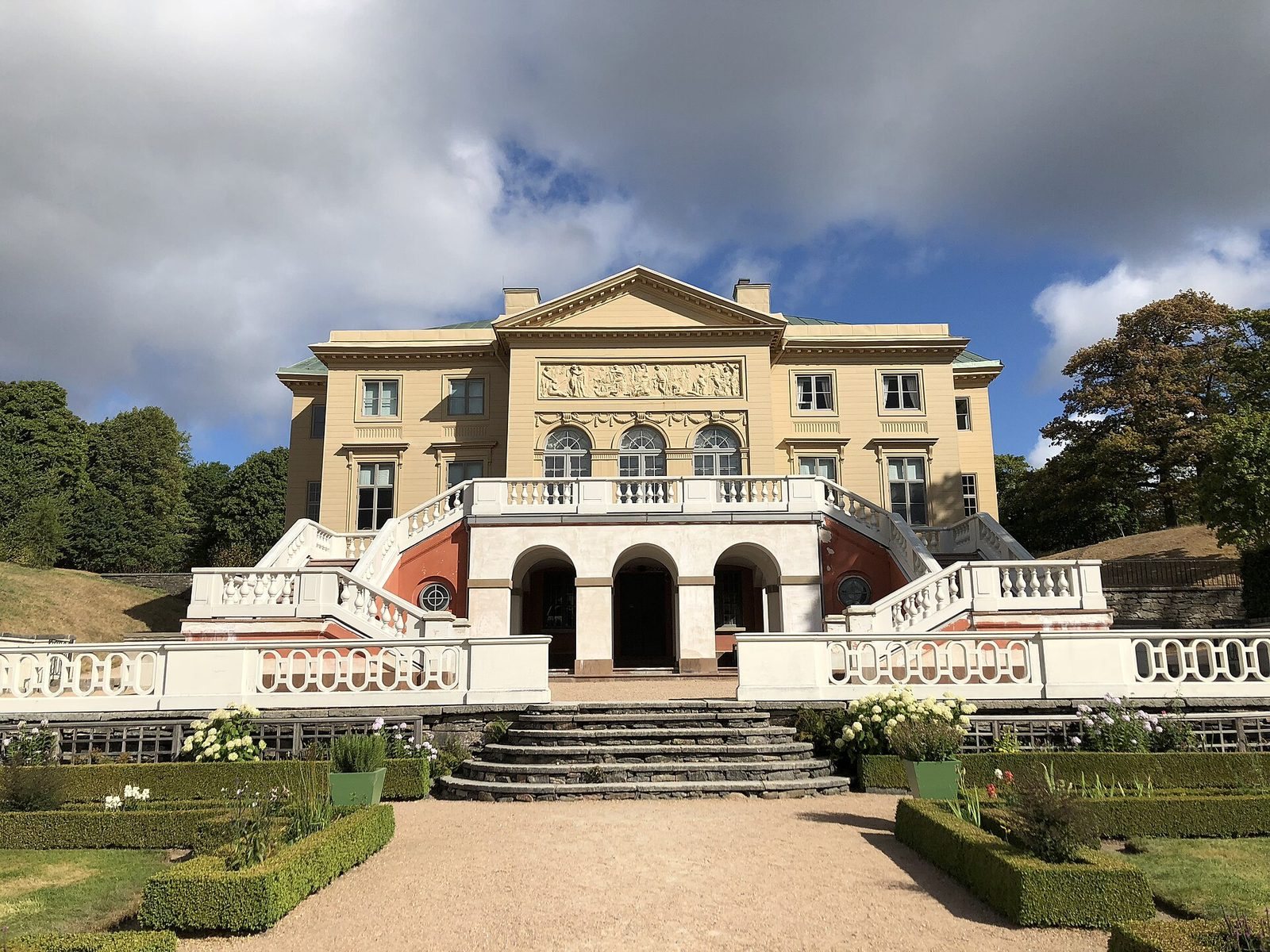
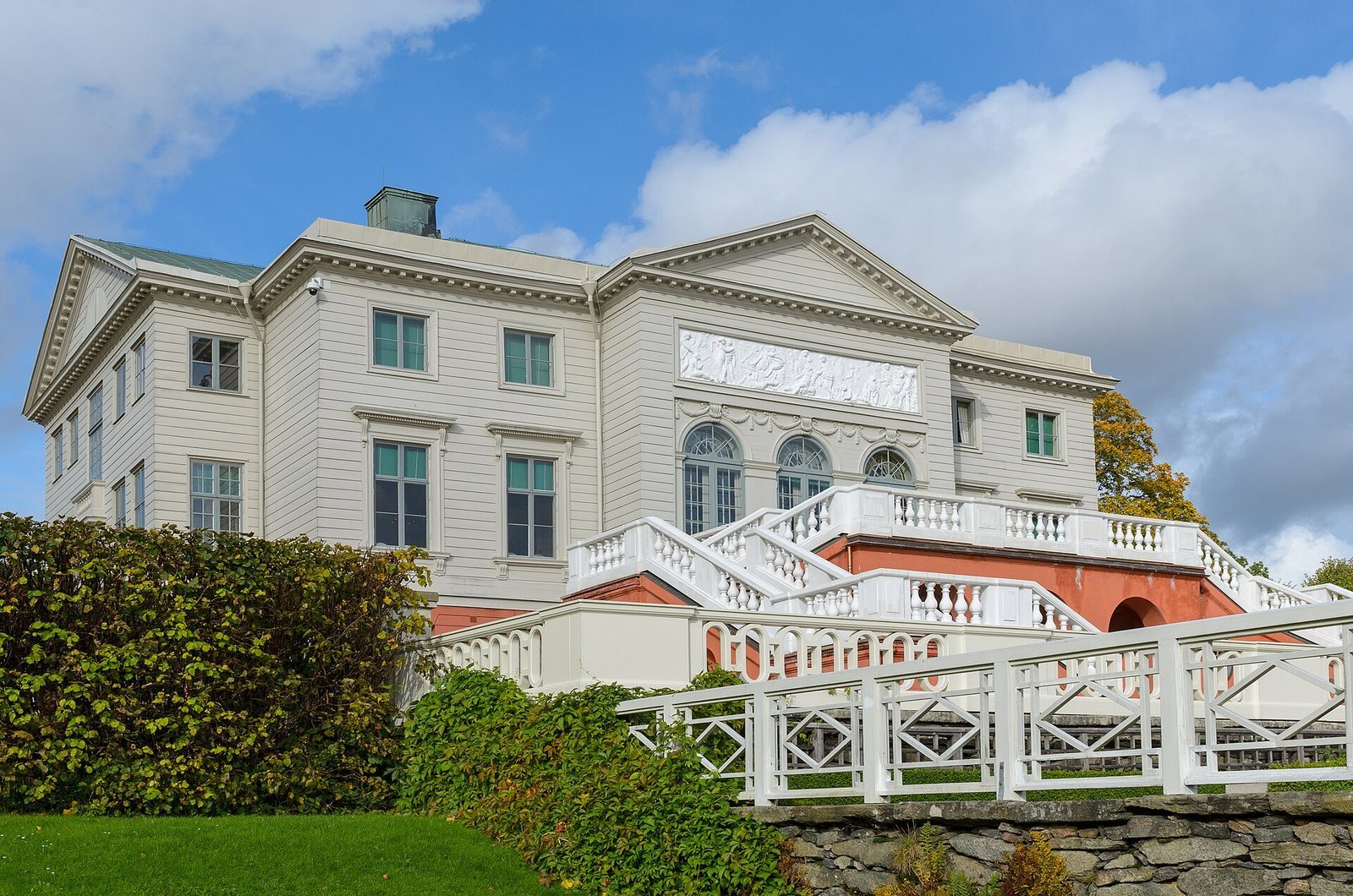
Gunnebo House is a wooden Neoclassical residence, a style drawing on classical Greek and Roman forms, in northeastern Mölndal Municipality, southwestern Sweden, between Mölndal and Pixbo. Swedish merchant John Hall commissioned it as a summer home for his non-aristocratic family. Planned and begun in 1784, the house was largely complete around 1796.
From farm to summer residence
Gunnebo is first mentioned in 1397 as a farm belonging to Fässberg parish. The estate included a mill by the late fourteenth century and later passed to royal or church owners. On 28 September 1778, Hall bought the property, including a crown-tax farmstead, meaning a farm that paid taxes to the Crown. Its previous owner, postal inspector J. U. af Dittmer, had acquired it in 1774 and was related to Hall by marriage.
Gunnebo was sometimes called a castle, although Hall had built it as a summer residence for a family outside the nobility. Its past under royal ownership was one reason for the name, and by the late nineteenth century large Swedish manor houses were commonly called castles. The Hall family received visits from King Gustav III of Sweden, Marie Thérèse of France, and Venezuelan revolutionary Francisco de Miranda.
Changing ownership
After Hall died in 1802, his son John Hall Junior inherited the estate. The family trading house failed in 1807 during the recession associated with the Napoleonic Wars, a series of early nineteenth-century European conflicts involving Napoleonic France. The family relinquished Gunnebo in the early nineteenth century. By 1832, the estate belonged to Johan Carlsson, a wealthy butcher, who had bought it for 10,000 Swedish thalers, a currency then used in Sweden. Six years later, he sold it for 16,666 thalers to John Barclay and his wife, Martina.
After Barclay’s death, his son-in-law James Alexander Gibson managed the estate. Pharmacist Arthur Cavalli later owned it. In 1888, Wilhelm Denninghoff bought Gunnebo for 90,000 kronor and gave it to his daughter Hilda and her husband, Baron Carl Sparre, as a wedding present. The Sparre family retained the estate into the mid-twentieth century. Hilda, its last private owner, died in 1948.
Municipal stewardship
Mölndal Municipality acquired Gunnebo in 1949 and renovated it through 1952, using the Hall family’s furnishings inventory and Carlberg’s original drawings as guides. Work to reconstruct and renovate the buildings and gardens has continued since the 1990s, drawing on surviving plans. Gunnebo now operates as a museum and a recreation of an eighteenth-century home.
The main house, garden facilities, park, and wider outdoor grounds became part of a nature reserve in 1949. The house has been protected as a building monument since 1963, and the estate has been a cultural reserve since 2003, a designation for a protected historic landscape. King Gustav V visited Hilda Sparre in the early twentieth century. The silent film Kärleken segnar was filmed at Gunnebo in 1916.
Remains
The estate brings together its principal house, associated garden buildings and gardens, a park, and a broader outdoor area. Its layout and buildings were designed as a planned whole, and surviving original plans have informed later work on the estate.
The house
Gothenburg city architect Carl Wilhelm Carlberg designed the house and the estate’s associated buildings and gardens. The wooden residence covers about 900 square metres and has 25 rooms. Its construction used pine and fir from northern Sweden. Carlberg’s design drew on French Neoclassicism and villas by Andrea Palladio, an Italian Renaissance architect, outside Verona and Vicenza. The house’s eighteenth-century interior was recreated in the 1950s, and several original furnishings were returned during the twentieth century. Carlberg’s original drawings are held at the Röhss Museum, a Gothenburg museum of design and decorative arts.
Gardens and grounds
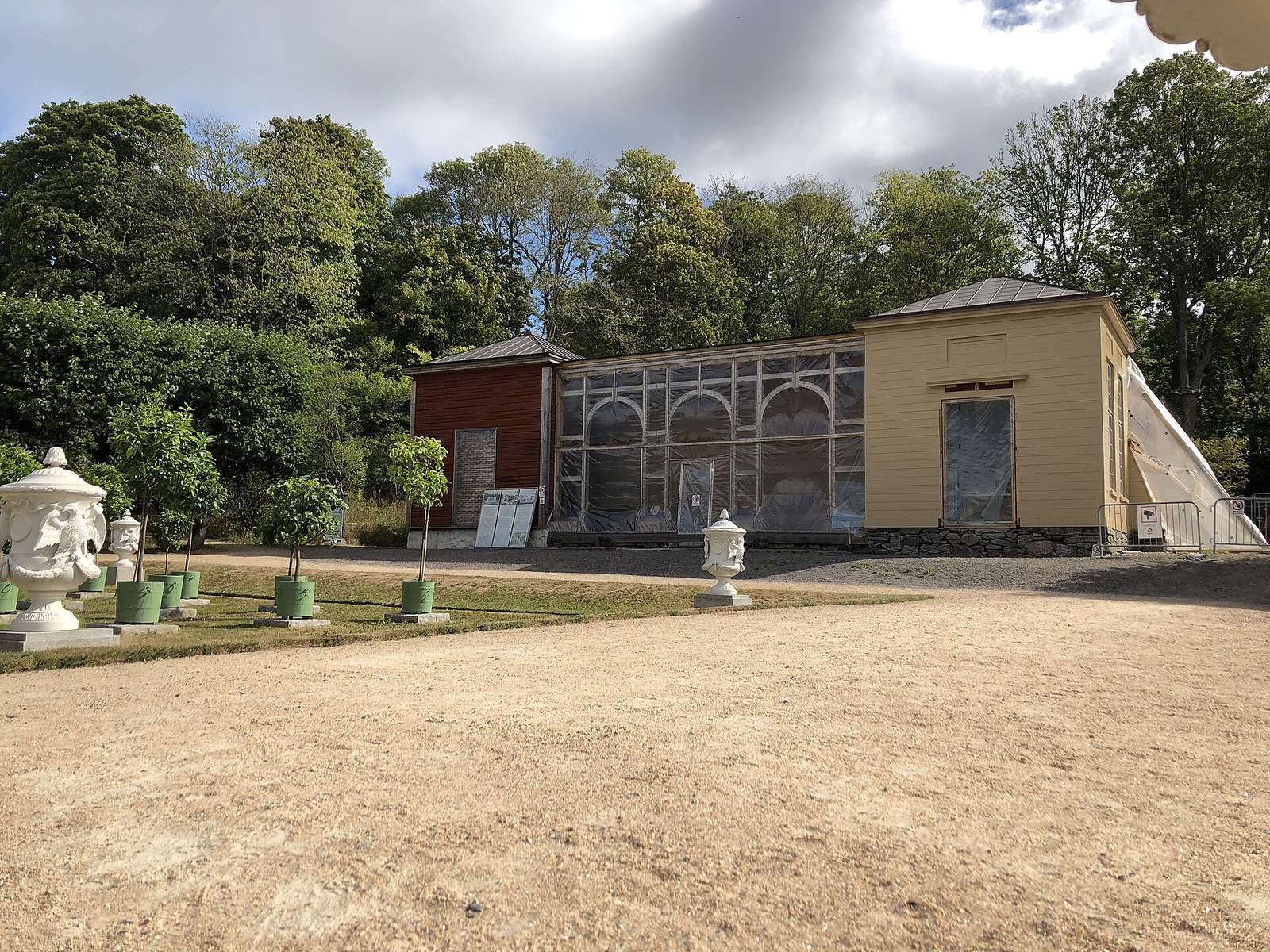
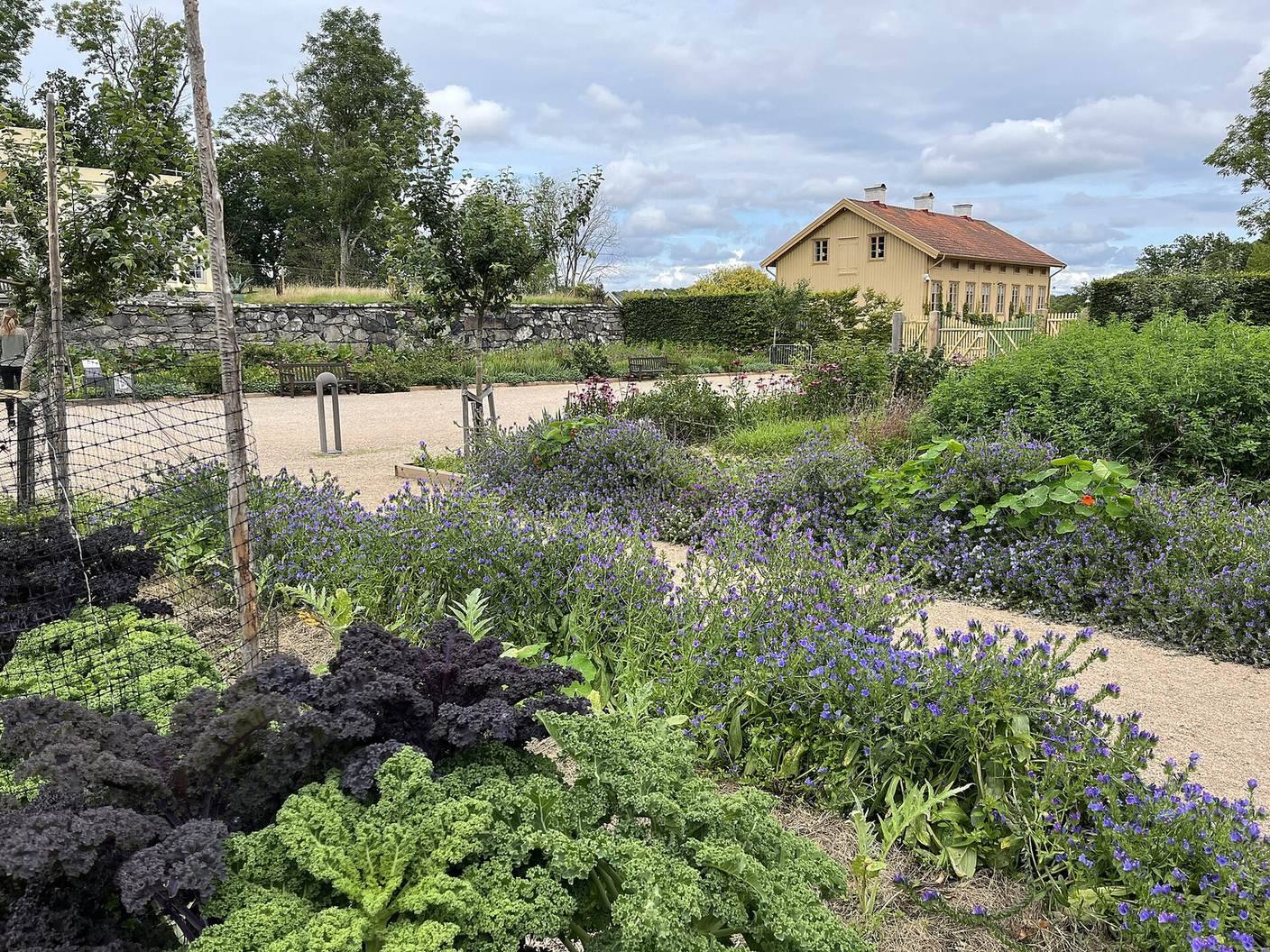
The estate includes an orangery, a building for sheltering citrus trees and other tender plants in cold weather, and three gardens associated with the house. One is a French-style Baroque garden, based on a formal, carefully ordered layout; Gunnebo’s Baroque gardens are regarded as among Sweden’s finest and best preserved. A landscape garden lies between Lakes Stensjön and Rådasjön. The estate is also regarded as one of Sweden’s most complete eighteenth-century estates.