Church of St Nicholas, Tomášov: A Roman Catholic Parish Church in Slovakia
Site at a Glance
- Popularity
- Very Low
- Country
- Slovakia
- Primary era
- Early Modern
- Eras represented
- Early Modern, Modern
- Civilizations
- Austria-Hungary, Austrian Empire, Habsburg, Hungarian
- Site type
- Religious
- Remains
- Fortified Church
On this page13 sections
History
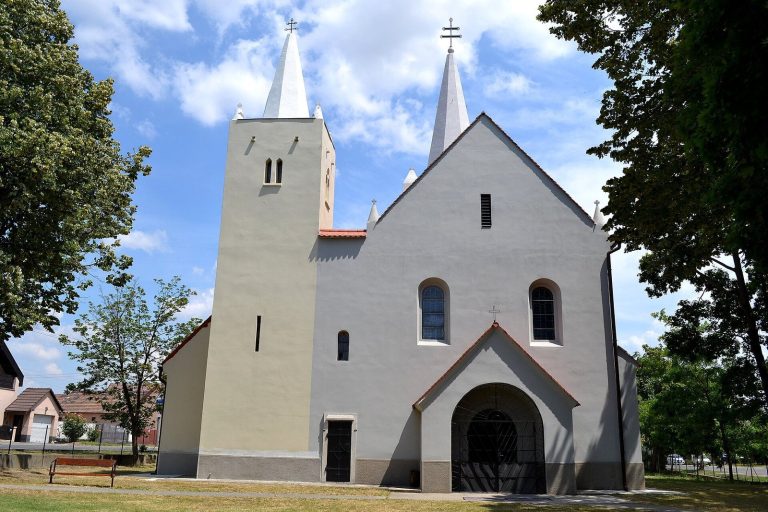
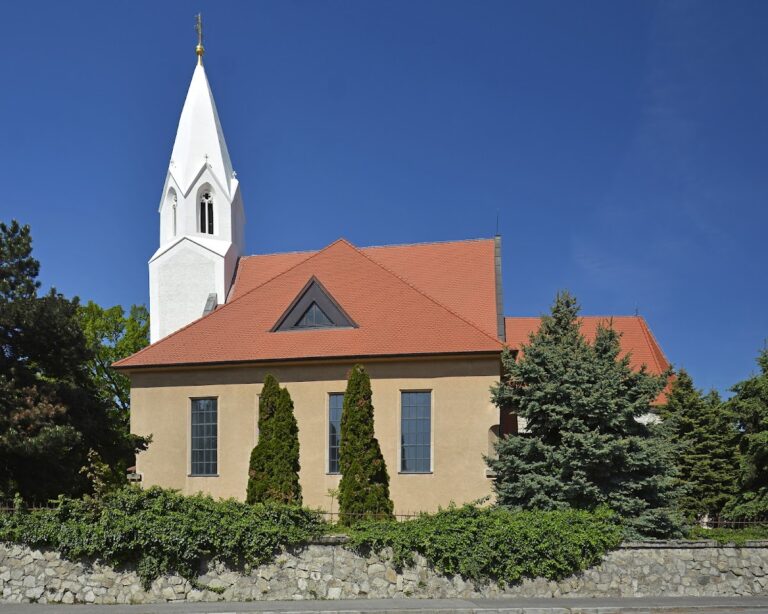
The Church of St Nicholas, Tomášov, is a Roman Catholic parish church in Slovakia, rebuilt between 1750 and 1755 and classified as Classicist, a European architectural style. The parish is recorded from the 14th century, while an Early Baroque church, a European architectural style, was built on the site in 1674.
Parish origins and religious divisions
Tomášov was formerly known as Fél. Although the village had a predominantly Catholic population for a long period, some residents adopted Calvinism, a Reformed Protestant tradition, in the 16th century. The local Calvinist parish was ravaged by Archbishop Lippay and again, in 1657, by Archbishop Szelepcsényi. Both were senior Catholic prelates in the Hungarian hierarchy. Calvinists were expelled from the village and sought refuge in Číčov; the part of that settlement where they lived also came to be called Fél.
Church building and confessional settlement
Szelepcsényi had a church built on the site of an older building in 1674. On 10 February 1700, the local church was assigned to Catholics because they formed the majority. The Calvinists were given a suitable site for a school, rectory, and church. The Catholic church was renovated in 1713, then rebuilt between 1750 and 1755 and consecrated in 1755.
Nineteenth-century changes and later care
The interior was renewed in 1834 during the parish tenure of Ján Thaisz. In the last quarter of the 19th century, the façade was reshaped in a Romantic interpretation of historicism, a later approach that drew on earlier architectural styles. Canonical visitations noted a five-stop organ in 1756 and a six-stop instrument in 1781. The present organ was dismantled and restored between 2011 and 2014, then reconsecrated on 6 December 2014 by Jozef Haľko, an auxiliary bishop of the archdiocese. The church was registered as a National Cultural Monument of the Slovak Republic on 15 November 2016.
Remains
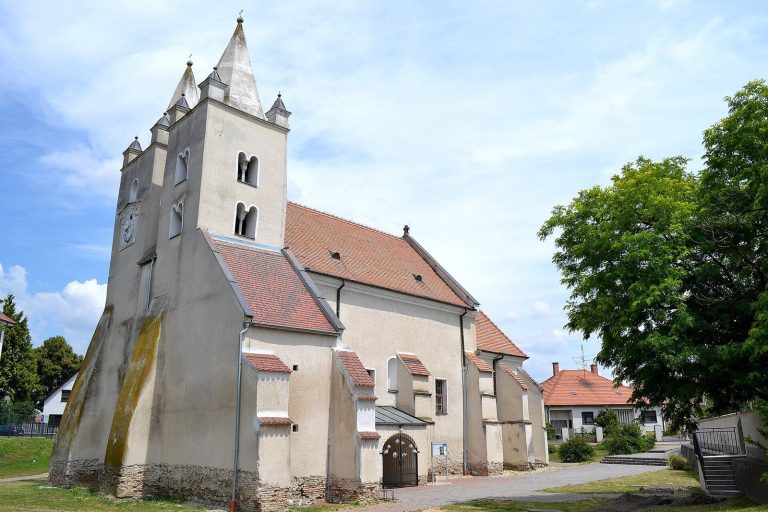
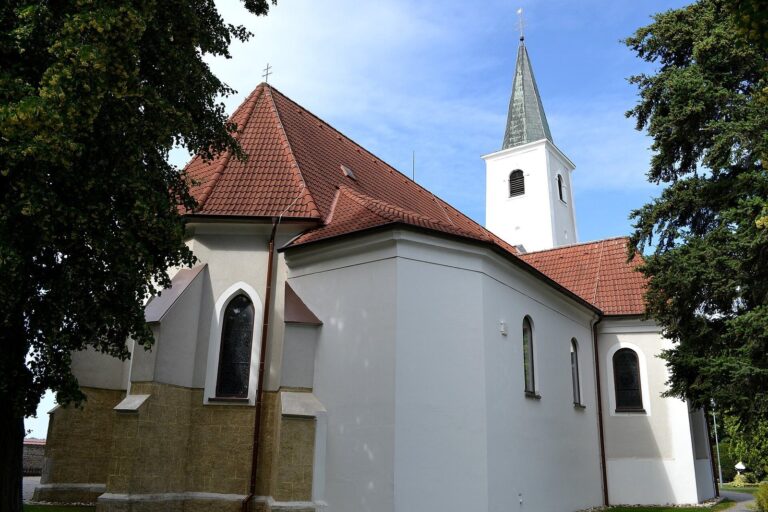
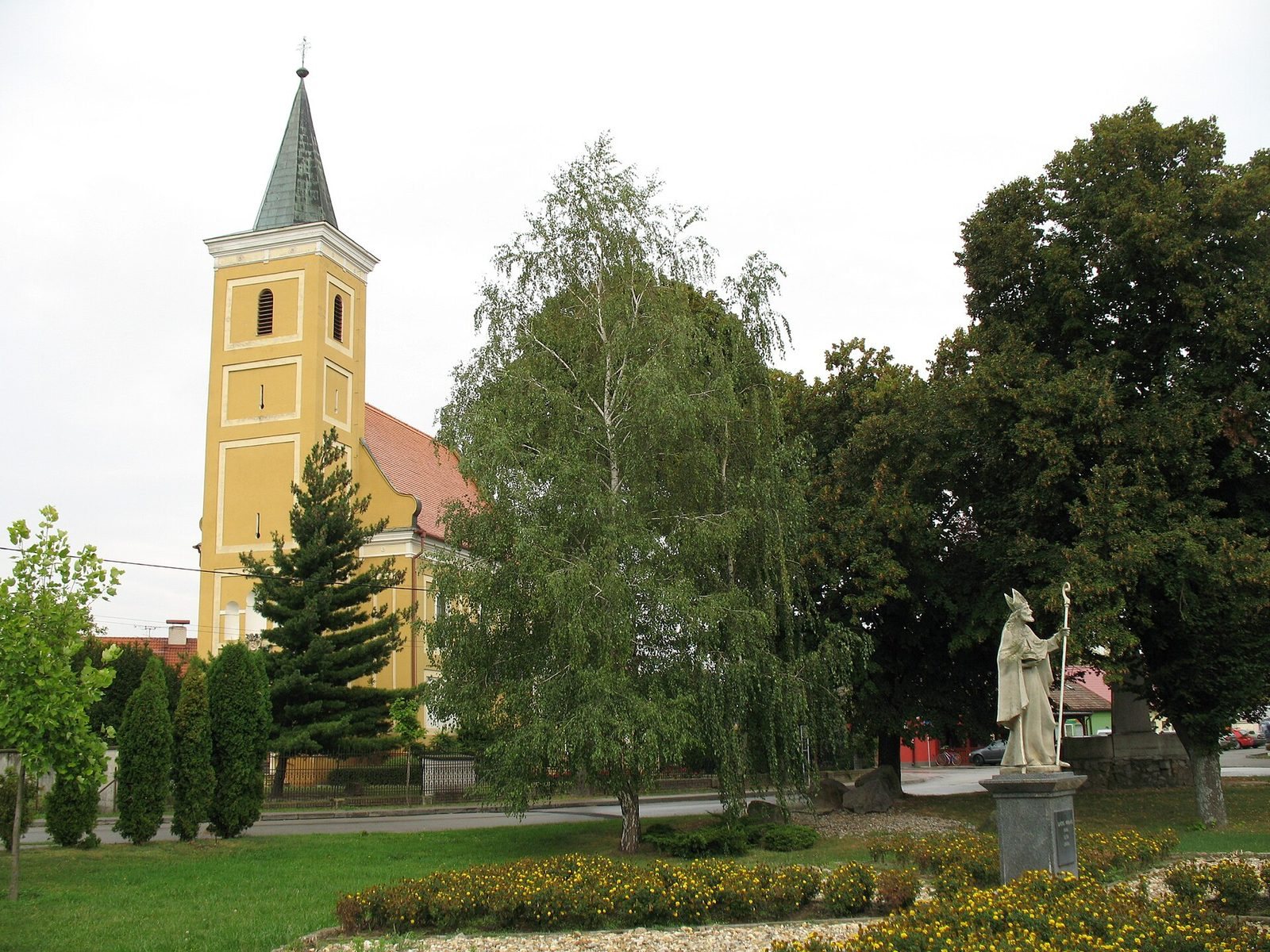
The church has a single nave and an east-facing sanctuary with a polygonal end. A tower projects in front of the building, while a sacristy is attached to the north and an entrance vestibule to the south. Stone from a church in Malinovo, destroyed by floods, was used in its construction.
Exterior and layout
Tower and entrance
Keyhole-shaped loopholes, narrow defensive openings, appear on the tower’s floors. Above the stone entrance portal, a niche holds a Baroque stone statue of St Nicholas. A stone coat of arms belonging to Archbishop Szelepcsényi is set above the niche.
South wall and enclosure
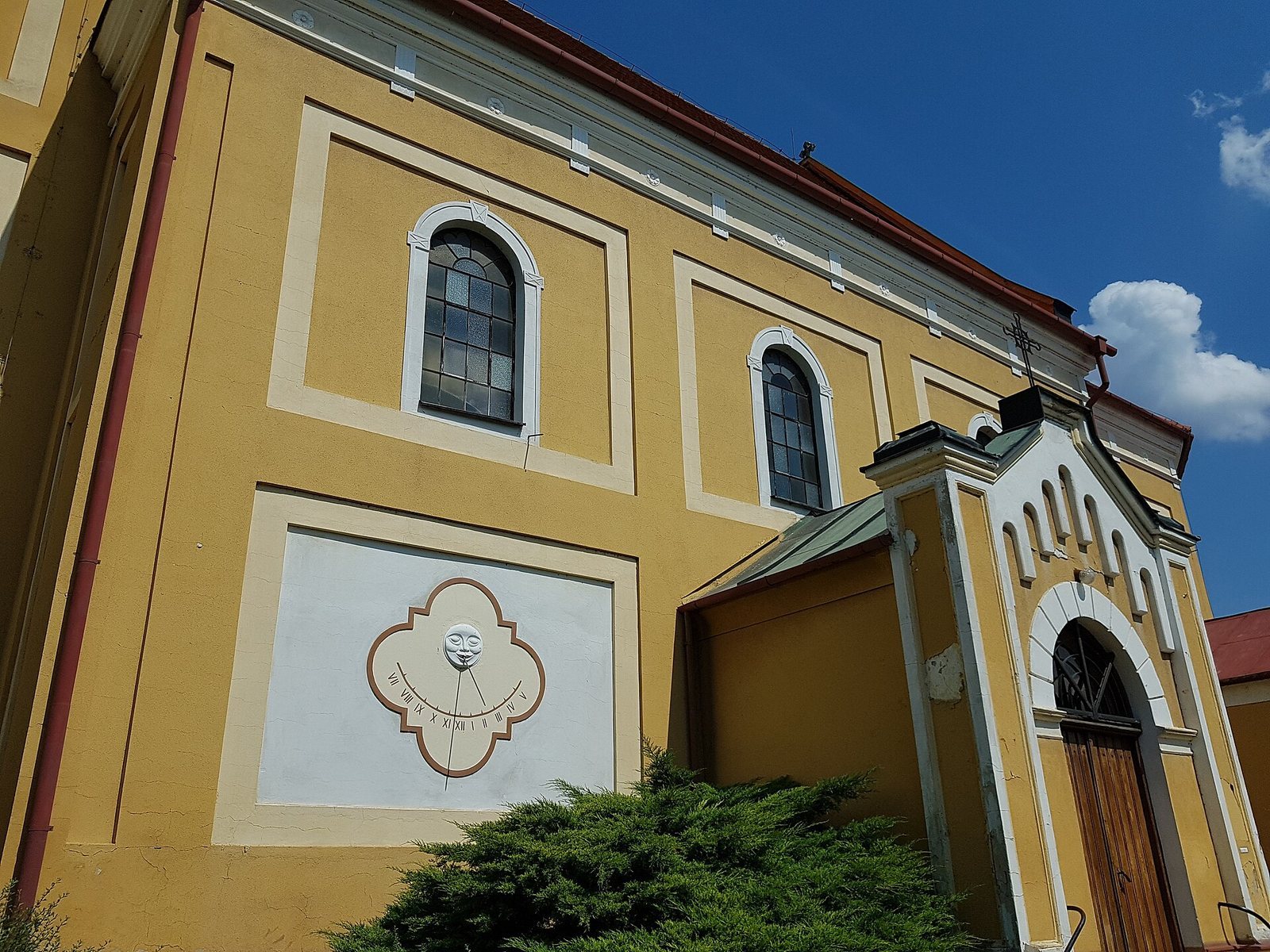
A sundial with a relief of the sun is set into the south wall and dates to the second half of the 19th century. A wrought-iron fence surrounds the church. Bratislava blacksmith Alexander Kohl made it in 1903.
Interior and furnishings
Nave, sanctuary, and choir
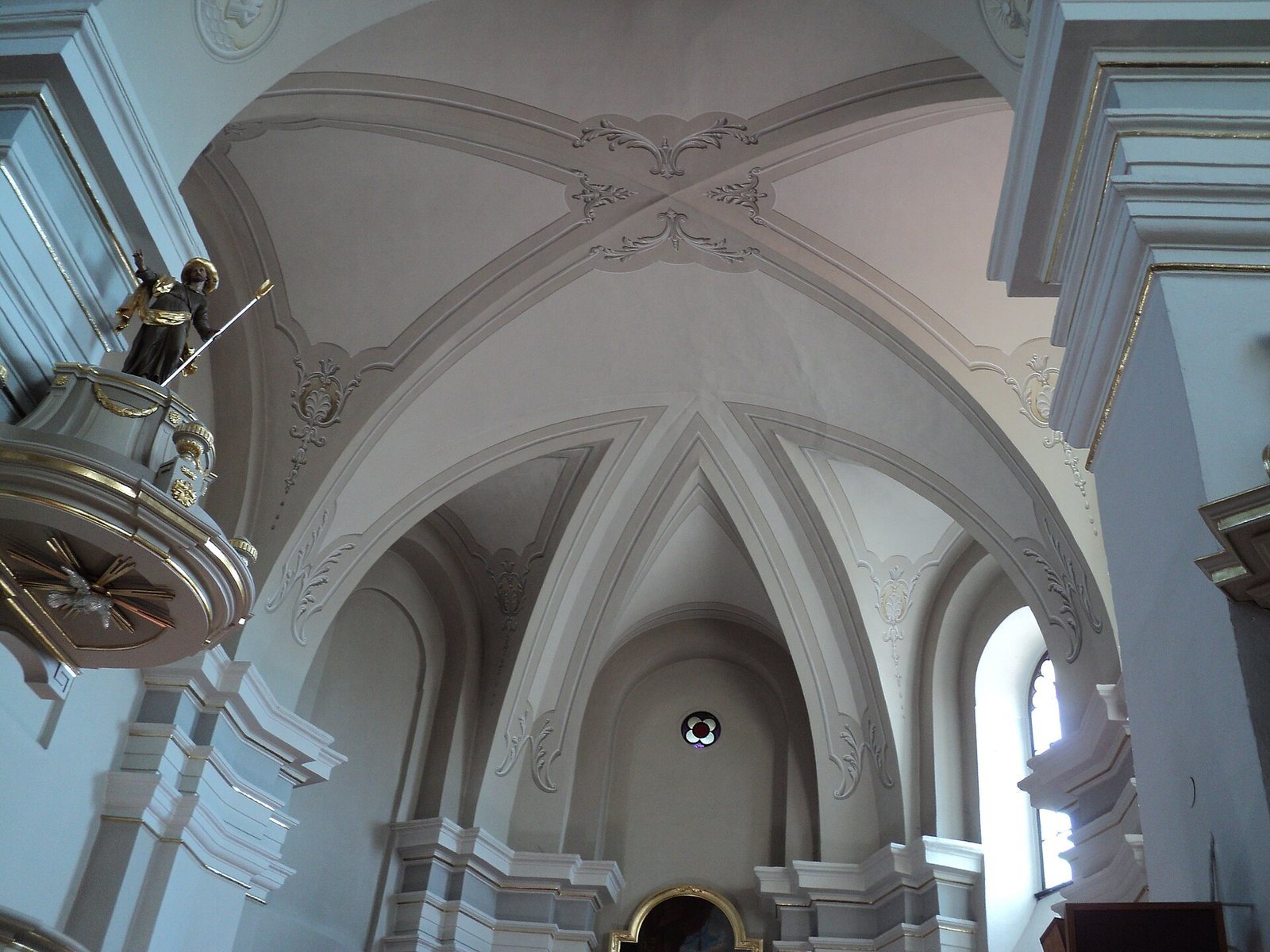
The nave has a flat ceiling, while the sanctuary is covered by a groin vault, formed where two barrel vaults intersect. Illusionistic paintings on the vault create an effect of depth; they date to the 19th century and were supplemented around 1980. At the west end of the nave, three arches support the choir.
Altars and devotional paintings
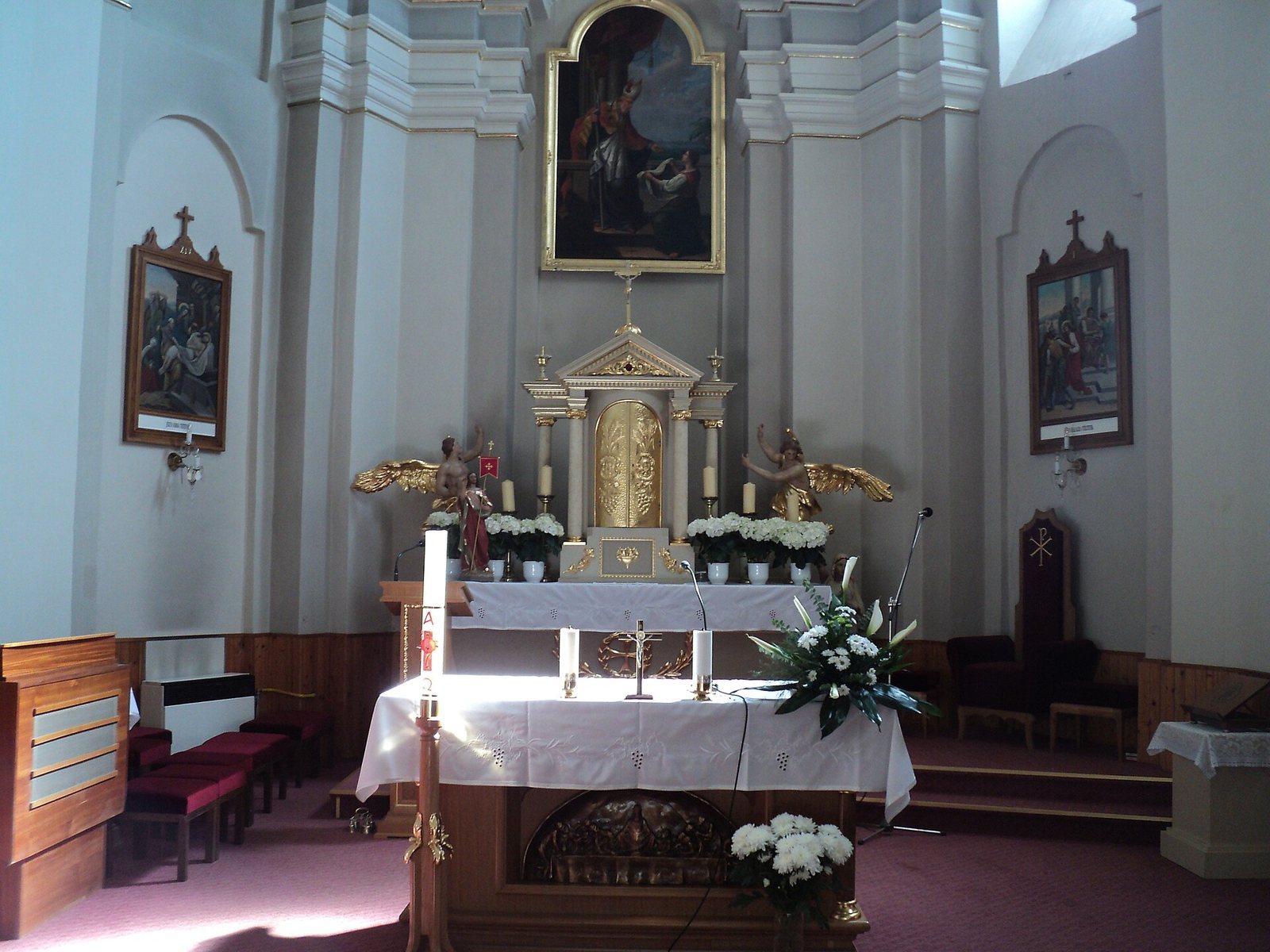
The main altar, dating to the second half of the 19th century, has an oil painting of St Nicholas the bishop distributing alms, flanked by angel sculptures. The side altars are dedicated to Our Lady of the Rosary, a devotion to Mary, and the Sacred Heart, a devotion to Jesus’s heart as a symbol of his love. Fourteen oil paintings of the Stations of the Cross, a devotion recalling episodes of Christ’s Passion, hang in the nave and sanctuary. They also date to the second half of the 19th century.
Organ
Michal Szlezák, an organ builder from Bratislava, made the choir organ in 1864 as his first work. It has one manual and eight stops, six for the manual and two for the pedals. Its slider chest directs wind to the pipes, while mechanical action connects the keys to the valves.
Bells
The tower contains two bells. Joseph Golnes cast the smaller bell in 1816, and the Richard Herold foundry in Komárno made the larger one in 1921.