Tølløsegård: A Danish Manor House and Estate
Site at a Glance
- Popularity
- Medium
- Country
- Denmark
- Primary era
- Modern
- Eras represented
- Early Modern, Modern
- Civilizations
- Danish
- Site type
- Domestic
- Remains
- Manor House
On this page6 sections
History
Tølløsegård, also known as Tølløse Castle, is a manor house and estate in Tølløse, Denmark. First mentioned in 1370, it belonged to the Diocese of Roskilde, a church district under a bishop, and was administered as a fief, a landed holding governed under a superior authority.
Church and Crown ownership
Following the Danish Reformation of 1536, which transferred substantial property and authority from the Catholic Church to the Crown, the Crown confiscated Tølløsegård. It then granted the fief to Ove Bille, Denmark’s last Catholic bishop, as a form of pension. Peder Christensen Dyre later held it, but lost the estate in 1558 after a conviction for perjury in a legal dispute.
Peder Oxe and the sixteenth century
The Crown transferred Tølløsegård to Peder Oxe in exchange for other property, and he built a new main building. Oxe became a royal privy councillor, a member of the monarch’s advisory council, in 1552. Amid political controversy in 1558, he resigned from public office. Summoned that year to answer embezzlement charges, he fled to Lorraine, and his Danish estates were transferred to Herluf Trolle.
Oxe returned during the Northern Seven Years’ War, a conflict between Denmark-Norway and Sweden in the 1560s, and regained Tølløsegård along with Gisselfeld and Løgismose. In 1567 he became Lord High Steward, a senior royal official. After his death, his widow, Mette Rosenkrantz, inherited the estate.
Inheritance and changing ownership
By 1588, Tølløsegård had passed from Mette to Oxe’s sister, Sidsel Oxe. Sidsel died without children in 1592 and left it to her nephews Jens and Christian Barnekow. Christian acquired Jens’s share and held the estate until his death in 1612. It then passed to his son-in-law, Tønne Friis. Tønne’s widow, Lene Barnekow, remained at the estate, and their daughter Margrethe held it from 1660. In 1665, Margrethe transferred it to Christian Skeel in exchange for other property.
Skeel’s son-in-law, Frederik Gersdorff, inherited the estate in 1687 and died within five years. His widow held it until selling it to Otto Krabbe in 1706. Krabbe sold it to Brostrup Albertin in 1709. Albertin’s widow later transferred it to Christian Ditlev Reventlow, who passed it to his son Conrad in 1737. Conrad’s son-in-law, Gustav Frederik Ysenburg-Büdingen, succeeded him. After his young daughter died in an accident at the estate, Ysenburg-Büdingen reportedly came to detest it. He sold it in 1763 to Claus de Caspergaard, whose widow sold it to Johan Thomas Neergaard in 1768. Neergaard sold the estate to Peter Christian Zeuthen in 1793.
The Barony of Zeuthen and later use
After Peter Christian Zeuthen died in 1823, his estate retained Tølløsegård until 1826, when it passed to his son Christian Frederik Zeuthen. Christian Frederik established the Barony of Zeuthen in 1843. A king-appointed member of the Danish Constituent Assembly, the body that drafted the 1849 constitution, he voted against it. After his death in 1850, his widow, Sophie Hedevig, née Schulin, kept the estate until 1866 and endowed the barony to her youngest brother, Christian Frederik, who took the name Schulin-Zeuthen. When he died in 1873, the estate passed to his nephew Christian Julius William Schulin-Zeuthen, and later to William C. S. Schulin-Zeuthen.
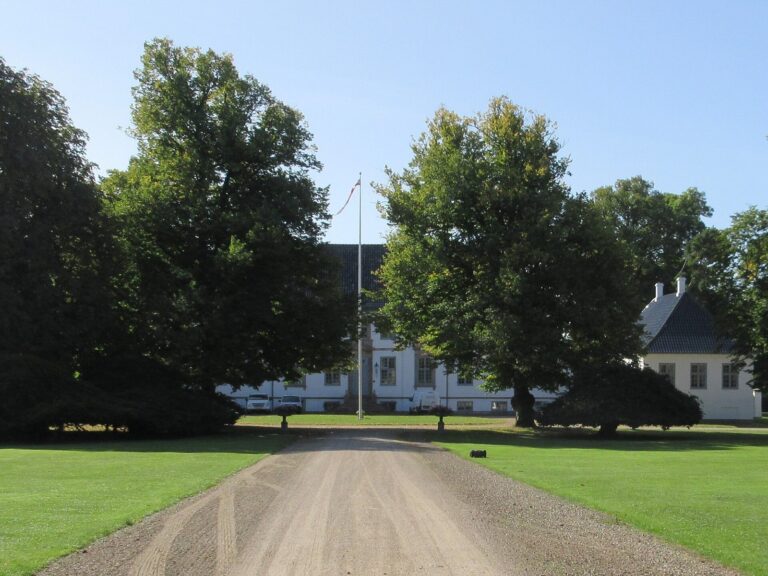
The Barony of Zeuthen was dissolved in 1923 under a 1919 law that ended the entailed status of such estates. Tølløsegård was sold to H. O. Larsen in 1923, passed to J. de Neergaard between 1924 and 1926, and then to A. Larsen around 1926–27. H. Hollesen acquired it in 1941, followed by Arly Henckel in 1949. A fire in 1944 preceded completion of the current main building that same year. Tølløse Municipality owned the estate from 1975 to 2006, followed by Holbæk Municipality until 2010. Since 1997, it has operated as a school called Tølløse Slots Efterskole.
Remains
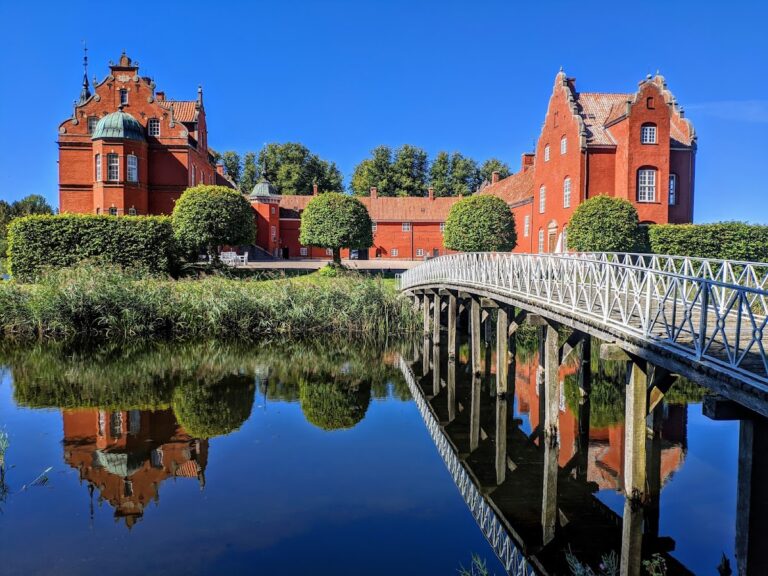
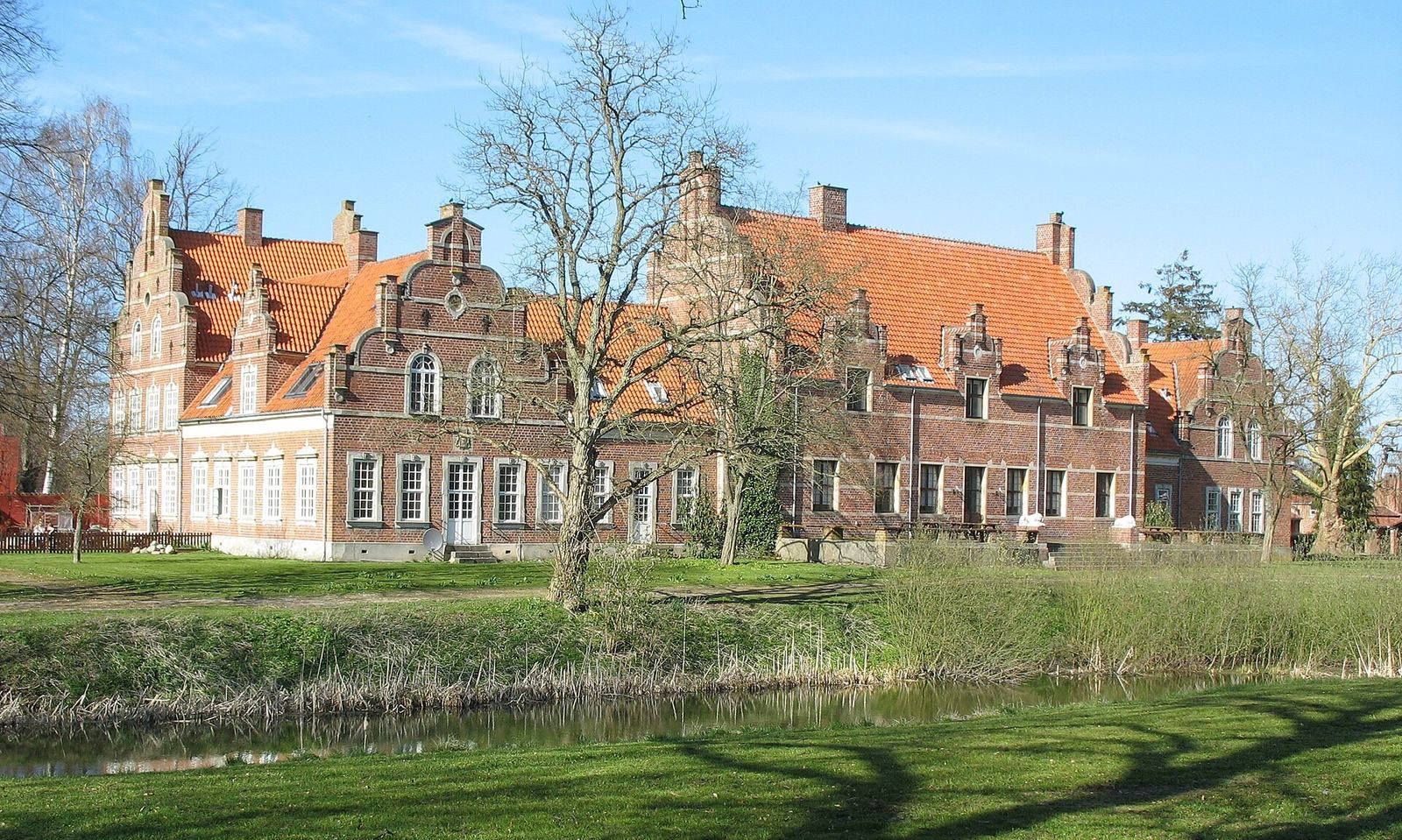
The current main building is the principal structure described at Tølløsegård. It was completed in 1944 after a fire that year and designed by Ernst Kühn.