Ottensheim Castle: A Renaissance Castle in Austria
Site at a Glance
- Popularity
- Medium
- Country
- Austria
- Primary era
- Early Modern
- Eras represented
- Medieval, Early Modern, Modern
- Civilizations
- Austria-Hungary, Duchy of Austria, Habsburg, Holy Roman Empire
- Site type
- Domestic
- Remains
- Castle
On this page7 sections
History
Ottensheim Castle, in Austria, began as a 12th-century fortress of Wilhering and was later converted into a Renaissance castle. In 1148, the brothers Ulrich and Cholo von Wilhering were its owners.
Territorial control and conflict
Territorial rulers, princes with authority over their lands, held the fortress from 1220 to 1527. The Habsburgs, Austria’s ruling dynasty, pledged it to the Lords of Walsee from 1331 to 1461, then to the Liechtenstein family from 1461 to 1492. The Liechtensteins also owned Steyregg Castle downstream on the Danube.
During a feud with Frederick III, Holy Roman Emperor, Heinrich the Lame and his brother Christoph, Liechtenstein nobles who supported Matthias Corvinus, king of Hungary, devastated Linz’s suburbs in 1476 and Baumgartenberg Abbey in 1477. In 1477, they also destroyed the territorial rulers’ castles at Edramsberg and Schönering. After their defeat, the Liechtensteins lost their pledged possessions, including Ottensheim, without compensation.
Conversion and changing ownership
In 1524, Chancellor Niklas Rabenhaupt von Suche received Ottensheim from King Ferdinand I as a fief, a grant of property tied to service or allegiance. In 1527, he made it his freehold and converted the fortress into a castle.
The Upper Austrian estates, the province’s organized representatives of clergy, nobility, and towns, owned Ottensheim from 1529 to 1621. Emperor Ferdinand II later pledged Upper Austria to Maximilian, Elector of Bavaria, a prince who governed the Bavarian electorate. Maximilian took possession of Ottensheim and gave it to the Jesuits, a Catholic religious order. After the order was suppressed in 1773, the castle passed to the imperial court chamber, the administrative body responsible for the ruler’s property and finances.
Ownership, damage, and restoration
Among the castle’s 19th-century owners were the Counts of Thun and Hohenstein, the Counts Coudenhove-Kalergi from 1863, and Karl Pfeiffer von Weissenegg from 1895. Pfeiffer commissioned major structural alterations.
The English Wightman family owned the castle from 1936 until the German Reich confiscated it for use as a forest administration by the Wehrmacht, Nazi Germany’s armed forces. Russian occupation soldiers severely damaged the building after the Second World War. The 1955 Austrian State Treaty ended the Allied occupation and restored Austria’s sovereignty; the castle then returned to its owners, who lived in Africa and could do little to care for it. It continued to deteriorate.
Captain Ansell gave the castle away in 1981. Its new owner sold it in 1988 to the Wildmoser, Pichler, and Schützeneder families, enabling comprehensive restoration. The building is now maintained and privately inhabited.
Remains
Ridge, courtyard, and park
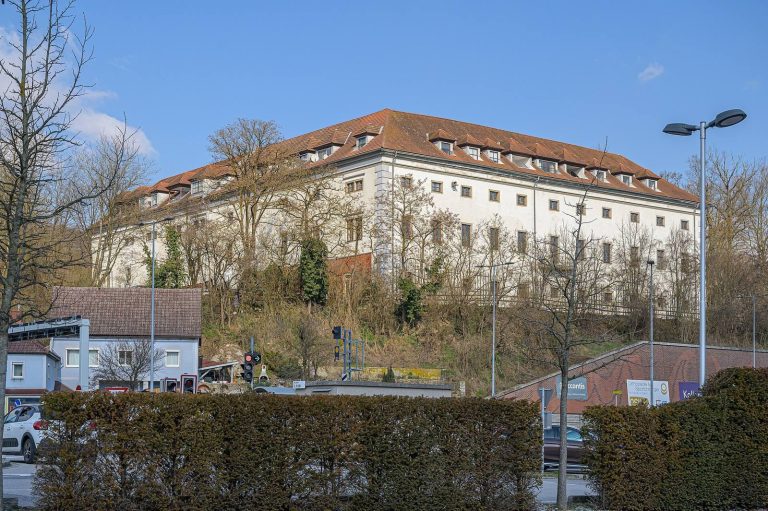
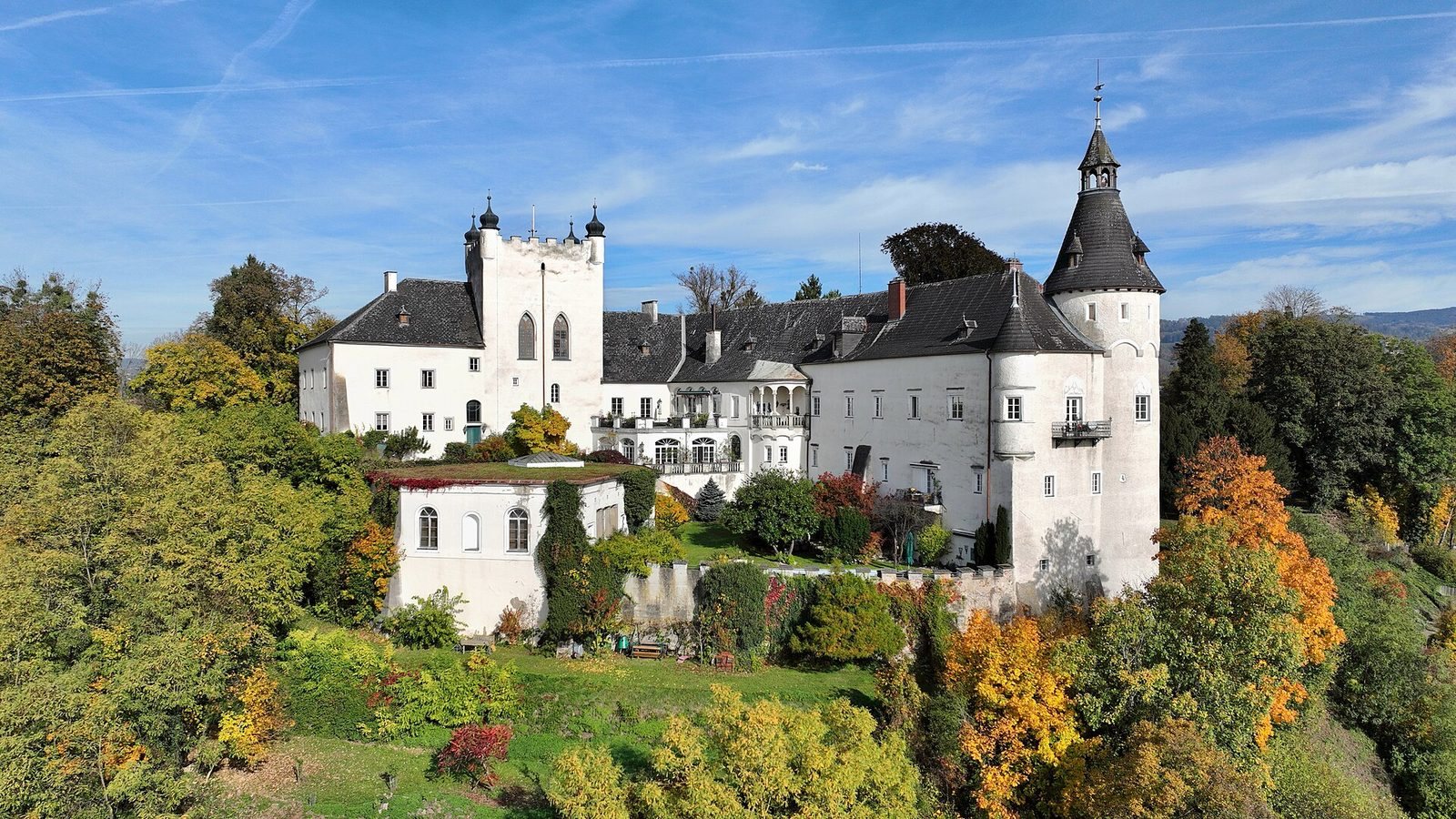
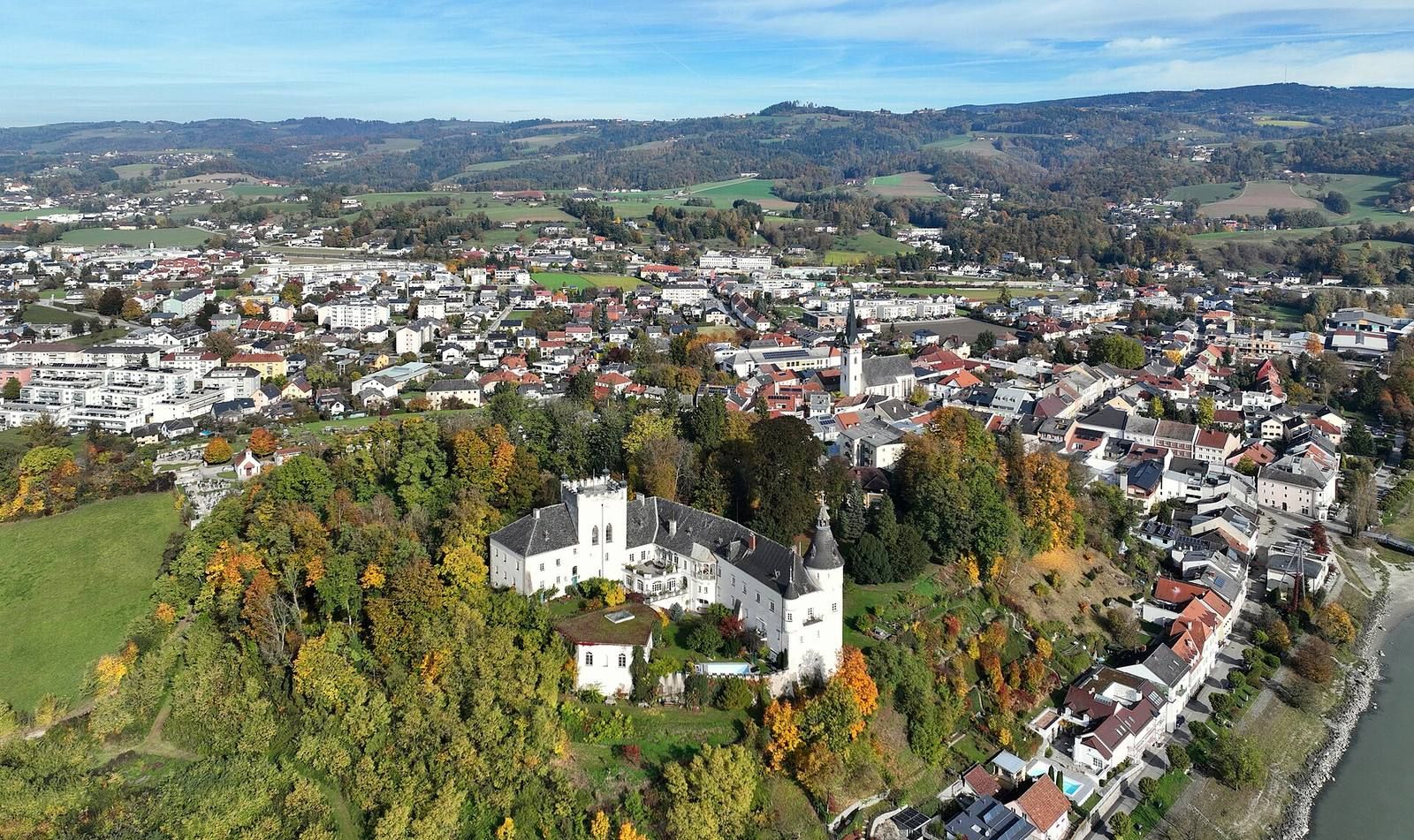
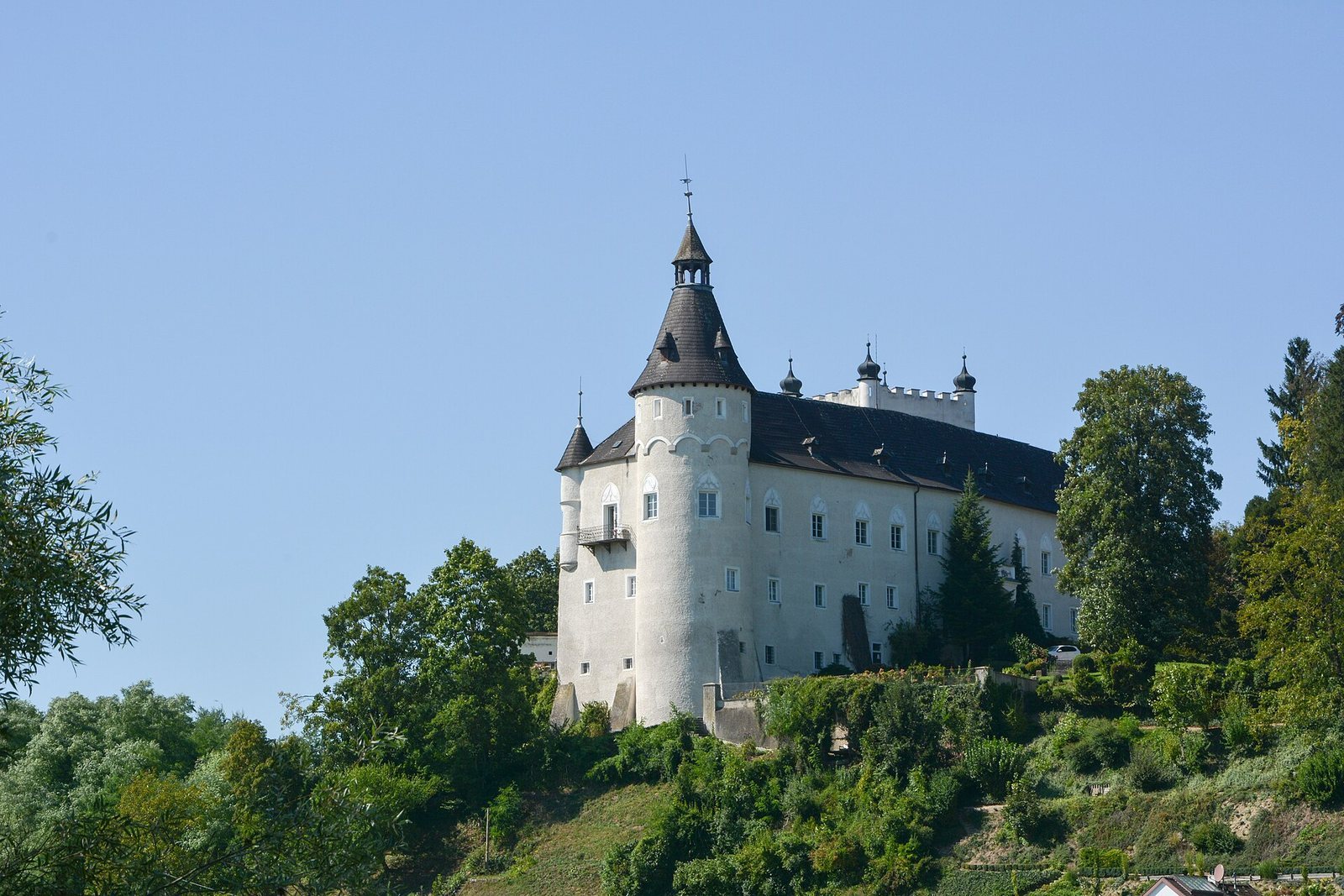
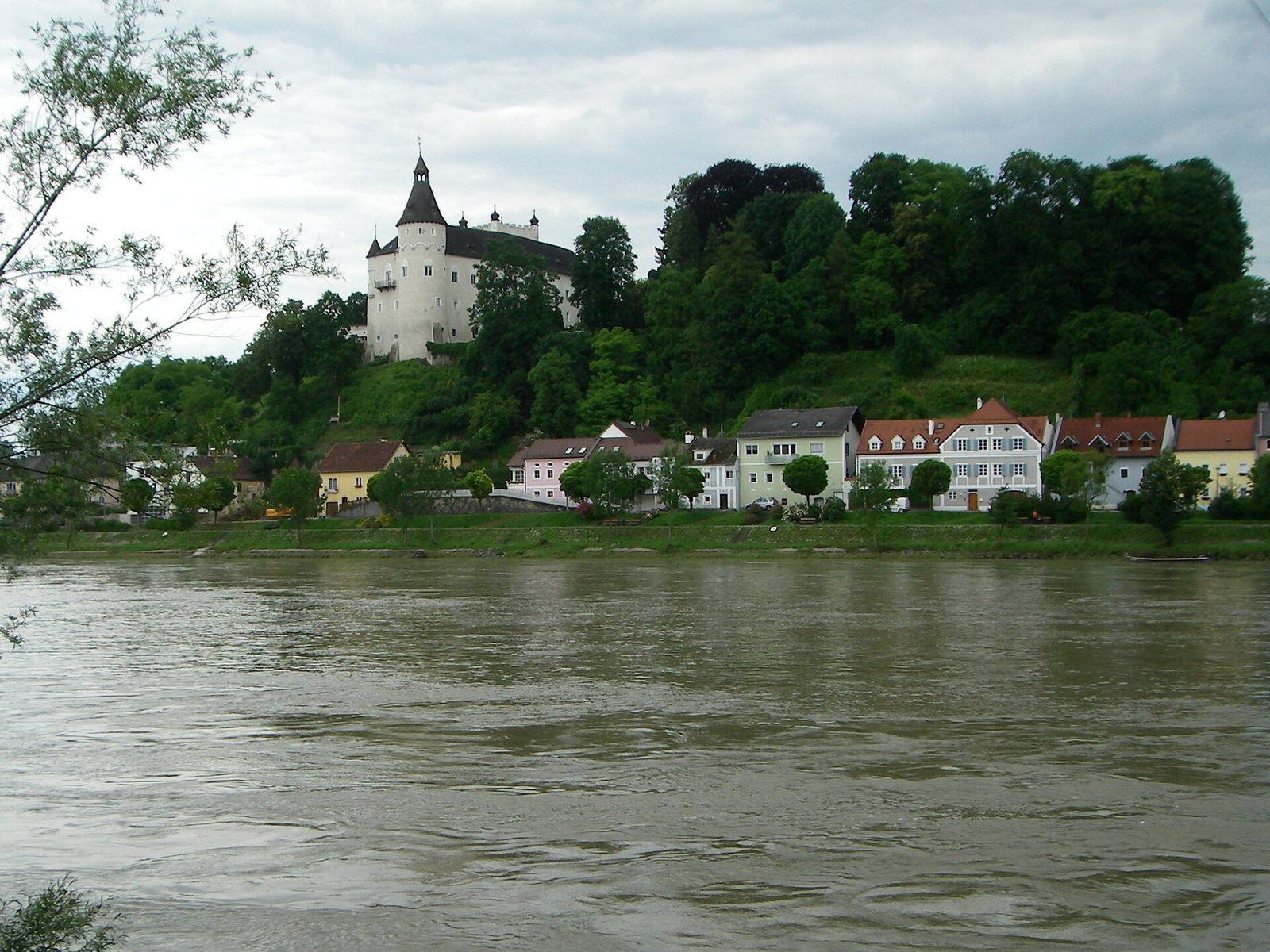
The Renaissance-style complex occupies a rocky ridge that drops steeply south toward the Danube. Its courtyard is arranged on two terraces, with the tower wing bounding it on the east. A spacious park lies north of the castle.
Tower and chapel
The square tower was originally built of rubble masonry, using irregular, roughly shaped stones. During the conversion into a castle, it was reduced to its first storey and rebuilt in brick. A chapel occupies the tower’s first floor.