Tokyo Imperial Palace: Japan’s Imperial Residence on the Former Edo Castle Site
Site at a Glance
- Popularity
- Very High
- Country
- Japan
- Primary era
- Modern
- Eras represented
- Early Modern, Modern
- Civilizations
- Japanese, Tokugawa
- Site type
- Domestic
- Remains
- Palace
On this page18 sections
History
Tokyo Imperial Palace is Japan’s imperial residence in Chiyoda City, on the former site of Edo Castle. The present main palace, completed in 1968, combines modern construction with Japanese architectural references. Edo Castle was used by the Tokugawa shogunate, Japan’s military government, before imperial rule was restored in 1868.
From Edo Castle to the Imperial Residence
A fire in 1657 destroyed the Honmaru, the castle’s main enclosure, including its original principal tower. Edo Castle continued to serve as a seat of Tokugawa rule until the shogunate surrendered. Its final shogun, Tokugawa Yoshinobu, and other residents had to leave after the Meiji Restoration, the political change that ended shogunal government and restored imperial rule.
Emperor Meiji arrived from Kyoto on November 26, 1868, took up residence in the castle, and renamed it Tōkei Castle. After leaving and returning on May 9, 1869, he gave it the name Imperial Castle. During the Meiji period, other castle structures were cleared for new construction or lost to fires and earthquakes. A fire destroyed Nishinomaru Palace on May 5, 1873, prompting the emperor to live temporarily at a palace in Akasaka. The government decided in 1879 to rebuild the western compound, and a new imperial palace was completed there in 1888.
The 1888 palace was made of wood, with traditional Japanese exteriors and interiors that incorporated both Japanese and European styles. Its grand rooms had Japanese-style coffered ceilings. Public rooms had parquet floors or carpets, while residential rooms used tatami mats. The main audience hall covered about 737 square metres, with a Japanese-style ceiling, parquet flooring, and fire-resistant copper plates on its roof instead of Japanese cypress shingles.
Prewar Changes and Wartime Destruction
From 1888 until 1948, the compound was called Kyūjō. In the late Taishō period and early Shōwa period, concrete buildings were added, among them the headquarters of the Imperial Household Ministry and the Privy Council, an advisory body to the emperor. In 1948, the area was renamed Kōkyo, meaning Imperial Residence.
An Allied firebombing raid on May 25, 1945, destroyed most of the older palace’s buildings. U.S. bomber pilot Richard Lineberger later said that the palace was targeted during a special mission on July 29 and struck by 2,000-pound bombs. In August, Emperor Hirohito met the Privy Council in an underground air-raid shelter on the grounds called His Majesty’s Library. Decisions made during the meetings there culminated in Japan’s surrender.
Rebuilding and the East Gardens
Because the Meiji-era palace had been largely destroyed, the government chose in 1959 to replace it. Construction began in 1960, and the emperor’s private apartments were built in 1961. Work on the ceremonial palace followed from 1964 to 1968, when the new complex was completed.
The East Gardens were created from former Edo Castle compounds. Work began in 1961 and included a pond in Ninomaru and repairs and restoration to Edo-period fortifications and structures. The project also required the removal of later buildings, including a dormitory built for imperial princesses in 1932, as well as stables and residences. The gardens opened as a public park in 1968. In 1963, the area received Japan’s Special Historic Site designation, a cultural-property status for places of particular historical importance.
Imperial Residences in Fukiage
Fukiage Palace, completed in 1993, served as Emperor Akihito’s main residence from December 1993 until March 2020. Following refurbishment, Emperor Naruhito, Empress Masako, and Princess Aiko moved there in September 2021. The separate Fukiage Ōmiya Palace in the northern part of Fukiage Garden was the residence of Emperor Shōwa and Empress Kōjun. After Emperor Shōwa died in 1989, it remained the Dowager Empress’s residence until her death in 2000.
Remains
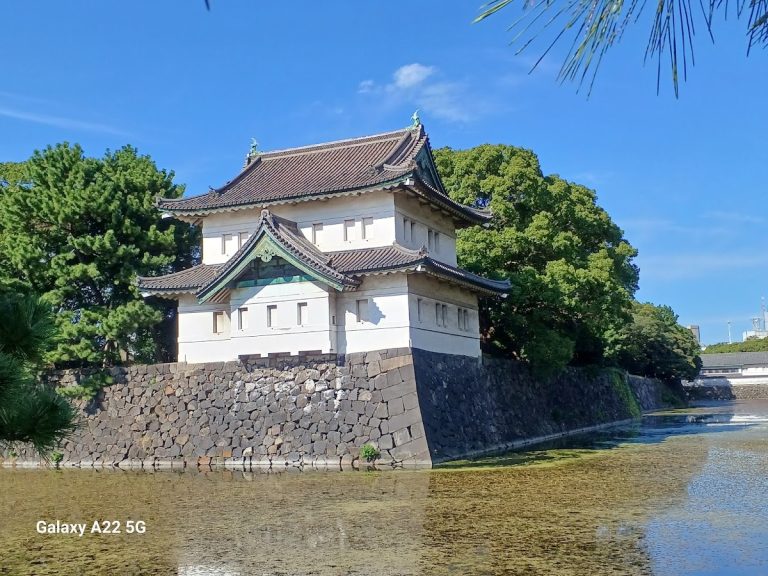
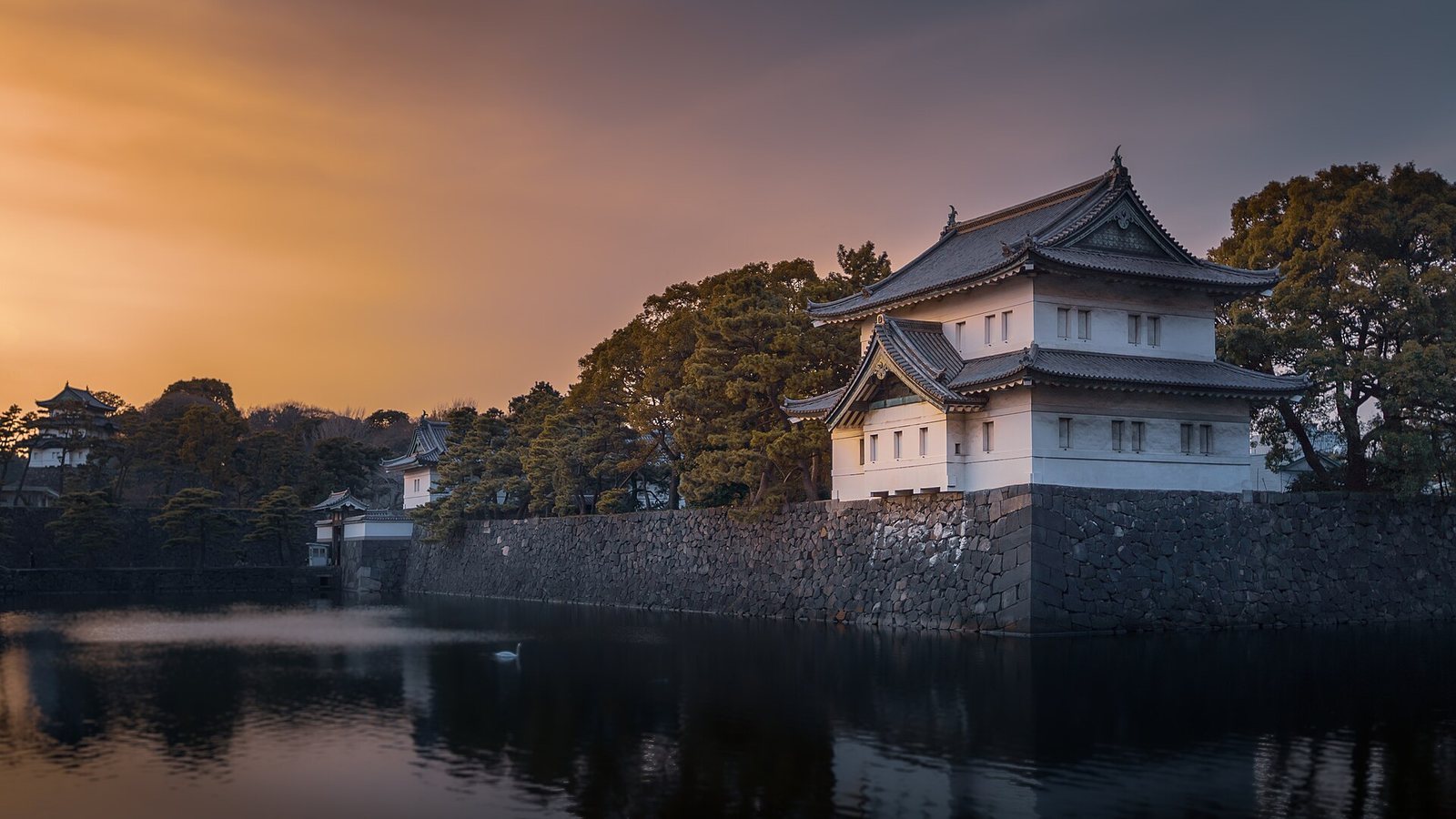
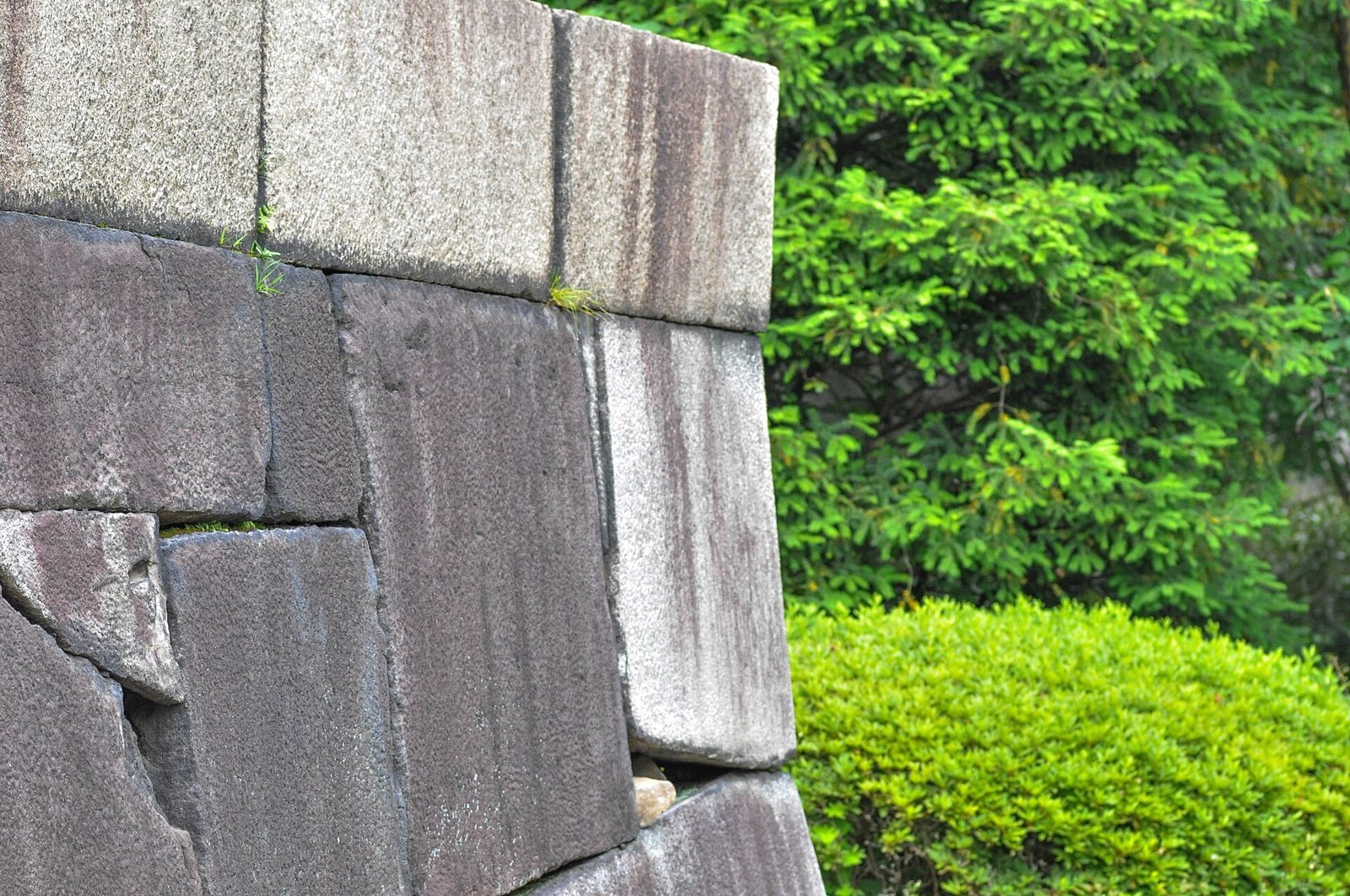
The palace grounds form a park-like complex of about 1.15 square kilometres, combining the main palace and imperial residences with archives, museums, administrative buildings, and former Edo Castle fortifications. High walls, towers, and deep, water-filled moats preserve the castle landscape. The East Gardens occupy 210,000 square metres of the former Honmaru and Ninomaru enclosures.
The Main Palace and Imperial Sanctuaries
The Kyūden
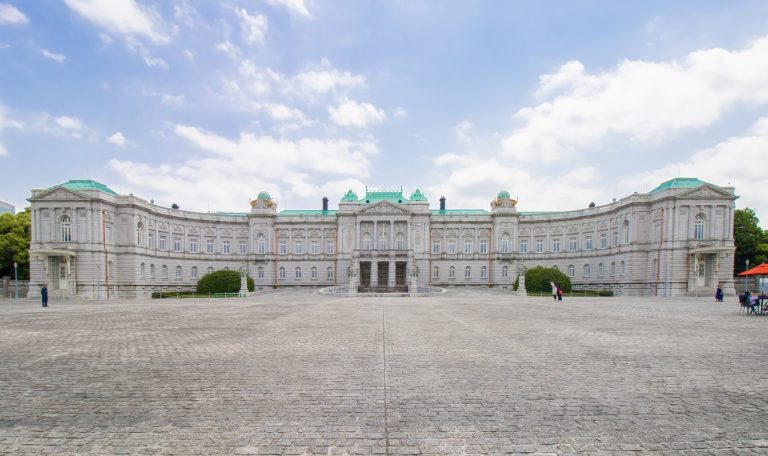
The main palace, or Kyūden, occupies the former Nishinomaru, Edo Castle’s western enclosure, alongside the Imperial Household Agency headquarters. It consists of six connected wings, with two storeys above ground and one below, and covers about 23,000 square metres. Its steel-framed reinforced-concrete structure uses mainly domestic materials. A large hipped gable roof, columns, and beams bring Japanese architectural references into the modern design.
Principal spaces include the Seiden State Function Hall, Hōmeiden State Banquet Hall, Chōwaden Reception Hall, Rensui Dining Room, Chigusa Chidori Drawing Room, and the emperor’s work office. Other named rooms include Minami-Damari, Nami-no-Ma, Kita-Damari, Shakkyō-no-Ma, Shunju-no-Ma, Seiden-Sugitoe (Kaede), Seiden-Sugitoe (Sakura), Take-no-Ma, Ume-no-Ma, and Matsu-no-Ma. Matsu-no-Ma, the Pine Chamber, is the throne room. It is used for audiences with the prime minister, appointments and dismissals of ambassadors and ministers, and the appointment of the prime minister and chief justice. Japanese-style painters, including Maeda Seison, created artworks for the palace.
The Three Palace Sanctuaries
West of the new palace stand the Three Palace Sanctuaries, a group used for imperial religious observances. They are Kashikodokoro, Kōreiden, and Shinden, where parts of the Imperial Regalia, objects that symbolize the imperial institution, are kept. Kashikodokoro enshrines the sacred mirror associated with Amaterasu, the sun deity traditionally regarded as an ancestor of the imperial line. Kōreiden is dedicated to deceased emperors, while Shinden is dedicated to eight palace guardian deities and deities of Heaven and Earth.
Fukiage Palaces
Fukiage Palace stands within Fukiage Garden as the emperor’s residence. The separate Fukiage Ōmiya Palace is in the garden’s northern section.
The East Gardens
Castle Grounds and Buildings
The gardens include the former Honmaru and Ninomaru compounds, with Edo-period fortifications and structures repaired or restored during their development. Administrative facilities include the Imperial Household Agency’s Archives and Mausolea Department and the Music Department of the Board of Ceremonies. Other buildings include the Saineikan training hall for guards and the Museum of the Imperial Collections. The former Privy Council building is among the few structures from the prewar Shōwa period that survive in the gardens.
Tōkagakudō
The Imperial Tōkagakudō Music Hall stands east of the former main tower in Honmaru. Designed by Japanese architect Kenji Imai, it is an octagonal reinforced-concrete building covering 1,254 square metres. Each of its eight outer walls has a distinct mosaic-tile design.
Ninomaru Garden and Suwa no Chaya
Ninomaru Garden lies at the foot of the castle hill. Kobori Enshu, a seventeenth-century garden designer, first planted it in 1636. Fire destroyed the garden in 1867, and its present layout, established in 1968, follows a plan from the rule of the ninth shogun, Tokugawa Ieshige. A pond forms part of the garden, and its northwestern corner holds 260 donated trees representing all of Japan’s prefectures and 30 varieties.
Suwa no Chaya, a teahouse, was originally in Fukiage Garden. After the Meiji Restoration it was moved to Akasaka, then rebuilt at its original location in 1912. It was later relocated to its present position in Ninomaru Garden during construction of the East Gardens.
Gates and Surrounding Grounds
Entrances and Bridges
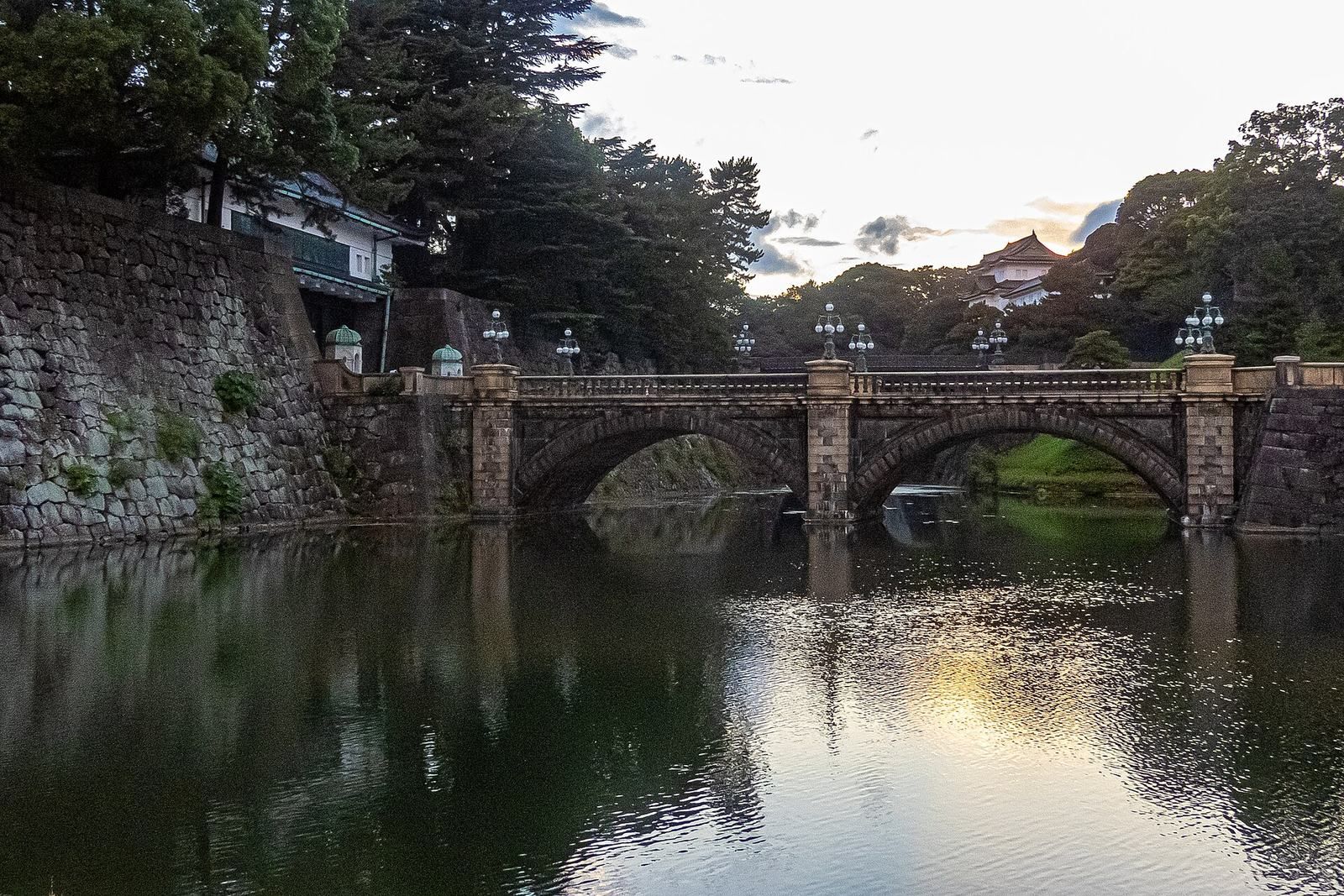
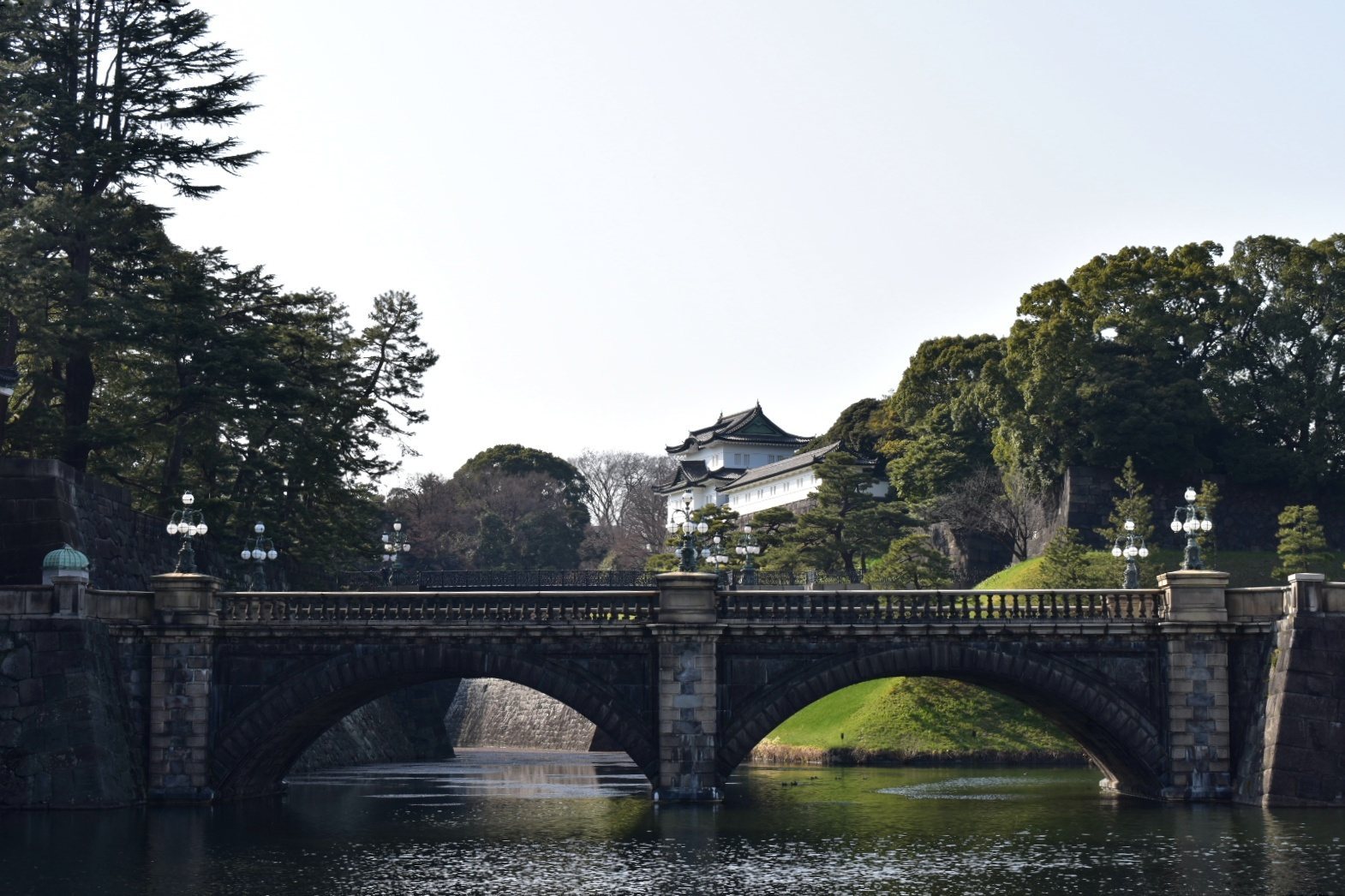
Ote-mon is the main entrance to the East Gardens. Seimon Ishibashi bridge leads toward the palace’s main gate, and the grounds also include Sakurada Gate. Stone and iron bridges now cross the moat where paired wooden bridges once stood, replacing them during the Meiji period.
Kitanomaru Park
North of the palace, Kitanomaru Park occupies Edo Castle’s former northern enclosure. It includes Nippon Budokan, an arena used for martial arts events and other performances, and a bronze monument to Prince Kitashirakawa Yoshihisa, an imperial prince and military figure.
Kokyo Gaien National Garden
Kokyo Gaien National Garden comprises outer gardens around the palace. Its bronze monuments commemorate Kusunoki Masashige, a fourteenth-century commander associated with Emperor Go-Daigo, and Wake no Kiyomaro, an eighth-century court official.