Visconti Castle in Cherasco: A Medieval Stronghold
Site at a Glance
- Popularity
- Very Low
- Country
- Italy
- Primary era
- Medieval
- Eras represented
- Medieval, Modern
- Civilizations
- Italian
- Site type
- Military
- Remains
- Castle
On this page4 sections
History
Visconti Castle in Cherasco, Italy, was ordered by Luchino Visconti in 1348 after he took the town, and became an important stronghold in the western Visconti territories.
Communal and Visconti Rule
During the Italian communal era, when many cities were governed by local communes, Cherasco’s Commune strengthened a stronghold in the 13th century, probably on the site of the later castle. The town subsequently came under the rule of the House of Savoy, a European dynasty whose lands included Savoy and Piedmont.
In 1348, Luchino Visconti, Lord of Milan, defeated the Savoy and conquered Cherasco. He ordered a new castle as part of the town’s fortification, reflecting Cherasco’s importance to the Visconti lands in the west. The town was included twice in dynastic marriage arrangements: in 1368, as the dowry of Violante Visconti when she married Lionel of Antwerp, an English prince and Duke of Clarence, and in 1387, as the dowry of Valentina Visconti when she married Louis I, a French prince and Duke of Orléans.
Savoy Rule and Later Changes
Under the 1559 Treaty of Cateau-Cambrésis, a peace settlement that concluded the Italian Wars, the castle returned to the House of Savoy. The Savoys used it as a refuge during the plague of 1630 and when French forces threatened in 1706.
In 1691, Victor Amadeus II chose to concentrate the defense of his territories in a smaller number of suitable strongholds, and Cherasco was not among them. The castle was deliberately partly demolished by explosives so it could no longer function as a military fortification. Its reduced remains served as barracks until 1815, then became a farmhouse.
At the beginning of the 20th century, new owners extensively refurbished the surviving structure and partly rebuilt it.
Remains
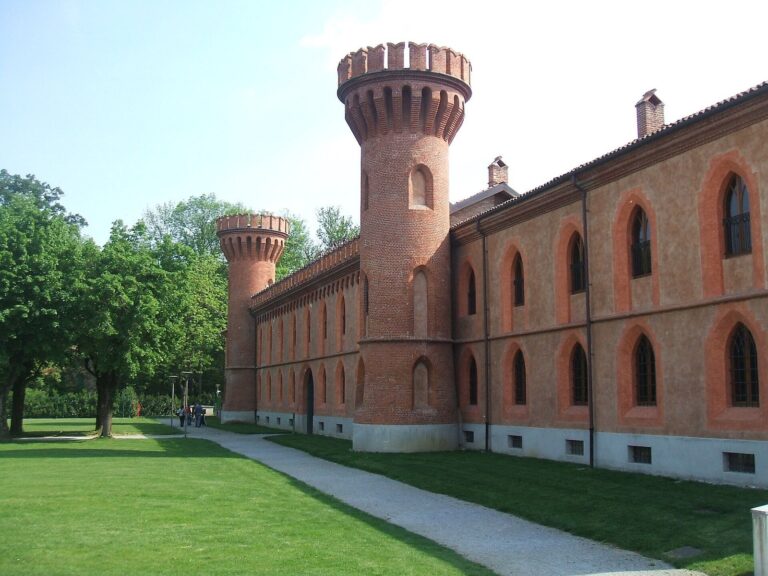
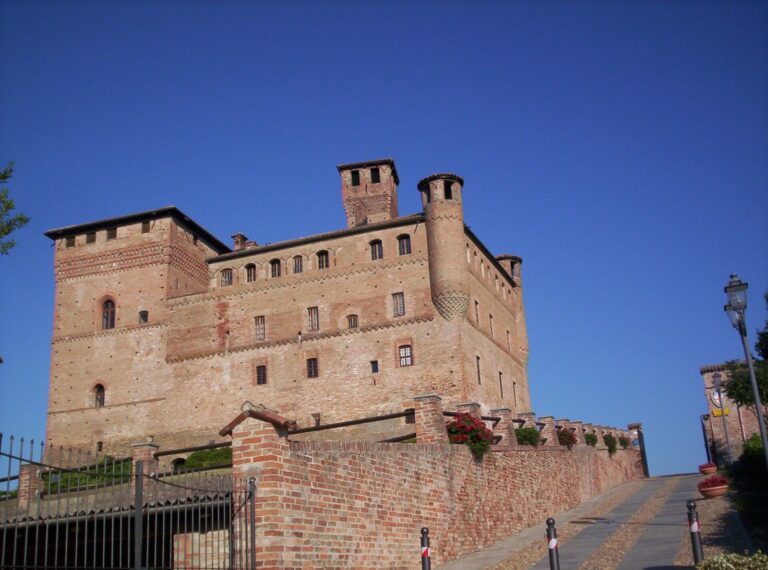
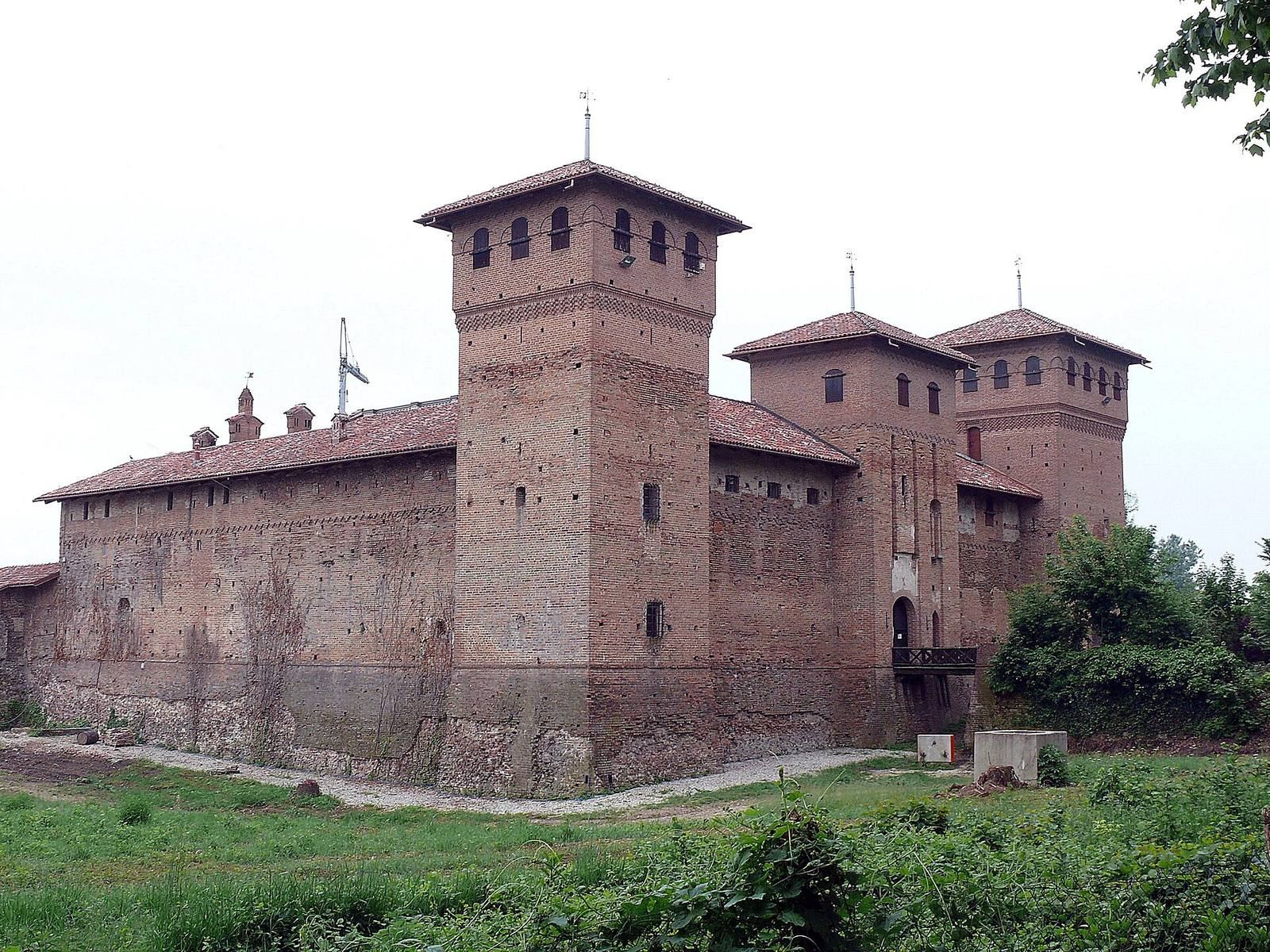
The castle stands on a wedge-shaped plateau at Cherasco’s edge, where the Stura di Demonte and Tanaro rivers meet. The naturally protected site overlooks their confluence. Built entirely of brick, the castle has a quadrangular plan with a tower at each corner. A smaller tower marks the entrance, which had a drawbridge. This arrangement was common in Visconti territories.
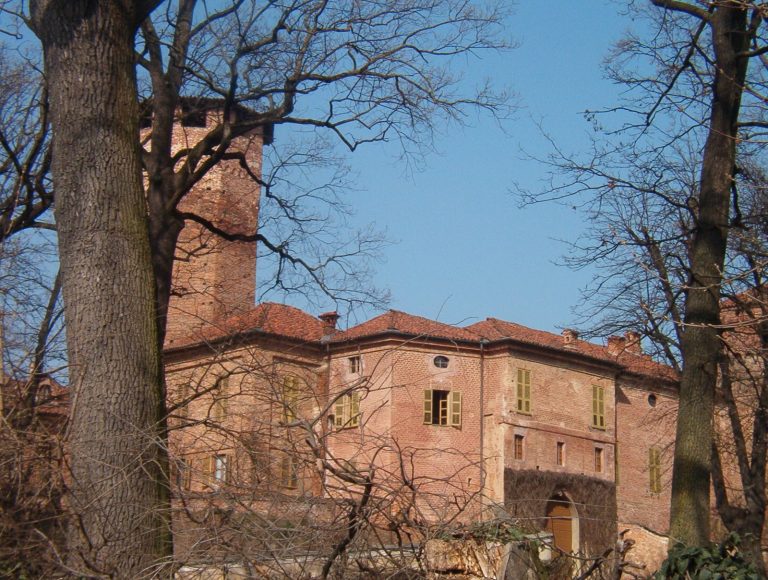
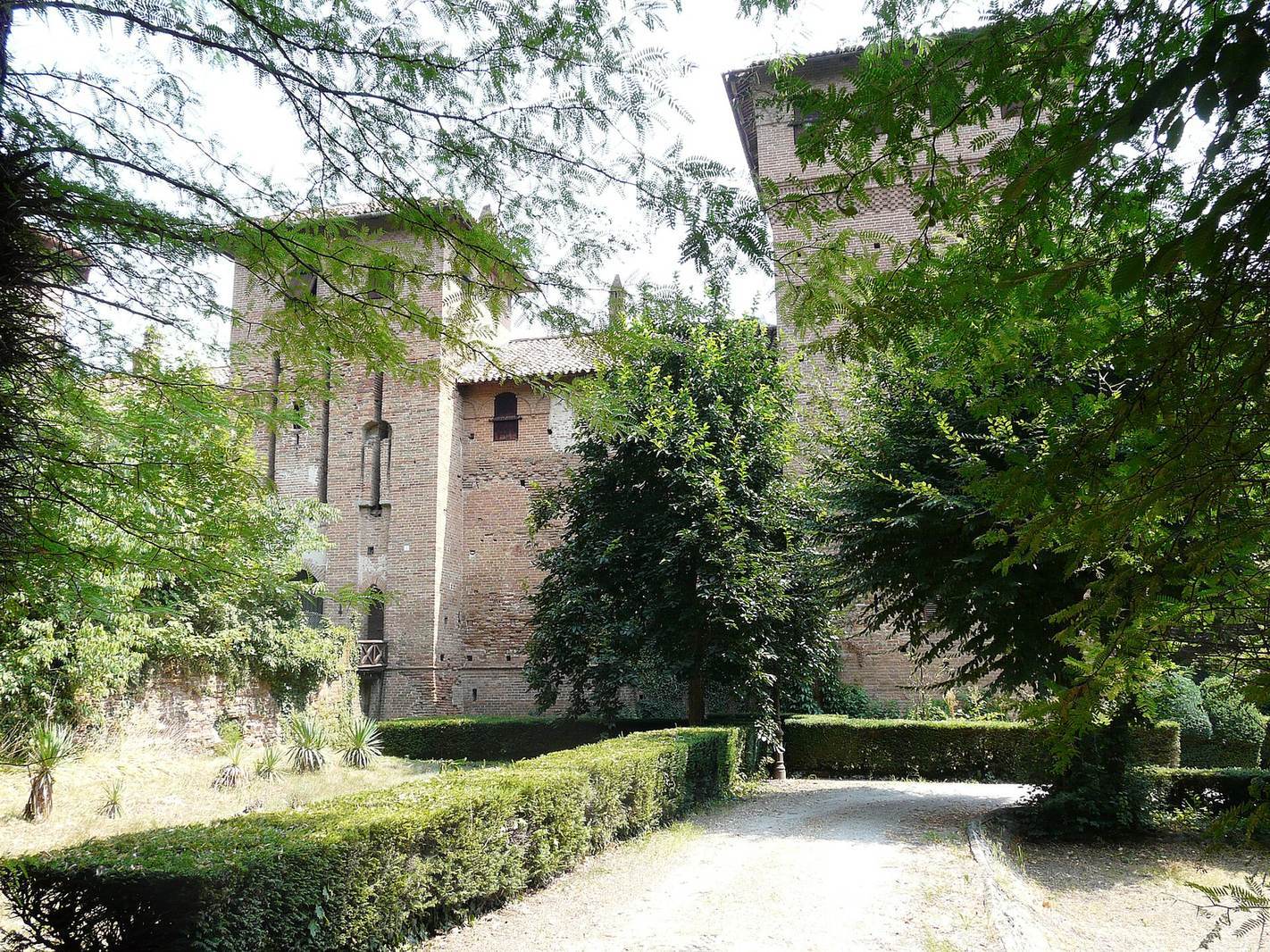
The building’s present form reflects extensive 20th-century work, including additions within the walls, raised towers, and redesigned interiors. Set within a residential estate with an Italian-style garden, the partly reconstructed castle is in good condition.