Castle Pollenzo: A Savoy Royal Residence and Agricultural Estate in Italy



Site at a Glance
- Rating
- 4.5
- Popularity
- Low
- Country
- Italy
- Primary era
- Modern
- External website
- Open
- Eras represented
- Medieval, Modern
- Civilizations
- Kingdom of Sardinia
- Site type
- Domestic
- Remains
- Palace
On this page11 sections
History
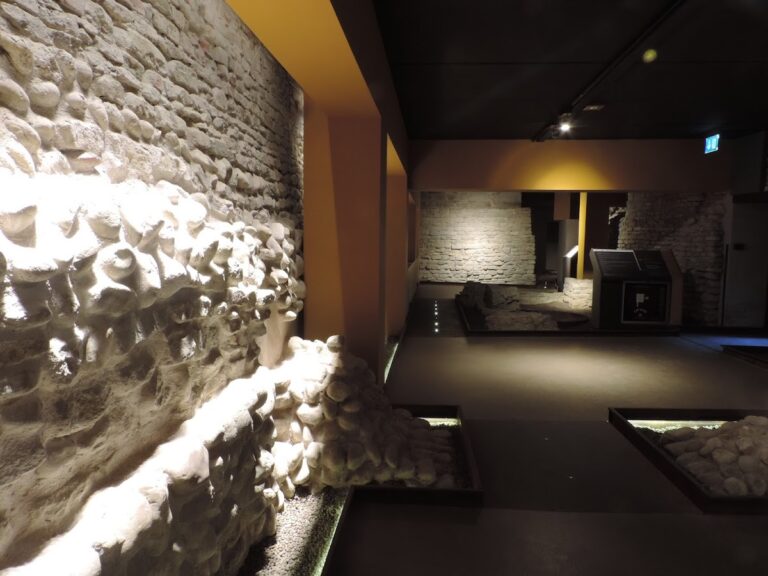
Castle Pollenzo is a historic castle complex in Pollenzo, a hamlet of Bra in Piedmont, Italy. Known to the Romans as Pollentia, the settlement has a history of about two millennia, during which fortifications, castles, and churches were repeatedly built and destroyed. Archaeological excavations have brought to light Roman and early medieval finds.
Medieval Foundation
Conflicts among the major communes of Lower Piedmont during the twelfth and thirteenth centuries led to the complete destruction of the earlier settlement. Pollenzo was subsequently made the seat of a county held by Antonio Porro, a Visconti patrician, meaning an aristocrat associated with the Visconti ruling family of northern Italy.
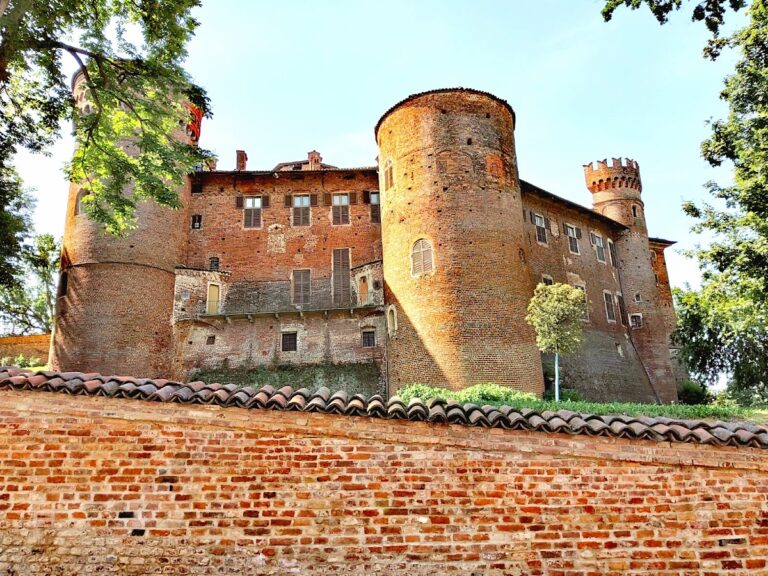
In 1386, Antonio Porro promoted the construction of a new castle. The work was carried out by the engineer Andrea da Modena. Within a few decades, the fortress had become a prestigious feudal residence of the marquises of Romagnano.
Renaissance Transformation
During the second half of the sixteenth century, the marquises of Romagnano undertook a major renovation in the Mannerist style. Mannerism was a sixteenth-century artistic approach known for sophisticated, often elongated or elaborately composed forms. Sculptural remains and written documents have made it possible to reconstruct this phase, which was almost entirely erased during the nineteenth-century rebuilding.
The Carloalbertine Rebuilding
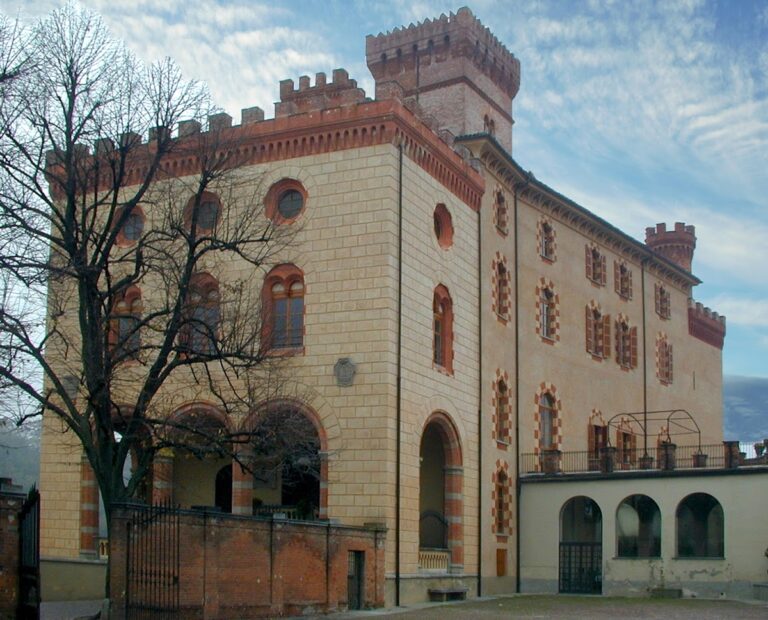
Between 1832 and 1847, King Carlo Alberto of Savoy-Carignano radically transformed Pollenzo into a romantic royal summer and hunting residence. Carlo Alberto belonged to the Savoy-Carignano branch of the House of Savoy, the ruling dynasty whose dukes, princes, and kings created a network of royal residences and public buildings across their territories. The project evoked an idealized Middle Ages while incorporating an opulent classicizing aesthetic.
The rebuilding destroyed most of the medieval and early modern settlement, including many fourteenth-century rural and defensive buildings, the former Church of San Vittore, the internal and external road network, and the four ports linking Pollenzo, Isola, and the right bank of the Tanaro River. The castle was extensively rebuilt both inside and out, while the donjon, the principal fortified tower of a medieval castle, remained the principal substantially intact exterior element.
Pelagio Palagi directed the overall artistic conception, working with Ernesto Melano on the buildings and Xavier Kurten on the new park. Carlo Bellosio, Gabriele Capello, Giuseppe II Gaggini, and Pietro Cremona also contributed to the ensemble. Their work created a unified composition of square and fountain, church, Albertina farm, castle, and Agency. Palagi’s unrealized Neo-Gothic design for the castle facades is preserved in the Palagi archive at the Archiginnasio in Bologna. Neo-Gothic was a nineteenth-century revival of medieval Gothic architecture.
Royal Estate and Later Ownership
The royal estate developed around the castle as an integrated agricultural enterprise. It included the Agency, park, cultivated land, farms, and vineyards. Carlo Alberto intended Pollenzo as a model agricultural establishment where experiments could improve agricultural and wine-production yields. Work included trials with cereals and viticulture, while the Genoese oenologist Paolo Francesco Staglieno began producing “Pollenzo Wine” for the king.
After abdicating on 9 May 1946, Vittorio Emanuele III, King of Italy from 1900 until 1946, adopted the name Count of Pollenzo and settled there. He devoted himself to agricultural research. Following the institutional change of 1946, the castle and other privately held Savoy properties became involved in a prolonged legal dispute. The castle and part of the estate remained with the Savoy family until 1972, when they were sold to the Frus family, owners of the Castor household-appliance company. The property has remained privately owned.
Pollenzo forms part of the Residences of the Royal House of Savoy, which UNESCO inscribed as a World Heritage site in 1997 for their architectural and historical importance. The Agency later entered a period of postwar abandonment. In 2000, the Slow Food association acquired it with public and private capital and began restoration, completed in 2004. The restored building returned the complex to active use while retaining its connection with agricultural and enological experimentation.
Remains
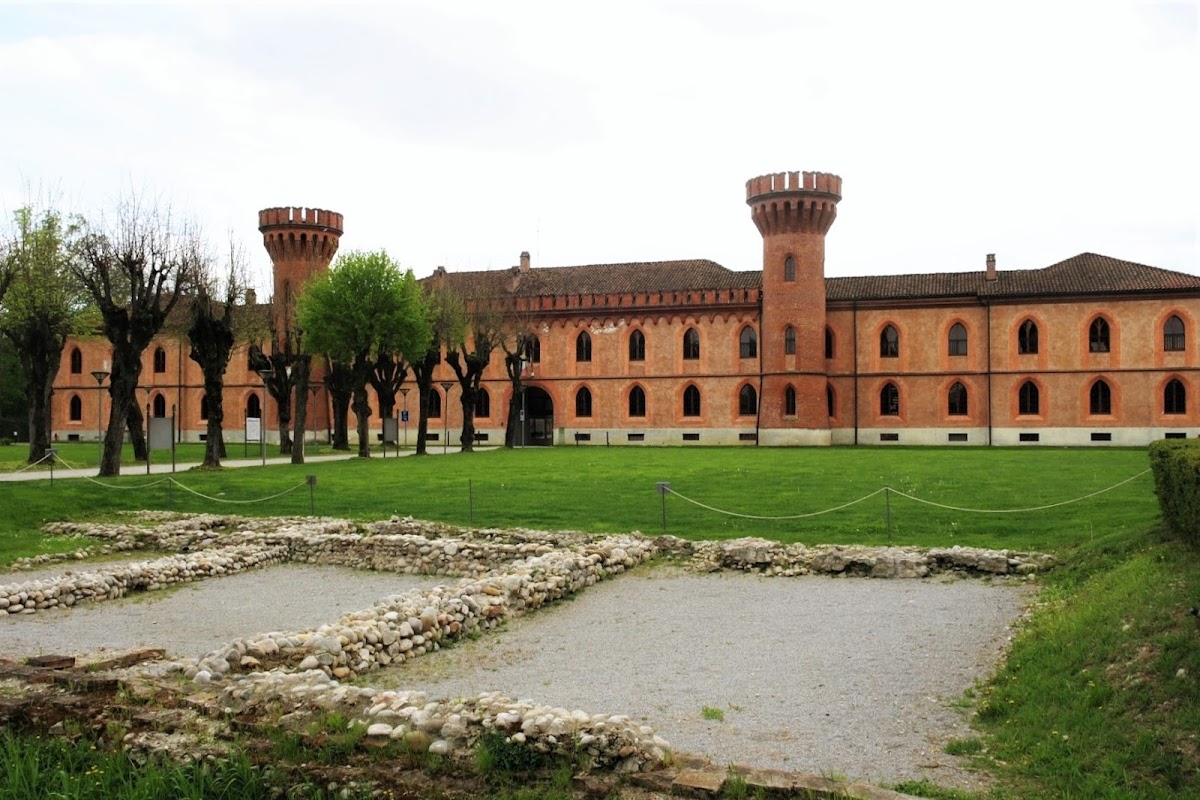
Castle Pollenzo survives as part of an integrated nineteenth-century ensemble organized around the castle, the Agency, the Church of San Vittore, the park, the Albertina farm, the square and fountain, agricultural land, farms, and vineyards. The castle preserves the results of medieval, Renaissance, and nineteenth-century alteration, while the adjacent buildings express the unified Neo-Gothic reconstruction directed during Carlo Alberto’s reign.
Castle and Church
Castle
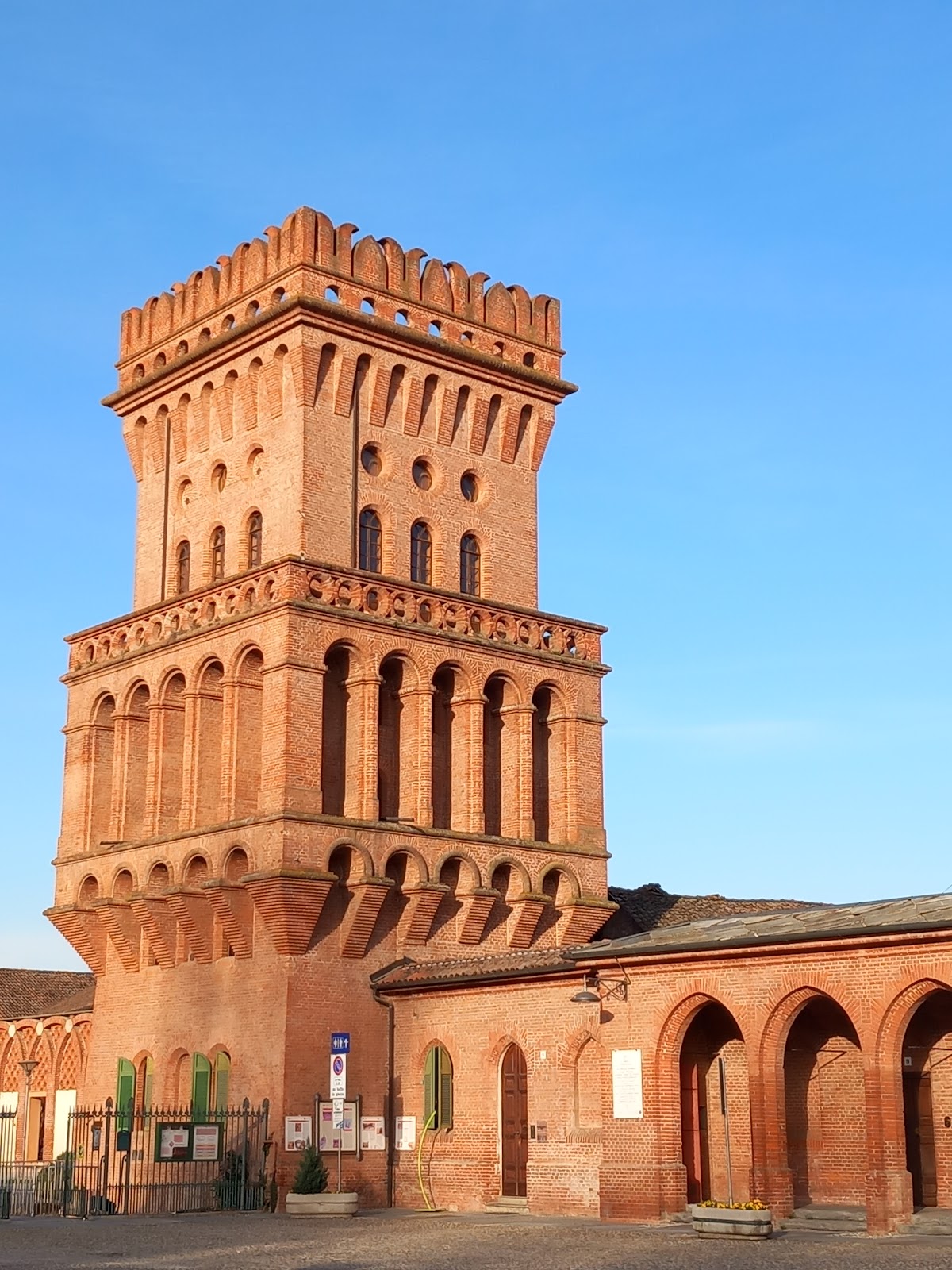
The surviving castle combines medieval origins with Renaissance and nineteenth-century changes. Its exterior was almost completely reshaped during the rebuilding of 1832–1847, and the interior was also largely altered. The donjon remains the principal substantially intact element of the earlier castle, preserving the strongest physical link with its medieval fortified phase.
Church of San Vittore
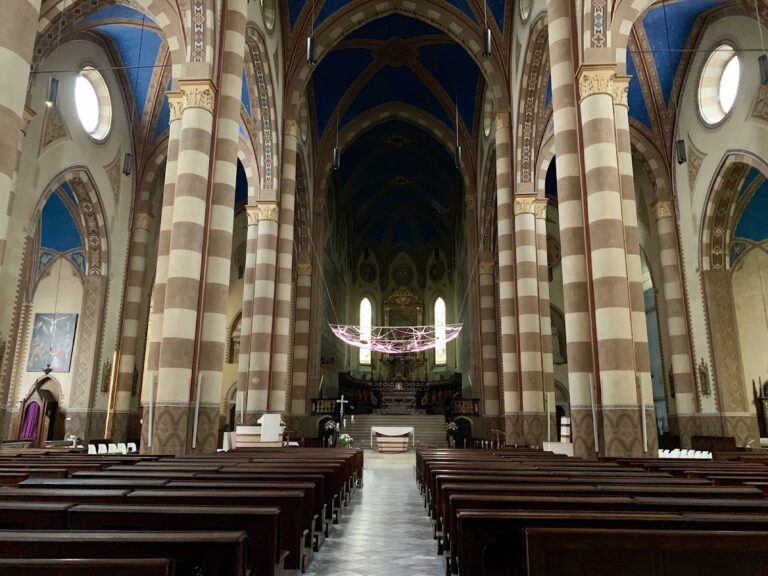
The Church of San Vittore is a Neo-Gothic building constructed around 1840 to designs by Ernesto Melano. Its interior contains Carlo Bellosio’s painting of the martyrdom of Saint Victor and a valuable sixteenth-century wooden choir transferred from Staffarda Abbey. The church forms part of the rebuilt composition beside the castle and square.
Agency and Agricultural Estate
Agency
The Agency is a large nineteenth-century Neo-Gothic courtyard building constructed from 1833 for the general administration of the Savoy lands. It stands immediately beside the castle, faces Piazza Vittorio Emanuele II, and is opposite the Church of San Vittore. As the functional center of the Pollenzo ensemble, it organized the administrative work of the royal agricultural estate.
Restored premises in the Agency now accommodate the University of Gastronomic Sciences, the Wine Bank, the Agency Hotel, and the Garden restaurant. These uses continue the building’s association with agriculture, food, and wine experimentation within the former Savoy estate.