Church of the Holy Trinity: The Capuchin Church of Pezinok, Slovakia
Site at a Glance
- Popularity
- Low
- Country
- Slovakia
- Primary era
- Early Modern
- Eras represented
- Early Modern, Modern
- Civilizations
- Austria-Hungary, Austrian Empire, Habsburg, Hungarian
- Site type
- Religious
- Remains
- Church
On this page13 sections
History
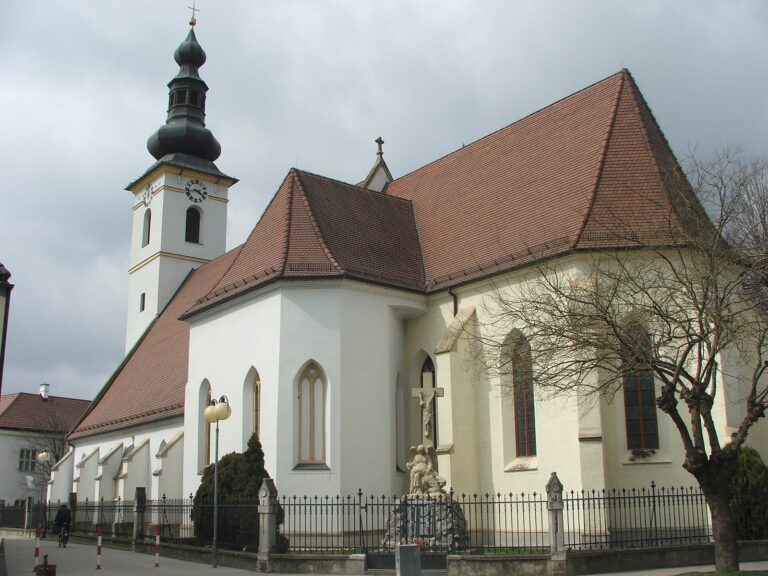
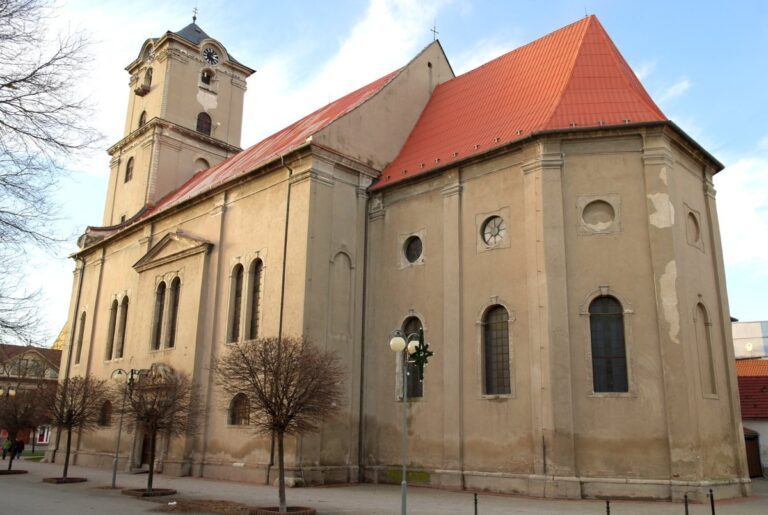
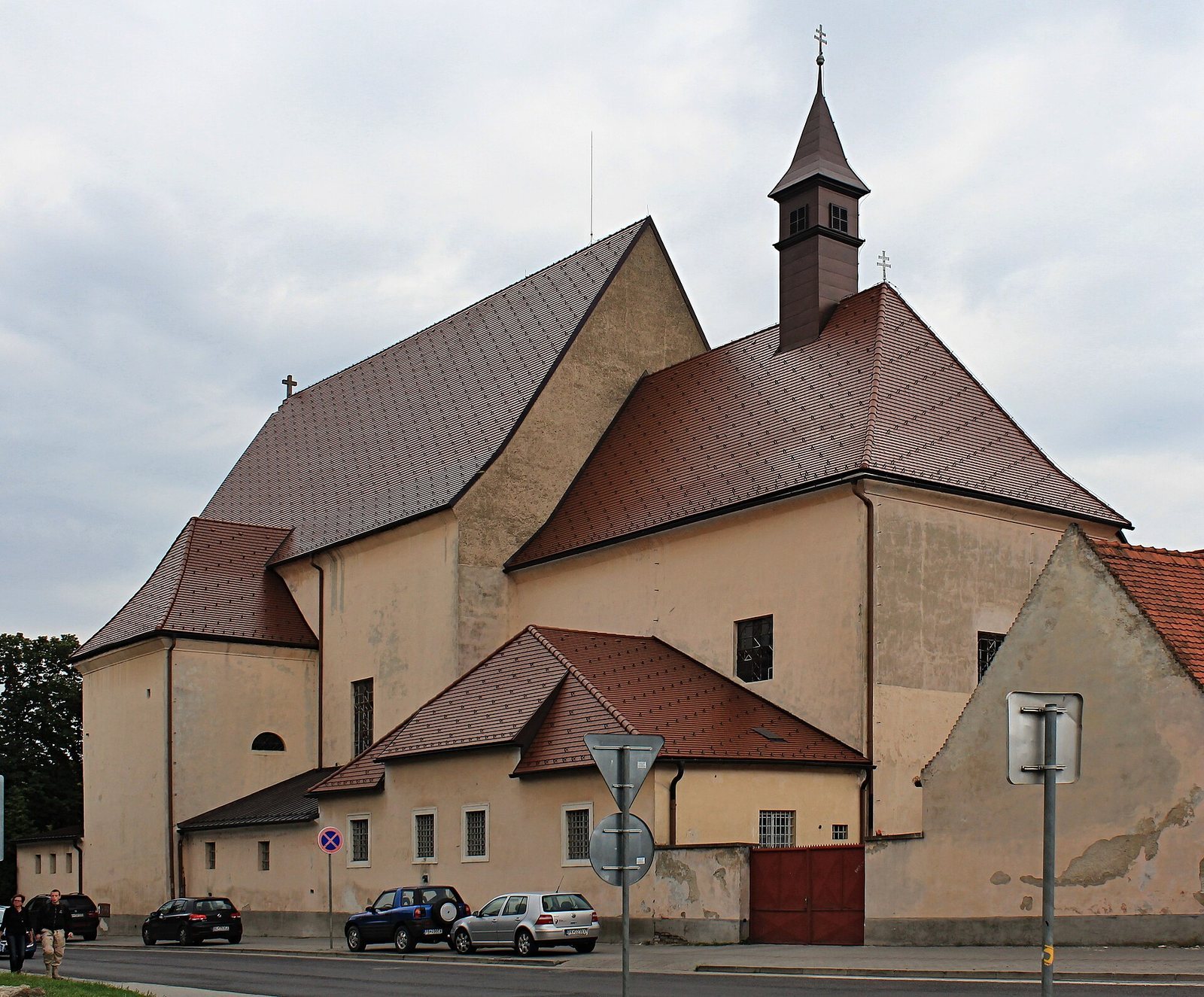
The Church of the Holy Trinity, also known as the Capuchin Church, is a Baroque Roman Catholic church in Pezinok, Slovakia. It belongs to the Capuchin Western Province and the Archdiocese of Bratislava, within the Pezinok deanery and parish. Dedicated to the Holy Trinity, the Christian belief in one God in three persons, its patronal feast falls on 16 June.
Capuchin arrival and construction
Capuchins, a reform branch of the Franciscan order, arrived in Pezinok on 10 June 1674. Archbishop of Esztergom Juraj Szelepcsényi brought them to the town as part of the Catholic Church’s renewal and response to Protestantism. The Capuchins were assigned the Church of the Blessed Virgin Mary, while its lower church, taken from the Evangelical church, became the new parish church. At first the Capuchins lodged in a private house, then in a separate house rented from the town.
The church and monastery were built on the site of Baron Matej Hedly’s manor. Bishop Andrej Kürtessy laid the church’s cornerstone in 1715, and its roof was in place by 1716. The Capuchins moved into the monastery in 1726, when the first services were held; Ján Paján, a parish priest from Modra, preached. Archbishop Imrich Eszterházi attended the church’s consecration on 9 July 1730, performed by Bishop Žigmund Beréni.
Changing uses of the monastery
On the night of 13-14 April 1950, the monastery became an internment facility for superiors of religious orders whose monasteries had been closed that night. The facility was soon transferred to Báč. Capuchins were initially allowed to stay in Pezinok, but most were later removed. Three remained to conduct services, and they too were taken away in 1952.
The monastery was subsequently used to retrain religious seminarians and later to confine diocesan priests. Sisters from hospitals were brought there, followed by elderly priests and members of religious orders. A Charity Home for elderly and sick priests was established, and sisters from other orders were eventually removed, leaving Vincentian sisters, whose communities follow the tradition of Vincent de Paul. The Charity Home’s spiritual director also administered the church. The church was registered as a Slovak National Cultural Monument on 17 July 1963.
Return of the Capuchins
Capuchins returned to Pezinok in 1990 and resumed using the church and part of the monastery. The Charity Home closed in 2004. Since then, the church and monastery have served the Capuchin community exclusively.
Remains
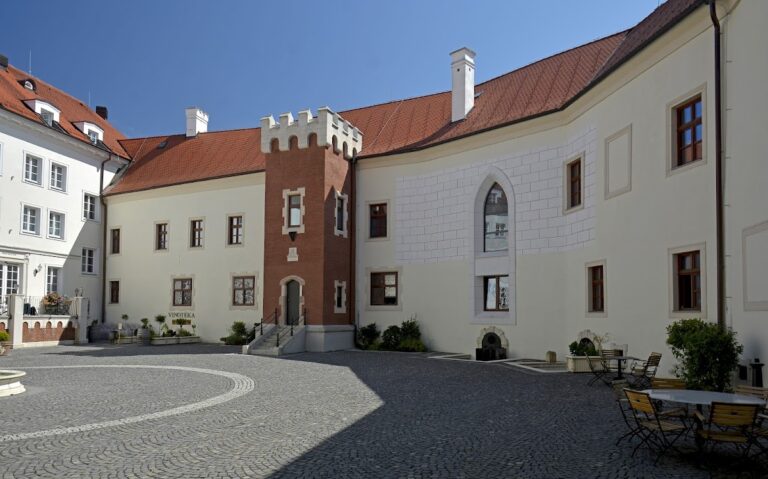
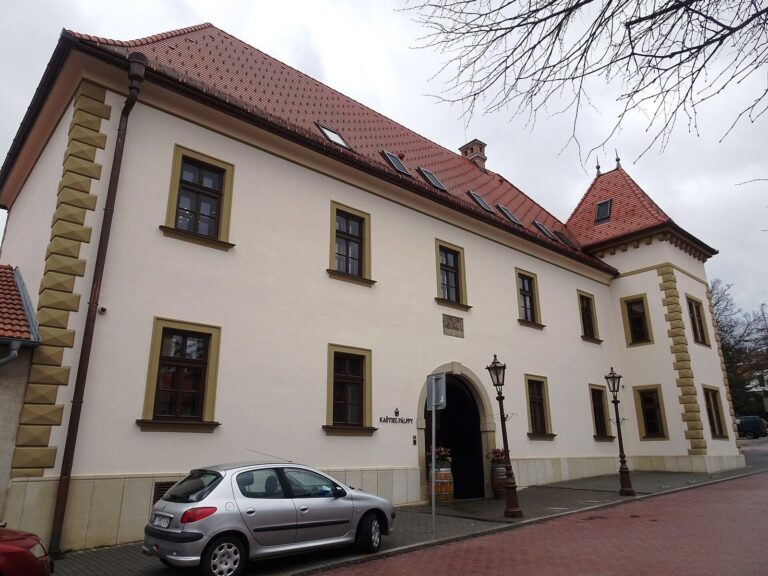
The Baroque church is a single-nave building, with one main body, joined to a four-wing Capuchin monastery. Its entrance passes through a tunnel. At the sanctuary, the area around the altar, the altar separates the main worship space from an oratory, a prayer room for the religious community behind it.
Church and interior
Rooms and layout
On the church’s right side are a separate confessional room, a sacristy for liturgical furnishings and a former archive. Above the oratory is a small tower containing a bell made in 1807 by Karol Filgrader of Trnava. An organ dating to 1822 stands on the choir loft, an elevated gallery associated with worship and music. A crypt, a chamber beneath a church, lies below the building.
Altars and painted decoration
The main altar bears a painting of the Holy Trinity by J. Kuch. Side altars used for prayer and devotion honor St Francis, St Fidel, St Felix and St Elizabeth. Augustín Barta painted the church walls in 1912.
Monastery and grounds
Monastery complex and garden
A theatre hall called the Shelter once formed part of the complex. After it was demolished, a new Charity Home building was erected on its site. The Capuchin garden originally reached almost to M. R. Štefánika Street and enclosed Holubyho Street.
Devotional features outside the church
Statues before the church
Statues of St Francis of Assisi and St Anthony were placed in front of the church in 1750. When the statue of St Francis weathered, it was replaced by a statue of St Florian, an early Christian martyr widely venerated in Central Europe, brought from the town’s lower gate. Vladimír Milko restored the outdoor statues in 1956 and 1996.
Cross, grotto and painted image
A cross in front of the church bears a painting of Jerusalem by Augustín Barta, dated July 1968. Brigita Čechová commissioned a Lourdes grotto, a devotional shrine recalling the grotto at Lourdes, France, dating to 1947. Barta also painted an image of the Miraculous Medal of the Virgin Mary on the first house in front of the church.