Taylor Institution: Oxford’s Library for European Languages
Site at a Glance
- Popularity
- Medium
- Country
- United Kingdom
- Primary era
- Modern
- Eras represented
- Modern
- Civilizations
- British
- Site type
- Civic
- Remains
- Library
On this page13 sections
History
Foundation and early use
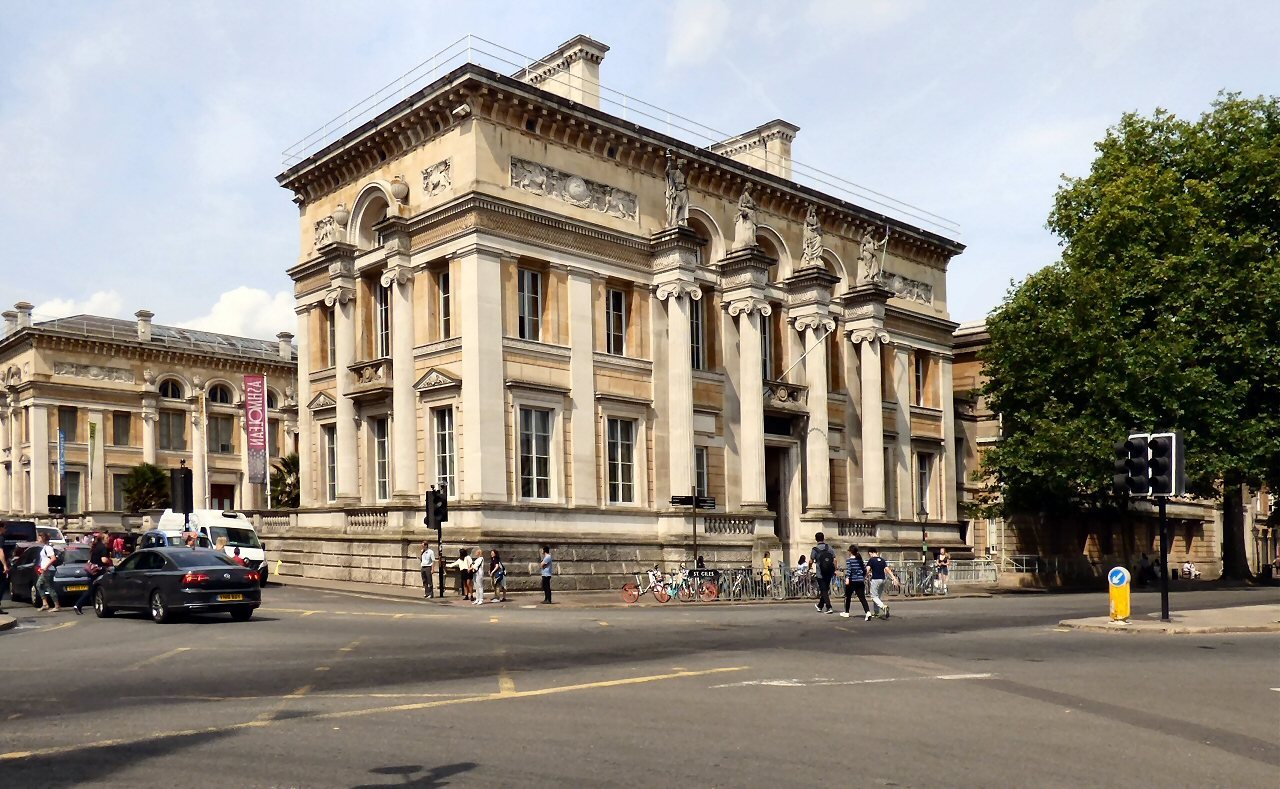
The Taylor Institution, commonly known as the Taylorian, is a language library and teaching institution at the University of Oxford in Oxford, United Kingdom. It was established and opened in 1845 to support the study of European languages, with much of its funding coming from the estate of architect Sir Robert Taylor (1714–1788). Modern European languages were not then taught at Oxford.
Because the Bodleian Library, Oxford’s principal research library, had insufficient space, the new building initially served other purposes as well. It hosted William Stubbs’s lectures on English history and housed Frederick William Hope’s butterfly collection.
Growth of language studies
A yearly lecture on foreign literature has been held at the Taylorian since 1889. Oxford established its Faculty of Medieval and Modern Languages and its Honours School in 1903, developing the university teaching of modern languages that had not existed when the Institution was founded.
Expansion and recognition
The building was extended northward along St Giles’ in 1931 and again in 1938, to designs by T. H. Hughes. It received Grade I listed status in 1954.
Remains
Building and layout
Main building
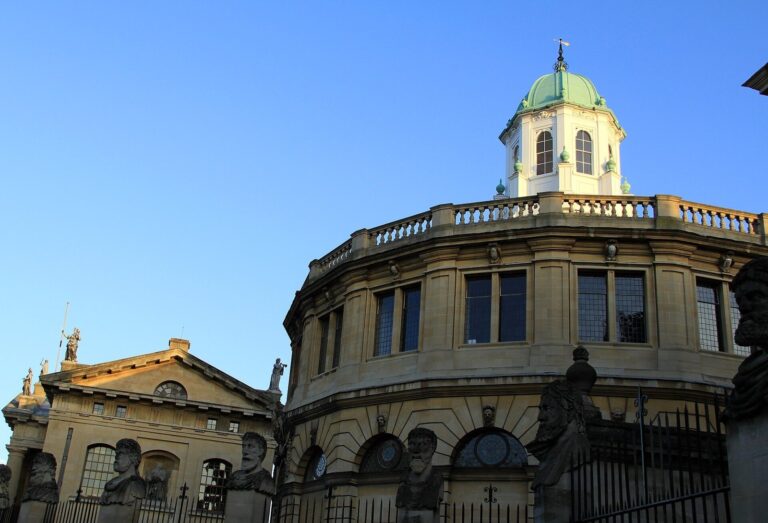
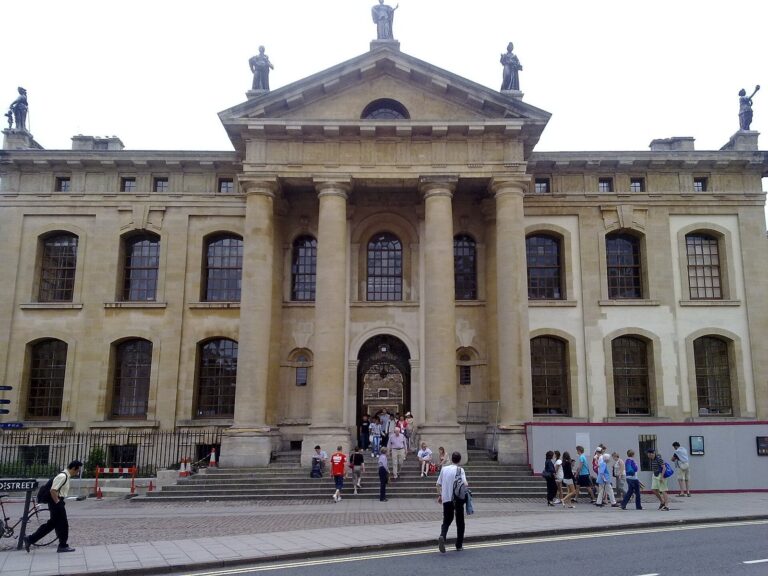
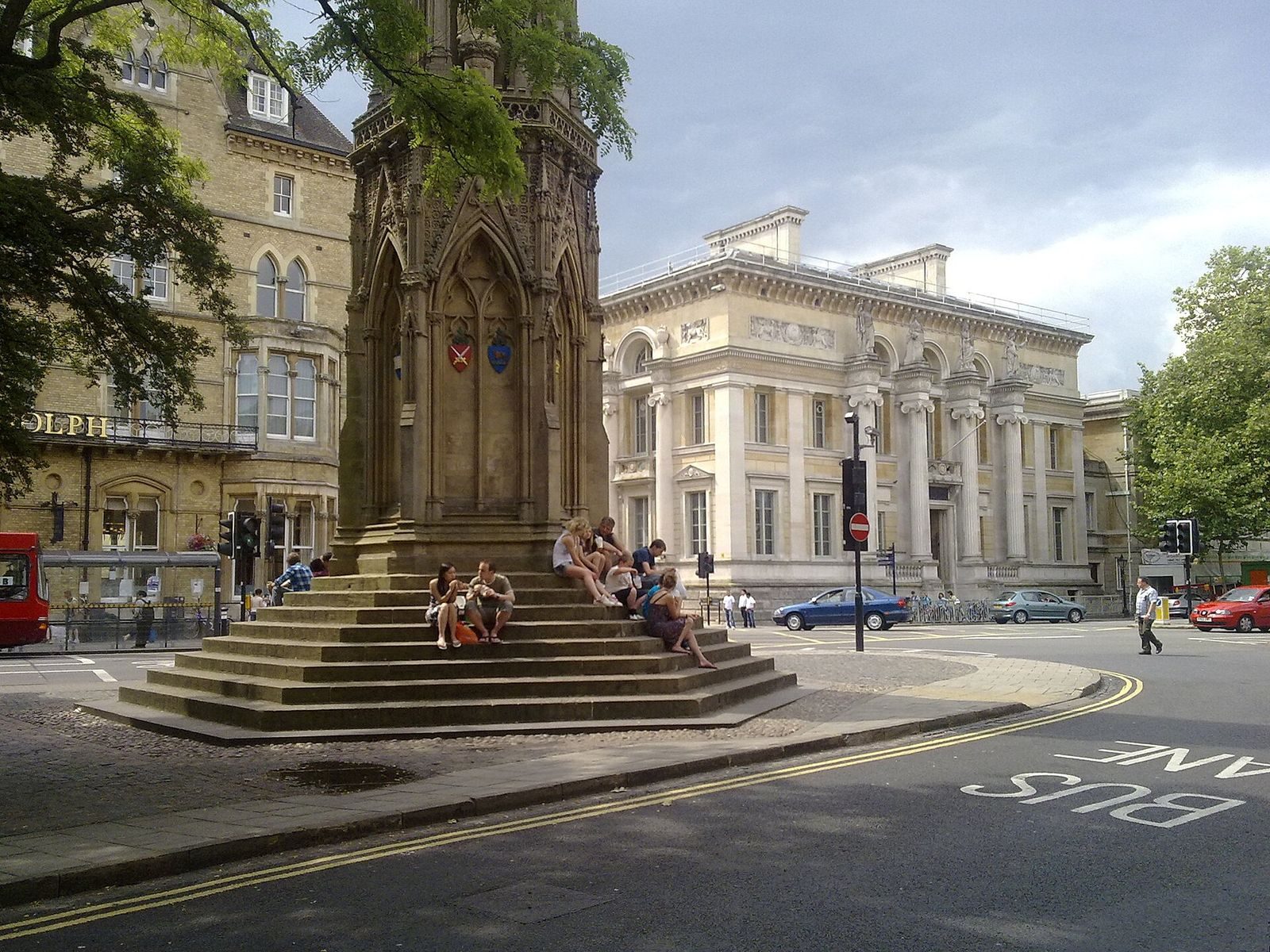
At the southern end of St Giles’, the Taylor Institution occupies the east wing of a neoclassical building designed by Charles Cockerell for both the Institution and the University Galleries, now the Ashmolean Museum, Oxford’s museum of art and archaeology. The Institution’s lecture rooms are used by the University’s Faculty of Medieval and Modern Languages.
Extensions and annex
The extensions continue north along St Giles’. A separate annex at Wellington Square houses collections in Greek, Slavic, Uralic, and Albanian languages.
Library collections
Language holdings
The library holds around 500,000 volumes. Its collections include French, German, Italian, Spanish, including South American Spanish, and Portuguese, including Brazilian Portuguese.
German holdings
German-born scholar Max Müller began the German collection with publications he brought from Germany. Its holdings include many pamphlets by Martin Luther, a leading figure in the Protestant Reformation, including a first edition of Sendbrief vom Dolmetschen. The collection ranges from these early works to contemporary German literature and includes a lock of German writer Goethe’s hair.
Italian, Spanish, and Portuguese holdings
The Italian collection includes works by Dante and Tasso, as well as one of the largest collections of Giovanni Battista Guarini’s Il Pastor fido. It also holds works by Foscolo and Futurist manifestos from the early twentieth-century artistic and literary movement. Spanish and Portuguese holdings include early editions by Spanish writers Lope de Vega, Cervantes, Góngora, Quevedo, and Calderón, and by Portuguese poet Luís de Camões.
French and Russian holdings
French is the library’s strongest collection. It includes the only complete collection worldwide of French editions of Voltaire’s Candide printed in 1759, the year it was first published. The holdings also include one of only two known copies of the first edition of Adolphe by French-language writer and political thinker Benjamin Constant. Russian first editions are also well represented.