Lincoln College: A Medieval College of the University of Oxford
Site at a Glance
- Popularity
- Very High
- Country
- United Kingdom
- Primary era
- Medieval
- Eras represented
- Medieval, Early Modern, Modern
- Civilizations
- British, English
- Site type
- Civic
- Remains
- University
On this page20 sections
History
Lincoln College, formally the College of the Blessed Mary and All Saints, Lincoln, is a University of Oxford college on Turl Street in Oxford, United Kingdom. Founded in 1427 by Richard Fleming, then Bishop of Lincoln, it is the ninth-oldest surviving Oxford college. Fleming established it to oppose Lollardy, a late-medieval reform movement associated with John Wyclif that challenged established church doctrines.
Foundation and refoundation
A charter granted by King Henry VI placed the parishes of All Saints, St Michael at the North Gate and St Mildred under the college and its rector, the head of the institution. The college began with a weak endowment and struggled during the Wars of the Roses, the dynastic conflict between Lancaster and York. Its charter had been issued under the Lancastrian dynasty, which was later displaced.
Fleming died in 1431, and the first rector, William Chamberleyn, died in 1434. The college was left with little money and few buildings. Its second rector, John Beke, attracted new support, and by 1436 the college had seven fellows, or senior academic members. John Forest, Dean of Wells and a friend of Beke, made a substantial gift. The college promised to recognize him as a co-founder but did not do so. His donations helped pay for a chapel, library, hall and kitchen.
In 1478, Thomas Rotherham, Bishop of Lincoln, secured a new charter from King Edward IV and effectively refounded the college. His support followed a sharp sermon by the incumbent rector.
Wesley and Methodism
From 1726, fellow John Wesley held religious meetings at Lincoln with his brother Charles and other students. Their circle became known as the Holy Club, an Oxford religious group associated with the Wesley brothers. Wesley’s visits grew less frequent after he left for Georgia in 1735 as a missionary chaplain. He later signed publications as a former fellow of Lincoln College.
Traditions and institutional change
Lincoln and neighboring Brasenose College share an annual Ascension Day custom. Local tradition links it to the death of a Brasenose student, though the story has two versions: a Lincoln porter supposedly refused him entry while a mob pursued students, or a Lincoln student supposedly killed him in a duel. In either telling, Lincoln’s invitation to Brasenose members through a connecting door, with beer offered as penance, followed the death. Since the nineteenth century, ivy has been used to flavor the beer to discourage excessive drinking.
The all-male Goblin Club, a dining society associated with Lincoln, was founded in 1902. In 2019, the college’s Junior Common Room voted to extend a ban on the society, which was perceived as elitist and racist. Mensa, a society for people with high measured intelligence, was founded at Lincoln in 1946 by Australian lawyer Roland Berrill and British researcher and lawyer Lancelot Ware. It is described as the world’s oldest high-IQ society.
Lincoln created the first Middle Common Room in Oxford or Cambridge reserved exclusively for graduate students in 1958; the college’s own MCR was founded in 1960. After more than five centuries as a men-only institution, Lincoln admitted its first mixed-sex cohort in 1979.
Remains
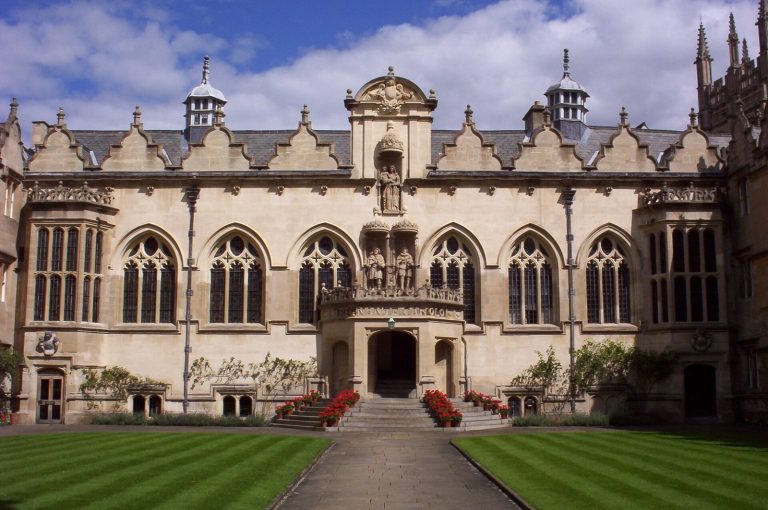
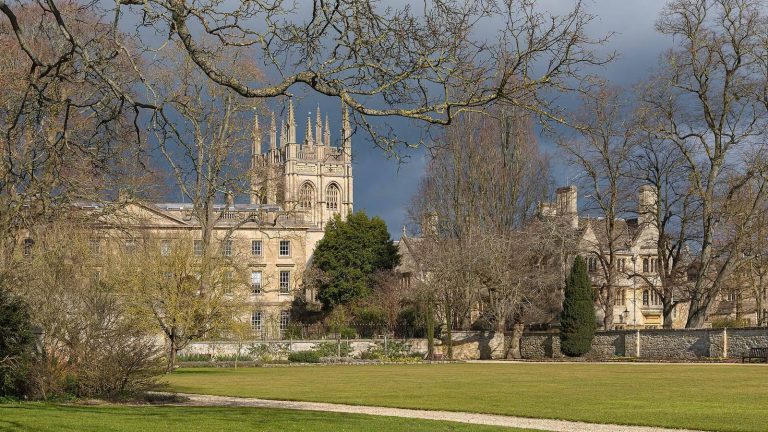
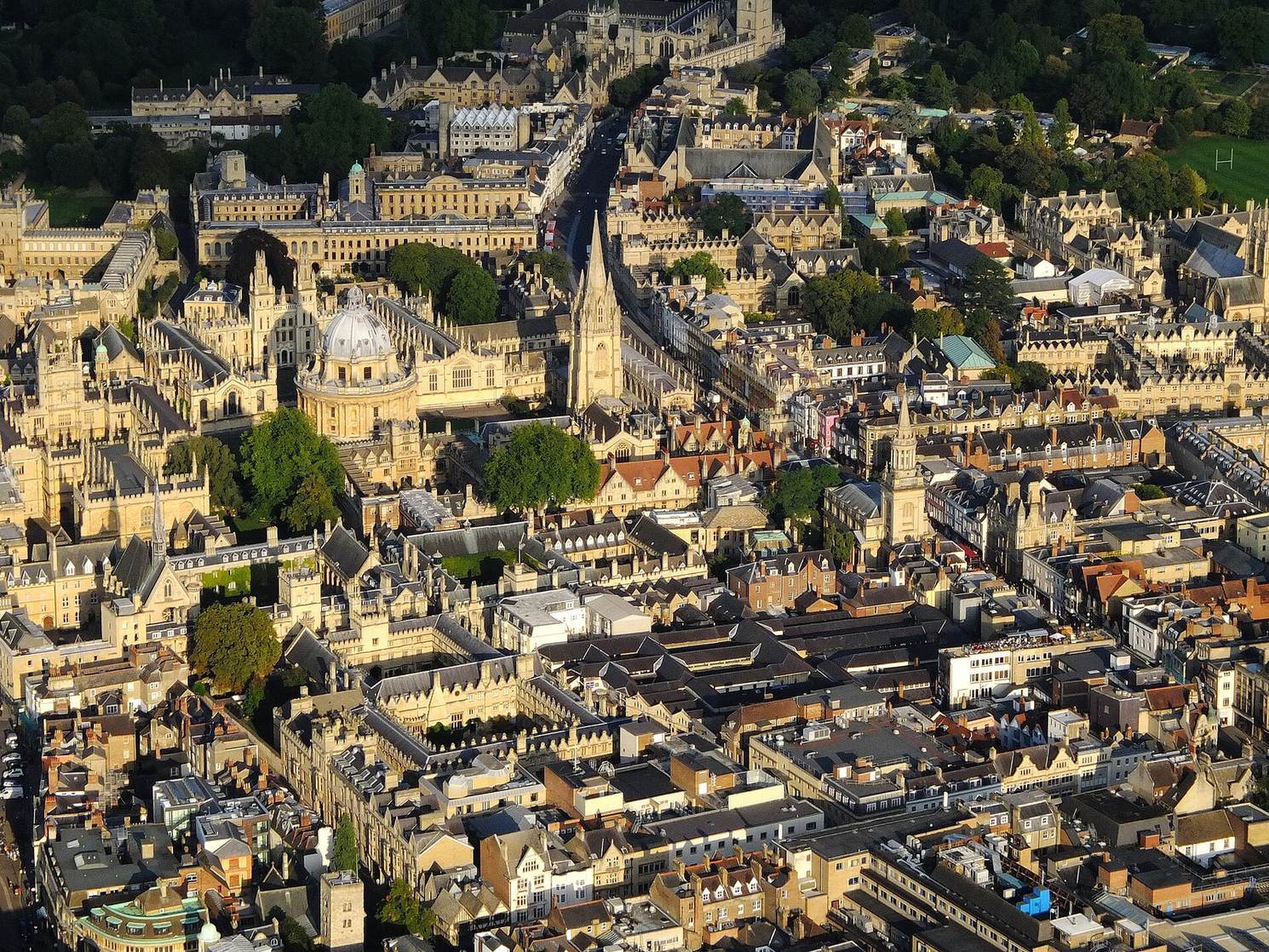
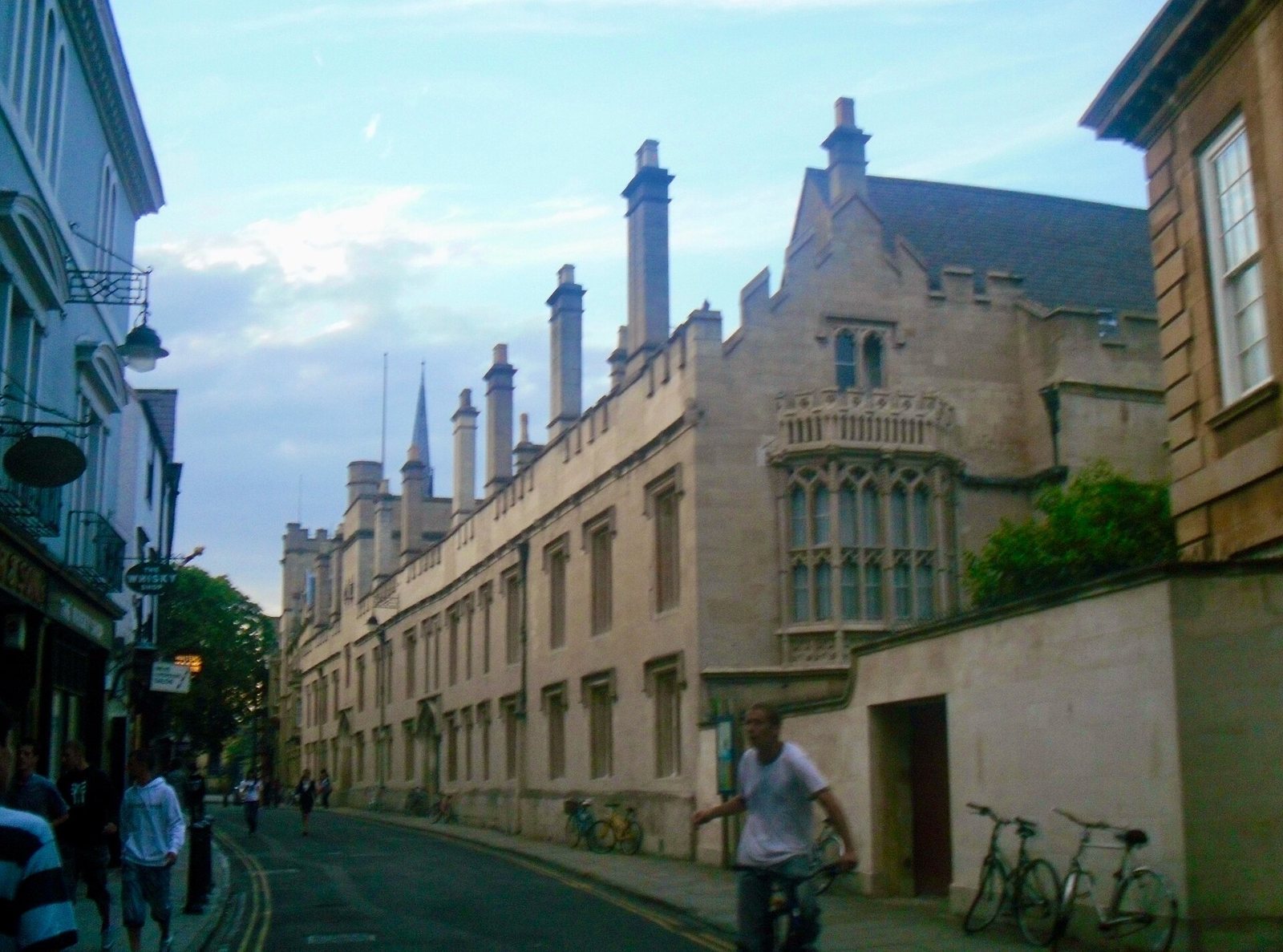
The stone buildings of Lincoln’s central precinct are arranged around three principal quadrangles, or courtyards, alongside additional irregular spaces. The layout brings together buildings from several centuries, from the fifteenth-century Front Quad to nineteenth-century additions. Architectural historian Nikolaus Pevsner judged that Lincoln retains more of the character of a fifteenth-century Oxford college than any other.
The central precinct
Quadrangles and street frontage
The Front Quad dates from the fifteenth century, while Chapel Quad was built between 1608 and 1631. The Grove, another quadrangle, was added in the nineteenth century. The Turl Street frontage and Front Quad remain two storeys high. Their low roof walls and notched battlement tops were added in the nineteenth century. Virginia creeper, Parthenocissus quinquefolia, covers the Front Quad walls, turning scarlet in autumn after its summer growth and leaving the walls bare in winter.
Deep Hall and kitchen
Deep Hall, also called Deepers, lies below the Great Hall and was formerly the college beer cellar. It is among the oldest parts of the college, and its pillars may be the oldest surviving feature. The wine cellar is reached through Deep Hall and extends beneath The Grove. Lincoln also has one of the United Kingdom’s oldest working medieval kitchens.
Rector’s lodgings
The Rector’s lodgings on Turl Street were built in 1929–1930 in a revival of Georgian design. A gate from Chapel Quad leads to them, and their main entrance faces Turl Street.
The chapel
Windows and arrangement
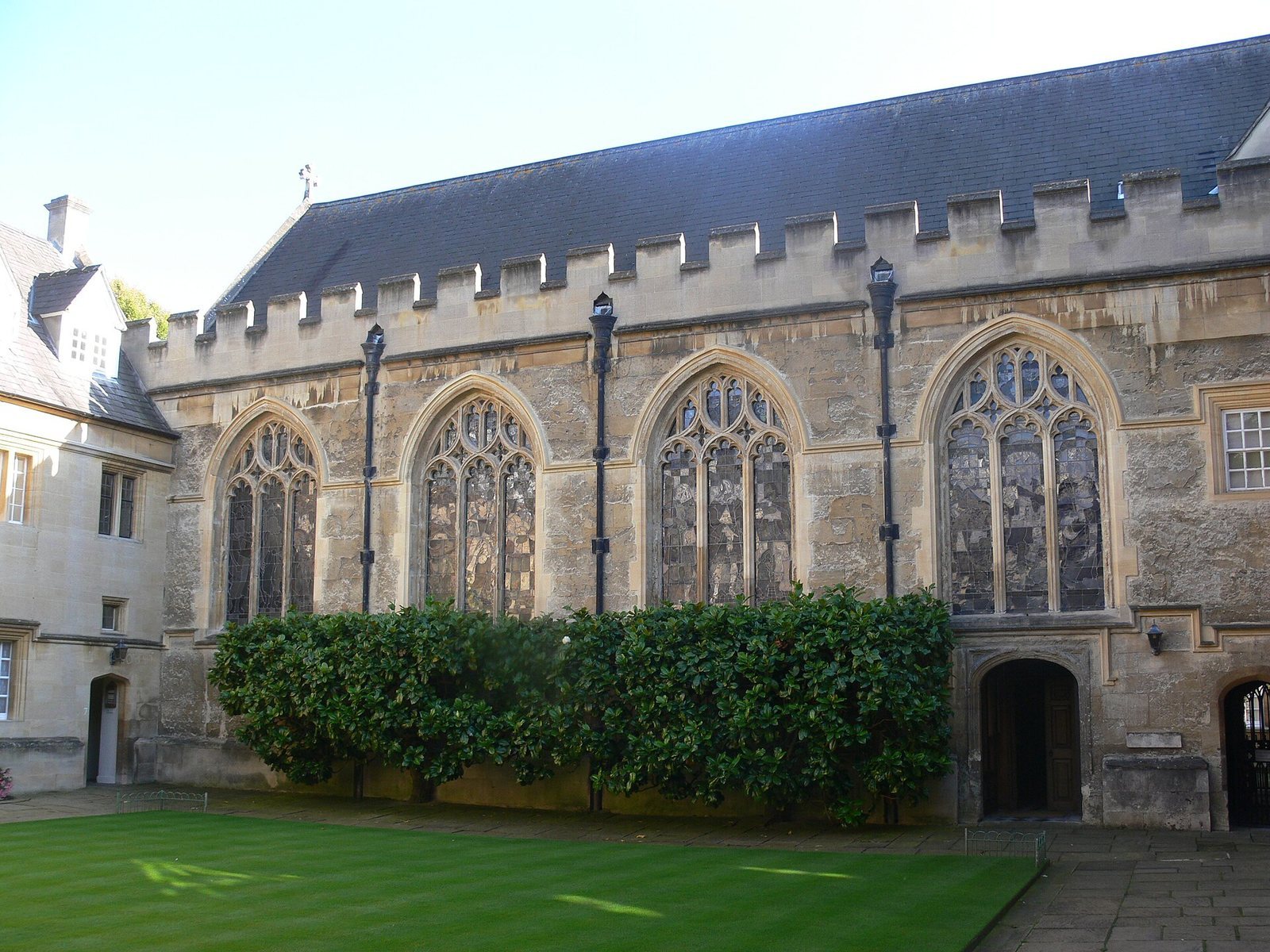
Built between 1629 and 1631, the chapel is in the late Perpendicular style, a late English Gothic style marked by vertical lines. Its enamelled windows were painted and fired, rather than made with colour incorporated into the glass. Created by Abraham van Linge, the east window contains twelve biblical scenes, with six from Jesus’ life above six Old Testament scenes, including the creation of Adam and Eve and Jonah being expelled by a whale. The north windows show the Twelve Prophets, and the south windows the Twelve Apostles.
Interior and restoration
A cedar screen separates the entrance area, which contains the organ, from the main chapel. The cedar reportedly gave off a strong scent for about the first century of the chapel’s existence. Wooden figures of Saint Peter, Saint Paul, Moses and Aaron were placed on the front pews, and a carved ceiling was installed in the 1680s. The interior has remained substantially unchanged since those additions.
A restoration campaign followed an assessment in the early 1990s that the chapel was in unacceptable disrepair. Work began in 1999 to preserve its seventeenth-century character. Black slate and white marble floor tiles were cleaned and repaired, or replaced where needed. Poor ventilation and wood laid directly on earth had contributed to woodworm damage and wet rot. Cracks in the enamelled windows were repaired where they were especially visible.
All Saints’ Church and the library
Church and tower
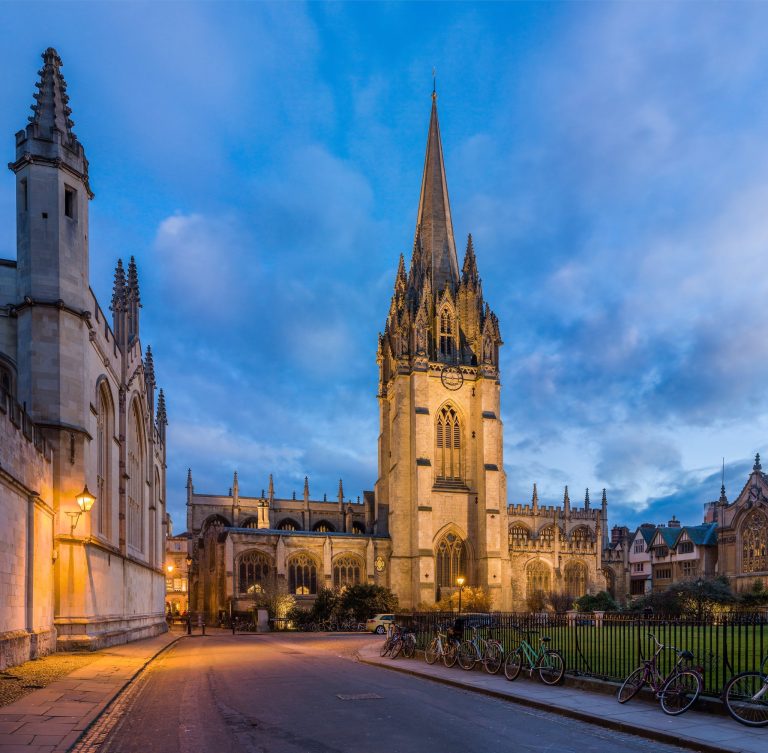
The library occupies the converted eighteenth-century All Saints’ Church, which was transferred to the college in 1971. After the church spire collapsed in 1700, Henry Aldrich designed a replacement church. Later work on the tower and spire may have been by architect Nicholas Hawksmoor. The tower holds eight bells and is a prominent part of Oxford’s skyline.
Library rooms and collections
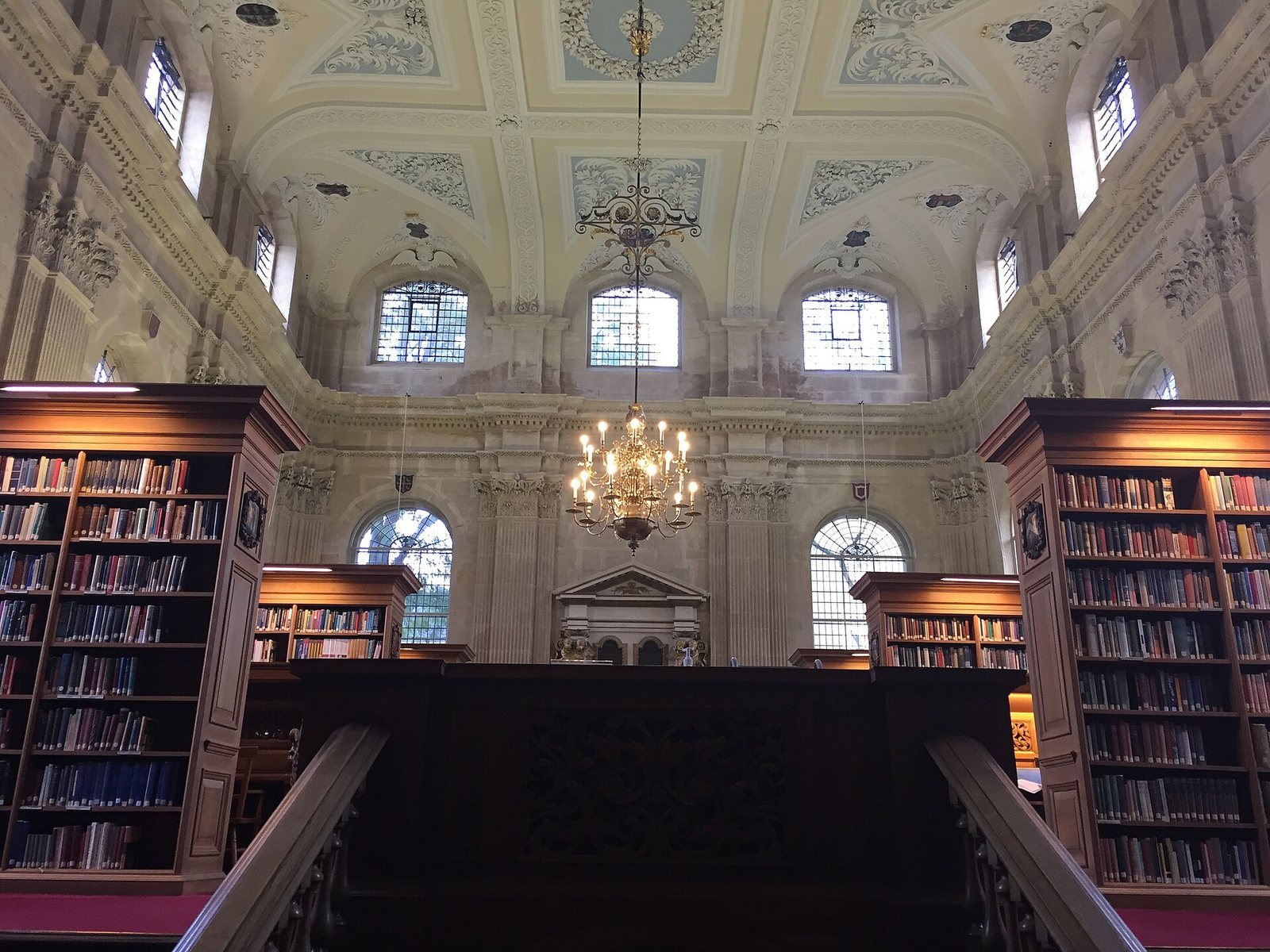
The library holds about 60,000 books. Its upper reading room, the Cohen Room, has an ornate plaster ceiling. The Senior Library downstairs contains older college holdings, including English Civil War pamphlets, Wesleyana, meaning writings and materials associated with John Wesley and Methodism, plays from the late seventeenth and early eighteenth centuries, and a small manuscript collection. The science library is also downstairs.
Other buildings and features
Wesley memorials and college arms
A portrait of John Wesley hangs in the Hall, and a bust of him faces the Front Quad. A room believed to have been his workplace bears his name; American Methodists renovated it in the early twentieth century. The college’s arms bring together associations with founder Richard Fleming, the See of Lincoln, or bishopric, and Thomas Rotherham. One division has six horizontal silver and blue bands, three red lozenges and a black pierced star on a silver band. Another combines a silver field with a red shield bearing two gold lions and a blue band showing the crowned Virgin Mary and infant Jesus in gold, beneath a blue mitre decorated in gold. The green third division bears three gold stags, arranged two above one.
Buildings across Turl Street
The college owns all or part of most buildings opposite its main precinct across Turl Street, many of which provide student accommodation. Rooms above shops include the Mitre rooms, once guest rooms of the Mitre Inn. The college has owned the inn since the fifteenth century, and the rooms became part of the college in 1969; the restaurants remained with the inn. Lincoln House, directly opposite the college, was built as an annexe in 1939.
Other accommodation and academic buildings
Accommodation at Bear Lane occupies numbers 113 and 114 High Street and land extending back to the lane, given to the college by Emily and John Carr. Near Keble College on Museum Road, twelve terraced houses form Lincoln Hall, commonly called Mus Road. The EPA Science Centre was built behind them in the early twenty-first century, with apartment-style accommodation, teaching facilities and the college archives. The Berrow Foundation Building, completed in the mid-2010s, houses the MCR.
Commemorative portrait
In 2007, the college commissioned artist Daphne Todd to paint kitchen chef Jim Murden and butler Kevin Egleston, commemorating their work at Lincoln.