King’s Lynn Arts Centre: Medieval Guildhall and Historic Theatre
Site at a Glance
- Popularity
- Medium
- Country
- United Kingdom
- Primary era
- Medieval
- Eras represented
- Medieval, Early Modern
- Civilizations
- English
- Site type
- Entertainment
- Remains
- Theatre
On this page11 sections
History
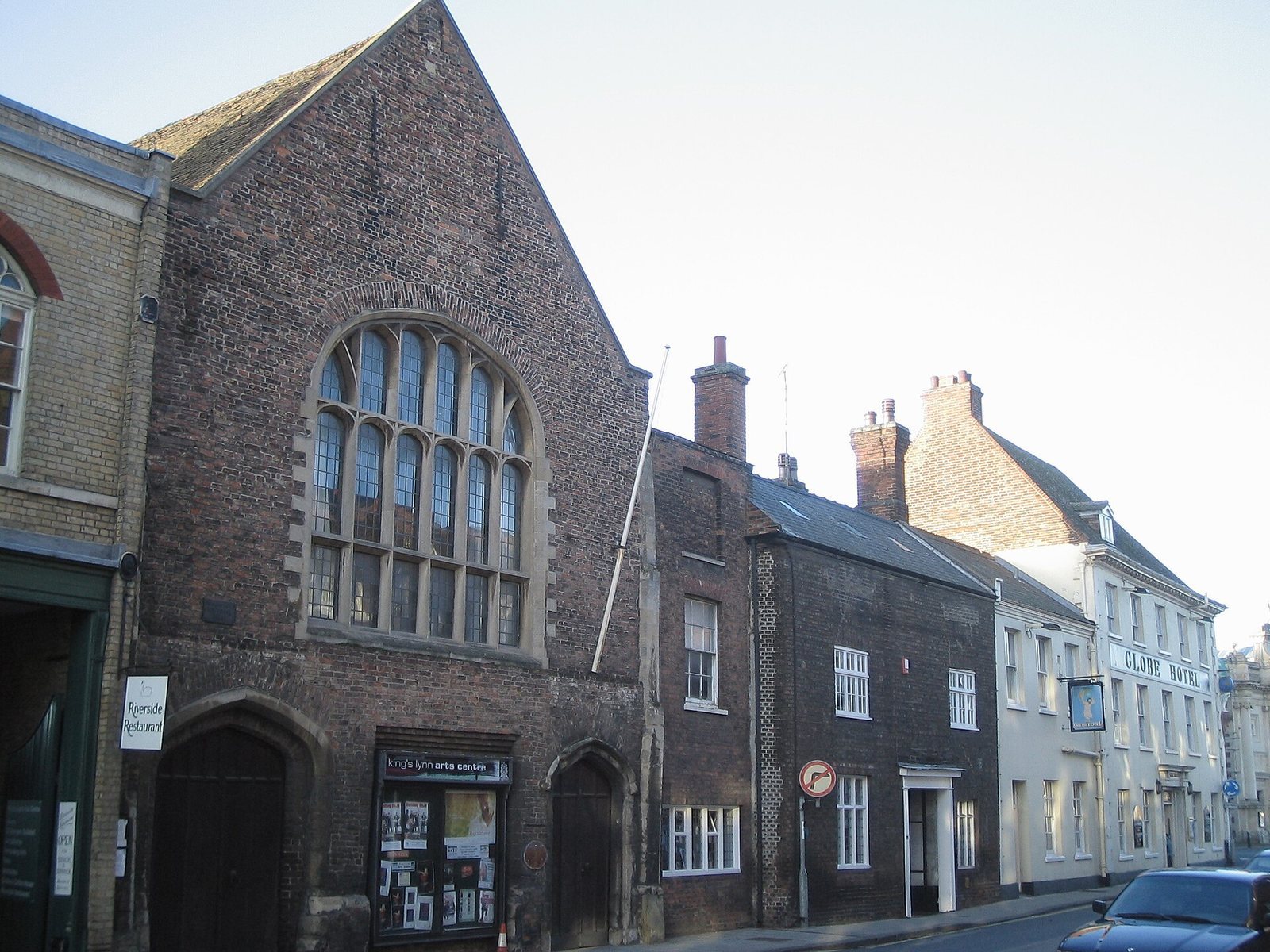
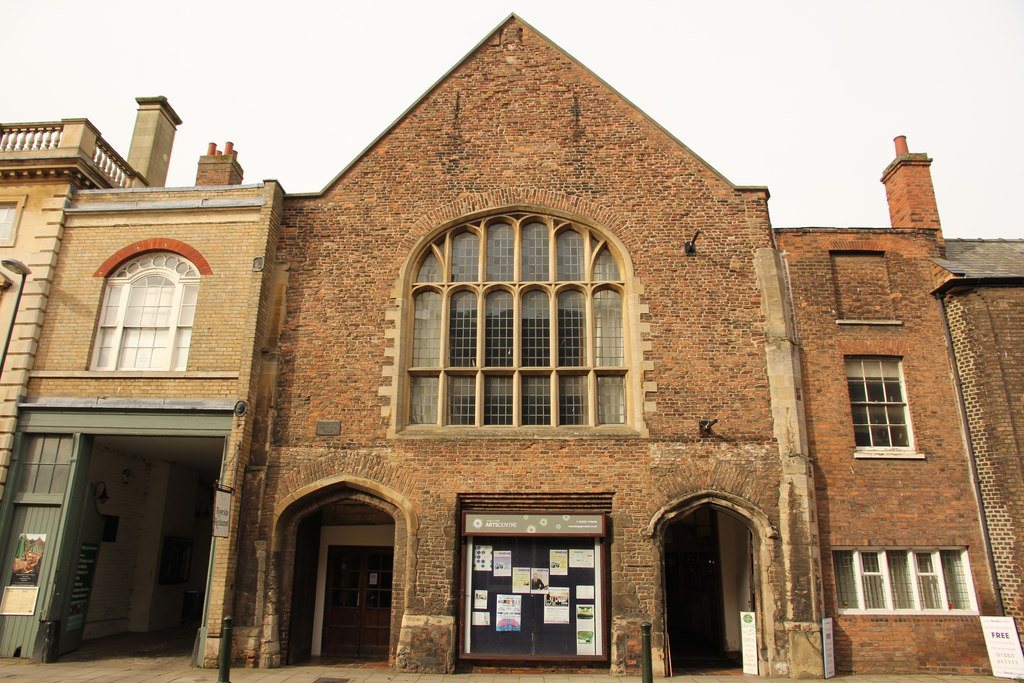
King’s Lynn Arts Centre, in the United Kingdom, occupies the Guildhall of St George, a medieval meeting hall built for the Guild of St George between 1410 and 1420. It is the only surviving theatre in England where William Shakespeare is believed to have performed.
The guild and early performances
The Guild of St George, a guild or association formed around shared trade, religious, or social purposes, was founded in 1376. It acquired reclaimed land beside the River Great Ouse in 1406 for its hall, which was in use by 1428. The earliest recorded play there was a Nativity performance before a guild feast in January 1445. William, a barber from Grassmarket, and Richard Comber performed it. The guild staged plays regularly and held a procession on St George’s Day until 1546.
Playhouse under civic ownership
After the guilds were dissolved in 1547, Lynn Corporation took control of the hall. A royal acting company played there regularly from 1585 to 1595. Academic research supports the local tradition that Shakespeare appeared in 1593 with the Earl of Pembroke’s Men, a professional acting company associated with the earl. The plague had closed London’s theatres that year.
The hall continued to host players in the 17th century and also served as a public hall, courthouse, and school. During the English Civil War, the conflict between Parliament and the Crown, it was used to store munitions. Plays were prohibited under the Commonwealth, the republican government that followed the war, but performances returned with the Restoration, the return of the monarchy in 1660. The playhouse’s success helped prompt construction of the town’s Theatre Royal in 1813. The guildhall was sold in 1814 and sold again in 1826 to the merchant Everard family, who turned it into a warehouse.
From warehouse to arts centre
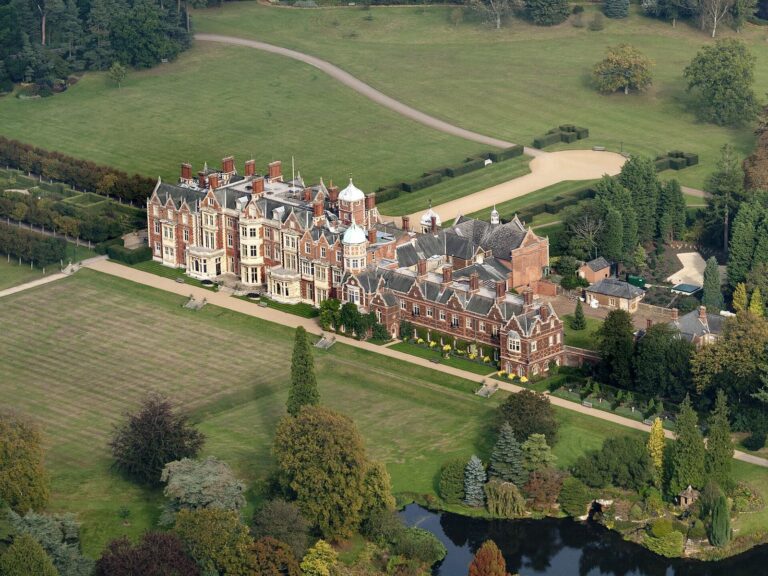
In 1920 the Everard family sold the building to G.M. Bridges and Son Ltd., a company specializing in theatrical sets. It had prospered during the Victorian and Edwardian eras and received royal warrants for work at Sandringham House, but declined as cinema spread. By 1946 the hall was derelict and facing demolition. Alexander Penrose bought it that year and adapted it as an arts centre. Marshall Sisson restored the building between 1948 and 1951, after which it passed to the National Trust, a British conservation organization. St George’s Arts Trust took a long lease in 1951, and Queen Elizabeth The Queen Mother, wife of George VI and mother of Elizabeth II, opened the centre on 24 July for the first King’s Lynn Festival.
In 1963 Lady Fermoy, a lady-in-waiting to the Queen Mother, arranged for the courtyard warehouses to be converted into galleries in memory of her husband, Lord Fermoy, a former mayor and Member of Parliament for King’s Lynn. The borough council took over the lease in 1993, and the King’s Lynn Arts Centre Trust managed the galleries from 2011 to 2016. The National Trust owns the building and leases it to King’s Lynn and West Norfolk Borough Council for performances, music, lectures, and other events. The guildhall is Grade I listed, the highest listed-building category in England. The theatre also commemorates its earliest recorded performance each year on 5 January.
Remains
Guildhall and courtyard
Hall and roof
The Guildhall of St George is a two-storey brick building measuring 32.6 by 8.8 metres. It occupies a long, narrow plot between King Street and the River Great Ouse. The theatre is on a raised upper floor above an undercroft, an enclosed lower storey. Buttresses were added along the north wall around 1500. Inside, the original 15th-century timber roof has a hammerbeam design, a structure supported by projecting horizontal beams.
Cellar and courtyard
A brick-vaulted wine cellar was built in the undercroft in the late 17th century. Its access passage extended beneath later warehouses towards the river. The warehouses form the building’s courtyard, a distinct group within the long, narrow plot.
Revealed features
Medieval floorboards
Renovation work in 2023 uncovered wooden floorboards beneath a later floor. Tree-ring dating and a survey of the building place them between 1417 and 1430. They are thought likely to have remained in use during Shakespeare’s presumed visit in 1592–93, and have been described as the only surviving boards on which he may have performed.
Blocked doorway
In August 2024, removing wall coverings exposed a doorway in a ground-floor wall. Behind them was a brick arch blocked with bricks. The passage is thought to date from the 15th century and may have linked the theatre with a room for performers, possibly a dressing room.