Guermange Castle: A Historic Estate in Moselle, France
Site at a Glance
- Popularity
- Very Low
- Country
- France
- Primary era
- Early Modern
- Eras represented
- Medieval, Early Modern, Modern
- Civilizations
- Duchy of Lorraine, French, Holy Roman Empire
- Site type
- Domestic
- Remains
- Castle
On this page7 sections
History
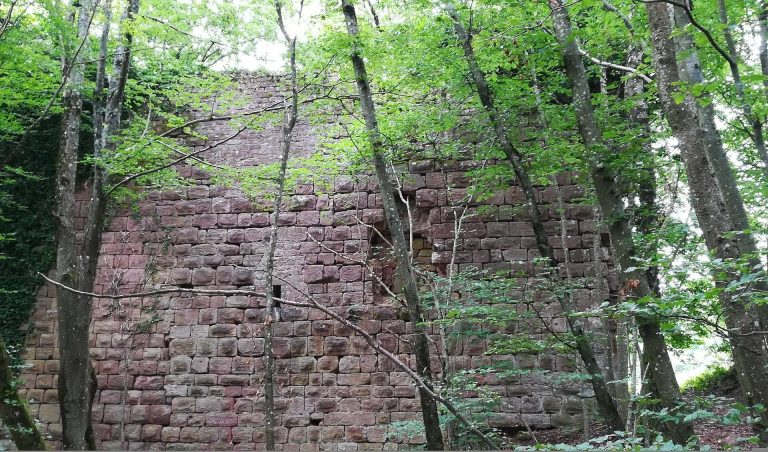
Guermange Castle, in Moselle, France, dates back to a 12th-century structure built to oversee an inlet of the Étang de Lindre.
Medieval restoration
Hans de Guermange restored and enlarged the castle between 1544 and 1547.
From Custine to the Masson family
The Étang de Lindre passed from the dukes of Lorraine, hereditary rulers of the Duchy of Lorraine, to the king of France and then the Custine family. In 1790, it became national property, meaning property taken into state ownership. The estate of Adam-Philippe, Count of Custine, a French aristocrat and general during the French Revolution, was sold in 1793. On 1 September 1807, the Guermange property was sold to Masson, an investor from the region.
Masson’s son, Antoine Achille, married Adélaïde Joséphine Bachasson de Montalivet, a descendant of a general of the French Empire, Napoleon I’s imperial regime. Antoine Achille continued acquiring land around the pond and bought the land of Guermange from Théodore Davillier in 1856. Tenant farmers worked the holdings under an estate manager-administrator.
Company ownership and twentieth-century changes
In 1908, four heirs of the Masson de Montalivet family formed the Lindre, Guermange and Dordhal Estates Company. During World War II, the château was used as a German military hospital and a camp for German girls. Germans restored it during this period.
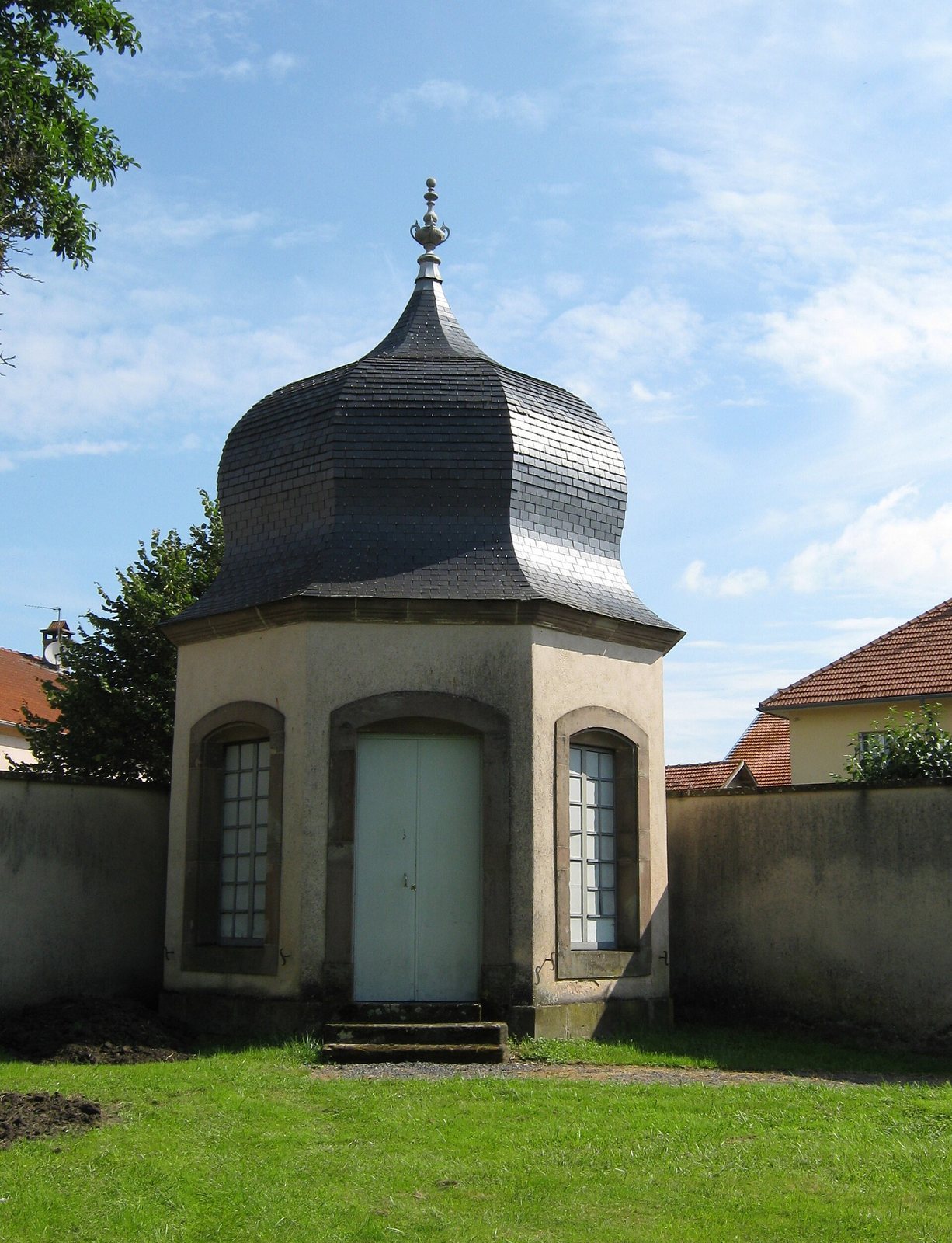
In 1974, the Montalivet heirs sold the Lindre properties. The Moselle department acquired thirteen ponds, the château, and the Maison franche, which it resold a few years later. The department made the estate a protected nature reserve within the Lorraine Regional Natural Park, a designated landscape combining conservation with local social and economic activity. On 26 December 1980, the facades and roofs of the park’s two corner pavilions received protection under France’s historic-monument system, which provides legal protection for heritage buildings and features.
Remains
The estate’s physical features include a château, park and former kitchen-garden structures, and agricultural buildings. They represent its residential, landscaped, and farming functions.
Residence and park features
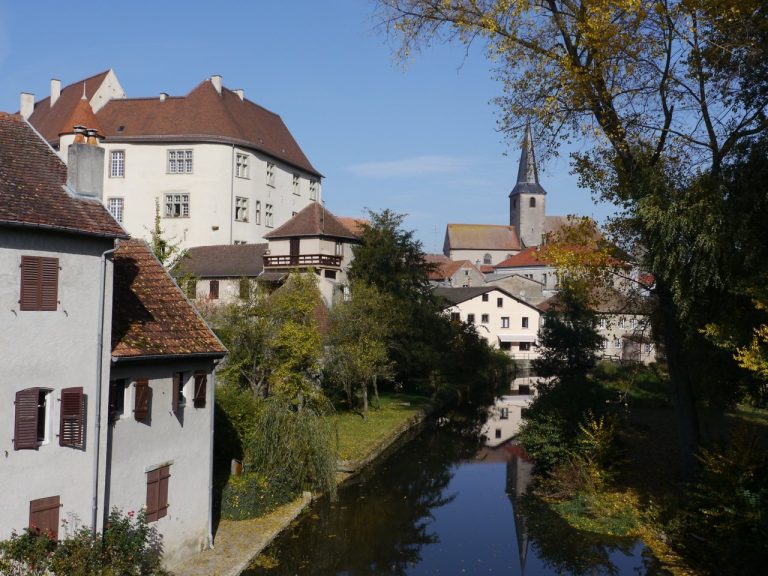
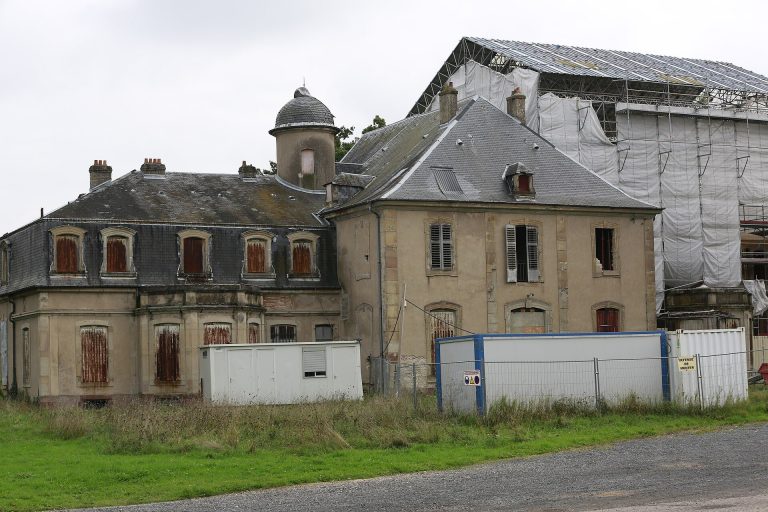
The château was built in the 18th century and partly reconstructed in the 19th. A turret is associated with its former kitchen garden, while two corner pavilions stand in the park.
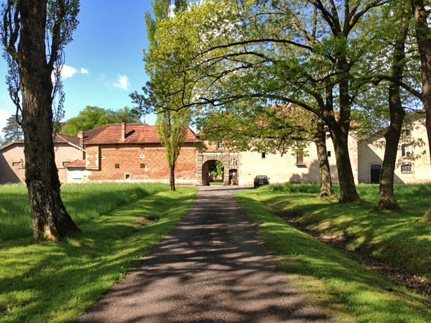
Agricultural buildings
The château farm dates to the 18th century, and its combined barn and stable belongs to the early 19th century. The horizontal beam above the barn’s carriage entrance bears the date 1803. A second barn door carries the inscription “AN XII,” referring to the twelfth year of the French Republican calendar.