Peñaflor Castle: A Medieval Fortress in Teruel, Spain
Site at a Glance
- Popularity
- Low
- Country
- Spain
- Primary era
- Medieval
- Eras represented
- Medieval, Modern
- Civilizations
- Taifa Kingdoms
- Site type
- Military
- Remains
- Castle
On this page9 sections
History
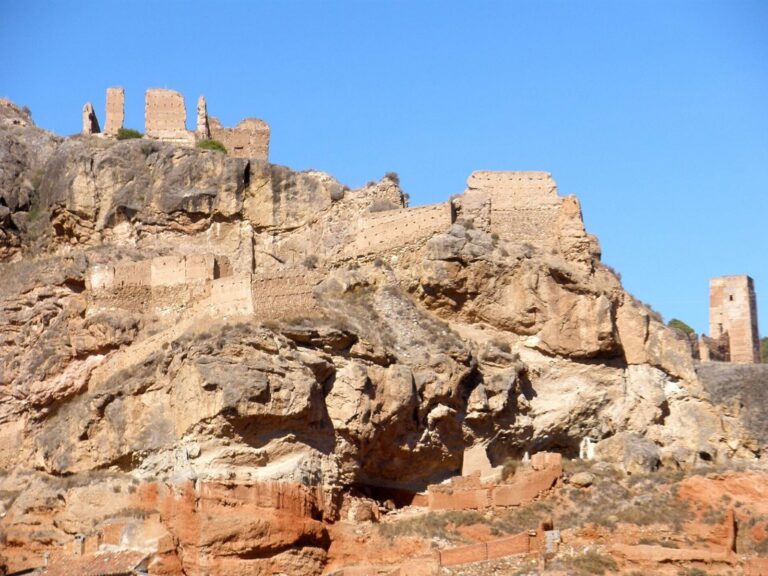
Peñaflor Castle, also known as Huesa del Común Castle, is a medieval fortress above Huesa del Común in Teruel, Spain, dating to the 10th–11th centuries.
Medieval control
In 1082, the Castilian military leader Rodrigo Díaz de Vivar, known as El Cid, captured the castle and settlement. The settlement appears as Ossa in the Cantar de Mio Cid, a medieval Castilian poem about El Cid’s deeds. Muslim forces soon recovered both. In 1120, Alfonso I of Aragon conquered the castle, but it was lost again after his death. The lords of Belchite eventually took permanent control with the support of Ramón Berenguer IV, Count of Barcelona.
The castle served for a time as a Templar commandery, an administrative holding of the Knights Templar, a religious-military order. It later returned to the crown’s direct authority and remained in royal hands until 1702.
Nineteenth-century occupation and protection
During the Carlist Wars, 19th-century conflicts over the Spanish succession, General Cabrera occupied the castle in 1838. It was altered to accommodate the weapons used at the time. A resolution dated 17 April 2006 declared the castle a Monument; the resolution was published on 22 May.
Remains
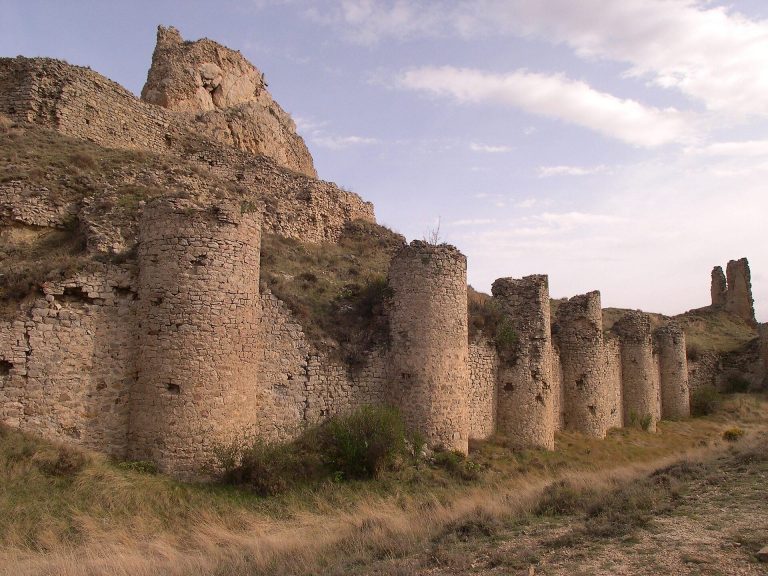
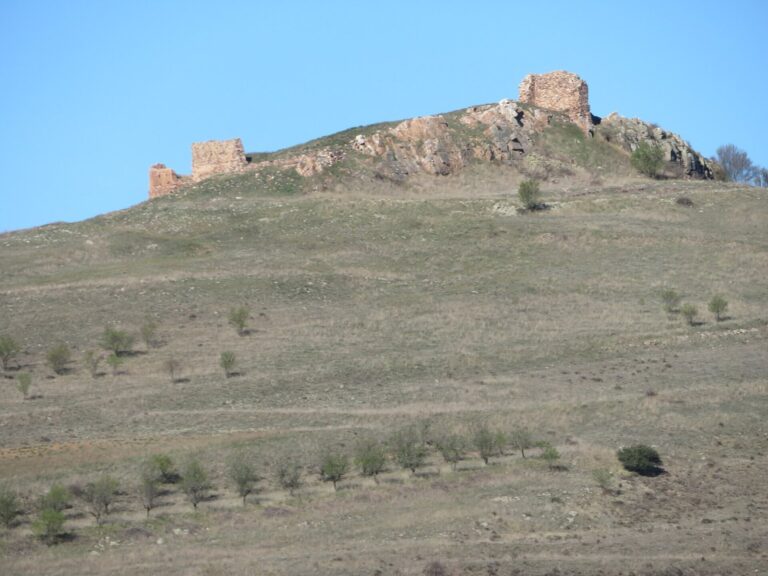
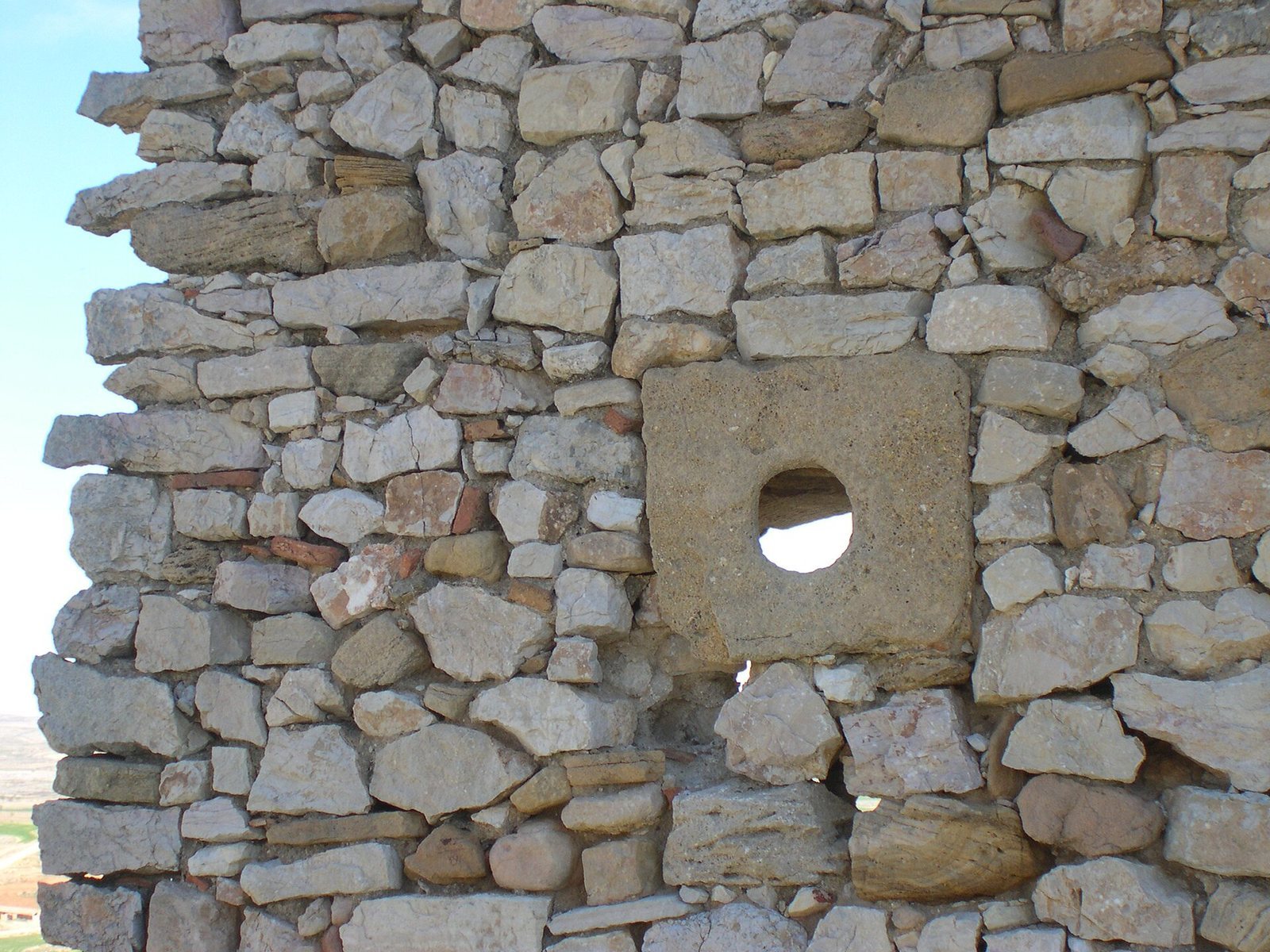
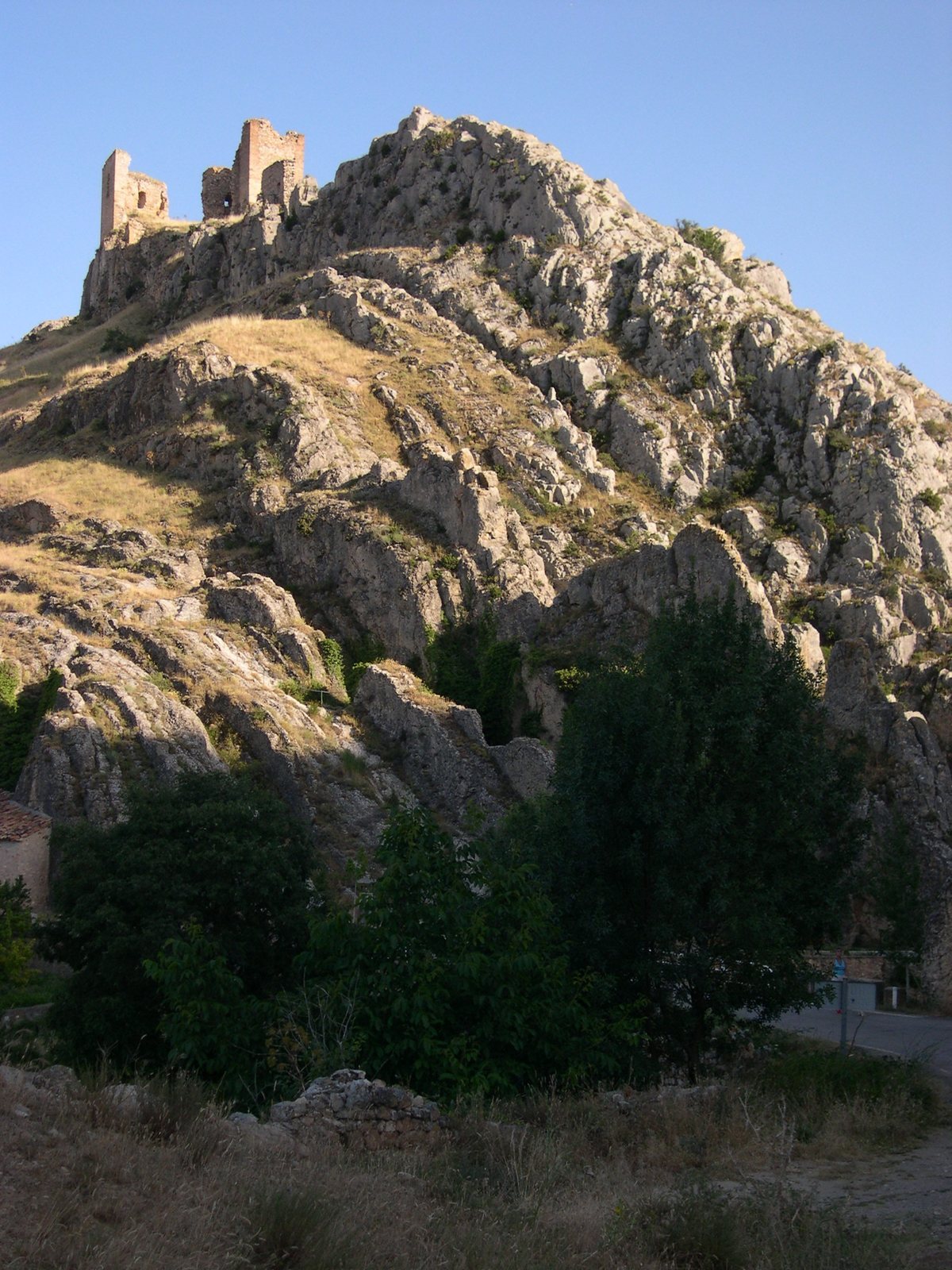
The remains occupy a rocky spur above Huesa del Común, with the main castle above a separate defensive structure at a lower level. The surviving fabric includes stone walls and towers, as well as brick vaulting in one tower.
Main castle
Western tower
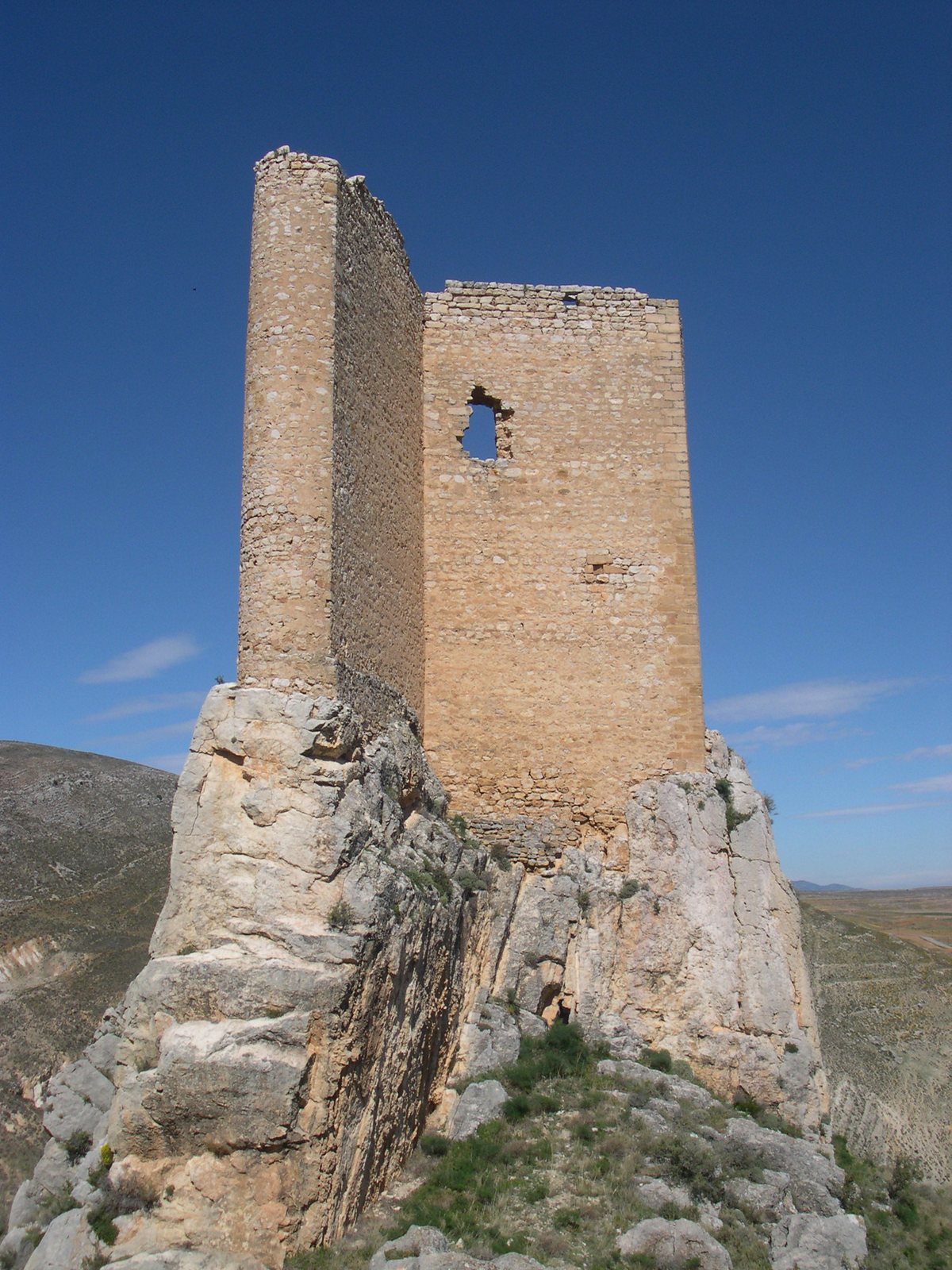
At the western end of the castle, a notably tall square tower measures 8 metres on each side. Its position and form suggest that it may have served as the keep, the castle’s principal fortified tower.
Eastern tower
The square tower at the opposite end measures 5 metres on each side. It retains the points where the ribs of a brick vault begin to rise.
Surviving walls
Other wall sections may have formed part of service buildings or the castle’s outer defences.
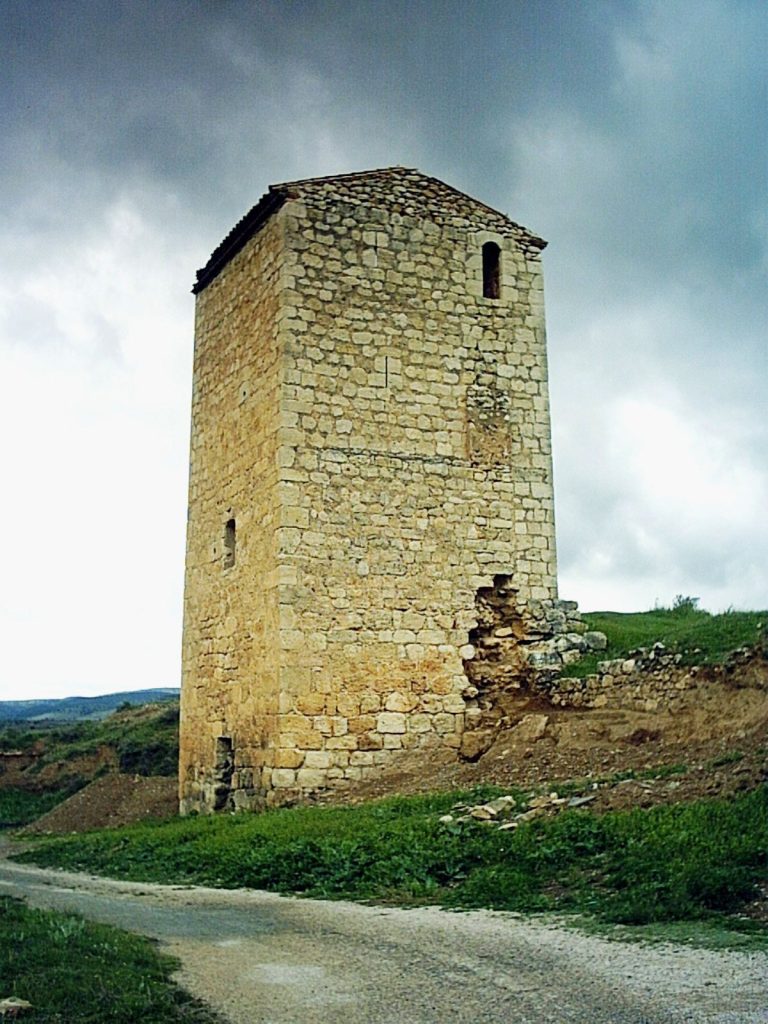
Lower defensive tower
Beside the path to the castle, at a lower level, stand the remains of a detached square defensive tower. Its walls are built from carefully cut stone blocks laid in regular courses, and it has an arched doorway.