Plague Column in Kremnica: A Baroque Memorial
Site at a Glance
- Popularity
- Low
- Country
- Slovakia
- Primary era
- Early Modern
- Eras represented
- Early Modern, Modern
- Civilizations
- Austria-Hungary, Habsburg, Hungarian
- Site type
- Civic
- Remains
- Monument
On this page7 sections
History
The Plague Column in Kremnica is a Baroque memorial in Slovakia, completed in 1771 to commemorate the epidemic that struck the town and surrounding area in 1710.
During the Baroque period, Kremnica shared in a revival of mining, metalworking and coinage among the central Slovak mining towns. Habsburg interest in the mineral wealth of Upper Hungary, a historical region within the Kingdom of Hungary, and support for mining technology accompanied a flourishing of the visual arts. This artistic activity raised Kremnica’s standing among Central European towns.
Commission and construction
A simpler plague column erected in 1711 was dismantled in 1761 and transferred to nearby Horná Ves, where it remains. In May 1765, Kremnica’s town council decided to replace it with a more imposing memorial to the 1710 epidemic. The council asked sculptor Dionýz Ignác Staneti to prepare a design and estimate. In July, he presented drawings, a model and a proposed cost of 22,850 florins, a historical European currency. His obelisk-like design drew on the older plague column on Vienna’s Graben.
The scale of the project led the council to bring in Viennese sculptor Martin Vögerle to work alongside Staneti. Their workshops began making stone statues and reliefs, but the Hungarian Royal Chamber, a Habsburg financial authority, and the Chief Chamber-Count’s Office in Banská Štiavnica, which administered mining affairs, objected to the expense. They called the project an unnecessary luxury and urged the town to use the money for other purposes, halting construction.
Staneti died in May 1767 and Vögerle in 1770, before the work was finished. Staneti’s successor, Ignác Peter Götz, continued the project, while Vögerle’s apprentice Theodor Mayer completed it. The column was finished in 1771 and consecrated the next year on the Feast of the Holy Trinity, the Christian belief in one God as Father, Son and Holy Spirit.
Weathering and restoration
In 1820 the sandstone was coated with linseed oil, followed later by oil paints, in an effort to protect it from weathering. Instead, the treatments worsened the stone’s deterioration, causing its surface to crack and flake. A survey by sculptor Alojz Štróbl led to renovation work in 1891–1894. Further restorations took place in the 1920s and 1950s, followed by a major restoration in 1995–2005. The column is designated a National Cultural Monument of Slovakia, a national-level heritage status.
Remains
Structure and sculpture
Pedestal and pylon
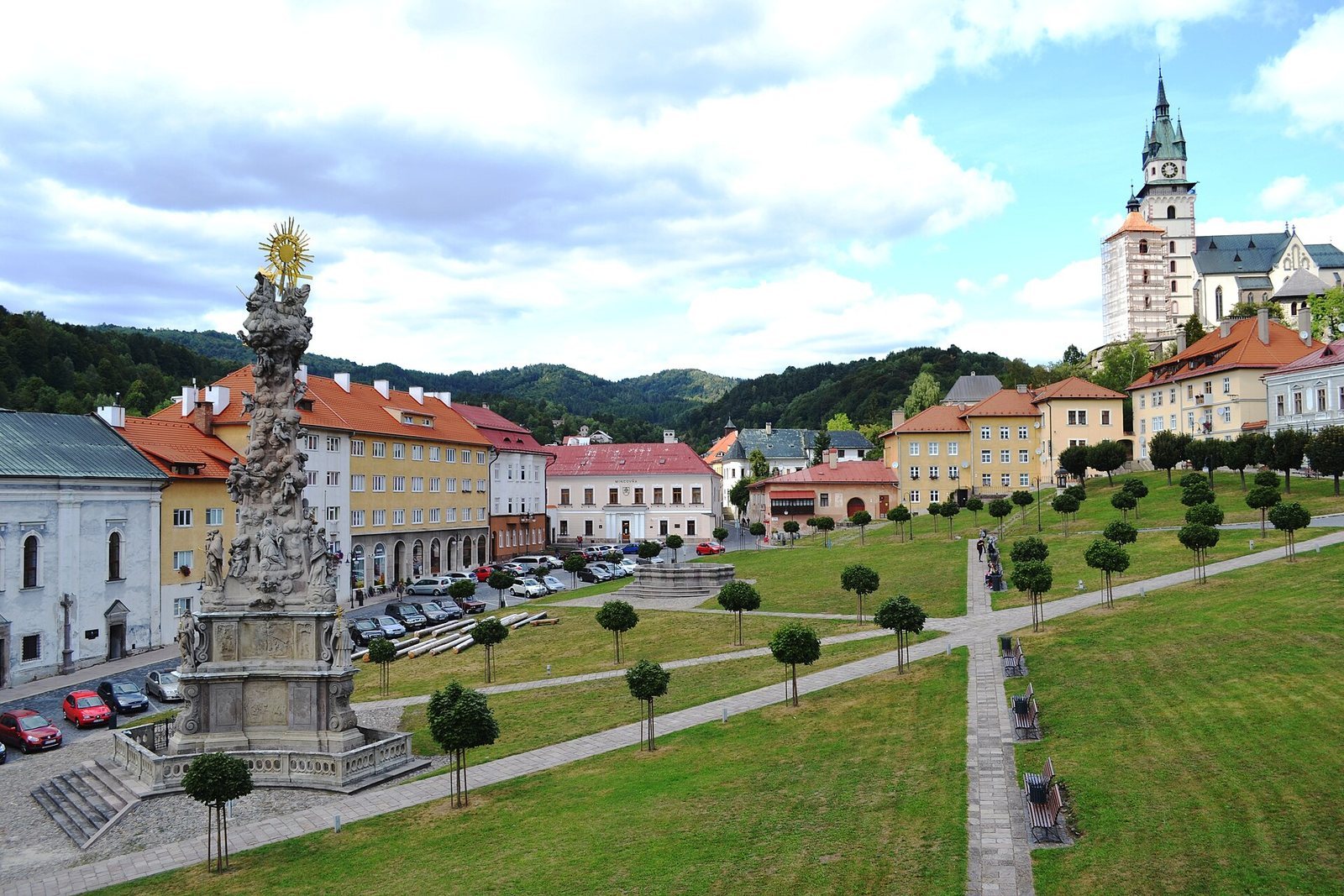
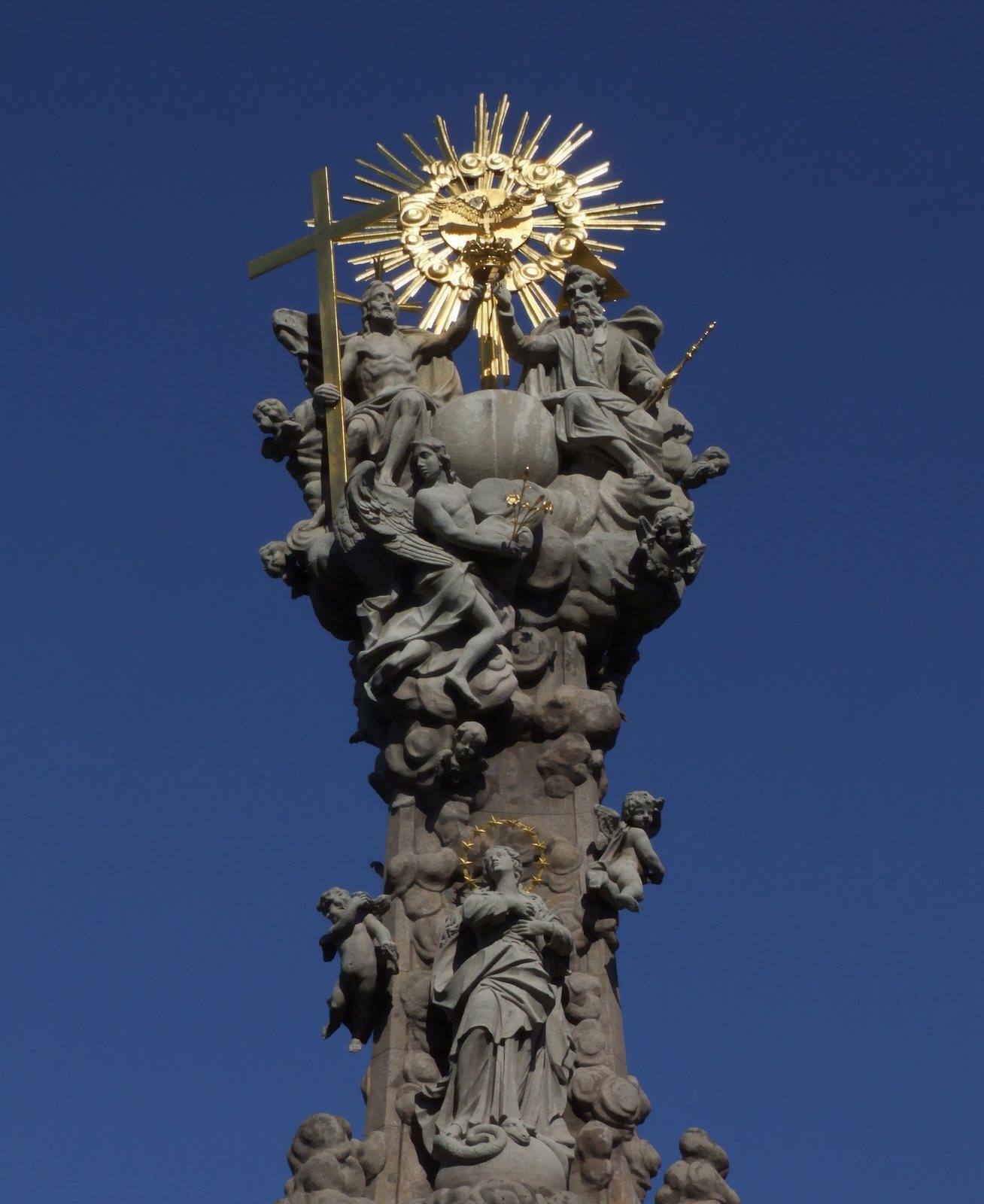
The column stands in Kremnica’s central square. It rises from an elevated pedestal reached by a staircase and enclosed by a stone balustrade, added in 1905. Above the pedestal, its main upright body, or pylon, stands 20 metres high and has a triangular plan. A sculptural group of the Holy Trinity crowns it. The monument is built from porous sandstone.
Statues and reliefs
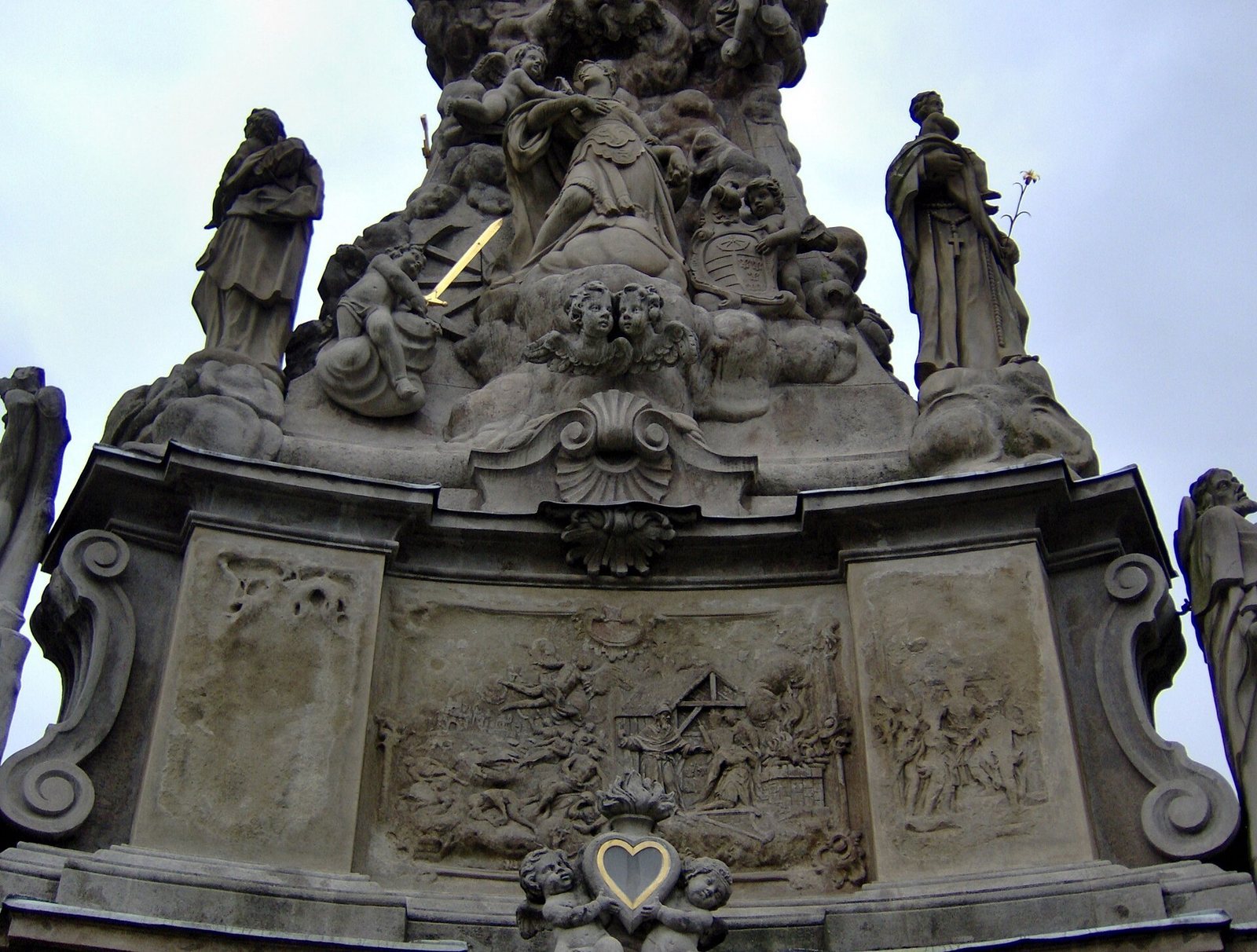
The sculptural program includes Saints Roch, Charles Borromeo, Rosalia and Sebastian, associated with protection against plague. Martyrs Barbara and Catherine of Alexandria appear alongside Anthony of Padua and Clement, saints associated with miners. The angels Michael, Gabriel and Raphael are also represented, as are religious and plague-related themes in reliefs. Several statues are copies made during the late nineteenth-century renovation.