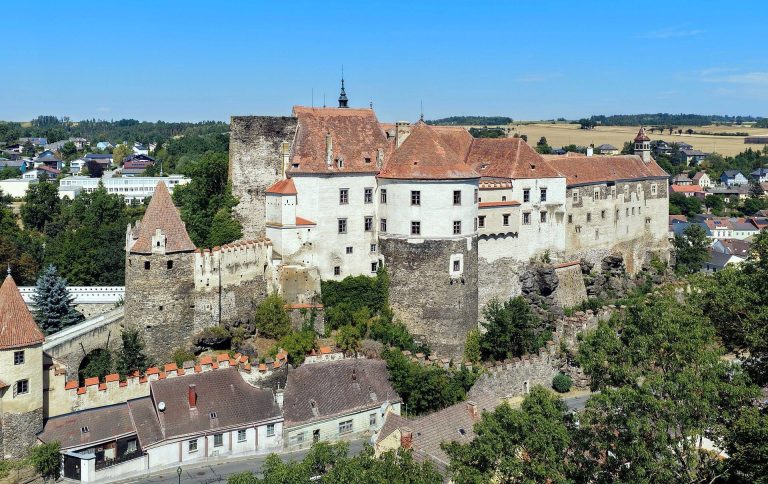
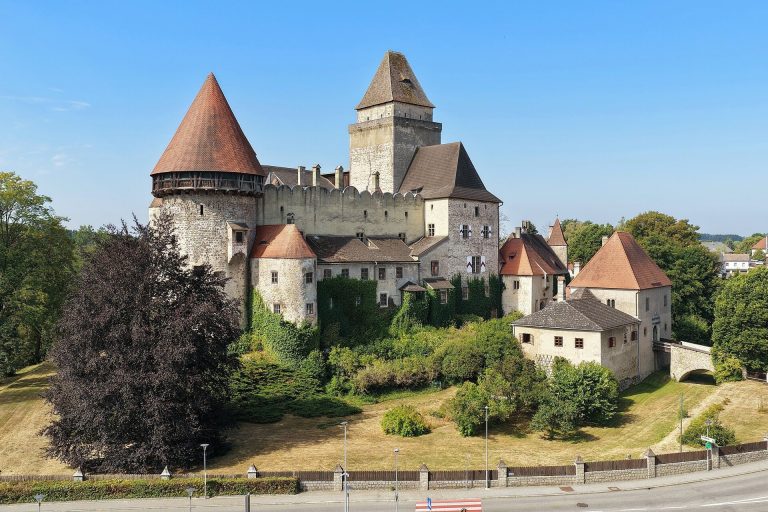
Dobersberg Castle: A Renaissance Building in Austria
Site at a Glance
- Popularity
- Medium
- Country
- Austria
- Primary era
- Early Modern
- Eras represented
- Medieval, Early Modern, Modern
- Civilizations
- Austrian Empire, Habsburg, Holy Roman Empire
- Site type
- Domestic
- Remains
- Castle
On this page4 sections
History
Dobersberg Castle is a Renaissance castle in the market municipality of Dobersberg, Austria, built around 1570 by Sigmund von Puchheim. It succeeded an earlier fortified structure on the same site, which appears to have stood there by about 1305.
Ownership and wartime damage
In 1588, Puchheim’s heirs sold the property to Johann Ambros Brassican. He later bequeathed it to his daughter Anna Sabina, who was married to Christoph Adam Fernberger. During the Thirty Years’ War, a major European conflict fought largely in Central Europe from 1618 to 1648, Bohemian troops plundered the castle.
In 1645, Imperial Colonel Johann Ernst Baron von Montrichier bought the lordship, a landed estate and its associated authority, from the Fernbergers. The property passed to Peter Baron von Ugate in 1673, and the Herberstein family acquired both castle and lordship in 1678. In the late eighteenth century, the Herbersteins sold their Waldviertel properties, including Dobersberg. Sebastian Edler von Güldenstein, whose title denoted a rank of nobility, became the owner but leased the property.
Renovation and modern use
Philipp Ferdinand Count von Grünne took possession of Dobersberg in 1802. The castle was extensively renovated, and a garden was laid out. After Philipp III Count von Grünne died, the property passed first to his mother and then to his nephew, Count Friedrich von Szápáry.
The castle was badly damaged in 1945 and suffered further harm during the subsequent Soviet military presence in Austria’s Soviet occupation zone. Its Neoclassical interior furnishings were lost. The market municipality of Dobersberg bought the building in 1948 and began renovation work in 1972. It now houses municipal offices and a natural history museum. On 31 May 2026, lightning set fire to the top of one of its towers.
Remains
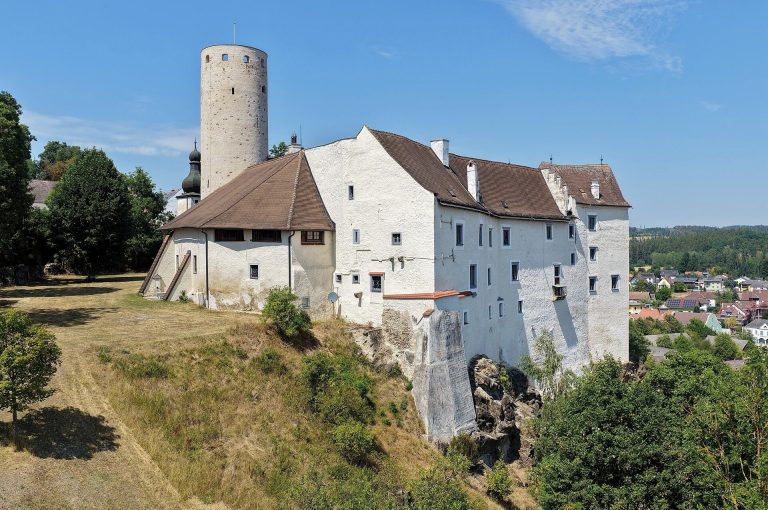
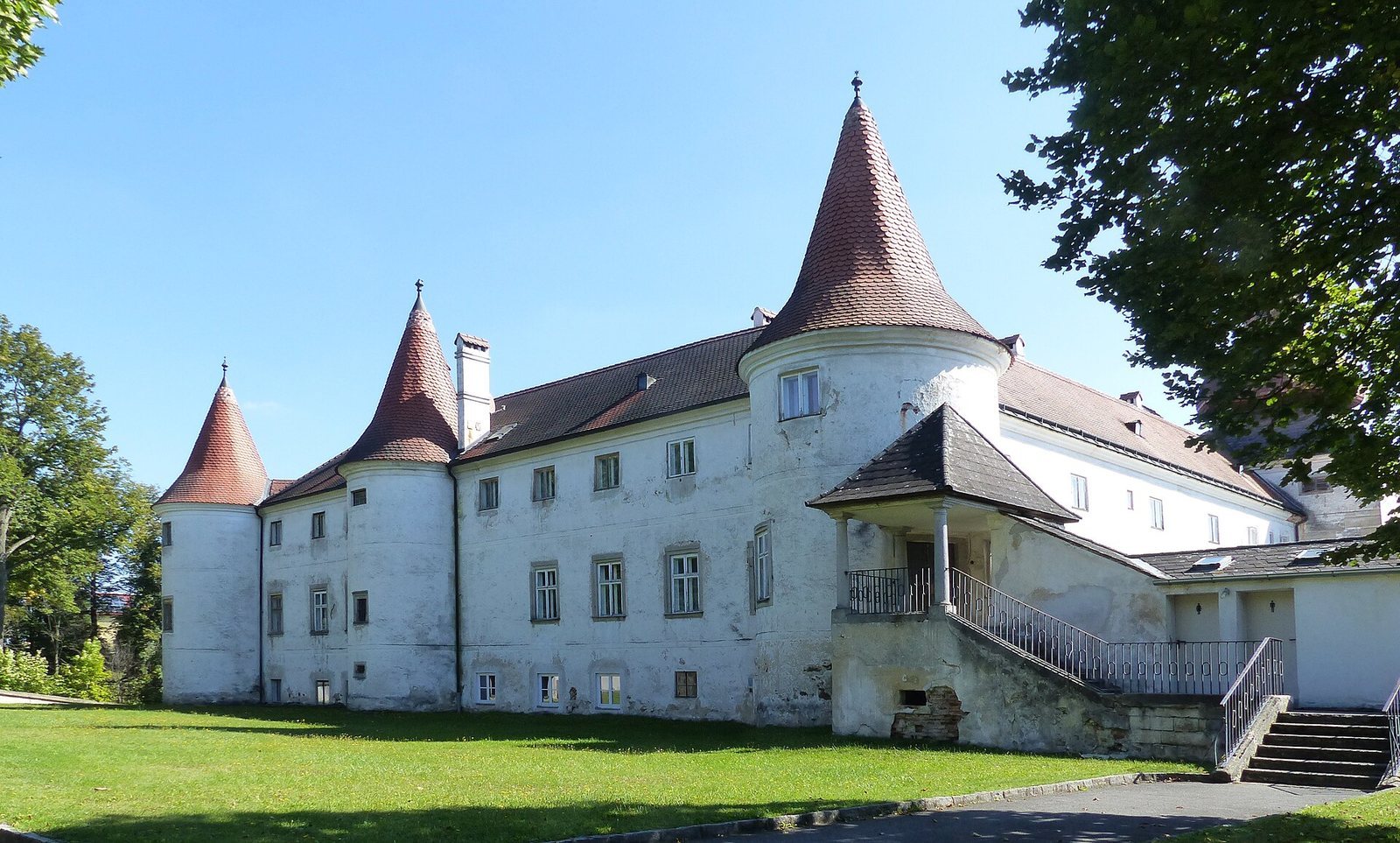
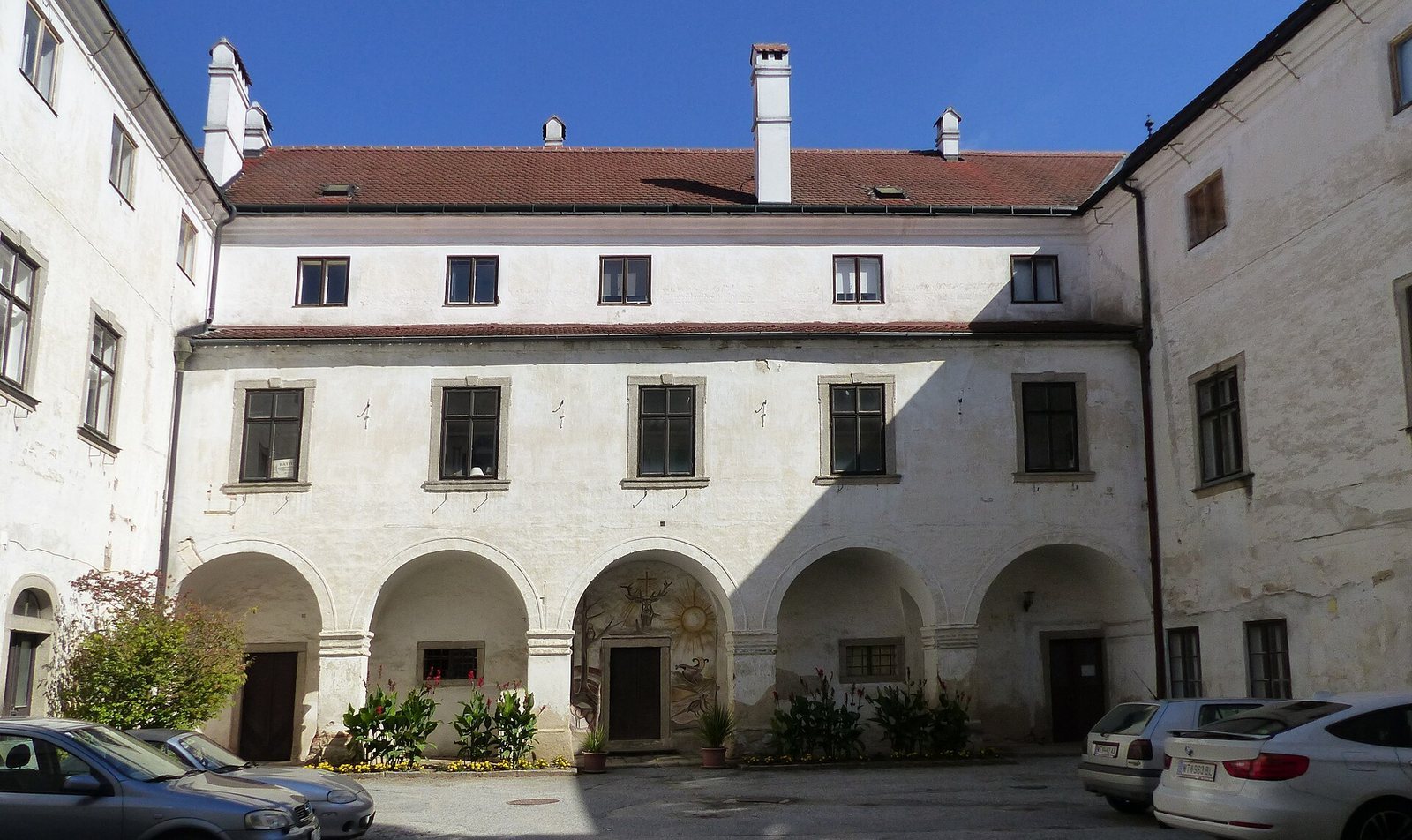
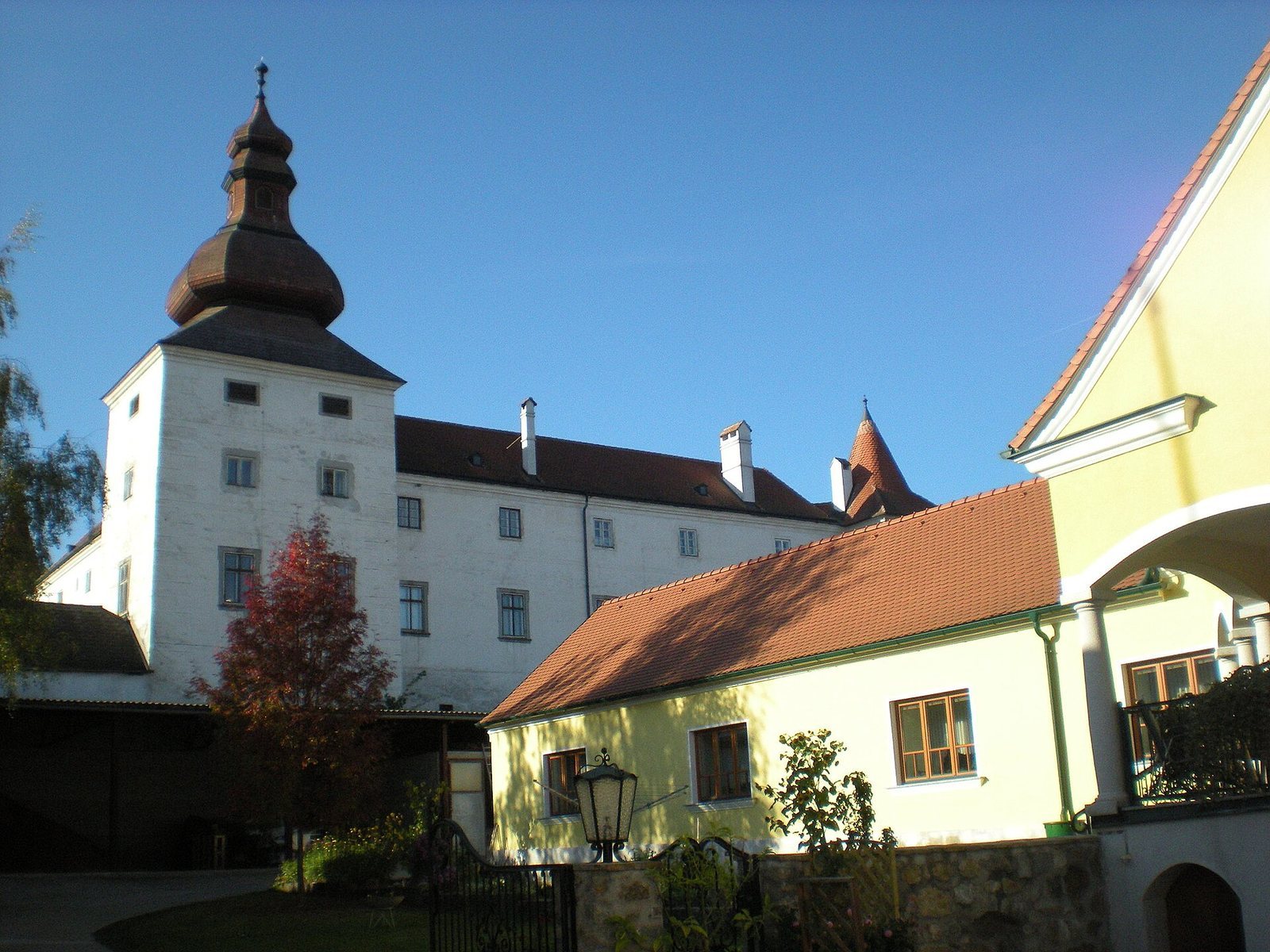
The castle is a low, three-storey Renaissance building arranged in four wings. Round towers with curved conical roofs mark its outer corners and the middle of its west side. A square tower stands at the southeast corner. It originally had a gallery beneath a gabled roof, while its surviving onion dome dates to alterations made in 1805.