Maříž Castle: A Baroque and Neo-Gothic Noble Residence in Czechia
Site at a Glance
- Rating
- 4.4
- Popularity
- Very Low
- Country
- Czechia
- Primary era
- Medieval
- Eras represented
- Medieval, Early Modern, Modern
- Civilizations
- Austria-Hungary, Habsburg, Holy Roman Empire
- Site type
- Domestic
- Remains
- Castle
On this page16 sections
History
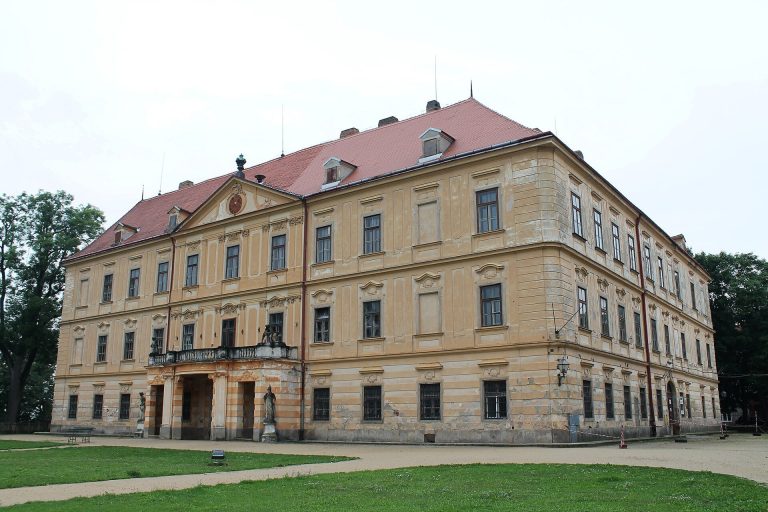
Maříž Castle is a former noble residence in Czechia, at Maříž, now part of Slavonice. It developed from a medieval fortress into a Baroque château in 1717 and was later enlarged in the Neo-Gothic style. The castle stood at the centre of an estate that included farmland, woodland, ponds, industrial buildings, and a park.
Medieval fortress and noble estate
A fortress already occupied the site before 1353. On 22 January 1372, Margrave John of Moravia granted the fortress and estate as a fief, land held from a superior ruler in return for obligations, to the brothers Oldřich and Ješek of Olešná. The estate was expected to provide an annual income of 22 marks. In 1414, King Wenceslaus IV granted the village as a fief to Oldřich of Maříž, and a charter issued by Ladislaus the Posthumous mentioned Maříž in 1454.
The Kadalic family of Řečice acquired the village in 1494, after King Vladislaus II Jagiellon released it from its feudal status. Jan of Řečice sold the fortress and village in 1607 to Marie Anna Kořenská of Terešov. Following her death, ownership passed to her brothers Jošt and Adam Kořenský of Terešov.
Seventeenth-century transfers and confiscation
Jošt and Adam sold Maříž in 1610 to Wolf Eitzing, an Austrian imperial hereditary chamberlain. Eitzing transferred it in 1612 to Jan Ryder, a citizen of Znojmo. In 1613, Ryder sold the estate for 12,000 florins to Ernest Stockhorner of Frating, who later acquired the Bohušice estate as well.
Both estates were confiscated in 1623 because Stockhorner had taken part in the Bohemian Estates’ Revolt, an uprising of Bohemian estates against Habsburg rule. Maříž was then acquired by the imperial-royal lieutenant colonel Peter von Kral. On 23 December 1630, he sold it for 9,000 florins to the imperial-royal captain Jakob Zinn, Knight of Zinnenburg. Zinn’s son Johann Franz inherited Maříž in 1674.
Baroque rebuilding
Otta Rudolf, Count of Schaumburg, and his wife bought Maříž on 19 February 1683 for 24,000 florins. Johann Rudolf Goldmüller of Goldenstein held the estate from 1693, followed by Johann Georg Hauspersky of Fanal between 1702 and 1710. After the estate was auctioned on 30 September 1710, it passed to Maximilian, Baron Želecký of Počenice, who sold it in 1713 to Johann Rudolf Komínek of Engelshausen.
Komínek transferred Maříž to Matthias Henry Butz of Rolsperg. Butz acquired the estate in 1713 and rebuilt the existing fortress as a Baroque château in 1717. After his death in 1748, ownership passed through his sons Franz Joseph and Hermann Anton to his grandson Maximilian, captain of the Olomouc region. Maximilian sold the estate on 30 December 1790 to Johann Baptist Baron von Madrowsky.
Nineteenth-century estate development
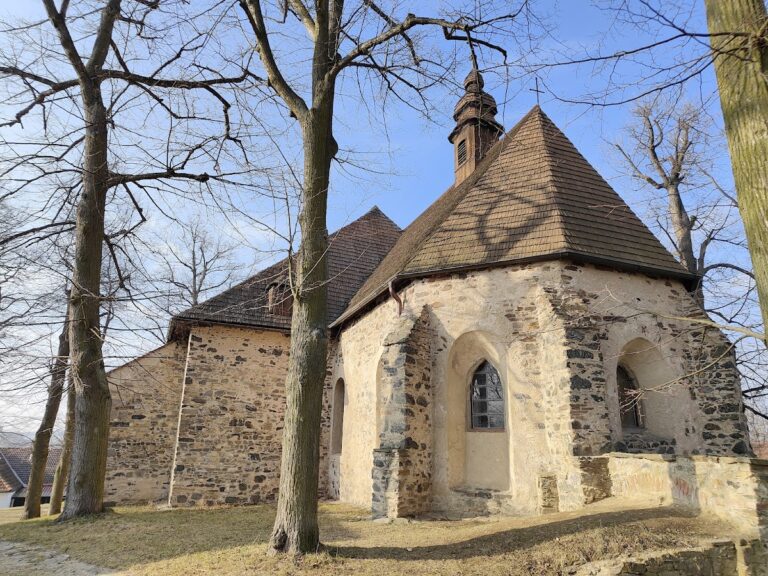
Johann Ignaz Rupp von Ehrenströhm became owner in 1793. After years of famine, he built a village chapel dedicated to Our Lady Help of Christians in 1817. His son Franz Rupp von Ehrenströhm established a cotton-spinning manufactory in 1820 and encouraged fruit-tree planting and fruit cultivation on the estate.
Maříž passed in 1823 to Franz Ritter von Leon and in 1840 to Baroness Berta von Erben. Several further owners followed, including Johann Dwořaček, who was proprietor in the middle of the nineteenth century. Václav Welz held the estate from 1874. In 1880, Leo Ritter von Stangler bought it for 115,000 florins. At that time, the estate covered 229.92 hectares and included farmland, forests, a mill, a sawmill, and starch works.
Neo-Gothic enlargement and the twentieth century
Helena Maria Adolfina Baroness von Offermann-Schindler acquired Maříž in 1898. She had the château thoroughly renovated and enlarged in the Neo-Gothic style, a nineteenth-century revival of medieval Gothic forms, and added a château chapel. She lived mainly in Vienna and used Maříž as a summer residence. After her death in 1914, the estate passed to her husband, Iwan Baron von Offermann.
At the beginning of 1915, the estate was sold to Alois Löbenstein and his associates, Jewish refugees from Bukovina. They felled the park and about 130 hectares of woodland, reportedly for deliveries to the Ministry of Defence. The cutting provoked strong local and official opposition, and the estate was then sold to the industrialist Schreyer for 1.5 million crowns.
After the First World War, a military detachment from Slavonice stationed border guards at Maříž in 1918, and the garrison commander lived in the château. In 1920, the owners Schulim and Jetti Schreyer paid for a replacement bell for the village chapel after its original bell had been requisitioned during the war. The estate, including the château, park, and farmyard, was sold in 1922 to Josef Miesler.
Under Josef and Resi Miesler, the château operated as Pension Schloss Maires. A nearby hunting lodge served as a holiday settlement for the German Provincial Commission for Child and Youth Protection in Brno.
War, occupation, and destruction
After the border region was transferred to Germany in 1938, Maříž and the estate became part of Groß-Zlabings in the Reichsgau Lower Danube. From 1940, the château complex housed a camp of the Reich Labour Service for female youth, the compulsory Nazi labour organization that assigned young women to agricultural, domestic, educational, and related work. About 50 to 60 young women, supervised by three leaders, worked on farms, in households, and in kindergartens.
In 1944, a labour camp for Hungarian Jewish people was established in the former forester’s lodge. Its inmates were assigned to forestry work. After the Second World War, the original German population was expelled, and the Red Army occupied the château until September 1945. The estate was confiscated as German property and assigned to the Ministry of Agriculture. The local national committee used the château for cultural purposes, while other institutions considered its accommodation for their own activities.
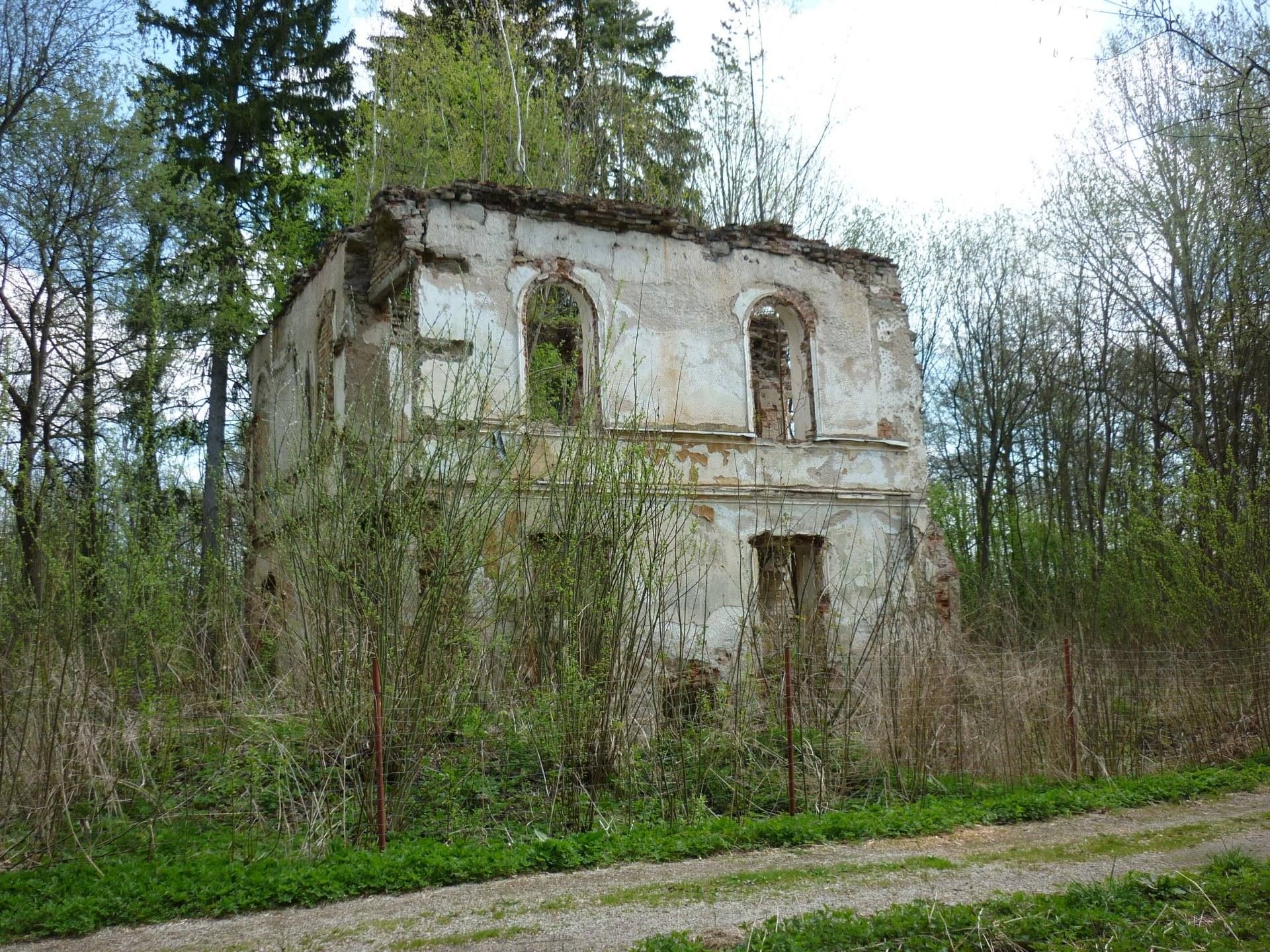
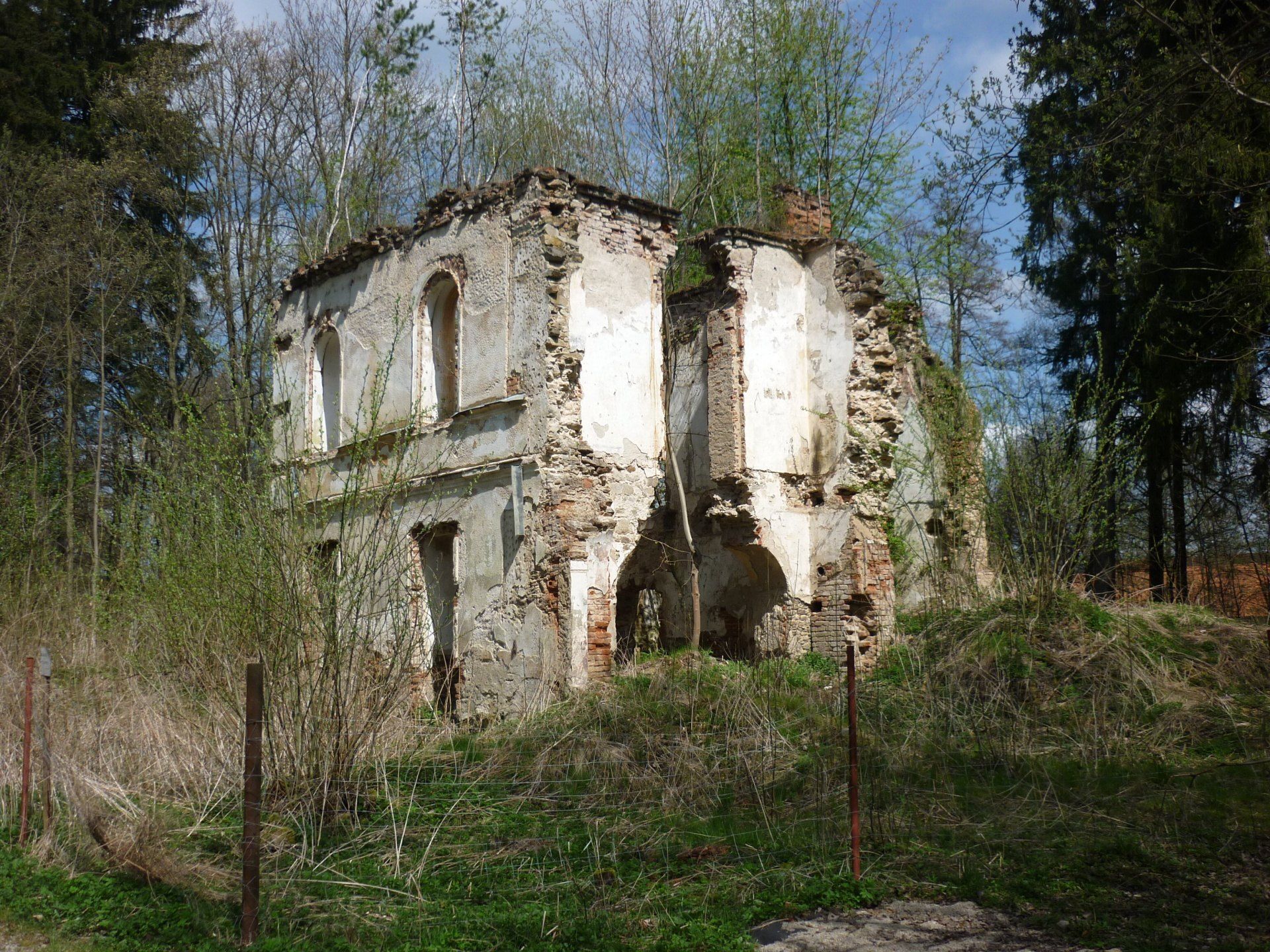
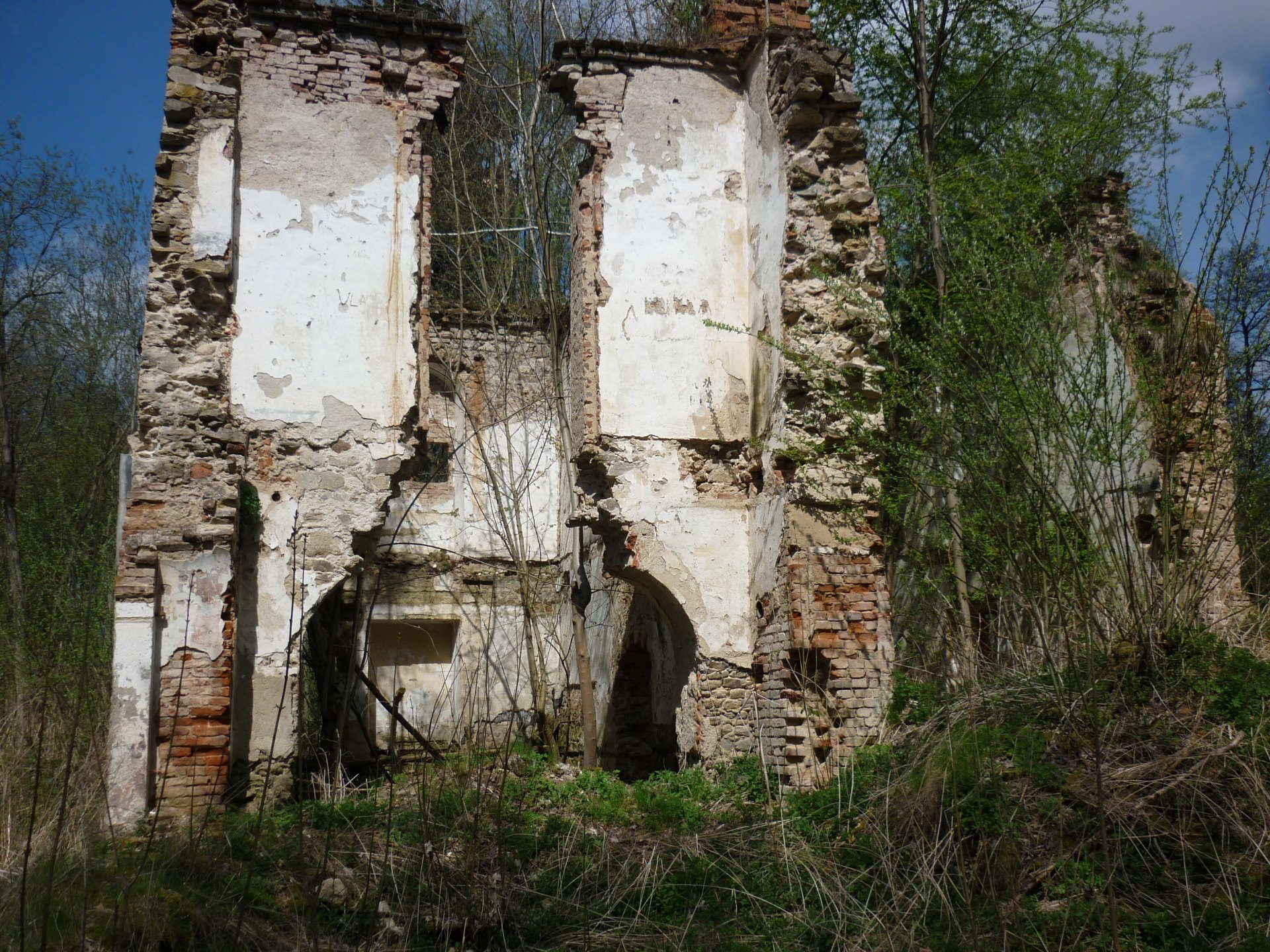
After 1948, agricultural collectivization organized land and production under state-socialist administration through the Slavonice and Maříž collective farms. The château chapel was breached through the roof and converted into a garage for agricultural machinery and a fertilizer store. Construction of the Iron Curtain, the heavily controlled boundary separating the Soviet-led eastern bloc from western Europe after the Second World War, accelerated the decline of the site. By 1955, the château was a ruin.
In the 1960s, the northern section was severely deteriorated and the southern wing had disappeared. During the 1980s, the remaining structures were lent to French filmmakers on the understanding that they would be blown up for a film. The château complex was demolished apart from surviving fragments, and the château tower was later removed by bulldozer before the Velvet Revolution.
Conservation of the park
Since 2007, local volunteers, supported by the Slavonická renesanční společnost and later by the Mařížský park association, have worked to protect and restore the natural and cultural values of the château park. Park revitalization took place from 2010 to 2012 through the cross-border European Park Bavaria–Bohemia project, linked with a new municipal park in Bogen.
The Mařížský park association was established in 2012 to continue maintenance and encourage sustainable development in the Slavonice region. A well was uncovered and cleaned in 2017, fitted with an artistic iron grille, and presented after restoration in 2018. The park remains part of the conservation effort, while the château ruins themselves remain unmaintained.
Remains
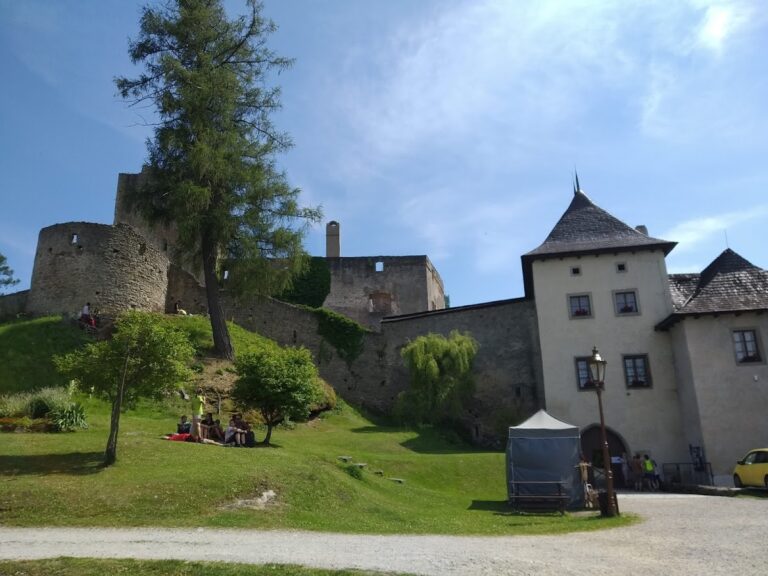
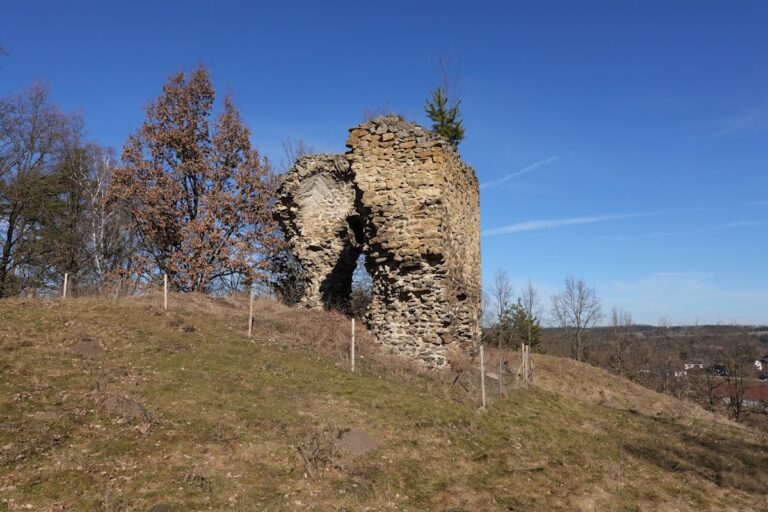
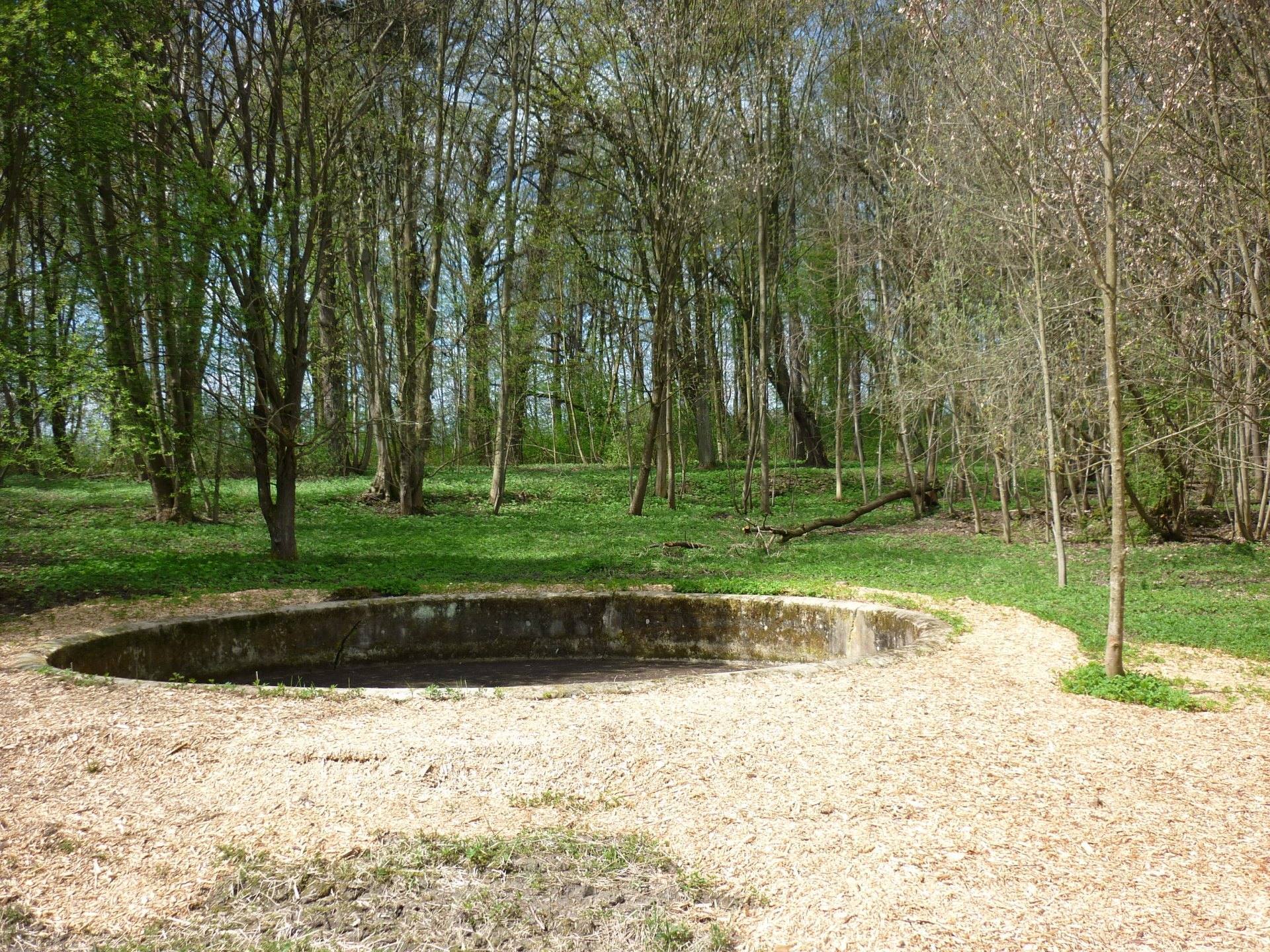
Maříž Castle survives mainly as fragments of the former residence and as parts of its wider estate landscape. The château developed from a medieval fortified residence, was rebuilt in brick and stone as a Baroque château in 1717, and received Neo-Gothic alterations and extensions in the nineteenth century. A small section of the western wing’s perimeter wall, a vaulted cellar, and the former fountain basin in front of the residence remain. A restored well survives in the park.
Estate buildings and productive works
Farmyard and industrial buildings
The estate included a farmyard, agricultural and forest land, ponds, a mill, a sawmill, and starch works. A granary was built in 1780, followed by a cattle-feeding barn in 1826. The cotton-spinning manufactory established in 1820 formed part of the estate’s productive facilities. A distillery established in 1841 included stables for fattening 60 bulls, accommodation for its tenant, and a hay and straw store. The distillery later ceased operation, while the mill and sawmill were still operating in the early twentieth century.
Village chapel
The village estate complex included a chapel dedicated to Our Lady Help of Christians. Its wartime bell was requisitioned, and a replacement made by Hiller and Sons of Brno was consecrated in 1920. The bell measured 56 centimetres in diameter. The chapel was later opened through the roof and used as a garage and fertilizer store, part of the alterations that accompanied the decline of the estate after 1948.
Hunting lodge and forester’s lodge
The Baron Offermann Hunting Lodge stood near the forest and was later used as a holiday settlement for children and young people. A nearby forester’s lodge was converted into a labour camp for Hungarian Jewish people in 1944, whose inmates carried out forestry work.
Park landscape
Ponds and woodland
The park originally extended around the château and contained several ponds. The estate’s recorded area was 229.92 hectares in 1900 and 302.92 hectares in 1912, including 130.74 hectares of fields, 20.50 hectares of meadows, 5.41 hectares of gardens, 129.67 hectares of forest, and 16.60 hectares of ponds. Much of the woodland was felled in 1915. Twenty-first-century restoration has renewed parts of the park landscape.
Well and park features
The park’s well was uncovered and cleaned in 2017, then restored with an artistic iron grille. The park also contains a statue of Little Bogenberg. A related partner park in Bogen has a wayside shrine based on a historic shrine from the Slavonice region. These features belong to the cross-border park project rather than to the demolished château building.