Dominican Church, Košice: A Roman Catholic Church and Dominican Complex
Site at a Glance
- Popularity
- Medium
- Country
- Slovakia
- Primary era
- Medieval
- Eras represented
- Medieval, Early Modern, Modern
- Civilizations
- Austria-Hungary, Habsburg, Hungarian
- Site type
- Religious
- Remains
- Church
On this page15 sections
History
The Dominican Church, Košice, was founded in Slovakia around 1290 by the Dominican Order. Founded by Dominic de Guzmán, this Catholic community relied historically on alms and emphasized preaching and public work. The church’s present fabric brings together Romanesque, Gothic, and Baroque styles, successive European architectural periods. It is regarded as Košice’s oldest church and oldest preserved building.
Foundation and medieval community
A written record from 1303 refers to the church as already existing. The present building is not identical to the early church, but it retains features from that period. A monastery stood beside it, and by the 14th century the complex also had a school and a respected workshop that decorated handwritten books with painted images and ornament.
In 1336, the Dominicans gave the city a strip of land three steps wide along the eastern edge of their plot, on what is now Dominican Square. In return, they received 600 cartloads of stone and 100 cartloads of sand. These materials may have been used to build the church tower. The church is dedicated to the Assumption of the Virgin Mary, the Christian belief that Mary was taken into heaven.
Fire, departure, and return
A fire on 13 April 1556 destroyed three quarters of Košice. With townspeople affected by the disaster and the Dominicans short of resources, the friars withdrew to Trnava and left the municipal magistrate to manage their property. The Protestant Reformation, the movement that gave rise to Protestant churches, was also gaining influence in Košice and further weakened the Dominicans’ position.
People left homeless by the fire occupied the damaged monastery. At the city authorities’ urging, the emperor offered the monastery and Dominican property to the Order of Saint Paul the First Hermit, a Catholic monastic order named for the early Christian hermit Paul of Thebes. The order lacked the means to repair the buildings. With the ruler’s approval, the city repaired the church roof and converted the church into a municipal food store. This use lasted into the early 18th century and fed a prolonged dispute between the Dominicans and the city. A further fire in 1674 unexpectedly brought the dispute to an end.
On 16 December 1697, Leopold I, a Habsburg ruler and Holy Roman Emperor, ordered the Dominicans to return to Košice and resume their work. Their return was supported by their role in the Counter-Reformation, the Catholic Church’s reform movement and response to Protestantism. Property arrangements were settled in 1699, when reconstruction of the church began. After about 40 years of repairs, the church was reconsecrated on 4 August 1741 and dedicated to the Assumption of the Virgin Mary.
Later use and change
Work on a new monastery on Mäsiarska Street began around the time the church was completed. With support from the city, the monastery was finished in 1767. During the socialist period, it housed an art school.
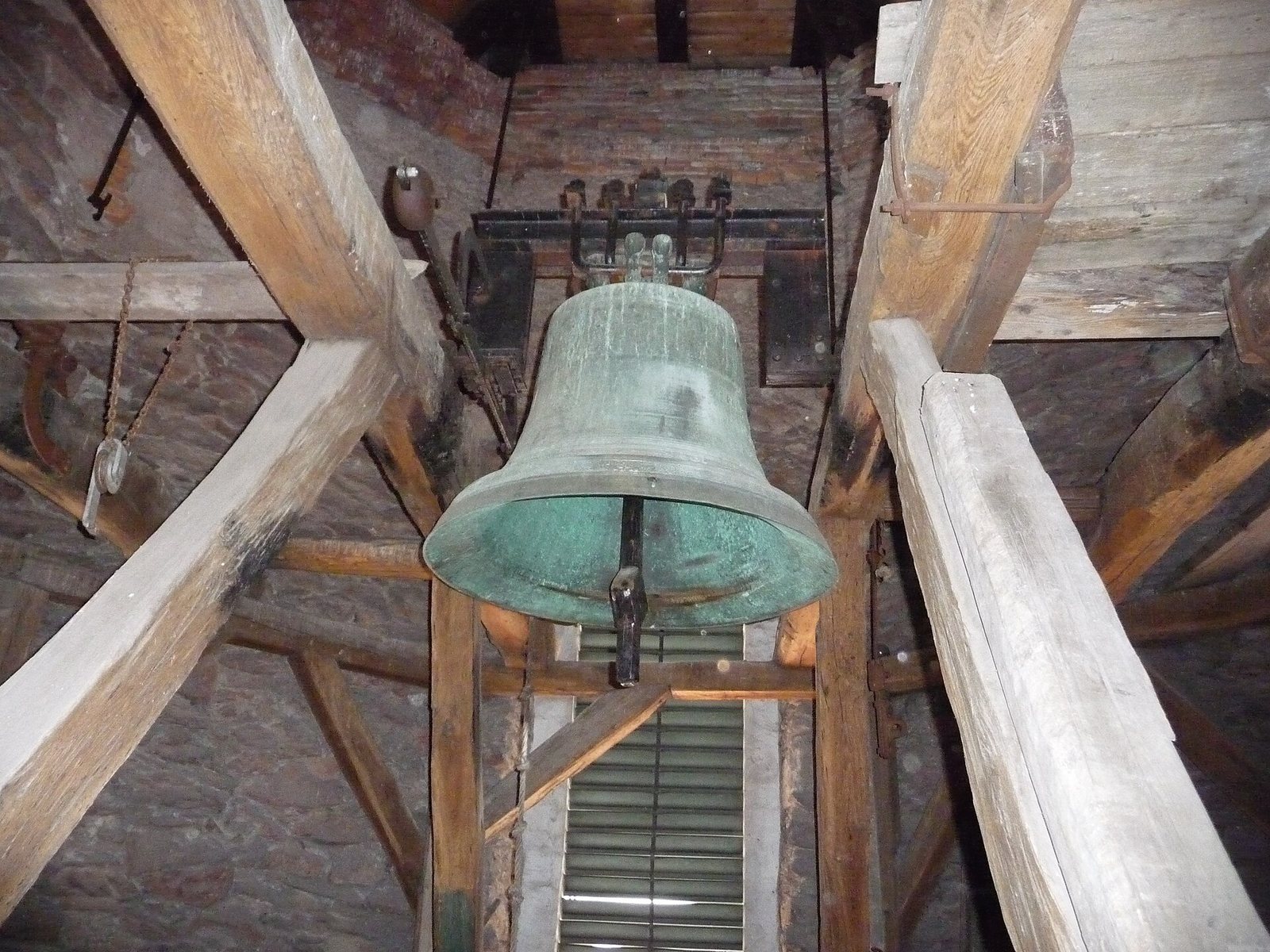
A fire that began on Čermeľská Road in 1846 sent burning roof shingles across the city and damaged the church tower. Three bells and many valuable books were lost. During the Hungarian Revolution of 1848-1849, Russian troops forcibly took over the church and used it as a food store. Around the turn of the 19th and 20th centuries, the monastery was altered and a new organ was installed.
A historical and heritage survey took place in 2006, followed by a major restoration affecting much of the church in 2014. The church is a Slovak National Cultural Monument, a protected heritage property, with registration dating to 1963.
Remains
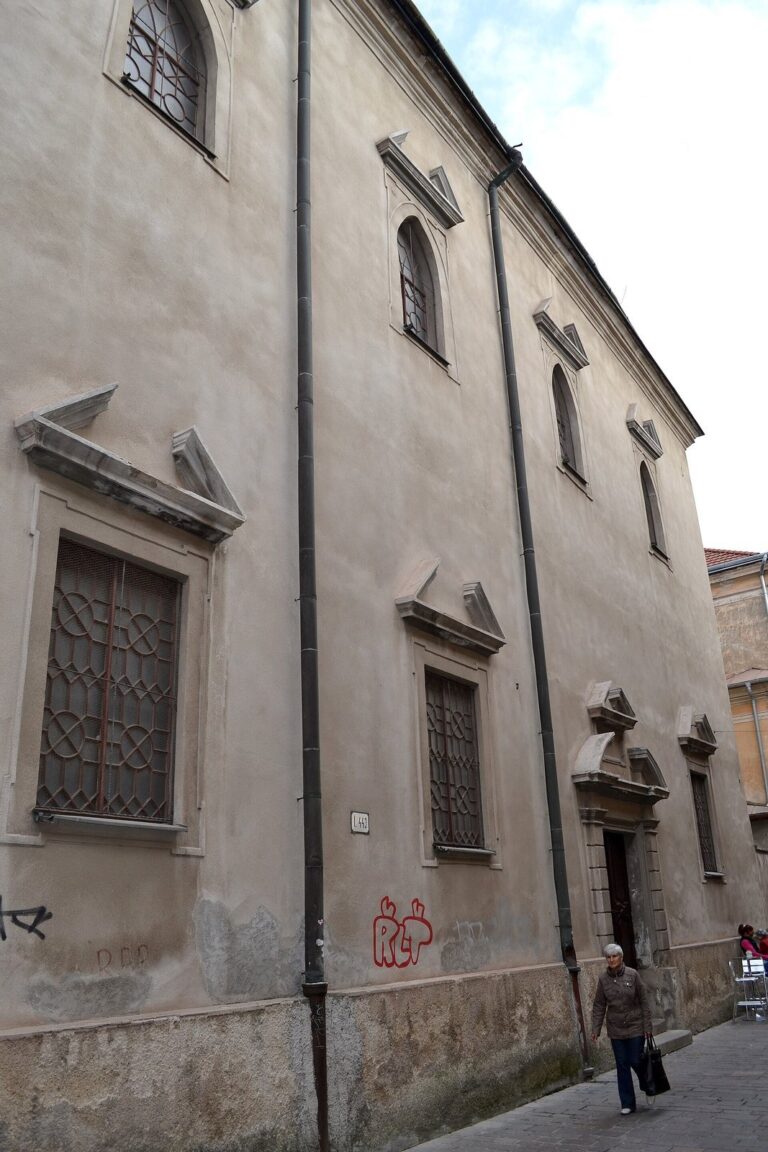
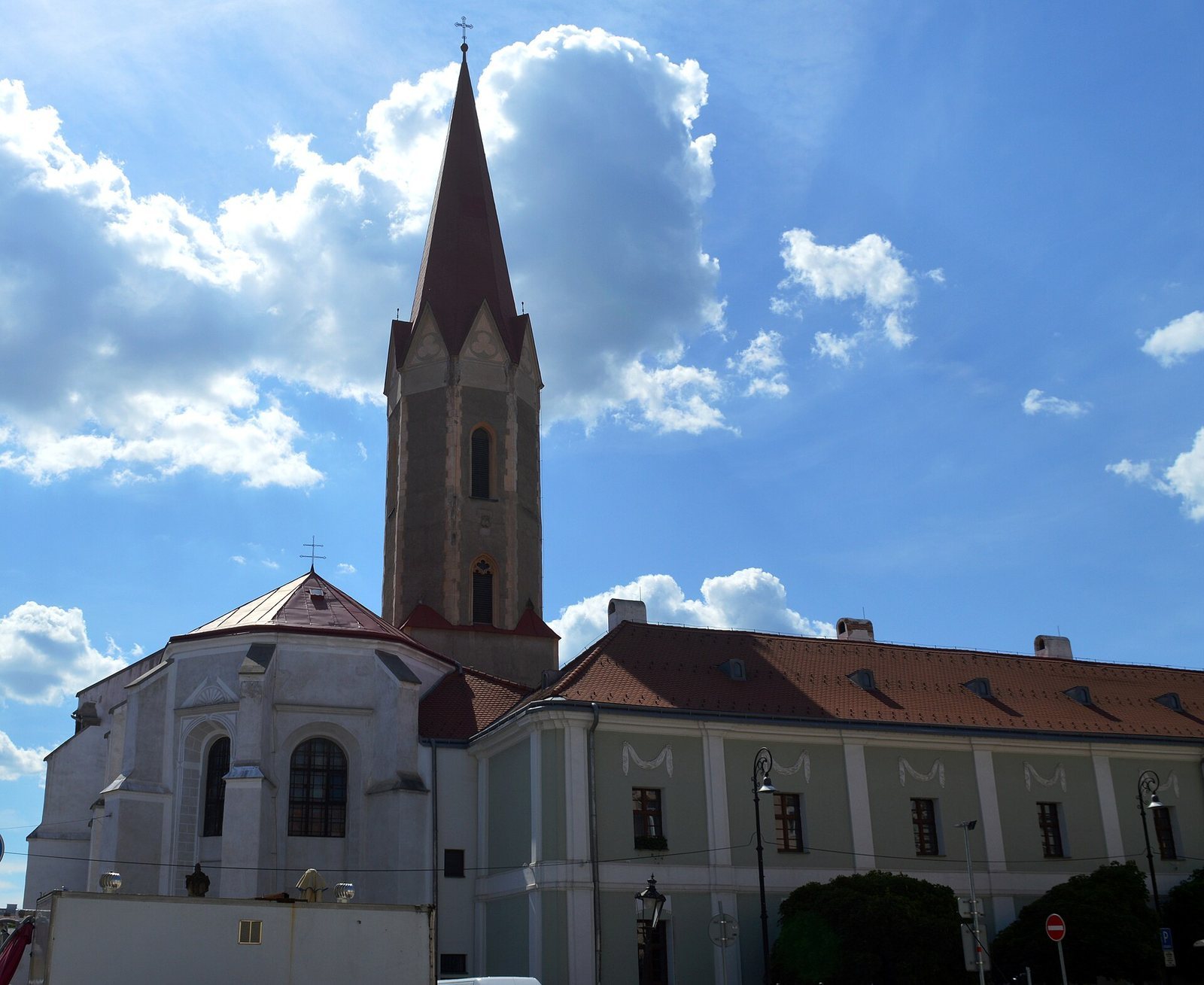
The stone church has a Romanesque nave and a Gothic sanctuary, with later Baroque changes to its fabric and windows. Its tower stands at the north side of the junction between the nave and sanctuary. Medieval supports, a carved window, historic furnishings, paintings, and underground spaces associated with the church preserve evidence of different phases of its development.
Stone fabric and exterior
Nave and sanctuary
The nave is the church’s oldest part and is Romanesque, while the sanctuary is Gothic. The original narrow windows were widened to their present form during the Baroque reconstruction. The building’s combination of medieval work and later changes reflects its long history of repair and rebuilding.
North tower
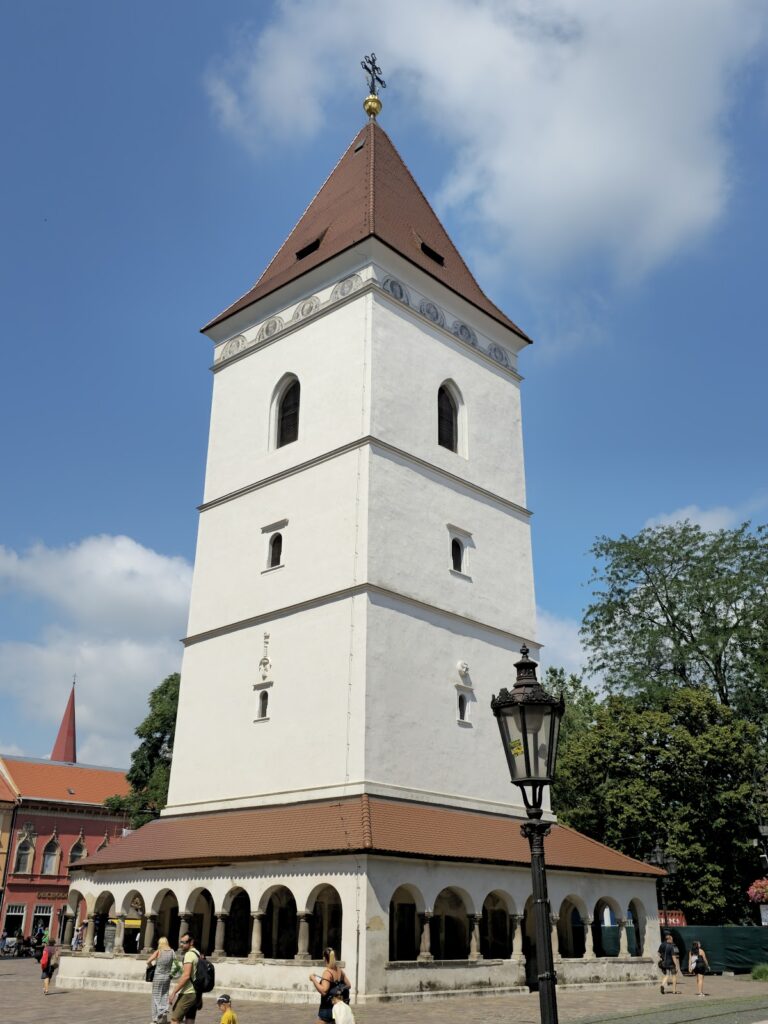
A single conical tower rises on the north side where the nave meets the sanctuary, a position associated with the architectural rules of mendicant orders. The tower was raised in 1903 and now reaches 68 metres. It is the tallest tower in Košice, nine metres higher than the north tower of St Elizabeth’s Cathedral.
Presbytery window and medieval supports
A decorative window in the south wall of the presbytery, the area around the main altar traditionally reserved for clergy, has carved tracery, the ornamental stone framework dividing a window. Dated to the mid-13th century, it was uncovered during research in 1979 and is regarded as an important artistic feature against the church’s otherwise restrained architecture. The capitals, or carved upper parts, of buttresses, wall supports, also survive from the medieval structure that once carried the vault.
Interior and associated features
Altars and furnishings
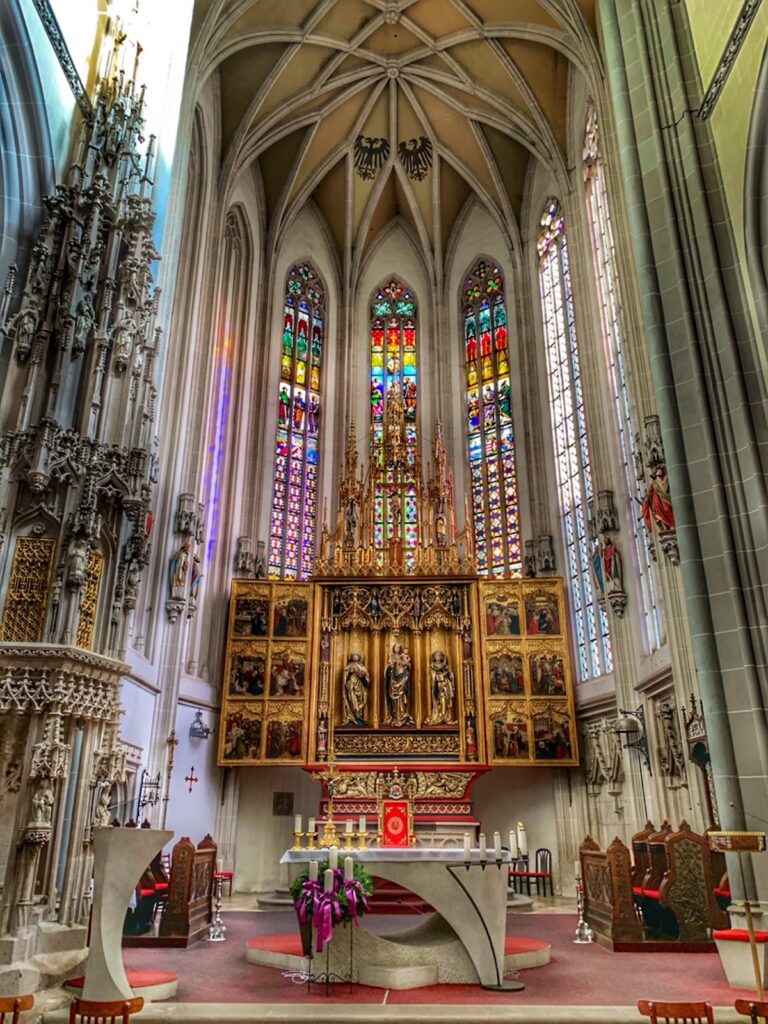
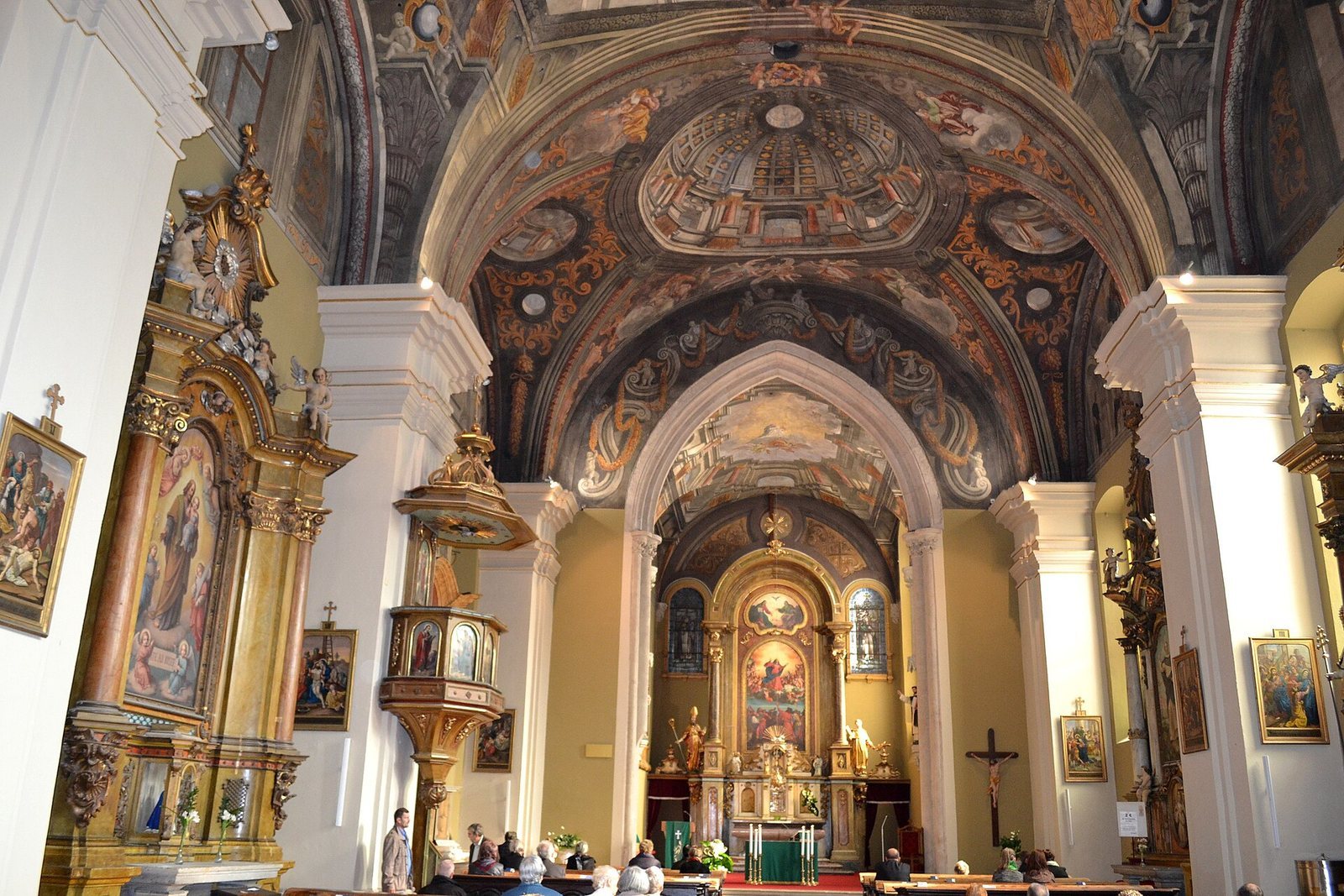
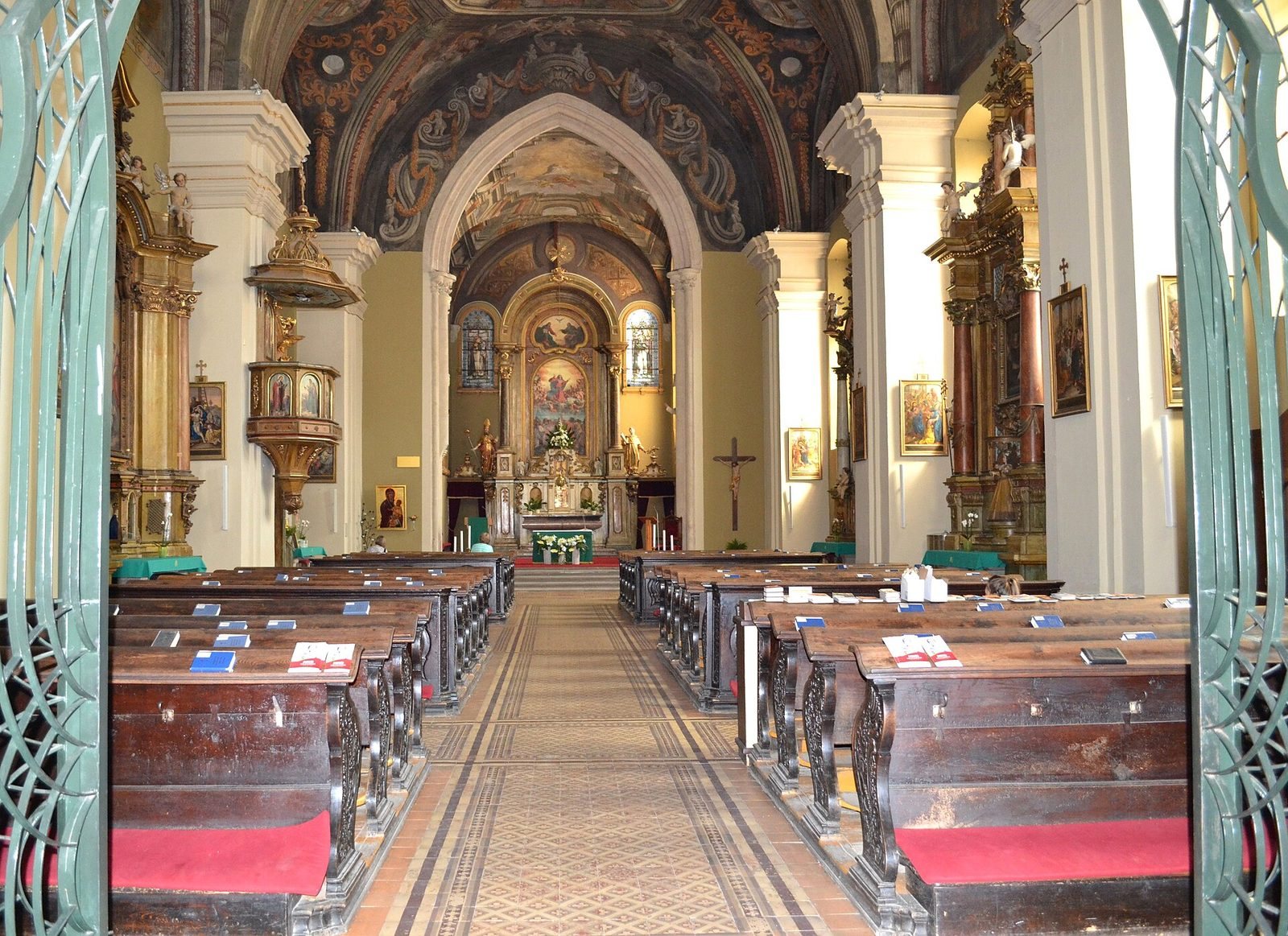
The main altar is dedicated to the Virgin Mary and depicts her Assumption. Four side altars stand in the church, including one dedicated to Our Lady of the Rosary, a Catholic devotion involving repeated prayers and meditation. Most of the interior furnishings date from the 19th century.
Wall and ceiling paintings
Štefan Vörös painted the church’s frescoes, wall paintings made on wet plaster, between 1750 and 1758. Painted cracks were included to give the interior an aged appearance. The ceiling paintings create the illusion that the roof is open and that the viewer is looking directly at the sky. Apparent ceiling cracks drew conservationists’ attention in the 1970s; when scaffolding was erected in 1982 in preparation for restoration, some were recognized as painted rather than structural.
Dominican figures
Paintings and statues portray members of the Dominican tradition, including Dominic de Guzmán, the order’s founder; Catherine of Siena, an Italian religious mystic and saint; and Thomas Aquinas, a Dominican theologian and philosopher. They also depict Margaret, a Dominican nun and daughter of Béla IV, a medieval king of Hungary.
Underground spaces
An extensive network of corridors, cellars, and crypts lies beneath Dominican Square and is associated with the church. Crypts are underground chambers often used for burial.
Holy Trinity column
A Holy Trinity column was transferred from Piešťanská Road to the church in 1929 and is associated with the complex.