Rudbjerggaard: A Half-Timbered Manor House on Lolland, Denmark
Site at a Glance
- Popularity
- Low
- Country
- Denmark
- Primary era
- Early Modern
- Eras represented
- Early Modern
- Civilizations
- Danish
- Site type
- Domestic
- Remains
- Manor House
On this page7 sections
History
Crown estate and noble ownership
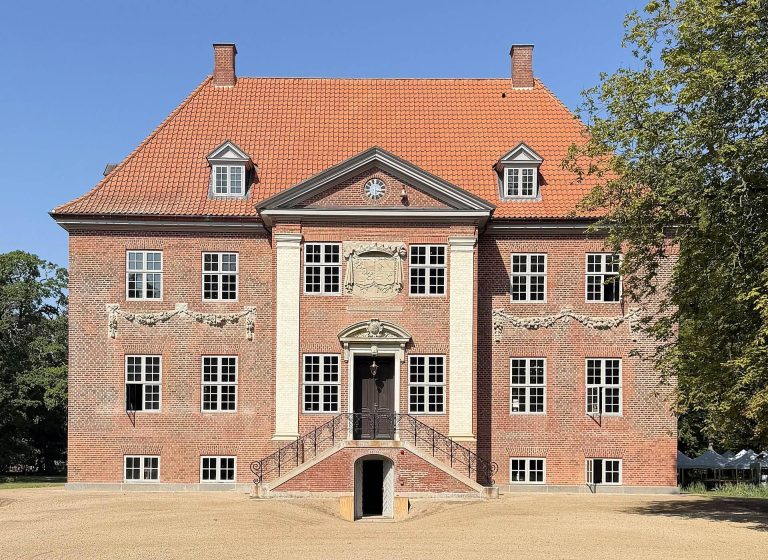
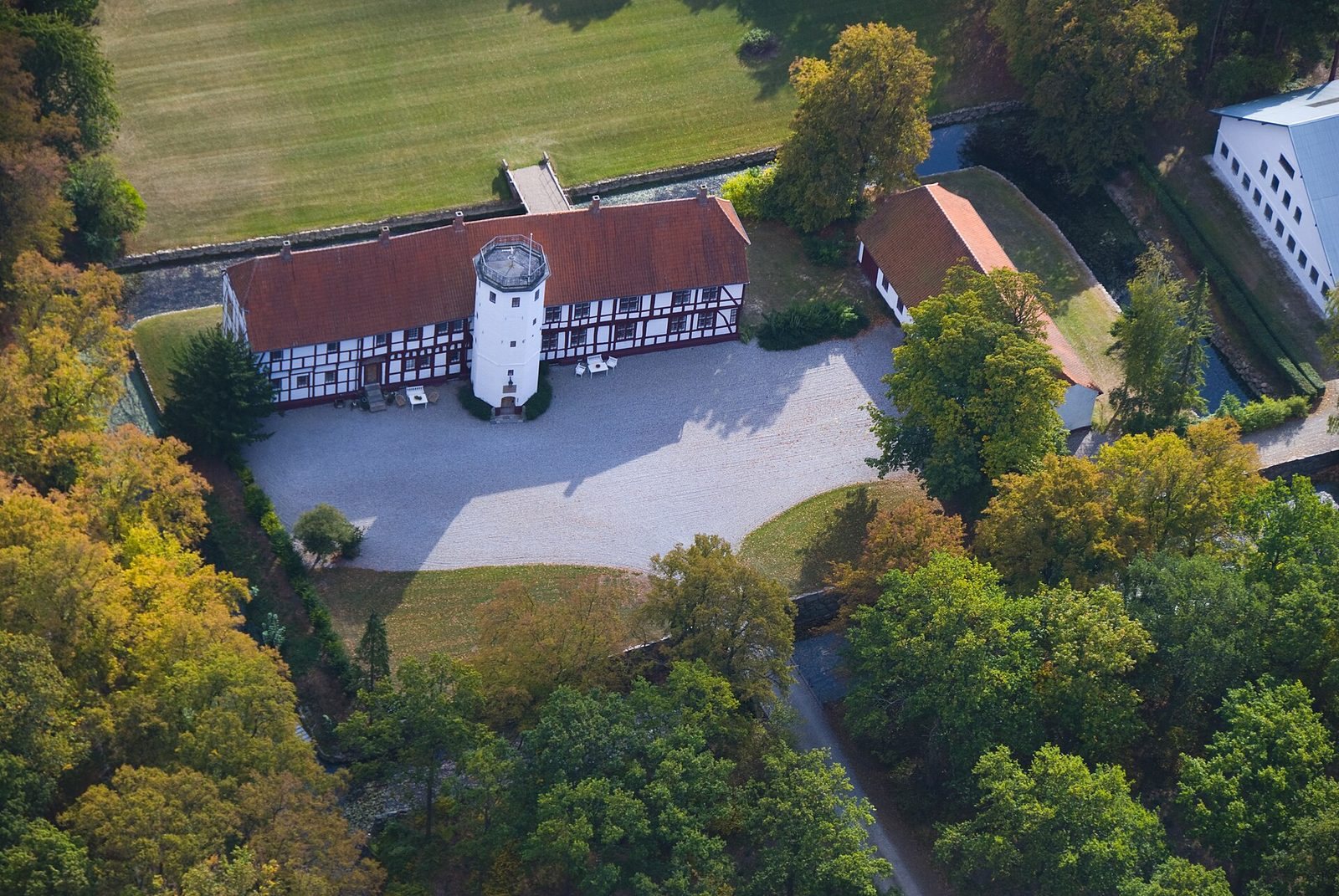
Rudbjerggaard is a vernacular-style manor house near Dannemare on Lolland, Denmark, built around 1600 by Danish nobleman Knud Eriksen Rud. It is Lolland’s only half-timbered manor house. The estate first appears in records in 1231 as crown land and remained royal property until the fifteenth century. The Crown transferred it to Christiern Rud, who passed it to Mogens Ebbesen Galt. Galt was a royal vassal, a noble who held land from the monarch in return for service. He served first at Aalholm Castle and later at Koldinghus, both royal castles. His family held the estate for more than a century.
Galt’s sons Erik and Ebbe died on the same day during an attack on Dithmarschen. A dispute over the estate followed, and it was assigned to their sister and Ebbe’s sons. After a period under the Grubbe family, Rudbjerggaard passed to Erik Rud in the mid-sixteenth century. The name’s first element, rud-, originally referred to rye in Danish and later became associated with the Rud family.
Knud Eriksen Rud and Kirsten Munk
Knud Eriksen Rud built a new residence on the estate around 1600. A date of 1606 on its staircase tower probably marks the building’s completion. Rud married Ellen Marsvin on 1 January 1607 and died in 1611. Before his death, he granted Rudbjerggaard to his stepdaughter Kirsten Munk, Marsvin’s daughter from her first marriage.
In 1615, Munk married Christian IV, king of Denmark and Norway, in a morganatic marriage, a royal union that did not give the spouse or children ordinary dynastic rights. As Munk was still young, her mother managed the estate. With the king’s permission, Marsvin sold it in 1616, probably because its location was remote.
Later owners and changes to the estate
Rudbjerggaard was sold in 1623 to Joachim von Barnewitz, a steward to Queen Sophie, the wife of Frederick II of Denmark and Norway. The estate passed between the Barnewitz and Bülow families until Ida Margrethe Knuth acquired it in 1755. The Knuth family retained it for about a century. Rudbjerggaard expanded during the seventeenth century but suffered during wars with Sweden. Most of its building complex was demolished in the eighteenth and nineteenth centuries.
From 1855 to 1865, Rudbjerggaard belonged to Louise Danner, the morganatic wife of Frederick VII, king of Denmark from 1848 to 1863. After passing through other ownership, the estate was acquired in 1891 by Count Ludvig Eduard Alexander Reventlow. Following his death in 1916, his widow kept the estate until her death in 1938.
Remains
The manor house
The present house is the surviving main wing of the original three- or four-wing complex. The east wing remained after later demolitions and was extended at both ends to form the current building. Its walls use half-timbering, with visible wooden frames and filled panels between the timbers. The large, octagonal staircase tower is built of dressed masonry, stone shaped and finished for construction.
Moats and avenue
The original moats still surround the house. A lime-tree avenue also survives and is attributed to Conrad Ditlev Knuth, son of the estate owner Ida Margrethe Knuth.