Orthodox Synagogue in Prešov: A Jewish House of Worship in Slovakia
Site at a Glance
- Popularity
- Low
- Country
- Slovakia
- Primary era
- Modern
- Eras represented
- Modern
- Civilizations
- Austria-Hungary, Habsburg, Hungarian
- Site type
- Religious
- Remains
- Synagogue
On this page7 sections
History
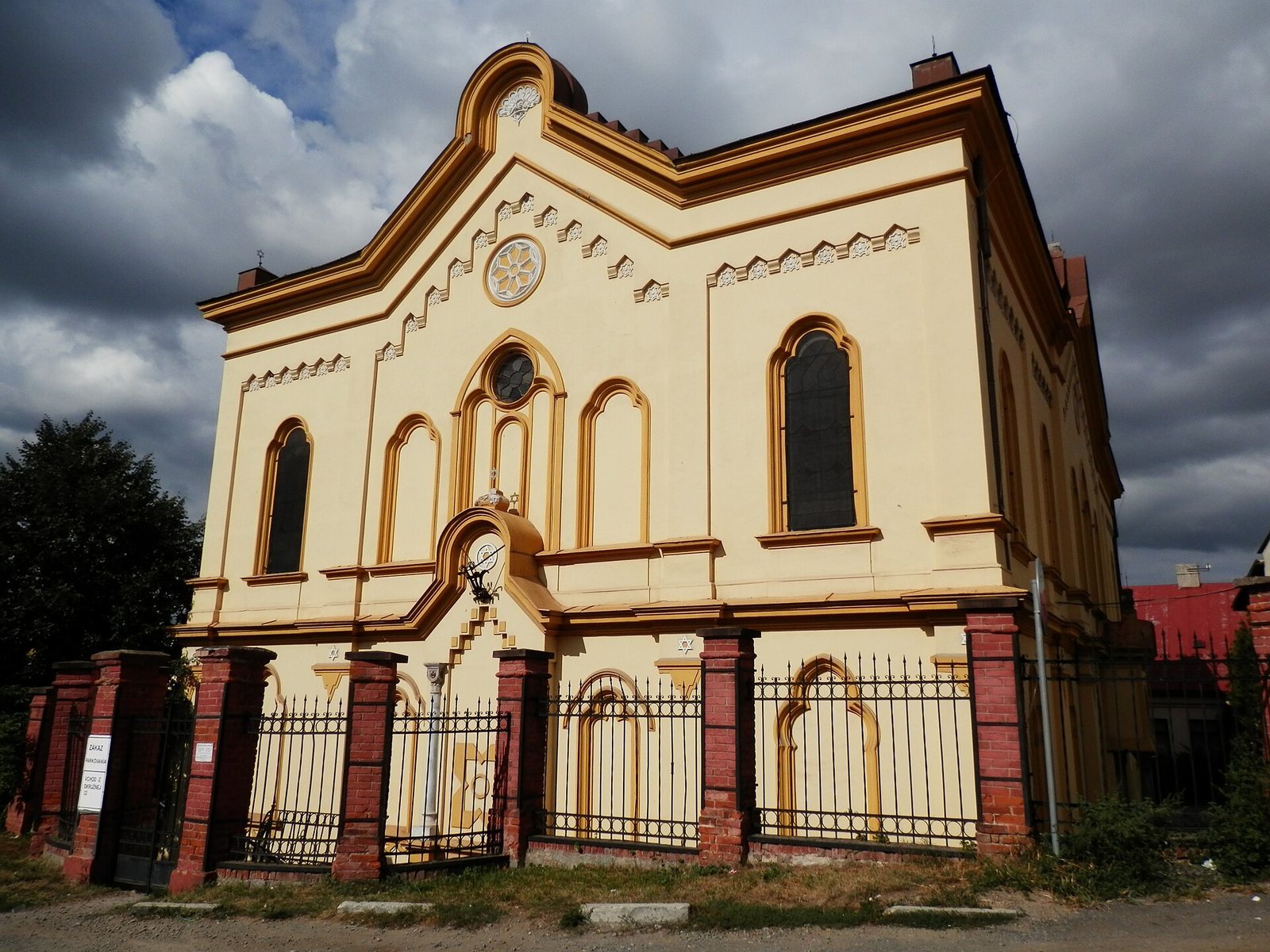
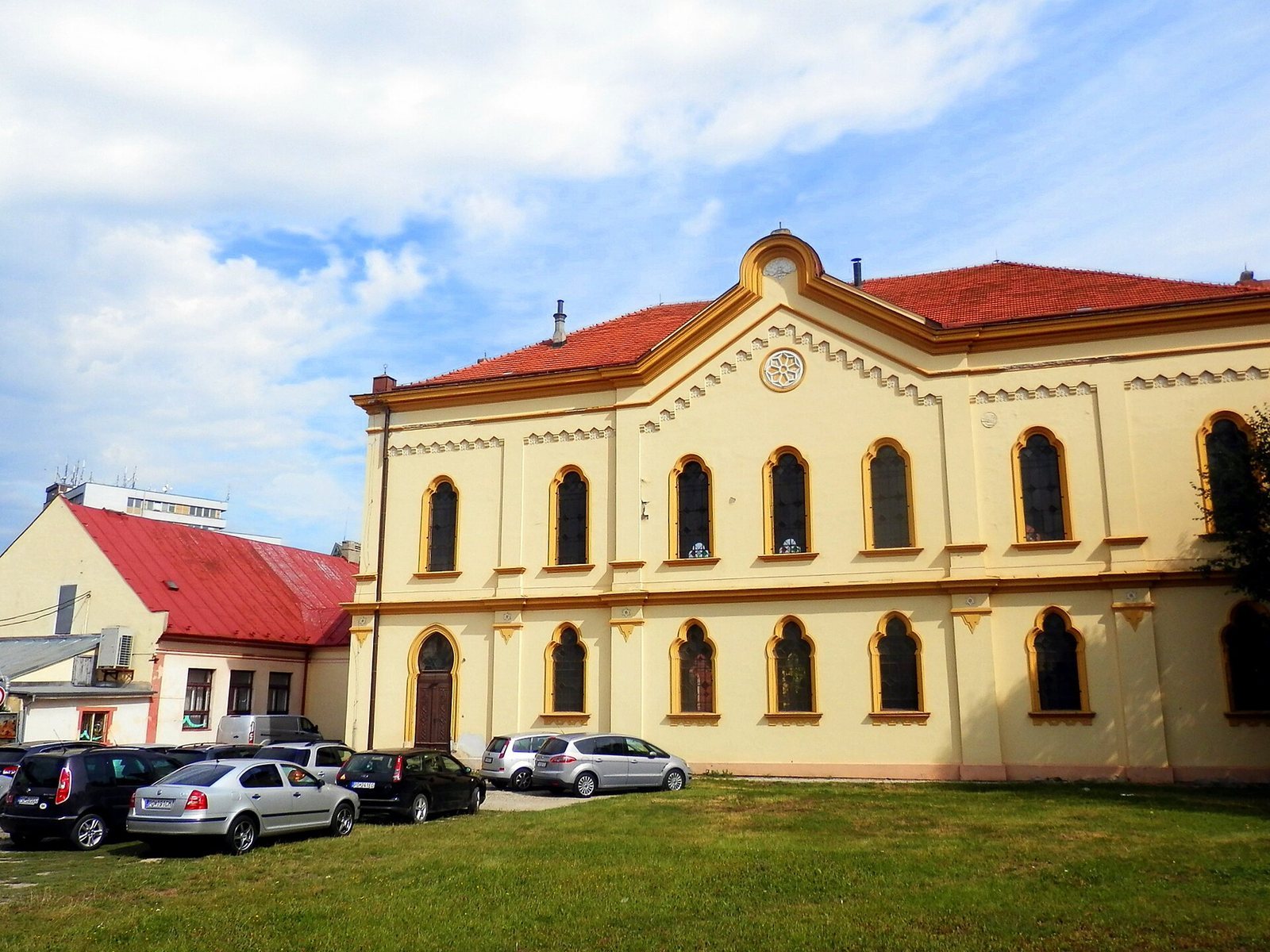
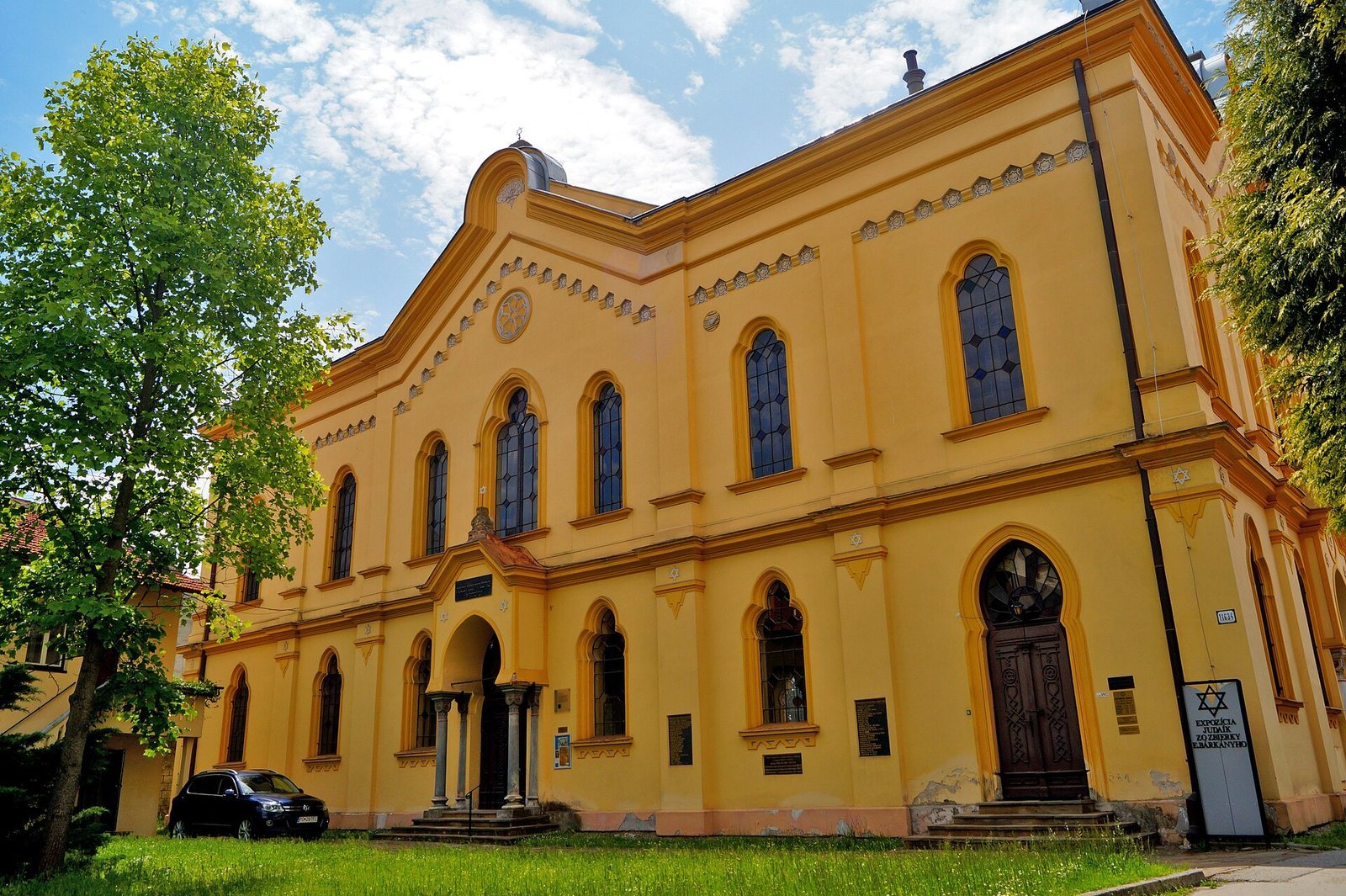
The Orthodox Synagogue is a Jewish house of worship in Prešov, Slovakia, built by the town’s Orthodox community in 1897–1898 with Neo-Romanesque features, Moorish forms, and Eastern-inspired details. It served Prešov’s Orthodox congregation and became a gathering place for local Jews facing deportation in 1942.
Jewish Community and Construction
For centuries, Prešov was a free royal town where Jews were barred from settling. Jewish residents lived in a nearby village and travelled to the town for business. Marek Hollander, an influential businessman, became Prešov’s first permanent Jewish resident despite local protests. His son Leo was the first president of the town’s Jewish community in 1830 and a prominent advocate of Jewish equality in Hungary.
An Orthodox Jewish community had formed in Prešov by the late eighteenth century. After 1871, Orthodox Jews and followers of Neolog Judaism, a distinct movement among Hungarian Jews, belonged to separate communities. The synagogue followed Orthodox Jewish practice and the Sephardic liturgical tradition. It was ceremonially opened on Yom Kippur, the Jewish Day of Atonement, in 1898.
Museum and Wartime Disruption
Prešov’s first Jewish museum was founded in 1928 and opened to the public in 1931 in the Kumšt building. Engineer Eugen Bárkány and Dr. Teodor Austerlitz, the son of a prominent Prešov rabbi, initiated its creation.
During the German occupation, German forces used the synagogue for military purposes, including as a workshop, garage, and stable. It continued to function as a synagogue until 1942. In spring and summer that year, Prešov’s Jews gathered there before deportation to German camps. Before the Second World War, 4,308 Jews lived in the town, 17.6 percent of its population. The museum ceased operating during the war.
Postwar Religious and Cultural Use
After the war and liberation, the synagogue housed a kitchen for returning refugees. Following repairs and work on its interior furnishings, it was reconsecrated in October 1948 and returned to religious use. The museum collection was transferred to the Jewish Museum in Prague and held there from 1952. In 1993 it returned to Prešov, and on 25 November part of it opened in the synagogue as the permanent Bárkány Judaica exhibition, displaying objects from Jewish religious and cultural life. The exhibition is administered by the Museum of Jewish Culture, part of the Slovak National Museum.
In 1989, the Los Angeles-based Pacific Jewish Center sought to move the synagogue’s interior to the United States. The plan did not proceed, chiefly because members of Prešov’s Jewish community opposed it and social circumstances changed. The synagogue underwent reconstruction in the 1990s. The complex is a national cultural monument, a status declared on 17 April 1963. The Jewish Religious Community of Prešov owns the synagogue and administers it with the Museum of Jewish Culture. It remains the only synagogue serving the town’s Jewish religious community, which has about 50 members.
Remains
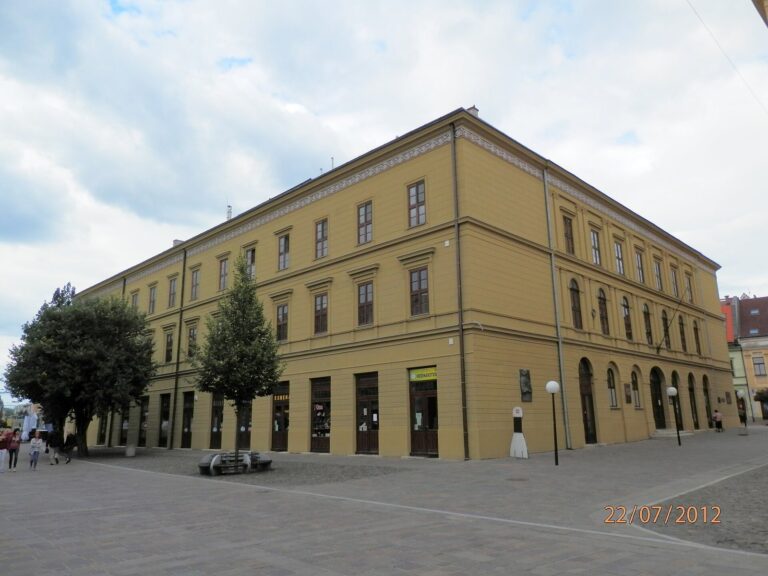
The two-storey synagogue stands in Prešov’s historic centre, beyond the former city walls, and faces southeast toward Jerusalem. It has no towers. Its exterior combines Neo-Romanesque features, including round arches, Moorish forms associated with Islamic architecture, and other Eastern-inspired details. The smooth, austere facades have narrow windows, and the round arches were restored in the 1990s.
Interior and Worship Furnishings
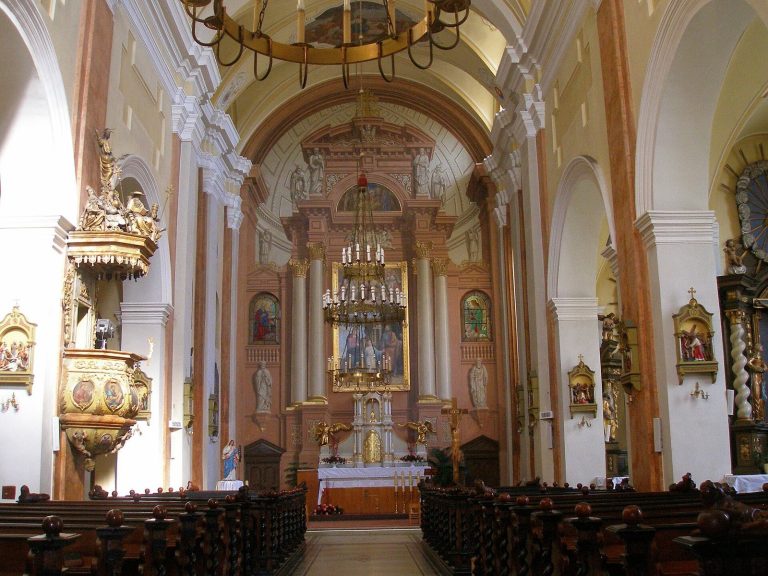
Inside, richly decorated frescoes by the painter Andrej Grazl cover the synagogue. Despite substantial damage to the building, the paintings retained their original appearance and expressive form, and the interior retains its furnishings. On the eastern side stands the Torah ark, a cabinet for sacred scrolls, made by the sculptor Bacsó of Košice. A raised platform in the centre holds a table for reading the Torah, the central Jewish sacred text. The upper-floor women’s gallery houses the permanent exhibition of Jewish religious and cultural objects.
Communal Complex and Courtyard
The synagogue formed part of a complex built by the Orthodox community. Its facilities included a prayer house, a school for children, a rabbinical office, a ritual slaughterhouse, a Hasidic study house, an advanced religious school, a kosher butcher’s shop, and a community office. In the courtyard before the synagogue entrance stands a Holocaust memorial, unveiled in August 1991. It commemorates more than 6,000 victims from Prešov and the surrounding area.