Hall i’ th’ Wood: A Manor House and Spinning-Mule Workshop
Site at a Glance
- Popularity
- High
- Country
- United Kingdom
- Primary era
- Early Modern
- Eras represented
- Early Modern
- Civilizations
- English
- Site type
- Domestic
- Remains
- Manor House
On this page5 sections
History
Manorial and industrial occupation
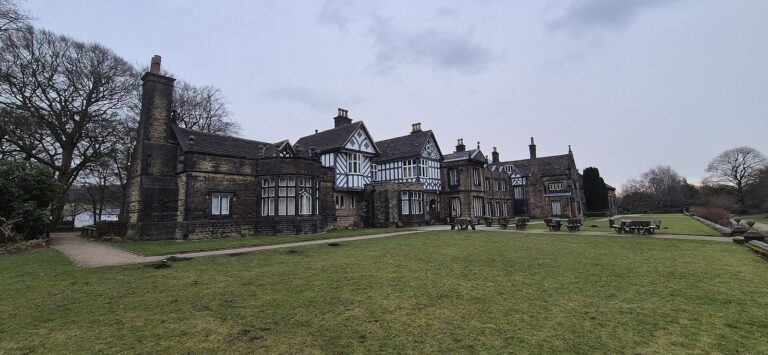
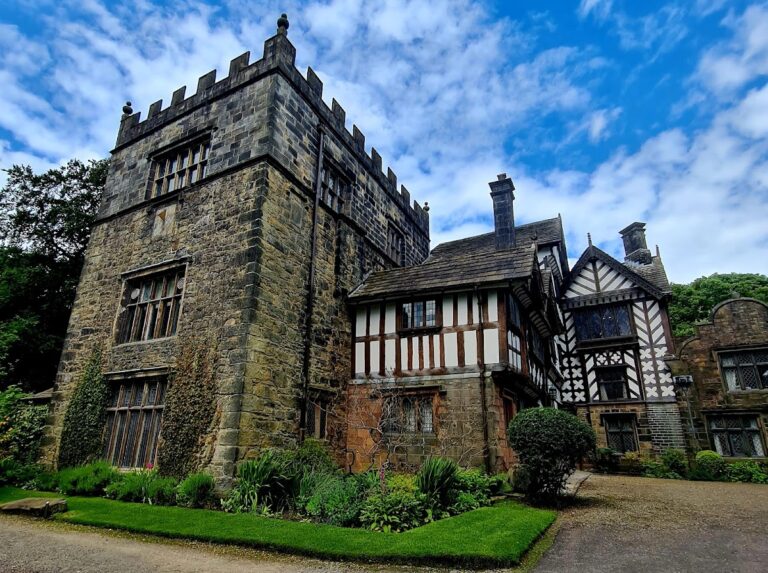
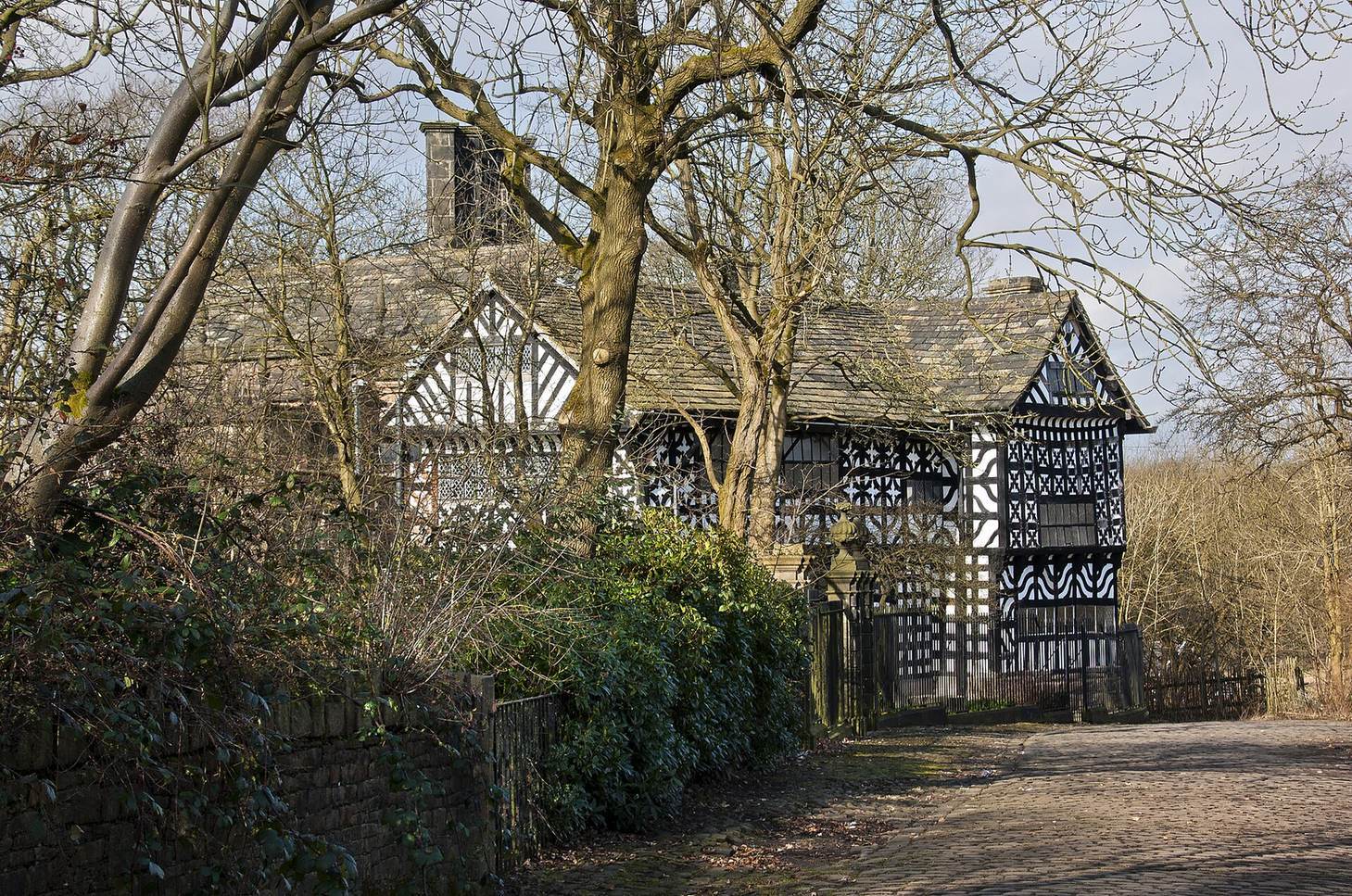
Hall i’ th’ Wood is an early-sixteenth-century manor house in the United Kingdom, later associated with Samuel Crompton’s work on spinning machinery. Its name is a local dialect form meaning “Hall in the Wood.” A manor house was the principal residence associated with a landed estate. In the sixteenth century, this house served the Brownlow family’s moiety, or half-share, of the township of Tonge with Haulgh. A township was a local administrative unit. The house was not used as a gentry residence; families engaged in industry lived there instead.
Crompton and spinning machinery
In the eighteenth century, part of the house was let to English inventor Samuel Crompton. There he designed and built the first spinning mule, a machine for spinning yarn. Around 1779, he also made a mule-jenny, a related spinning machine, to produce yarn suitable for muslin. The machine was also known as the muslin wheel or Hall i’ th’ Wood wheel.
Nineteenth-century reflection and restoration
In 1833, a poem by Letitia Elizabeth Landon appeared in Fisher’s Drawing Room Scrap Book alongside an engraving of William Linton’s painting of the hall. The poem reflected on changes the building had undergone over the centuries.
William Lever, later Lord Leverhulme, bought the house in 1899. Jonathan Simpson and Edward Ould restored it, and Lever gave it to the Corporation of Bolton, the town’s municipal governing body, in 1900. The house was designated a Grade I listed building in 1952, the highest category in England, reserved for buildings of exceptional interest. It later served as a museum run by Bolton Metropolitan Borough Council.
Remains
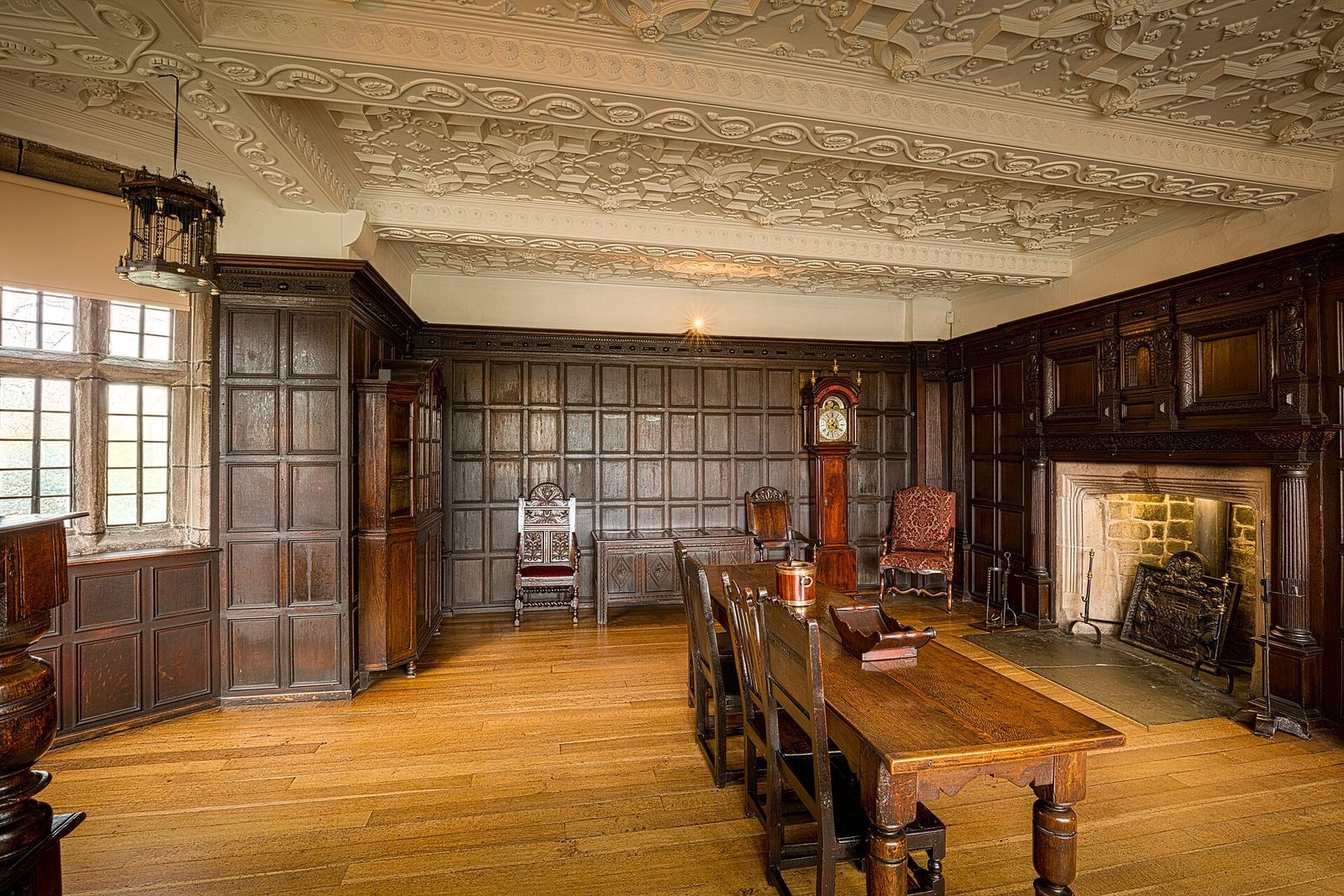
The house combines an original timber-framed structure with a stone-flagged roof and stone additions built in 1591 and 1648. Four separate dwellings can be identified within it, compared with five in an earlier arrangement. Each has its own entrance and staircase.
In 2021, severe structural problems, including timber decay, damp, rot, and vandalism damage, led to the need for essential maintenance.