Boringdon Hall: A Manor House in Devon
Site at a Glance
- Popularity
- Medium
- Country
- United Kingdom
- Primary era
- Medieval
- Eras represented
- Medieval, Early Modern, Modern
- Civilizations
- British, English
- Site type
- Domestic
- Remains
- Manor House
On this page10 sections
History
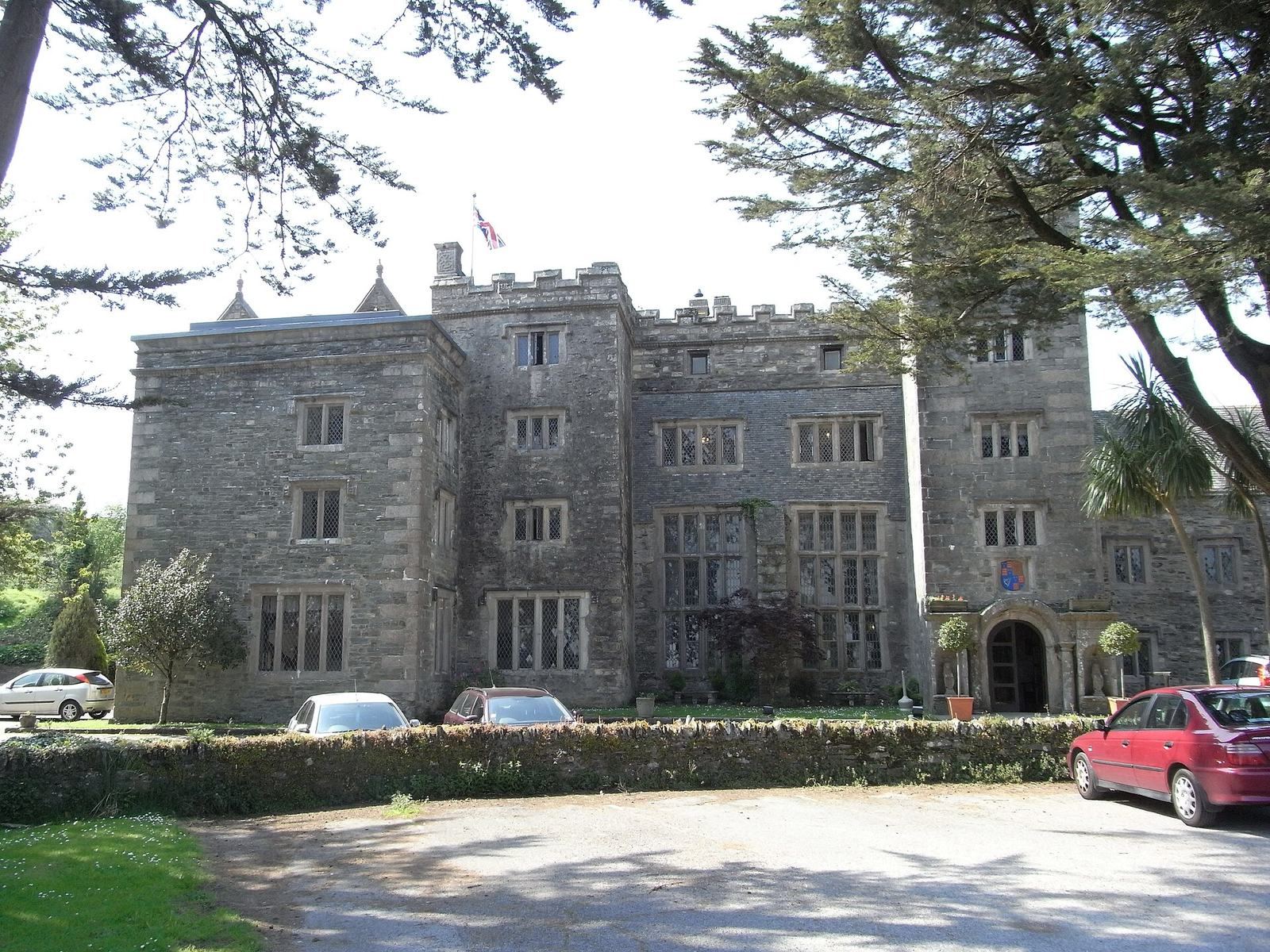
Boringdon Hall is a manor house in Colebrook, Devon, United Kingdom. Antiquary John Britton placed the oldest parts of the present building around the mid-14th century, though later alterations make a secure date difficult.
Medieval and Tudor ownership
Around 956, the royal manors of Boringdon and Wembury were granted to Plympton Priory of St Peter in a grant attributed to Edgar, a 10th-century Anglo-Saxon king. After the Crown suppressed England’s monasteries and took their property, Henry VIII granted Boringdon to Thomas Wriothesley, 1st Earl of Southampton. Wriothesley sold the manor in 1549 to Richard Mayhew, whose name was also spelled Mayhowe.
In 1582, Mayhew’s granddaughter and heiress Frances, daughter of Jeronemy Mayhew, married John Parker of North Molton. The couple completed a remodeling of the house in 1587. Boringdon remained in the Parker family, whose members later held the titles of Baron Boringdon and Earl of Morley, into the 20th century. The Parkers also expanded nearby Colebrooke to provide homes for estate workers.
Civil War and the move to Saltram
The Parkers supported the Crown during the English Civil War (1642–1651), the conflict between the king’s supporters and Parliament. The house’s eastern portion, including the range beyond the entrance porch, was demolished. By 1980, only walls of this section remained, and it was rebuilt during the 20th century. Charles I may have stayed at Boringdon on 11 November 1642, when he was recorded as being at Colebrook.
In 1712, the Parkers acquired the nearby manor of Saltram and built Saltram House, which became their principal residence. Boringdon’s standing declined, and by the 1920s the house was being used as a farmhouse.
Twentieth-century changes
Boringdon Hall was listed at Grade I in 1952, the highest category for buildings of exceptional interest in England. After Edmund Robert Parker, 4th Earl of Morley, died in 1951, the family faced substantial death duties. In 1957, the Parkers transferred Saltram, its contents, and 291 acres to the National Trust in lieu of tax; Boringdon may also have formed part of that transfer.
Patrick Cotter, 7th Baronet of Rockforest, later acquired Boringdon and lived there during the 1960s. Paul Chapman subsequently took ownership and converted it into a hotel. Restoration began in 1986, but a major fire struck the building in March 1989. The Nettleton Collection of hotels acquired it in 2011.
Remains
Architectural remains
The main interior arrangement linked the entrance porch to a screens passage, a corridor separating the hall from service areas, with the great hall on its left. The building incorporates later alterations and imported period features and materials, which complicate the dating of its fabric. Architectural historian Nikolaus Pevsner remarked that its appearance of age was convincing on the surface.
Entrance porch
The porch has a semicircular arch edged with rope-like moulding in a Norman style, a form of Romanesque architecture associated with the Normans in England. Britton considered the porch older than the surrounding house and suggested that it may have been reused from a nearby church or Plympton Castle.
Great hall
The double-height great hall survives largely intact. Two windows light its south side, while a large granite fireplace occupies the north wall. The fireplace lintel bears the Parker arms. Above it, the chimney breast carries a large plaster representation of the royal arms of Charles I, dated 1640. Larger-than-life female figures representing Peace and Plenty flank it; Plenty holds a horn-shaped emblem of abundance.
A gallery stands at each end of the hall. Its ornate plaster ceiling imitates an earlier style; Pevsner described it as a well-executed modern imitation.
Granite doorframes
Granite doorframes appear throughout the house, and many have been moved from their original positions. The frame now used between the screens passage and the great hall once served as a fireplace in the southeast room.
Boringdon Arch
About a mile west of the hall, Boringdon Arch stands on Plymbridge Road along the former route between Boringdon and Saltram. Robert Adam designed this Roman-style monumental arch, which was built in 1783. It is now in disrepair and is included on the English Heritage at Risk Register.