Woodlands Fort: A Nineteenth-Century Defense of Plymouth
Site at a Glance
- Popularity
- Low
- Country
- United Kingdom
- Primary era
- Modern
- Eras represented
- Modern
- Civilizations
- British
- Site type
- Military
- Remains
- Fort
On this page6 sections
History
Construction and purpose
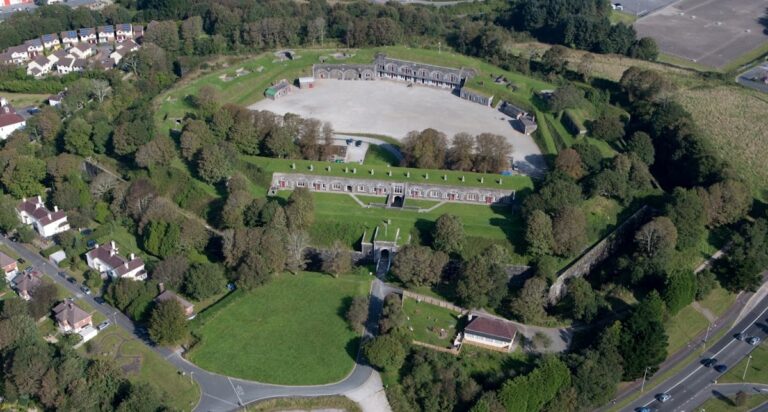
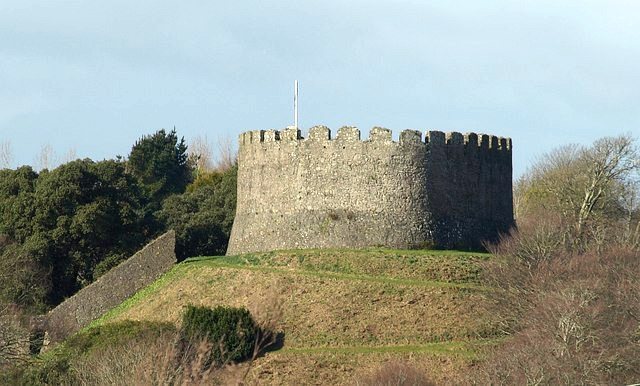
Woodlands Fort is a Victorian fort in Plymouth, United Kingdom, built between 1863 and 1869 as part of the Palmerston Forts, Britain’s nineteenth-century coastal and land defenses. It was one of the forts in a British fortification program recommended in 1859 by the Royal Commission on the Defence of the United Kingdom. The fort formed part of Plymouth’s northeastern defenses and was intended to protect the Royal Dockyard at Devonport from a possible French attack during Napoleon III’s rule as emperor of France from 1852 to 1870.
Captain Edmund Frederick Du Cane, a British military engineer, designed the fort. George Baker and Company undertook its construction, which the Royal Engineers, the British Army’s engineering corps, completed.
Military service and later use
The military relinquished Woodlands Fort in 1920. Plymouth City Council is its current owner.
Remains
Layout and buildings
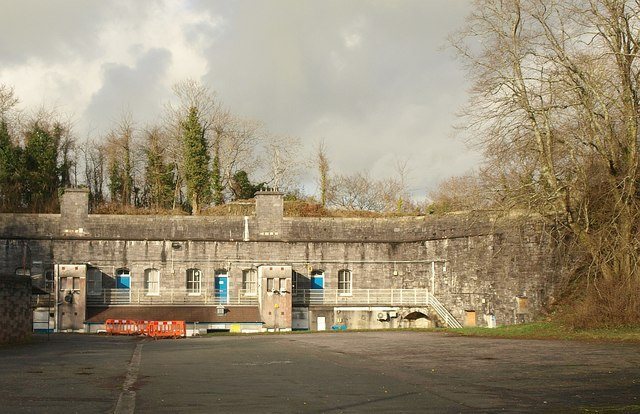
The fort has a trapezoidal plan and was built using masonry and earth, with features associated with advanced Victorian fort design. The soldiers’ barracks stand north of the parade ground. To the northwest, the cookhouse is now ruined, while military storage spaces called magazines lie in the northeast. The barracks remain in use and are maintained by volunteers. Much of the rest of the fort is derelict, with neglect and vandalism affecting other areas.
Ditch defenses and entrance
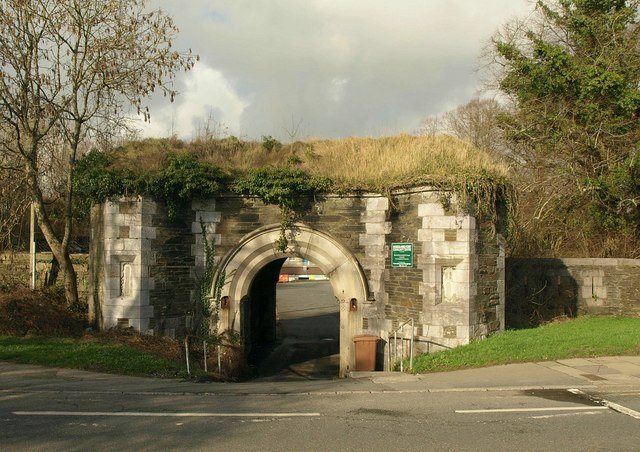
A caponier, a protected position for firing along a defensive ditch, covers the western flank from the northwest. In the northeast, a counterscarp gallery, a passage for firing from the outer side of a ditch, was reached through a tunnel beneath the ditch and provided flanking fire along its north and east sides. Neither defensive structure can be reached from within the fort. The gatehouse on the south side retains part of its original drawbridge mechanism. The ditch south of the fort was filled when Crownhill Road was widened.