Warthof: A Forestry Estate on the Site of Wart Castle
Site at a Glance
- Popularity
- Low
- Country
- Germany
- Primary era
- Medieval
- Eras represented
- Medieval, Early Modern
- Civilizations
- Duchy of Württemberg, Holy Roman Empire
- Site type
- Military
- Remains
- Castle
On this page8 sections
History
Warthof is a forestry estate in the municipality of Aspach, Germany, southwest of Spiegelberg, occupying the site of Wart Castle. Built by the margraves of Baden, the medieval castle is dated either to the early twelfth century or to around 1200. It was a small fortified seat associated with dependent nobles serving a territorial lord, and probably developed from a single watch post. Its name has been cited as consistent with that possibility. Wart served as an outpost among the larger castles of Löwenstein, Lichtenberg, and Reichenberg. A castle called Wartenberg, associated with Löwenstein, appears in a record of 1131, when Duke Welf VI stormed it.
Castle and changing ownership
In 1297, the castle and its chapel, dedicated to Saint Lawrence, passed to the Counts of Württemberg in connection with the marriage of a Baden princess. The Württembergs later granted the property to others under obligations of service. Around 1435, they pledged it to Konrad von Stammheim, while mining ventures in the area sought jet, gold, and silver. In 1456, Count Ulrich granted the castle to Benrold Nothaft of Hohenberg. Benrold’s son, the knight Eitel Hans Nothaft of Hohenberg, sold it back to Württemberg in 1509. The sale deed described a small castle, a barn, orchards, and extensive land.
Destruction and the later estate
In 1524, Archduke Ferdinand, later Emperor Ferdinand I, sold the castle and other properties, including Katzenhof, to Trautwein Vaihinger von Schöntal, a Württemberg secretary and entrepreneur. During the Peasants’ War, the 1525 uprising by rebellious peasants, the rebels plundered the castle and set it ablaze. They had previously nearly captured Vaihinger at Weinsberg. The chapel also burned, and the castle was never rebuilt. Vaihinger’s case against the alleged arsonists failed in 1533.
The burned castle stood uninhabited until 1559 and gradually decayed, while bushes spread across its fields. That year, the ruins, fields, and woods were granted to Dietrich von Plieningen, who lived at Schaubeck Castle. The property passed to Sebastian and Christoph von Plieningen in 1593, and new owners erected the buildings that survive on the grounds in 1650. An illustration from 1686 names the estate Klein Wartshoff and identifies it as belonging to the Pölnitz family. In the eighteenth century, it passed successively through the Gaisberg and Eltershofen families, the Württemberg branch of the Kniestedt family, and the Barons of Bruselle.
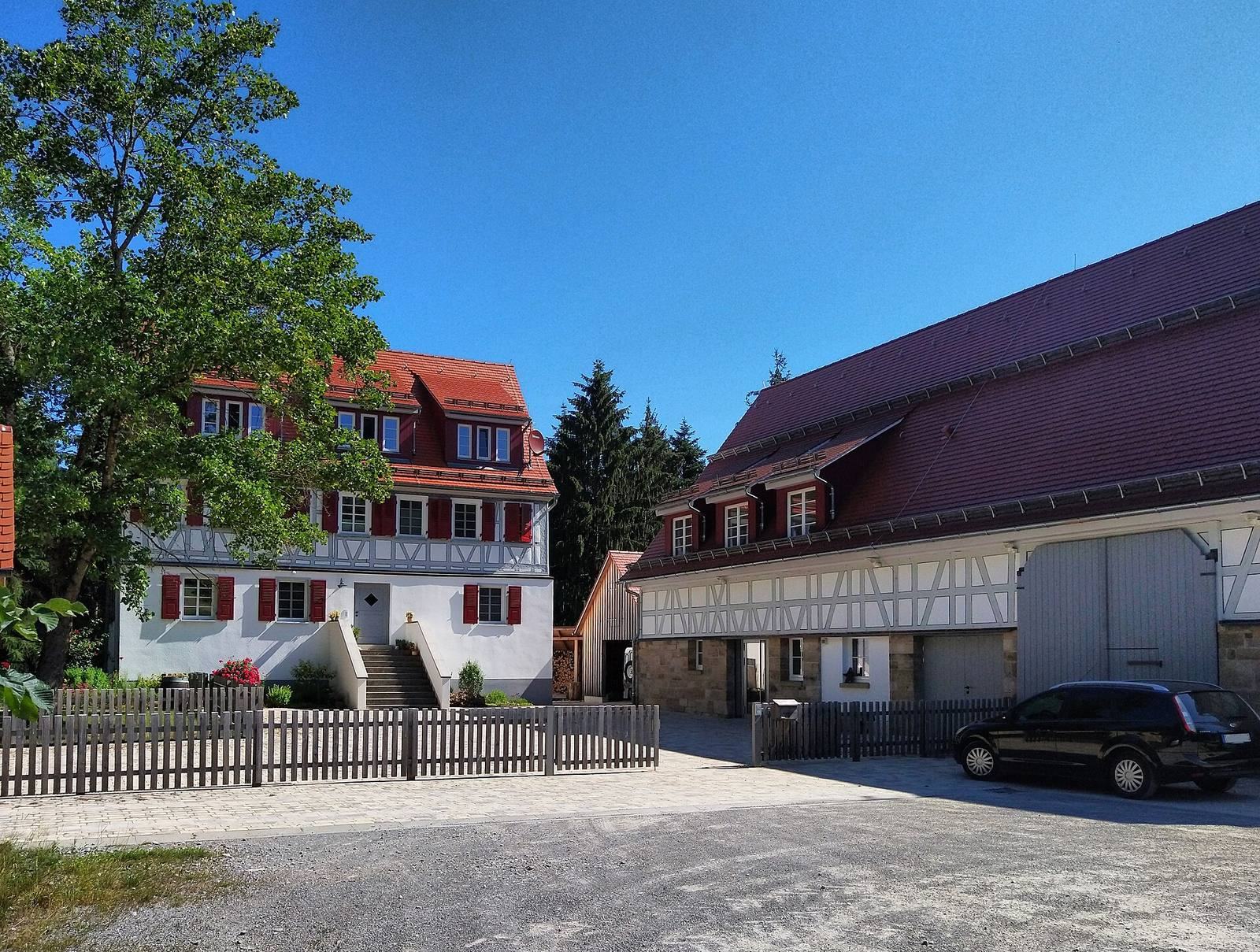
In 1862, the state of Württemberg bought the Wart estate from Baron Felix Friedrich von Bruselle and converted its farmhouse into a forestry station. The station is now under the Backnang Forestry Office.
Remains
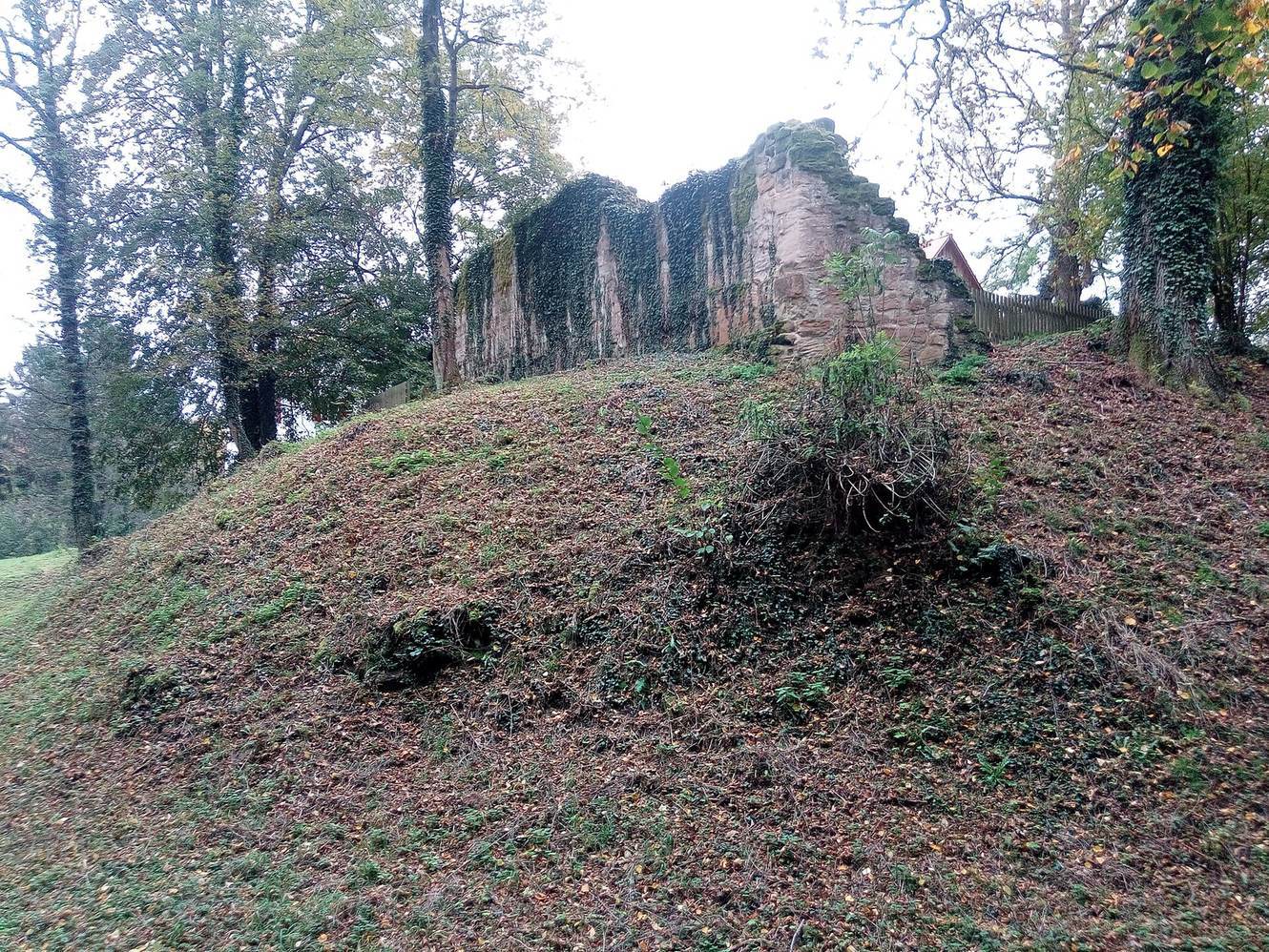
The woodland site lies on the southern slope of the Winterlauter in the Löwenstein Mountains. Its surviving features combine castle earthworks and masonry with later estate buildings. The castle’s rampart and ditch mark part of the former enclosure, while substantial remains of its northern walls and a cellar survive.
Castle earthworks and masonry
Rampart and ditch
The castle rampart and ditch remain except on the southern side, where a forest road was built over them. The ditch was once filled with water supplied by a well. Andreas Kieser’s forest map depicts it in that condition.
Northern walls and cellar
Considerable sections of the northern curtain wall and the main building’s northern outer wall survive in sandstone blocks. A cellar with a vaulted ceiling also remains and probably dates from after 1525.
Estate buildings and grounds
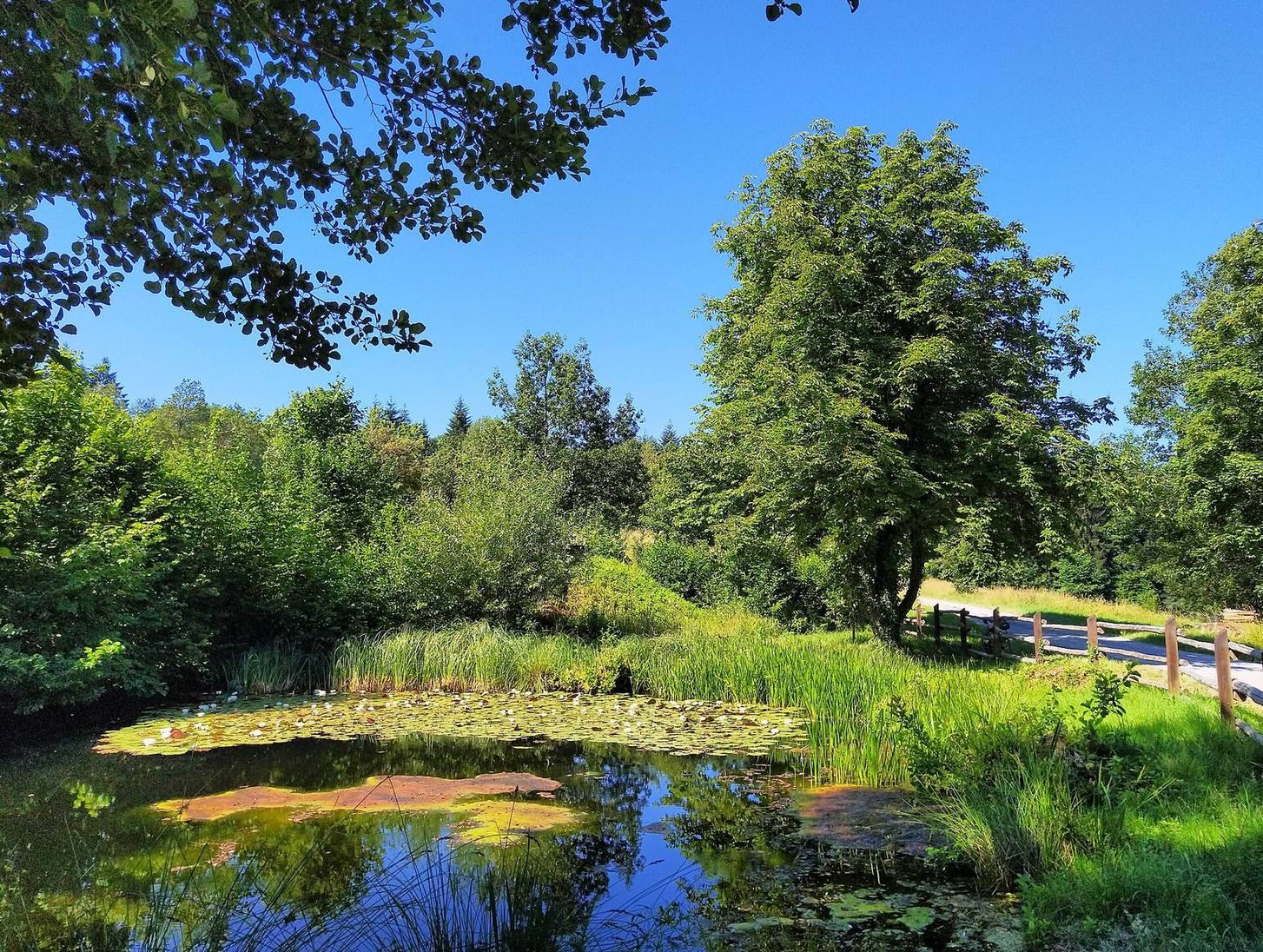
The buildings erected in 1650 remain in use as a forestry house, barn, and bakehouse. A fishpond is also among the site’s features. Kieser, a Württemberg surveyor and cartographer, depicted the farm beside the castle ruins on his 1686 forest map.