Mary’s Column: A Monument to Mary in Ljubljana, Slovenia
Site at a Glance
- Popularity
- Very Low
- Country
- Slovenia
- Primary era
- Modern
- Eras represented
- Early Modern, Modern
- Civilizations
- Austria-Hungary, Habsburg, Holy Roman Empire
- Site type
- Civic
- Remains
- Monument
On this page5 sections
History
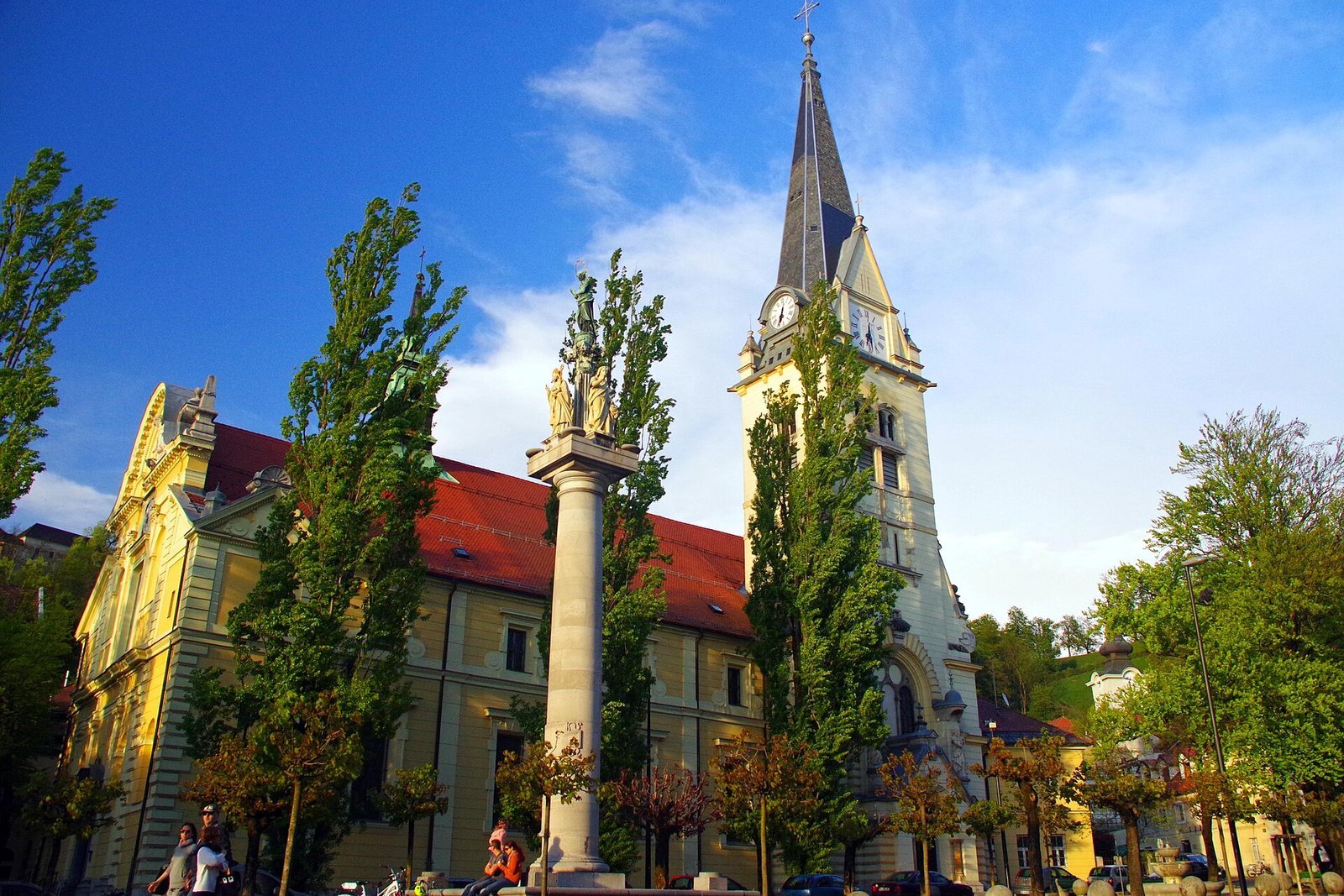
Mary’s Column is a monument to Mary on Levstikov Square in Ljubljana, Slovenia, in front of the parish church of St James. The Carniolan Estates, the representative estates of the Habsburg-ruled Duchy of Carniola, commissioned it in fulfillment of a vow made after the Ottoman threat receded at the Battle of Saint Gotthard in 1664, a conflict between Habsburg forces and the Ottoman Empire. The statue was cast in 1681 and raised onto the column in 1682.
Vow and construction
The Estates fulfilled their vow more than a decade after the battle, amid fear of plague that had spread to Styria. Janez Vajkard Valvasor devised the original design and created the statue using a thin-walled casting method he had developed, regarded as the first internationally recognized invention from Carniola. Salzburg sculptor Wolf Weisskirchner the Younger supplied the model, and Ljubljana bellfounder Krištof Schlag cast the statue on the night of 16 December 1681. It was ceremonially raised on 27 March 1682, Good Friday.
The monument became the focus of an annual procession in Mary’s honor and a gathering place for other important occasions. It presented the Habsburg dynasty as patron and protector in the struggle against the Ottomans, and expressed the triumph of Catholic orthodoxy over Protestantism in the region.
Decline and restoration
By the eighteenth century, devotion to Mary had waned and the monument was deteriorating. Logs were used to prop it up in 1840. Four years later, municipal authorities took it down because they considered its appearance unattractive before an expected imperial visit, and the statue of Mary was stored in a church.
In the mid-nineteenth century, growing national consciousness among the peoples of the Austrian Empire led the Habsburgs and the Catholic Church to promote renewed devotion to Mary as a means of encouraging unity. The monument was restored in 1870. Its original corner statues represented St Joseph, St Leopold, Ignatius of Loyola, and Francis Xavier, patrons of the empire. Those figures had disappeared, and new saints, chosen to suit the political climate and bourgeois taste without recalling the defunct monarchy, were made by Mayer’s art institute in Munich. The restoration’s opening ceremony drew very few people.
Plečnik’s redesign and protection
In the first half of the twentieth century, Ljubljana’s city council commissioned architect Jože Plečnik to redesign the monument. His 1938 scheme reworked a structure that had undergone repeated changes and was regarded as one of Ljubljana’s oldest surviving public monuments. On 18 July 2009, Mary’s Column was designated a cultural monument of national importance under a decree protecting Plečnik’s works in Ljubljana.
Remains
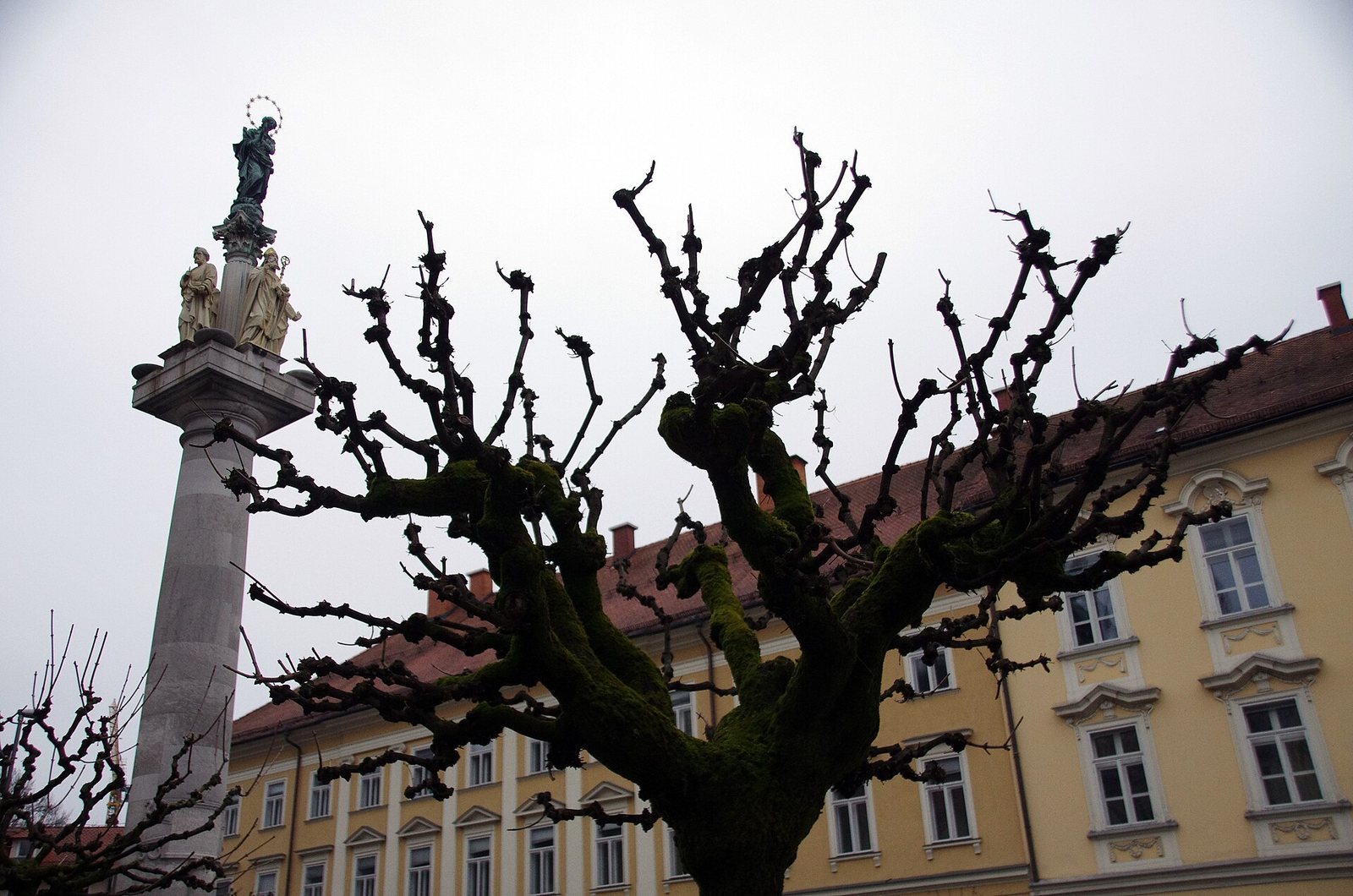
The monument stands 16 metres high. Its 9.5-metre marble column rises from a base and supports the capital of a smaller Corinthian column, an elaborately decorated top element. A Baroque brass statue of Mary stands above it. Four sculptures made of a zinc alloy containing copper are arranged around the smaller column on the platform of the larger one. They depict St Nicholas, St James, St Peter, and John the Baptist, patrons of Ljubljana’s churches. A carved plaque bearing an inscription is set into the lower part of the main column. In Plečnik’s 1938 arrangement, the statue of Mary, the four church-patron figures, and the earlier capital were reused at the top of a new column.