Church of the Assumption, Topoľčany: A Roman Catholic Pilgrimage Church
Site at a Glance
- Popularity
- Low
- Country
- Slovakia
- Primary era
- Early Modern
- Eras represented
- Early Modern, Modern
- Civilizations
- Habsburg, Hungarian
- Site type
- Religious
- Remains
- Church
On this page10 sections
History
The Church of the Assumption, Topoľčany, is a Roman Catholic pilgrimage and parish church in Slovakia, with its present late-Baroque form taking shape during rebuilding from about 1790 to 1802. Late Baroque is an ornate European style prominent in the eighteenth century.
Early church and dedication
The church is first recorded in 1285 as a pilgrimage church dependent on the parish of St Martin under Zobor. A document from 1559 says that a church dedicated to St Andrew had previously stood on the site, burned down, and was rebuilt. In the seventeenth century, the church received its dedication to the Assumption of the Virgin Mary, the Catholic belief that Mary was taken body and soul into heaven.
Rebuilding in the eighteenth century
A fire completely destroyed the church in 1731. The rebuilt building was consecrated in 1740 by Bishop Žigmund Beréni. Its present appearance developed through another rebuilding, carried out from around 1790 to 1802 with financial support from Baron Stummer. Bishop Jozef Vilt reconsecrated the church on 15 August 1802.
Parish and heritage status
The church serves as a Marian sanctuary, a place of devotion to Mary that also draws pilgrims. It belongs to the Diocese of Nitra, the Western Ecclesiastical Province, and the Topoľčany deanery and parish. Its liturgical feast is held on 15 August. Slovakia designated the church a National Cultural Monument on 4 June 1992.
Remains
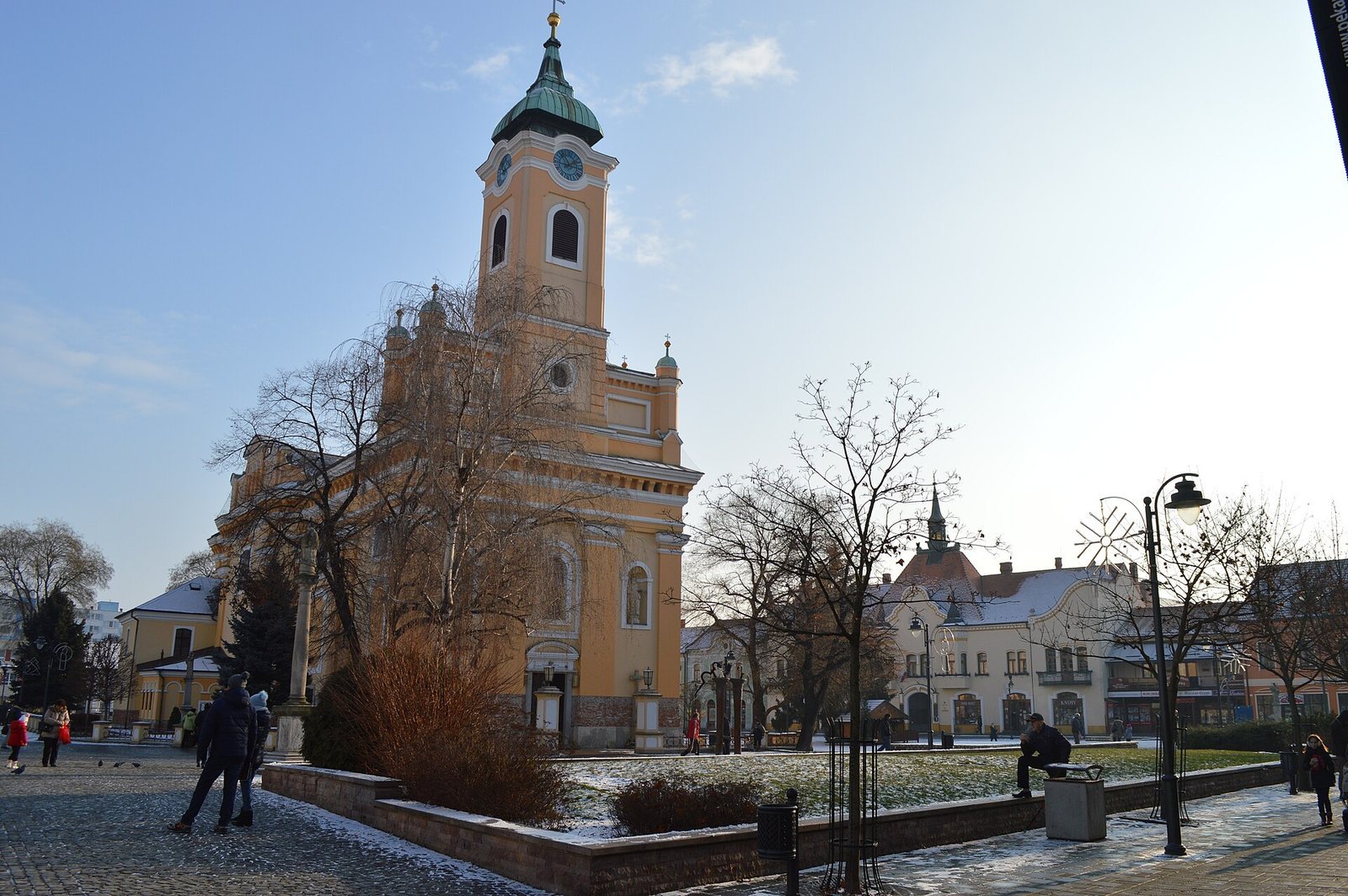
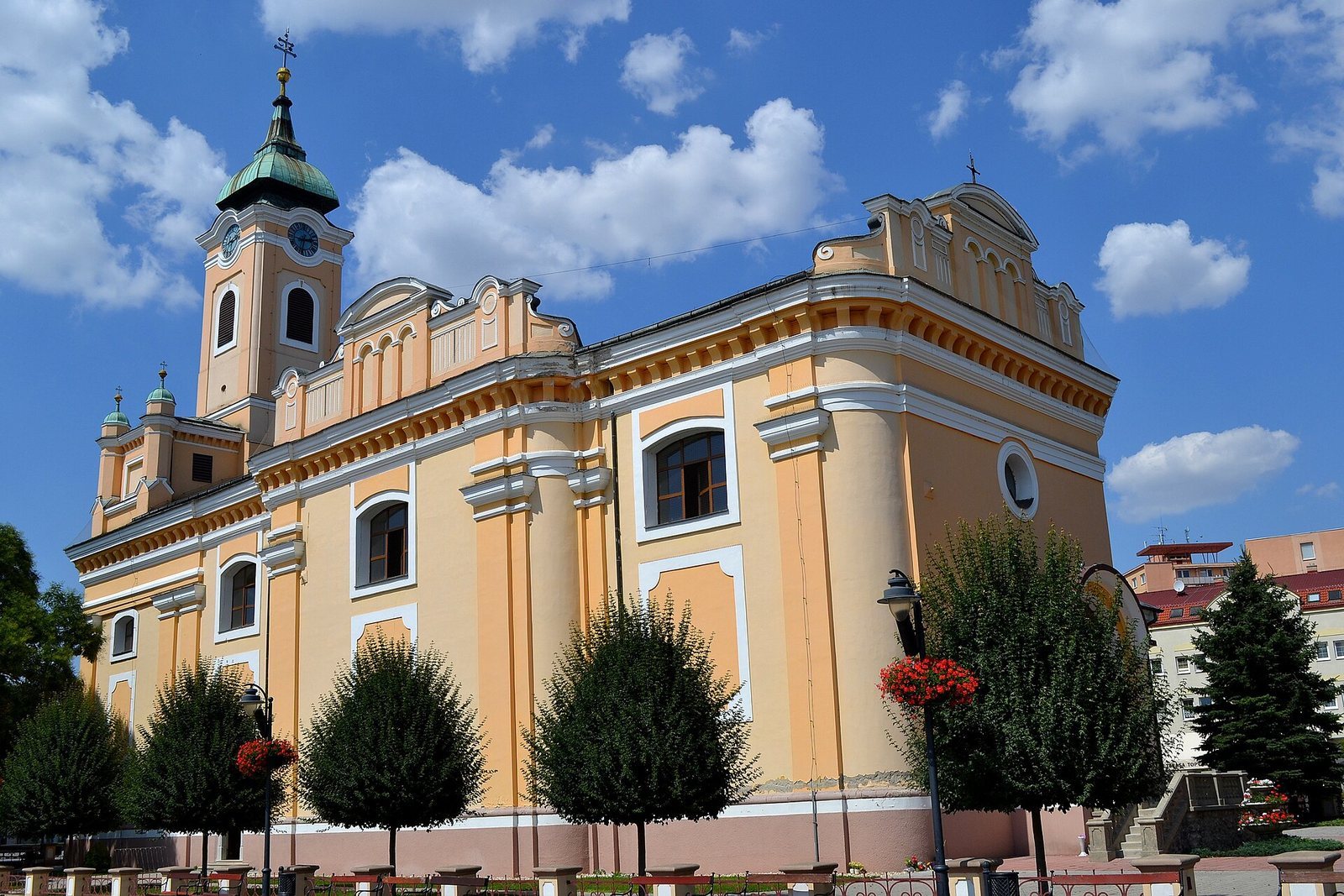
The church is a single-nave building, with one principal worship space, and stands at M. R. Štefánik Square in the historic center of Topoľčany. Its surviving form reflects late-Baroque design.
Exterior and plan
A tower is incorporated into the façade. On the north side of the presbytery, the area around the altar, stands an adjoining sacristy. Shallow pilasters, features resembling flat-faced columns attached to a wall, decorate the exterior elevations.
Interior and furnishings
Interior architecture
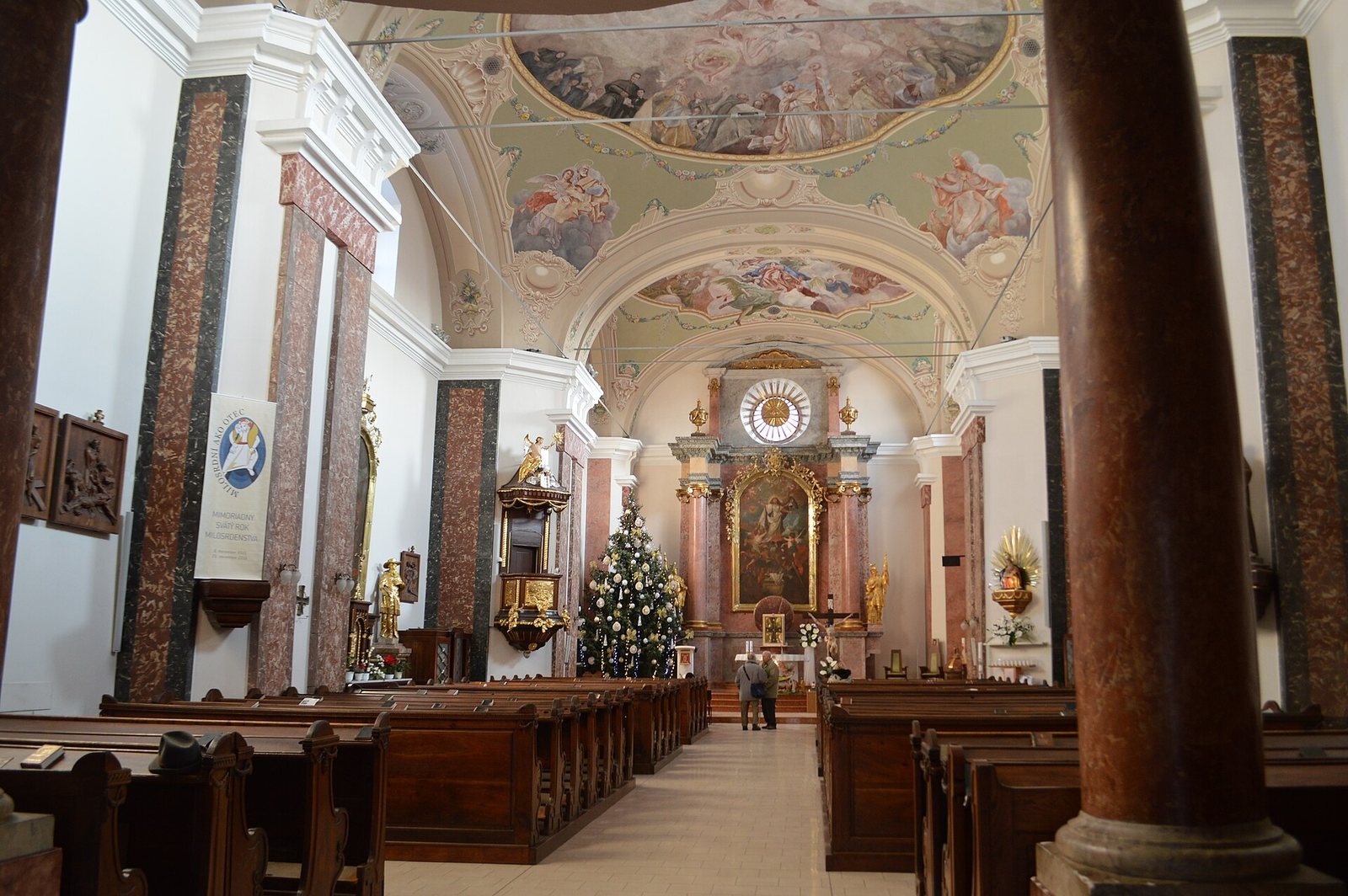
A projecting cornice runs along the interior walls above the vaulted ceiling, which is supported by structures attached to the walls. The interior also retains Baroque painted decoration.
Altars and devotional furnishings
The twentieth-century main altar bears a painting of the Assumption of the Virgin Mary. A new altar was consecrated in 2009. The furnishings also include a Pietà, depicting Mary mourning Christ, associated with Our Lady of the Seven Sorrows, a devotion focused on episodes of Mary’s suffering. The Pietà is regarded as miraculous.
The pulpit and the marble baptismal font are Classical in style, drawing on forms inspired by ancient Greek and Roman art and architecture.
Organ
A 24-stop organ, made in 1921, stands on the gallery, an elevated platform inside the church. Each stop controls a set of pipes producing a particular tone or range. The instrument was repaired in the 1970s and restored in 2019; Bishop Viliam Judák blessed it on 8 September that year.