Pauline Monastery at Šaštín-Stráže: A Marian Pilgrimage Complex
Site at a Glance
- Popularity
- Low
- Country
- Slovakia
- Primary era
- Early Modern
- Eras represented
- Early Modern, Modern
- Civilizations
- Austria-Hungary, Austrian Empire, Habsburg, Hungarian
- Site type
- Religious
- Remains
- Sanctuary
On this page15 sections
History
Origins and pilgrimage
The Pauline Monastery in Šaštín-Stráže, Slovakia, forms part of a late-Baroque pilgrimage complex whose development began in 1733 with the Paulines, members of the Catholic Order of Saint Paul the First Hermit. The project grew from devotion to the image of the Virgin Mary of the Seven Sorrows. In 1564, Angelika Bakičová, wife of estate owner Count Imrich Czobor, commissioned the statue in gratitude for prayers she believed had been answered.
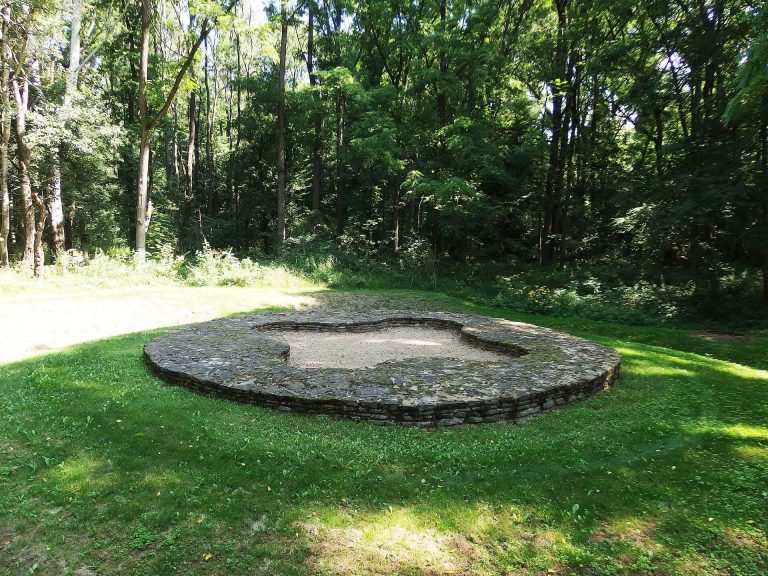
A triangular chapel was later erected for the image, with its construction dated to 1654. During the Turkish wars that year, the statue was moved to the Chapel of St. Imrich in Czobor Castle. It returned to its original location in 1710, after Turkish forces withdrew, so local believers could gather there. Following a formal church inquiry ordered by Imrich Esterházy, Archbishop of Esztergom, the statue was declared miraculous on 10 November 1732. It was placed in the care of Ján Schön, the local parish priest and dean.
Paulines arrived in Šaštín on 2 April 1733 to establish a pilgrimage church for the statue and a monastery for their order. Their regional superior, František Rosa, had secured its transfer into Pauline care.
Building the church and monastery
The first proposal, by imperial architect Ján Damiáni, placed the new building over the original chapel site. Waterlogged ground made this impractical: wooden piles eight feet long could not provide adequate foundations for a stone structure. The project instead adopted a location and design proposed by Matej Vépy, a building designer from Trnava.
After three years of preparation and disagreements over the plans, the foundation stone was blessed on 10 July 1736. The basilica’s shell was completed and roofed in 1748. The monastery was roofed in 1751, with construction continuing until 1786. Interior decoration began in 1757, and further work followed designs by Franz Anton Hildebrandt from 1760.
The farm building was completed in 1764. On 15 August that year, the church was solemnly consecrated and the statue placed on its main altar. Empress Maria Theresa and her husband, Francis Stephen of Lorraine, attended the ceremony.
Religious communities and later changes
In 1786, Emperor Joseph II suppressed the Pauline Order. The church and monastery then passed into the care of the local parish priest, Jakub Schneider.
The Salesians, a Catholic congregation founded by John Bosco in 1859 and focused on education and work with young people, arrived on 8 September 1924. They established an educational institute for priests and undertook substantial restoration. Four new bells were consecrated in 1926. In 1928, a national bell dedicated to the Seven Sorrows, weighing 4,745 kilograms, was consecrated.
The Salesians were expelled in 1950. The complex was subsequently used as a charitable home for religious sisters and as a retirement home, while part of it served for storage. Disruption of the permanent drainage in the basement allowed damp to penetrate the masonry. The Salesians had a brief presence from 1968 to 1970 and returned in late February 1990. Restoration began in 1991, and Don Bosco Gymnasium began operating at the site on 1 December that year.
The complex entered Slovakia’s Central Register of Monuments on 14 September 1963. Pope Paul VI granted the church the title of minor basilica, a special honorific status bestowed by the pope, on 27 June 1964. The complex was declared a National Cultural Monument on 11 June 1991.
Remains
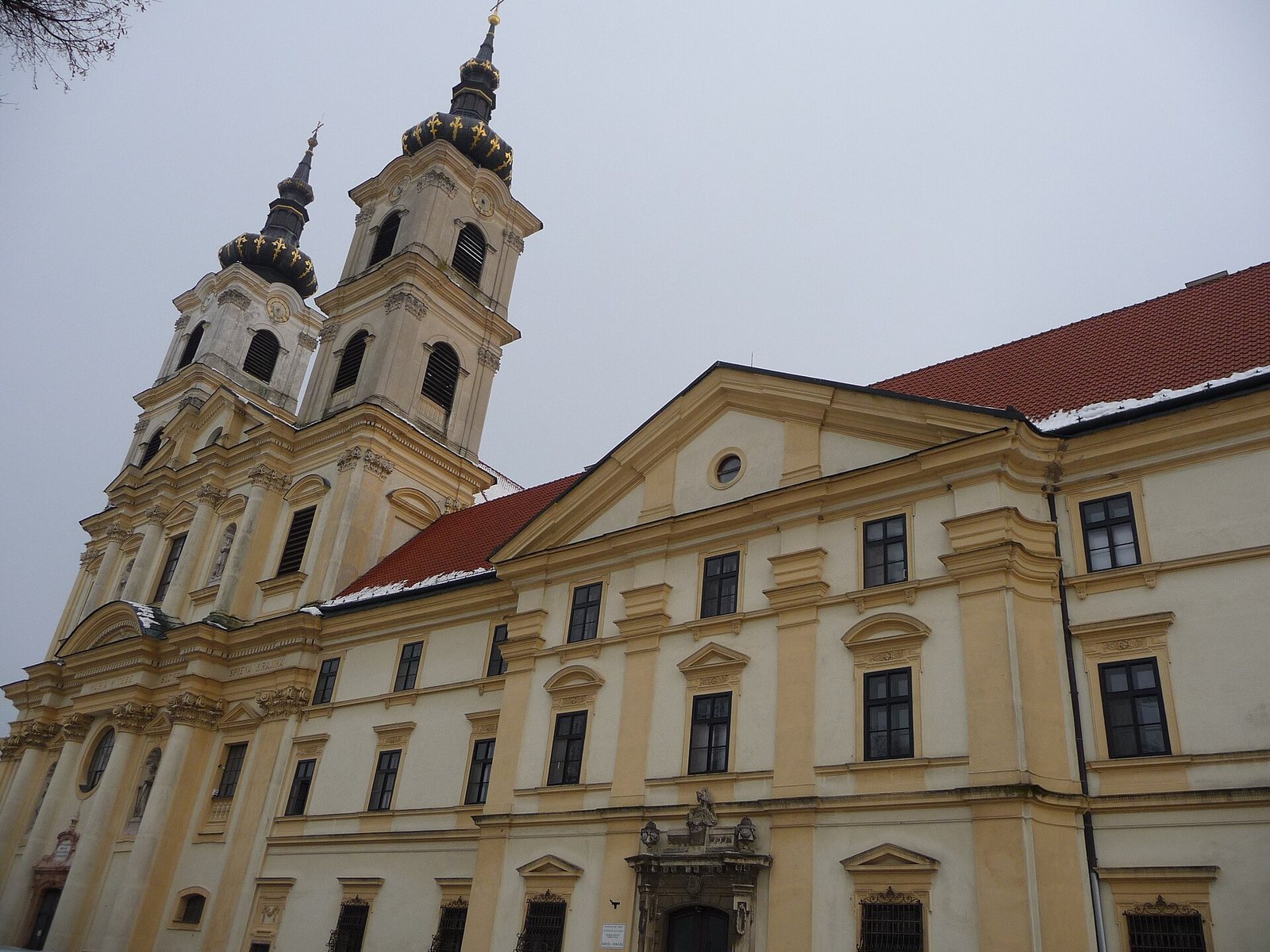
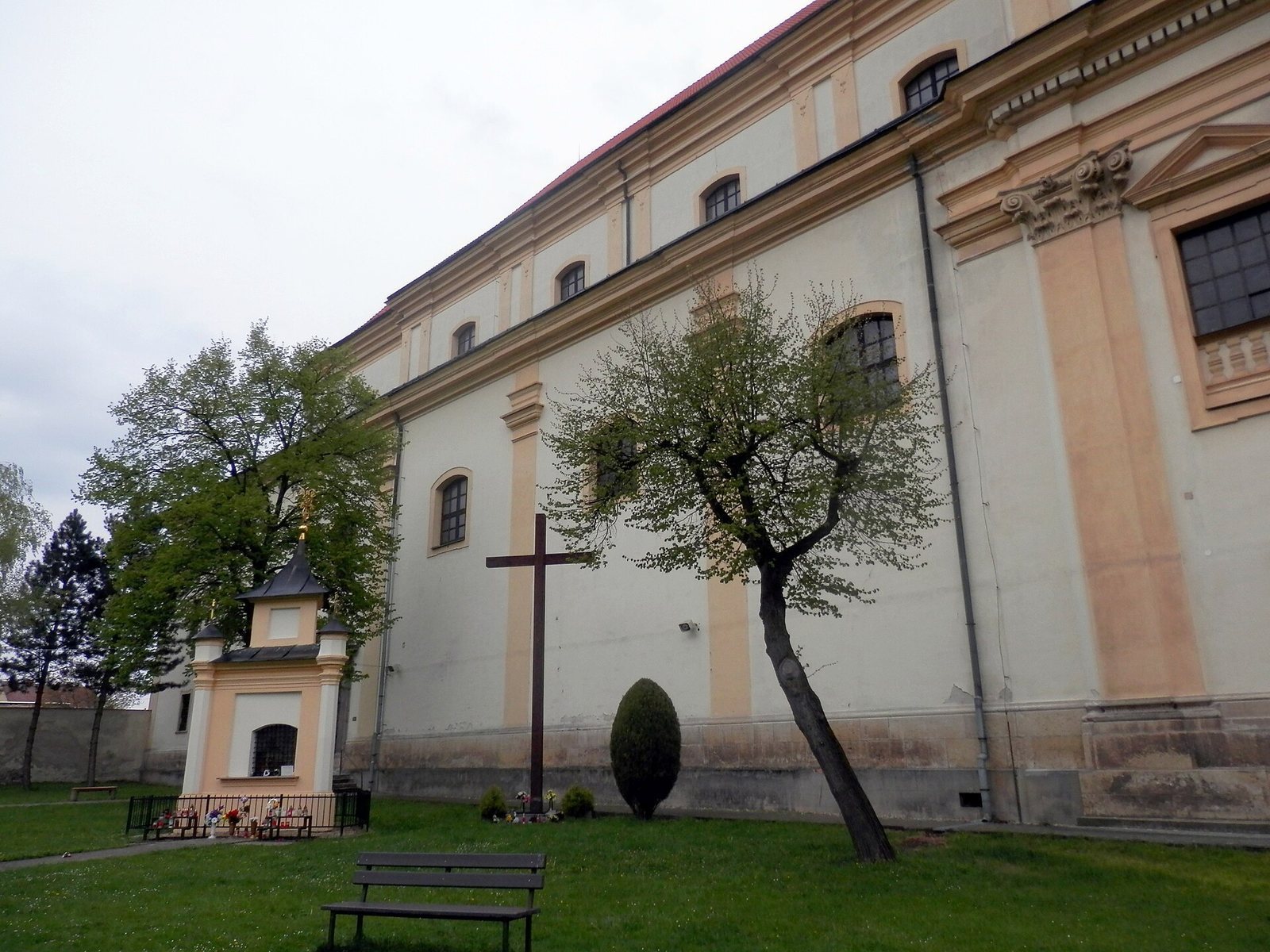
The complex brings together the late-Baroque Basilica of the Seven Sorrows of the Virgin Mary, the monastery physically joined to it, a separate triangular chapel, and a C-shaped farm building. Sculptures and a landscaped park form part of the wider grounds. The church and monastery provide the architectural core, while the chapel stands at the northeastern side of the basilica’s side façade.
Basilica and chapel
Basilica of the Seven Sorrows
The late-Baroque basilica measures 62 metres long, 23 metres wide, and 26 metres high; its main nave reaches 13 metres. Its towers originally rose only to roof level, then were raised in 1864 by builder Jozef Bárta of Hodonín. Franz Anton Hildebrandt designed the façade and the red-marble main altar. Jean Joseph Chamant, an imperial court painter, painted frescoes on the ceiling and above the side altars in 1757, while paintings on the side altars are by J. L. Kracker.
Chapel of the Seven Sorrows
The chapel has a triangular plan and stands at the northeastern end of the basilica’s side façade. Its location is associated with the place where Angelika Bakičová’s prayer was answered.
Monastery and farm building
Pauline monastery
The late-Baroque monastery is physically connected to the basilica, forming a joined architectural complex.
Farm building
The associated late-Baroque farm building has a C-shaped plan.
Sculptures and landscaped grounds
Holy Trinity group
A sculptural group of the Holy Trinity stands on a column in Kláštorné námestie. Trnava stonemason Jozef Habenicht made it in 1821.
Šaštín Pietà
North of the basilica’s façade, a sculptural group of the Virgin Mary holding Christ stands on a pedestal in the park. Known as the Šaštín Pietà, it dates to 1883 and follows a folk form of Classicist design.
Park
A park surrounds the complex, with designed landscaping dating to the end of the nineteenth century.