Korlátka: A Gothic Guard Castle in Slovakia
Site at a Glance
- Rating
- 4.7
- Popularity
- Medium
- Country
- Slovakia
- Primary era
- Medieval
- Eras represented
- Medieval
- Civilizations
- Hungarian
- Site type
- Military
- Remains
- Castle
On this page9 sections
History
Korlátka is a Gothic castle in Slovakia, built during the second half of the thirteenth century by local magnates, possibly Mateusz Czak, a medieval Hungarian nobleman. It was established as a guard castle near the Czech Road, an important regional trade and communications route, to monitor and protect traffic along it.
Medieval Ownership and Conflict
The castle first appears in written records in 1298. In 1394 it passed to Stibor of Stiboricz, a Hungarian nobleman and voivode of Transylvania, and it was probably later controlled by his son, Stibor Stiborowicz. Korlátka changed owners frequently after this period.
During the Hussite Wars, fifteenth-century religious and political conflicts originating in Bohemia, Korlátka served as a base for robber knights, armed groups that used fortified positions for raiding. Burghers from Bratislava expelled them around 1444.
Later Occupation and Decline
From the end of the fifteenth century until 1772, Korlátka belonged to the Korlátsky family. George II Rákóczi, prince of Transylvania, had troops occupy the fortress in 1645. In 1704, Kuruc troops, insurgent forces associated with anti-Habsburg uprisings in the Kingdom of Hungary, also occupied it during the Rákóczi Uprising, an early-eighteenth-century revolt led by Francis II Rákóczi.
The owners abandoned the castle in the mid-eighteenth century, after which it gradually fell into decay. The site is protected as a Slovak National Cultural Monument, a status registered on 14 September 1963. Historical and alternative names include Korlátsky hrad, Korlátko, Korlátky, Cerovský zámok, Konrádov kameň, Korlathkeu, Korlathkw, Kunradstayn, Koratowe Kameny, Kunradi Lapide, Karlátkó, and Konradstein.
Remains
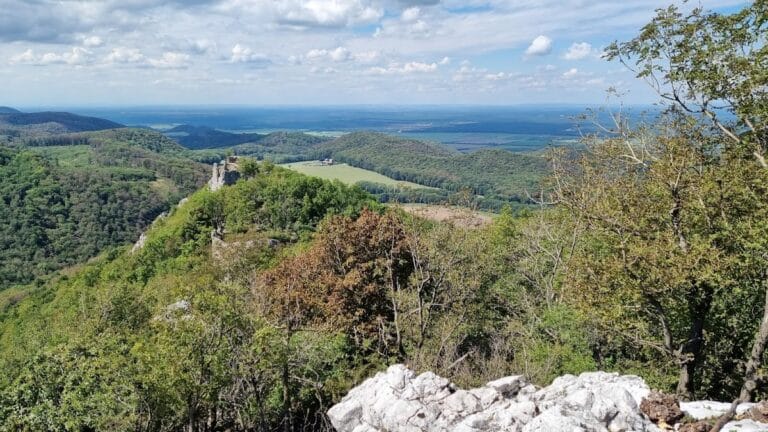
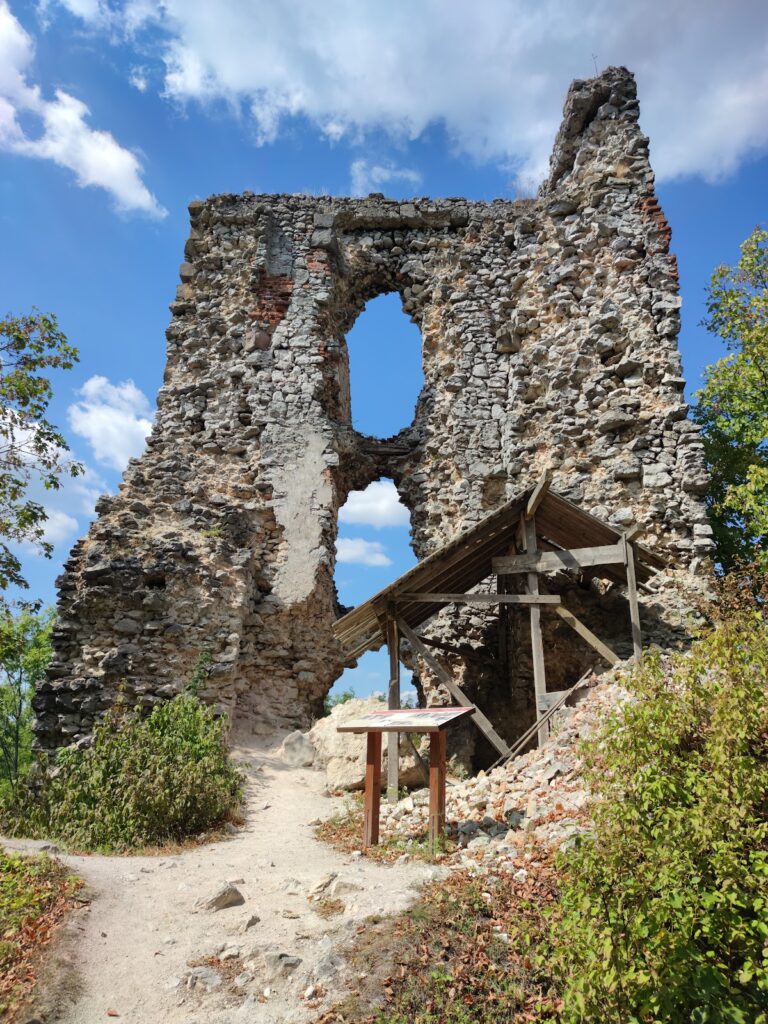
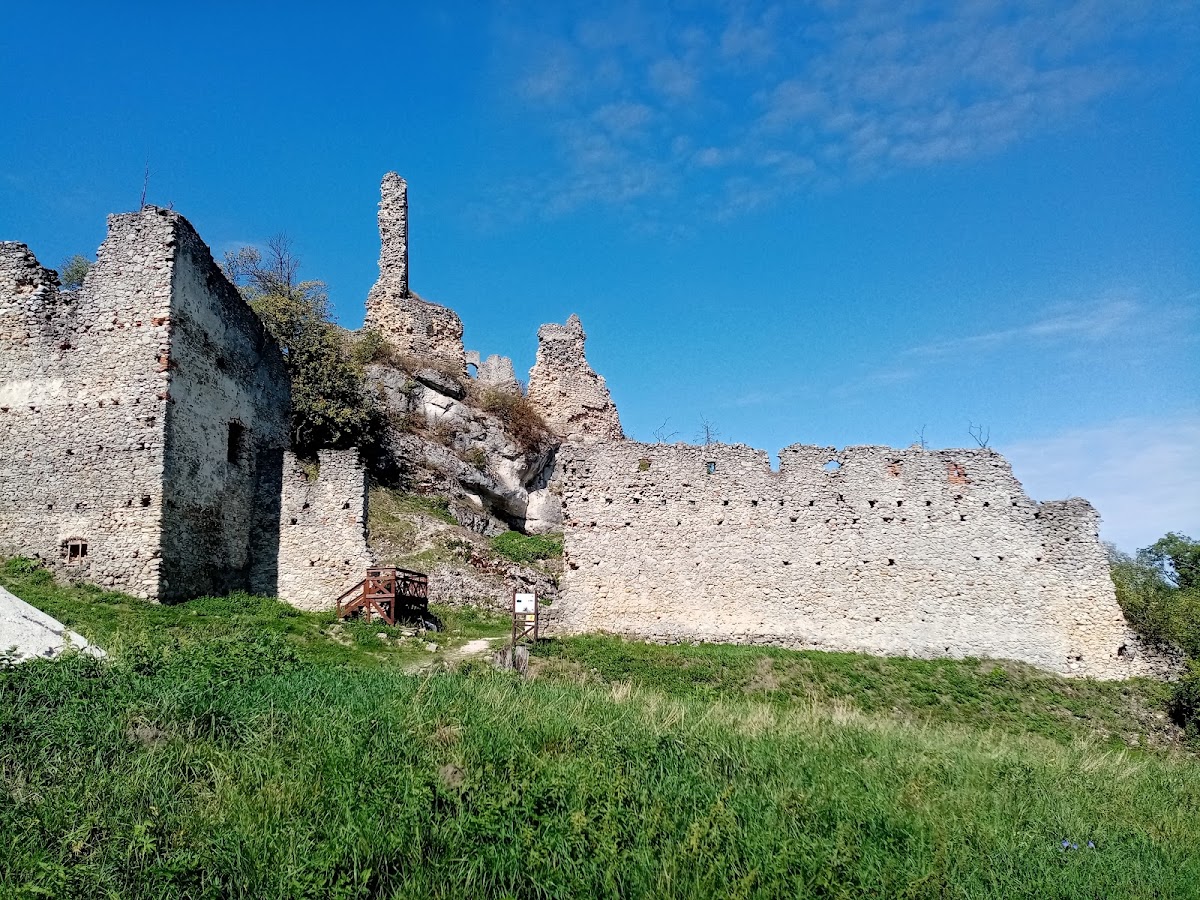
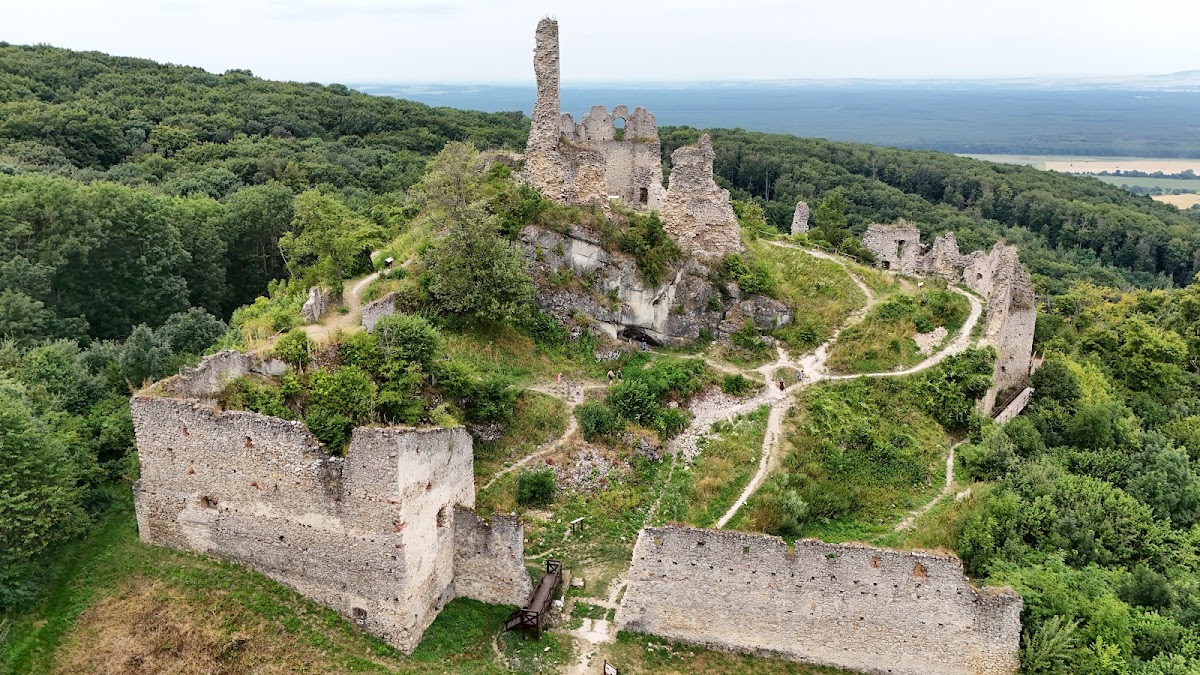
Korlátka survives as a castle ruin in the Malé Karpaty above the village of Cerová, near its Rozbehy section, at approximately 455 metres above sea level. The remains include a courtyard, a central castle area, parts of the castle wall and fortifications, and an outer bailey containing a farm building.
Central Castle Remains
Cylindrical Tower
Part of a cylindrical tower survives within the castle remains. The surviving section is described as unusual in Slovakia and forms one of the notable elements of the ruined central castle area.
Palace, Walls, and Entrance
Fragments of the palace stand alongside sections of the castle walls and fortifications. The remains of the entrance gate preserve evidence of the approach into the fortified complex, while the courtyard and central area retain the basic spatial organization of the castle.
Outer Bailey
Farm Building
The best-preserved component is a farm building in the outer bailey. It is also associated with the courtyard and represents a surviving part of the castle’s supporting complex.