Petershöhle, Donautal: A High-Medieval Cave Castle in Germany
Site at a Glance
- Popularity
- Low
- Country
- Germany
- Primary era
- Medieval
- Eras represented
- Medieval
- Civilizations
- Holy Roman Empire
- Site type
- Military
- Remains
- Castle
On this page5 sections
History
Petershöhle, Donautal, is a high-medieval cave castle in Germany, southeast of Beuron on the Swabian Alb. Its medieval phase is dated to around 1200, within the High Middle Ages, a period generally dated to about 1000–1300. Its social status is unknown.
Pottery indicates settlement at the cave during the Bronze Age, and other ceramic fragments have been attributed to the Celts. A small quantity of pottery from the 12th and 13th centuries supports the medieval dating. Oven-tile fragments suggest use over a longer period than a temporary refuge alone, though not continuous occupation.
People associated with nearby Beuron Abbey, a Benedictine monastery, are generally considered more likely occupants than members of the nobility. The cave is now owned by the House of Hohenzollern, a German dynastic house whose branches ruled Prussia and the German Empire.
Remains
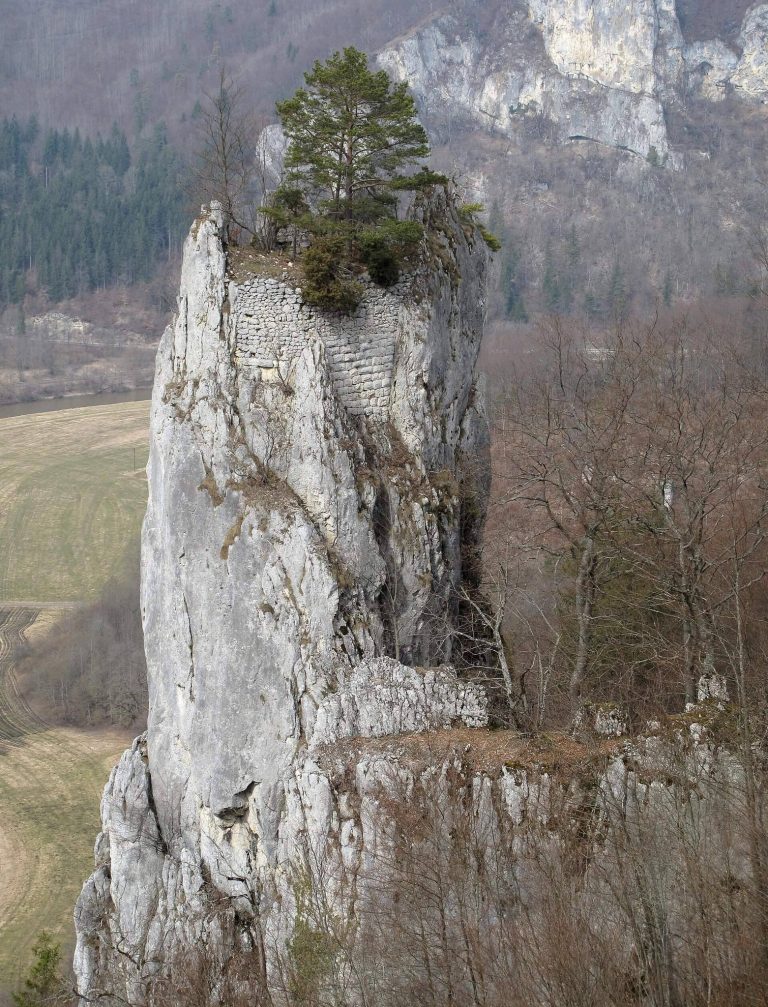
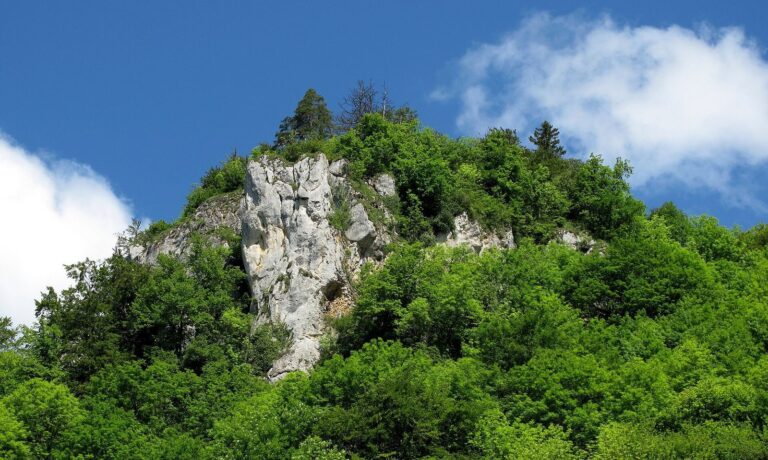
The naturally eroded limestone cave lies halfway up the slope of Peterfels, at an elevation of 730 metres. Its position affords views across the Upper Danube valley for several kilometres. The surviving castle features are concentrated at the cave entrance.
Cave entrance and defenses
Portal and front wall
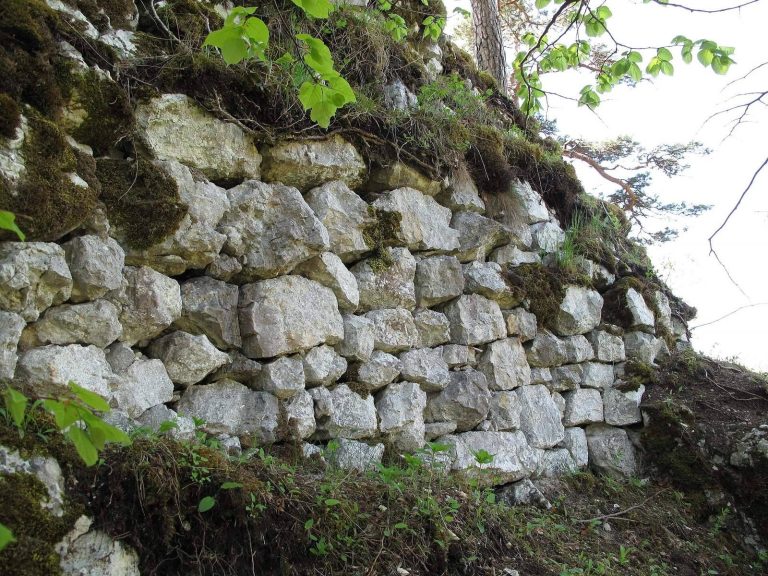
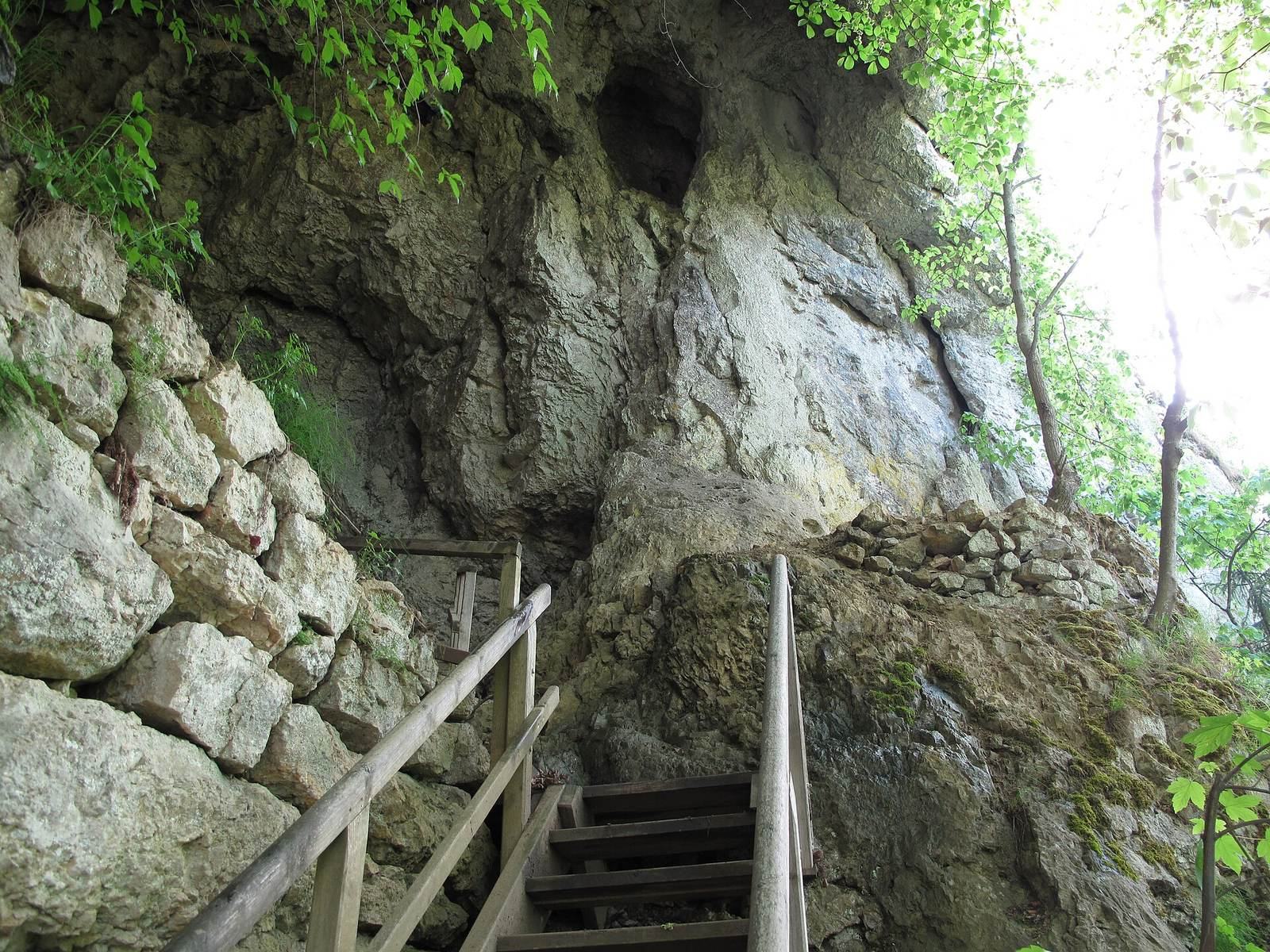
The portal faces north, toward the Danube, and is described as secure against direct assault and among the largest in the Upper Danube valley. A rock step, 5–6 metres high, stands in front of the entrance. Remains of a front wall indicate that the portal was once completely closed off. At the western end of the wall’s front face, a fortified, pulpit-like projection survives. Rubble stones in the lower section reach about 1.6 by 0.6 metres; above a height of roughly 2.5 metres, smaller stones are set in mortar.
Interior and access
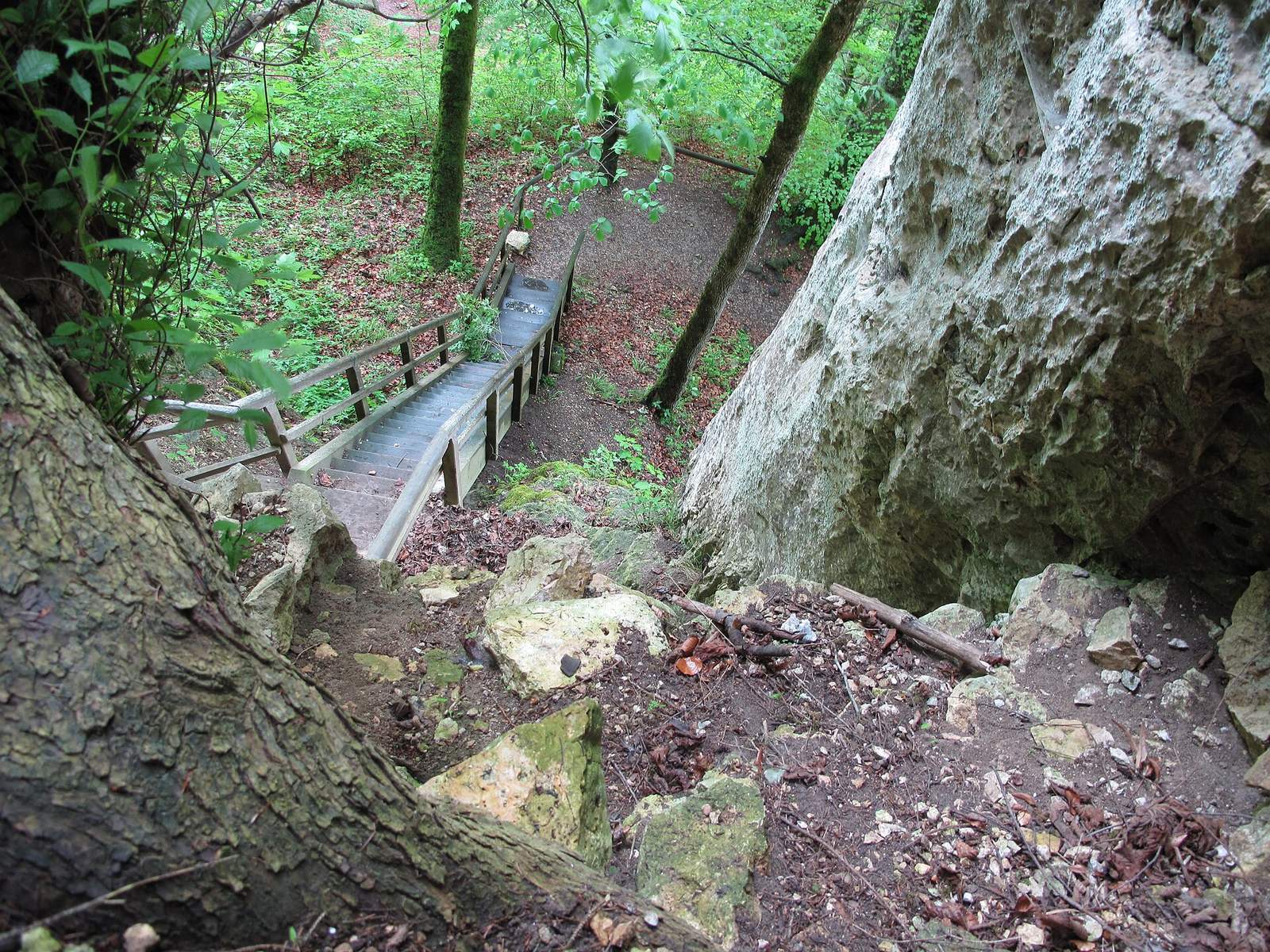
A steep shaft on the eastern side of the cave, about five metres behind the front wall, admits light. Access was by a steep wooden staircase, which has been removed for safety.