Theatre Royal, Newcastle: A Neoclassical Theatre in Newcastle upon Tyne
Site at a Glance
- Popularity
- High
- Country
- United Kingdom
- Primary era
- Modern
- Eras represented
- Modern
- Civilizations
- British
- Site type
- Entertainment
- Remains
- Theatre
On this page11 sections
History
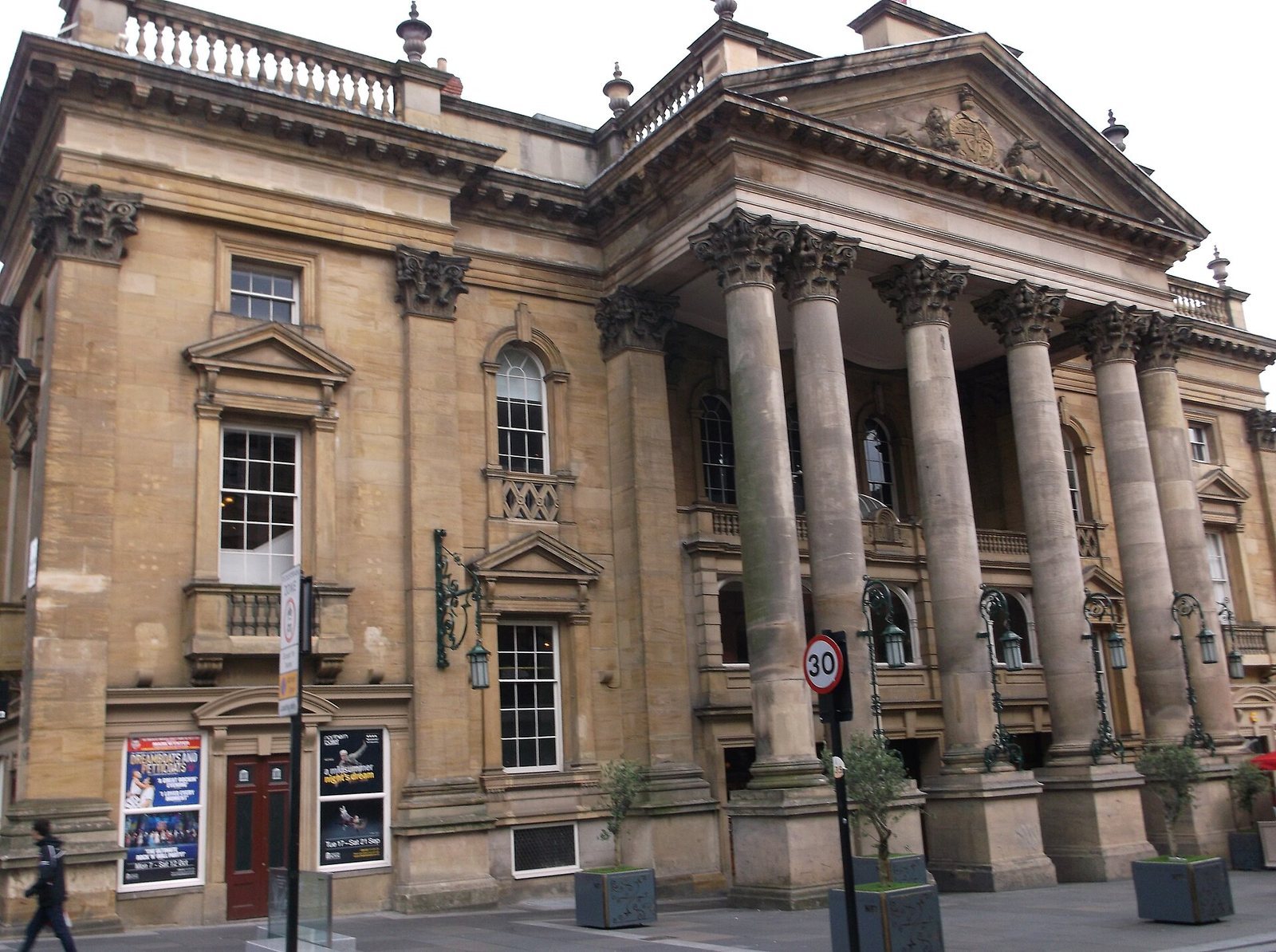
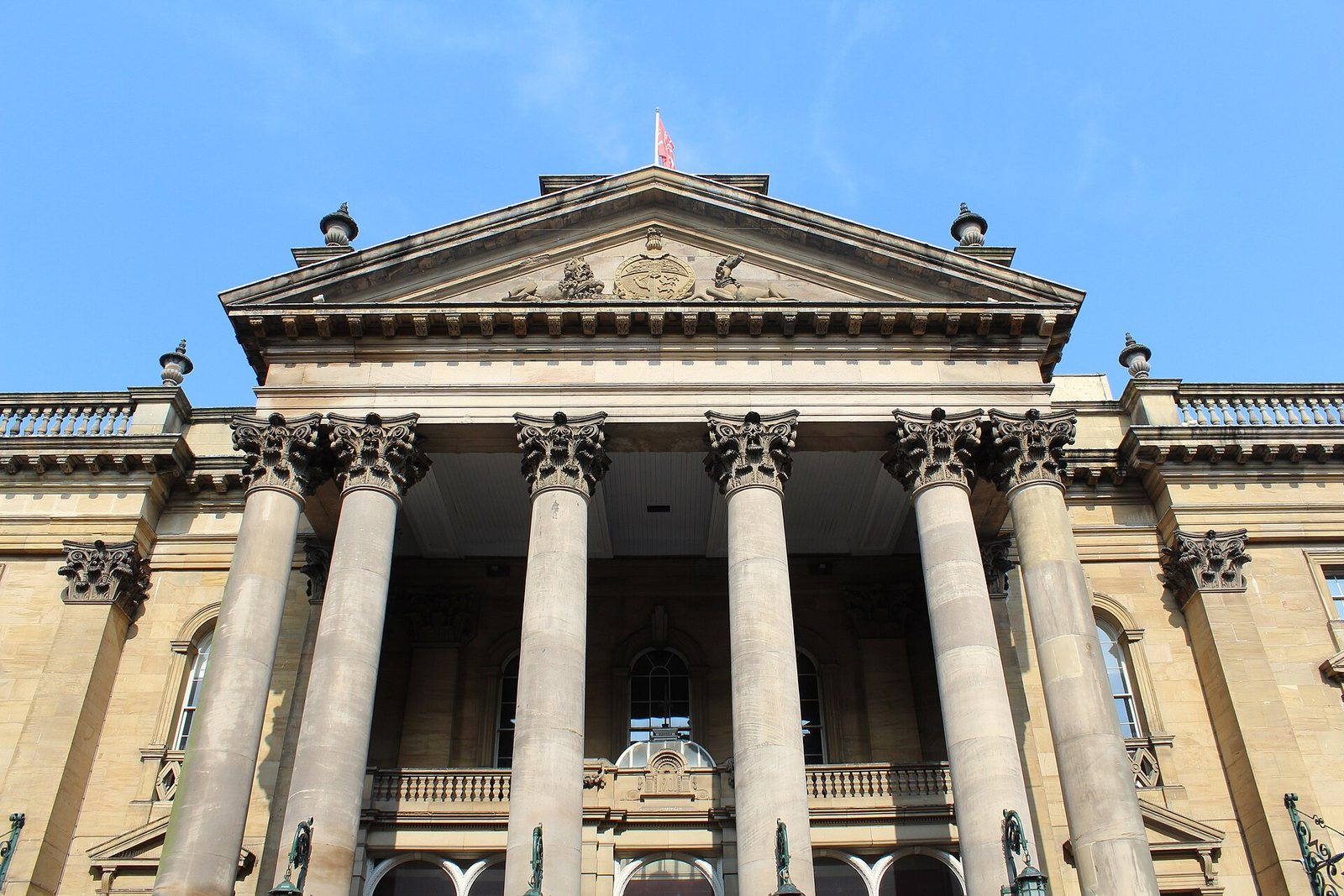
The Theatre Royal is a neoclassical theatre on Grey Street in Newcastle upon Tyne, United Kingdom. Designed by John and Benjamin Green as part of Richard Grainger’s city-centre plan, it opened in 1837. Its history began with an earlier Newcastle theatre, and the present building has been shaped by changing management, fire, and restoration.
The original theatre and its replacement
In the 1780s, King George III authorized the establishment of a theatre in Newcastle. The original Theatre Royal opened on Mosley Street on 21 January 1788. Stephen Kemble managed it from 1791 to 1806. The building stood in the path of the planned redevelopment route for Grey Street and was demolished in 1834 to make way for the present theatre.
Opening and nineteenth-century management
The Green-designed theatre opened on 20 February 1837 with a performance of Shakespeare’s The Merchant of Venice. Its shareholders were represented by a Proprietors’ Committee, which appointed lessees to run and programme the venue. Thomas Ternan was among the early managers; his wife, Frances Ternan, was the theatre’s leading actress.
Edward D. Davis held the lease from 1845 to 1870, longer than any other individual lessee. During his tenure, Charles J. Phipps redesigned the interior in 1867. William Glover and George Francis, both associated with Glasgow’s Theatre Royal, leased the Newcastle theatre from 1871 to 1878. Charles Bernard, who had links to Glasgow’s Gaiety Theatre, followed until 1882. James Howard and Fred Wyndham held the lease from 1883 to 1887, but the committee declined to renew it after they also leased the Tyne Theatre and Opera House. Glasgow theatre operator Robert Arthur took over in 1888 while also leasing Her Majesty’s Theatre in Dundee.
Fire and reconstruction
A large fire destroyed the interior in 1899 after a performance of Shakespeare’s Macbeth. Theatre architect Frank Matcham redesigned it, and the Theatre Royal reopened on 31 December 1901.
Theatre circuit and company management
From the 1870s, Newcastle, Glasgow, and Edinburgh were linked by a shared theatre and entertainment circuit. Exchanges of shows and pantomimes, comic musical productions traditionally associated with Christmas in Britain, developed from 1962. From the 1970s, annual tours by Scottish Opera and Scottish Ballet became part of the exchanges, with Opera North joining later.
Robert Arthur Theatres Ltd, which operated venues in Scotland and England and had many Tyneside shareholders, suffered losses that overwhelmed the company in 1911. Shareholders led by the family of Member of Parliament Joseph Cowen appointed Glasgow theatre manager Michael Simons as chairman of the new lessee company. Simons had established Howard & Wyndham Ltd in 1895, and from 1912 the Newcastle theatre became an important part of that group. The Cruikshank family later led the company; Edinburgh’s King’s Theatre joined it in 1928.
Ownership and restoration
Newcastle City Council took ownership in 1967; the Theatre Royal Trust is identified as the theatre’s owner. A major refurbishment and restoration in the late 1980s preceded its reopening on 11 January 1988 with A Man for All Seasons, starring Charlton Heston. The theatre closed for further restoration work on 14 March 2011 and reopened that September with Alan Bennett’s The Madness of George III.
The building was designated a Grade I listed building on 14 June 1954. In England, Grade I is the highest listing category, reserved for buildings of exceptional architectural or historic interest. The Royal Shakespeare Company has a longstanding association with the theatre, which it uses as its northern base and visits annually.
Remains
The theatre is neoclassical, drawing on forms associated with ancient Greek and Roman architecture. Its auditorium has a proscenium stage, framed from the audience by an arch, and seating arranged across four levels. The named seating areas are the stalls, grand circle, upper circle, amphitheatre, a tiered seating area, and gallery.
Auditorium and stage
Seating and decoration
The stated capacity is 1,249, with 501 seats in the stalls, 252 in the grand circle, 249 in the upper circle, and 247 in the gallery. A 2011 restoration reinstated the amphitheatre, which had been removed during earlier renovations. Boxes beside the stage and at the rear of the grand and upper circles bring the total to ten. The auditorium’s arch, tiers, and boxes are gilded with gold leaf, while its original plasterwork was conserved and restored. Seats throughout were replaced with Edwardian-style seats, drawing on the period of Edward VII’s reign, 1901–1910.
Stage and orchestra pit
The stage lift and orchestra pit were replaced during the restoration. The pit, a space for musicians between the stage and audience, can be adjusted with two lifts. When arranged to hold up to 60 musicians, it reduces the number of seats available in the stalls. The stage can accommodate 50 singers, dancers, actors, and musicians.
Lobby, access, and ventilation
The restoration added wheelchair spaces on levels that had previously been inaccessible and commissioned new frescoes for the lobby and upper circle. A new ventilation system was also installed.