Bristol High Cross: A Medieval Market Cross and Civic Monument
Site at a Glance
- Popularity
- Medium
- Country
- United Kingdom
- Primary era
- Medieval
- Eras represented
- Medieval, Early Modern
- Civilizations
- English
- Site type
- Civic
- Remains
- Monument
On this page10 sections
History
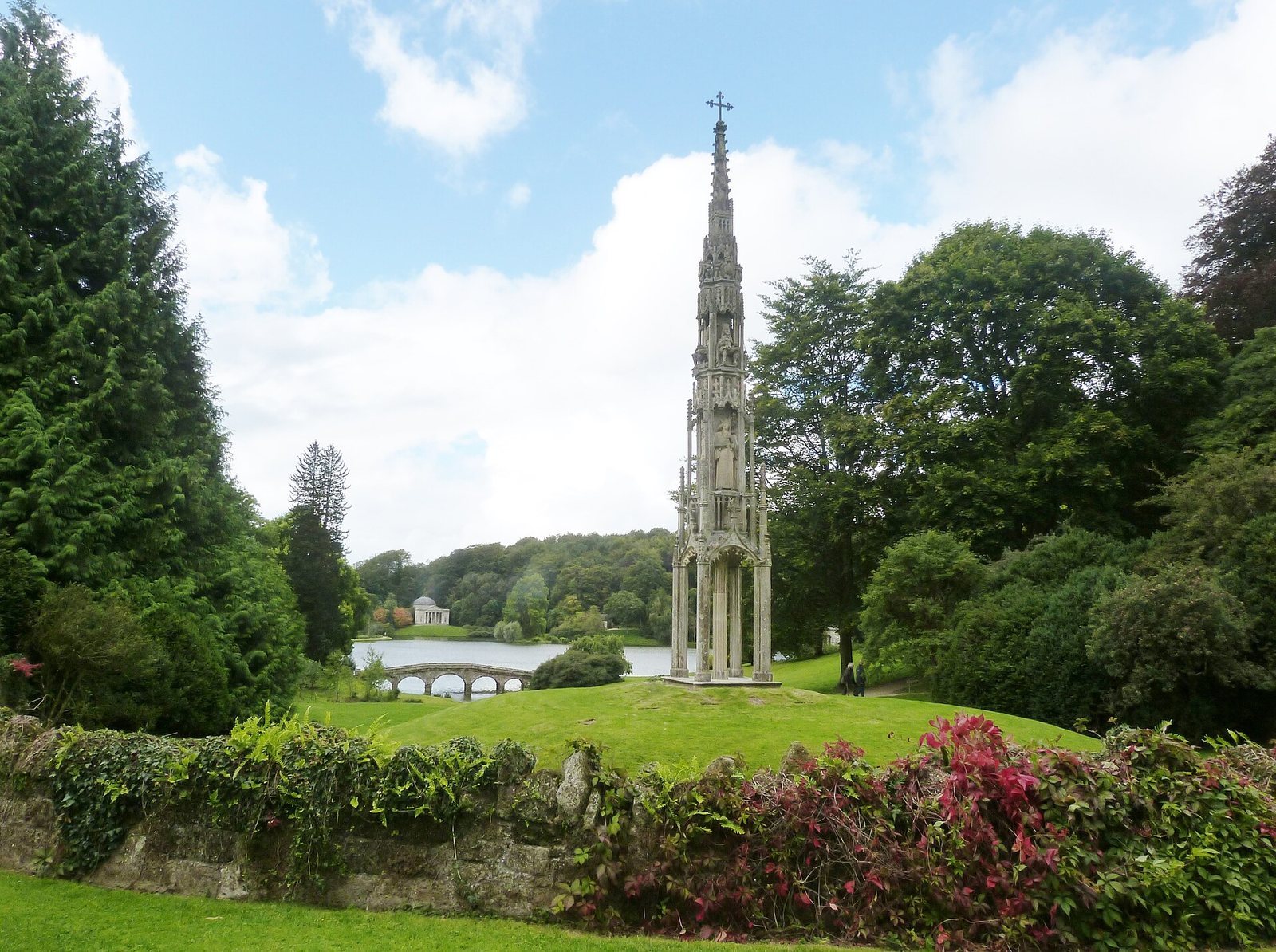
Bristol High Cross is a market cross in the Decorated Gothic style, an English Gothic phase known for elaborate tracery and ornament, originally erected in Bristol, England, and now standing at Stourhead in Wiltshire, United Kingdom. Tradition dates its construction to about 1373 and links it to Edward III’s charter making Bristol a county separate from Somerset and Gloucestershire. It may have replaced an earlier market cross. Its civic role is reflected in its use for royal welcomes, proclamations, executions, and public punishment.
Medieval origins and executions
The earliest known written reference to the cross appears in a civic ordinance of 1403 or 1404. Its precise age is difficult to establish because it was renovated and rebuilt repeatedly. In 1525, Bristol’s mayor ordered the head of the market cross to be renewed.
In 1399, after a brief siege of Bristol, Henry Bolingbroke ordered the execution at the cross of supporters of Richard II. They included William le Scrope, Richard’s Lord High Treasurer, and Sir John Bussy and Sir Henry Green. The following year, Thomas le Despenser, 1st Earl of Gloucester, was beheaded there for taking part in the Epiphany Rising, a revolt against Henry IV. Bolingbroke had become Henry IV after Richard II’s deposition in 1399.
Civic ceremonies and rebuilding
The cross hosted ceremonies welcoming Henry VII in 1487. Bristol’s establishment as a bishopric, the jurisdiction governed by a bishop, was proclaimed there in 1542. In 1554, Mary I and her husband Philip II of Spain were proclaimed joint sovereigns of England at the cross. In 1603, city recorder George Snigge, a senior municipal legal officer, and other civic dignitaries proclaimed James I king there.
Repairs in 1633–1634 involved partly dismantling the cross and adding a storey for four seated figures. In 1663, it was rebuilt with a further tier for four statues. The cross also served as a place of public punishment. A depiction from 1673 shows a man restrained by his feet in the city stocks beside it.
Removal from Bristol
As Bristol grew, the cross became an obstruction to traffic. In 1733, a council meeting called it a nuisance and objected to its association with Catholicism. That year, silversmith John Vaughan persuaded magistrates to remove it, arguing that high winds endangered his life and property. The cross’s pieces were kept in the guildhall until Alderman Price and other citizens arranged for its re-erection on College Green, beside the cathedral, in spring 1736.
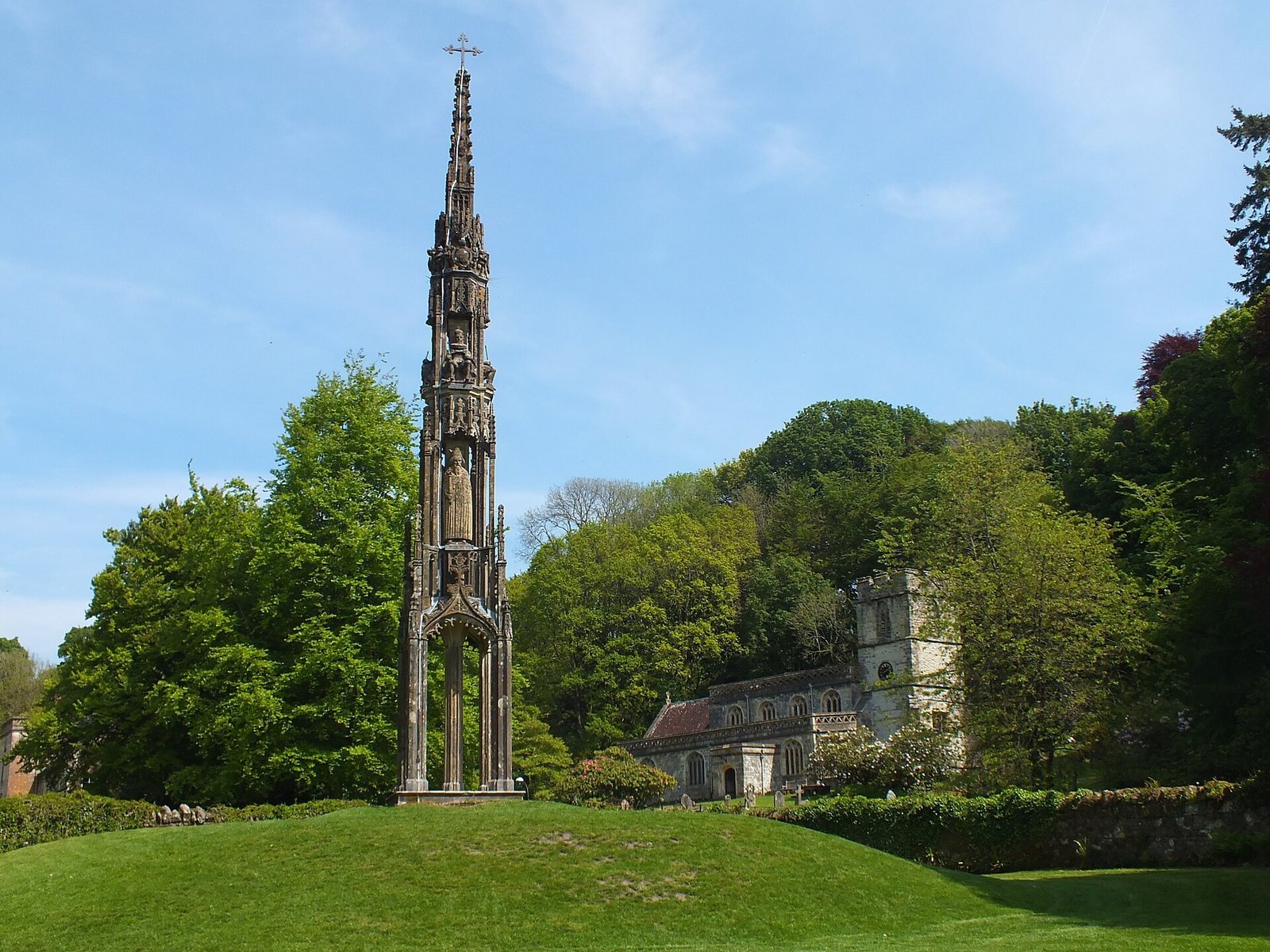
The cross again obstructed the green when visitors to the Hotwells spa used it as a promenade, sometimes walking in groups of eight or more. Funds raised to improve the green went toward raising its surface. The cross was dismantled in August 1762, and its pieces were left in the cathedral’s great cloister. In October 1764, Dean Cutts-Barton gave it to Henry Hoare, known as “the Magnificent,” an English banker and art collector. Except for the badly worn lower columns, the materials were taken to Hoare’s Stourhead estate in Wiltshire and the cross was rebuilt there in 1765. It remains at Stourhead in the care of the National Trust, a British charity that protects historic places and landscapes.
The Bristol replica
Because the original was too fragile to move again, Bristol citizens commissioned a replica in 1851. Architect John Norton examined the original, and mason and stone carver John Thomas made the replica’s body. Funding ran out after the statue of Edward III was completed, leaving the other alcoves empty for years. Statues made by regional craftsman Harry Hems were installed in 1889, after the cross had been shifted from the top of College Green to its centre to make room for Queen Victoria’s jubilee statue.
The replica was taken down in 1950 because the architect of the new Council House did not want a structure in front of it. Fundraising preserved its upper stage, which was re-erected in nearby Berkeley Square in 1956.
Remains
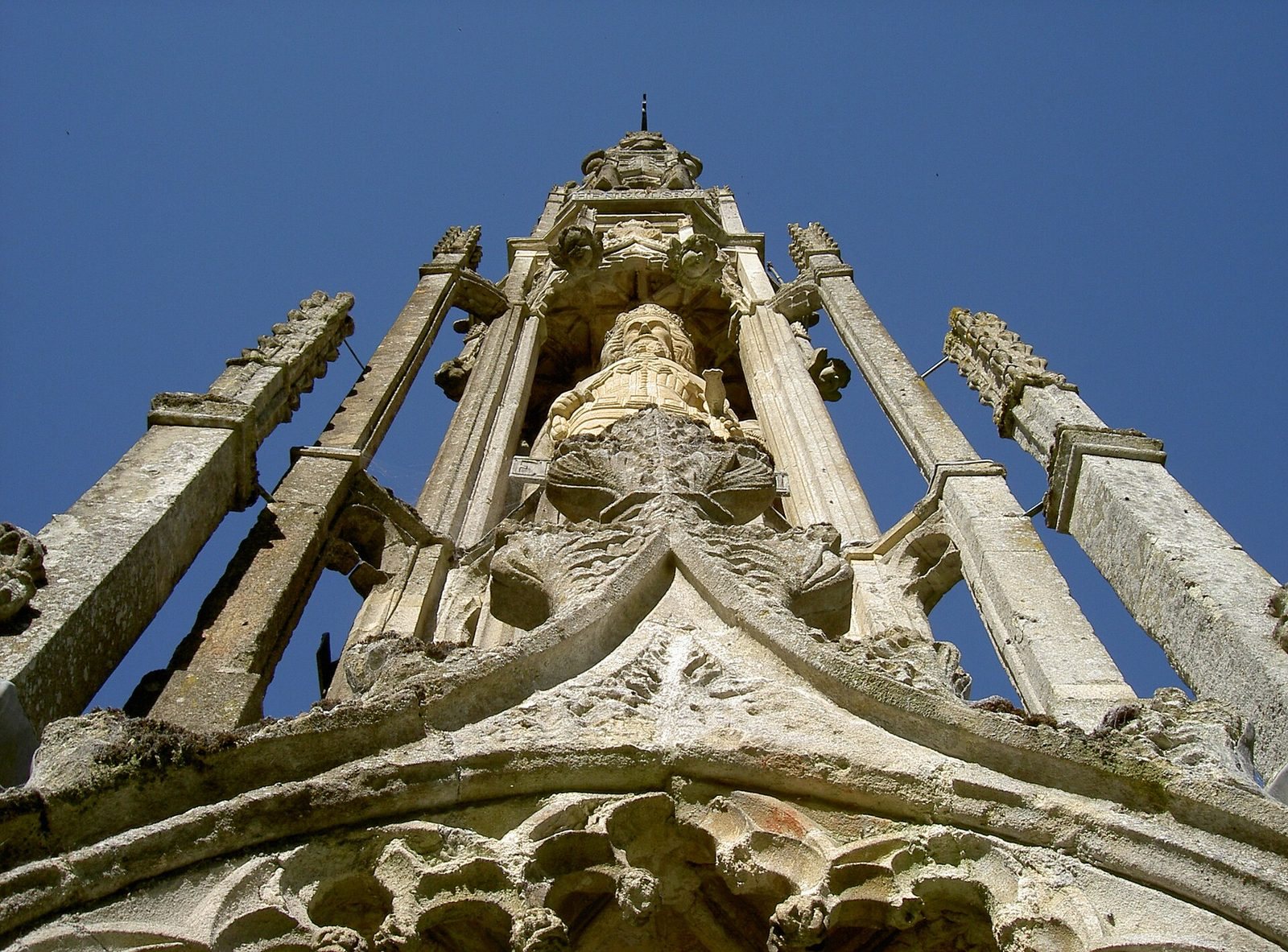
The original at Stourhead retains the cross’s tiered stone form, with a cross at its summit and statues set in alcoves around the upper levels.
Original cross at Stourhead
Base and tiers
The base is formed by four eight-sided piers joined by arches with pointed, lobed outlines. Above it, two tiers of alcoves held statues of English monarchs, beneath a pointed upper section crowned by the cross. Later additions provided a storey for seated figures and another statue tier.
Royal figures and surface
The eight monarchs represented on the cross faced Bristol’s principal streets. King John and Charles I faced north toward Broad Street; Henry III and Henry VI faced east toward Wine Street; Edward III and Elizabeth I faced west toward Corn Street; and Edward IV and James I faced south toward High Street. The cross was made of oolitic limestone, a limestone containing small rounded grains, and was vulnerable to frost damage. It was painted blue, gold, red, and vermilion; vermilion predominated on the statues’ clothing and weathered well. Four statues on the cross have since been replaced by replicas. The original carvings are on indefinite loan to the Victoria and Albert Museum in London, a museum of art and design.
Bristol replica
The replica was designed after close examination of the original. Its upper stage survives in Berkeley Square in Bristol.