Sæbygård: A Danish Estate with a Renaissance Manor House
Site at a Glance
- Popularity
- Low
- Country
- Denmark
- Primary era
- Early Modern
- Eras represented
- Early Modern, Modern
- Civilizations
- Danish
- Site type
- Domestic
- Remains
- Manor House
On this page8 sections
History
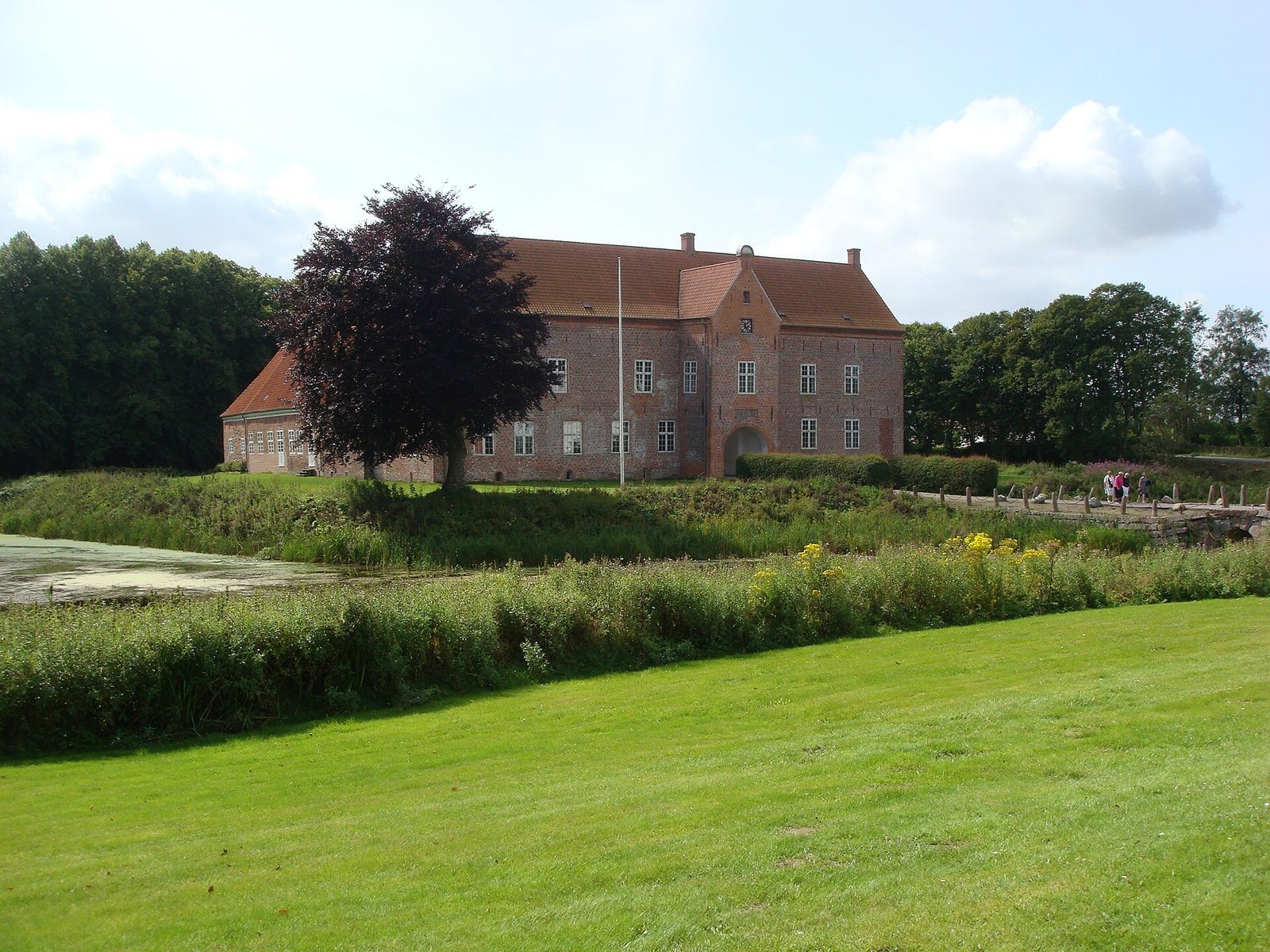
Sæbygård is a historic estate in Denmark with origins in the Middle Ages and a surviving main house from a Renaissance building complex. Pernille Oxe commissioned the earliest surviving parts of the present buildings in 1576. The estate passed from the bishopric of Børglum to the Danish Crown and later through several noble families.
Medieval estate and sixteenth-century ownership
Sæbygård belonged to the Børglum bishopric, the diocese governed by its bishop, until 1536. In that year, during the Reformation, a movement that transformed church authority and ownership, it passed to the Danish Crown. The Crown held it until 1560, when a land exchange transferred the estate to Admiral Otte Knudsen Rud and his wife, Pernille Oxe. Otte owned it from 1560 to 1565, while Pernille held it through 1576 as a widow. Their son Knud Ottesen Rud succeeded her and owned the estate until 1589, when Peder Munk took over.
Seventeenth-century owners
Sophie Pedersdatter Brahe, a widow, held Sæbygård from 1623 to 1638. Malte Sehested also appears among its owners. Otte Pedersen Brahe, identified as a brother, held it from 1638 to 1642, followed by Manderup Brahe, a son, through 1666. Birgitte Trolle, a widow, owned it from 1666 to 1668. Niels Juel held the estate until 1682, followed by Holger Pachs until 1698 and Elisabeth Bille, a widow, until 1723.
Eighteenth-century ownership
The succession in 1723 involved Niels Rosenkrantz and Lave Beck Arenfeldt, a son-in-law who held Sæbygård until 1735. The estate belonged to the Arenfeldt family from 1723. Anne Sophie Pachs, a widow, owned it from 1735 to 1763. In 1763 her daughter, Elisabeth Bille Arenfeldt, is named, and Elisabeth’s husband Otte Arenfeldt held the estate until 1806. Sæby Water Mill was part of the estate from 1703 to 1747.
Nineteenth- and twentieth-century ownership
In 1806, Sæbygård passed to Mette Johanne Juel Reedtz, a granddaughter of Elisabeth Bille Arenfeldt’s sister. Mette’s husband, Jens Karl Baron Krag-Juel-Vind, owned it until 1820. Their son Frederik (Frits) Sigfred Baron Krag-Juel-Vind-Arenfeldt held it from 1820 to 1858. His brother Preben succeeded him, followed by their sisters Sophie Cathrine, who owned it from 1867 to 1878, and Elisabeth Eleonora Christine, who held it until 1884.
Christian Ditlev Adolph Arenfeldt, from the Norwegian branch of the Arenfeldt family, owned the estate from 1884 to 1909. His son Julius Frederik Arenfeldt held it until 1947. Another owner of that name succeeded him and remained until 1981, followed by his son Julius Frederik Wilhelm Arenfeldt, who owned Sæbygård until 1988. That year the estate passed to Nordjyllands Kystmuseum, and the main building began serving as a museum.
Remains
Enclosure and courtyard
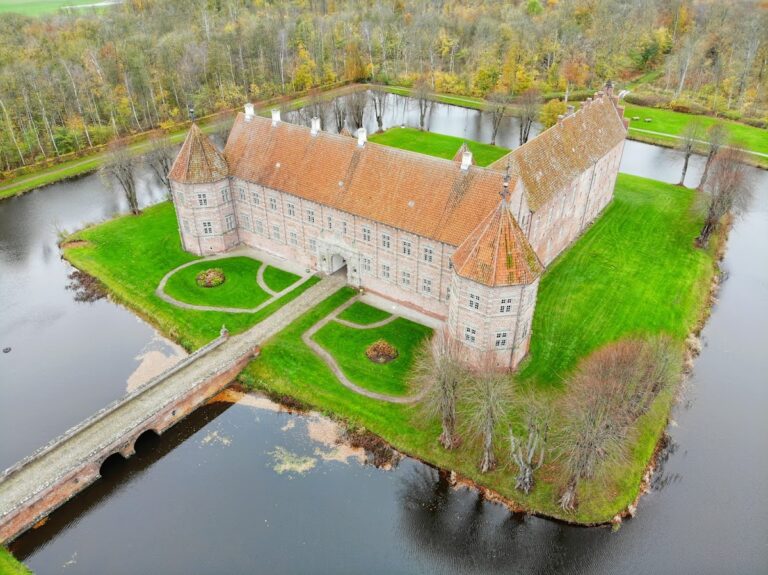
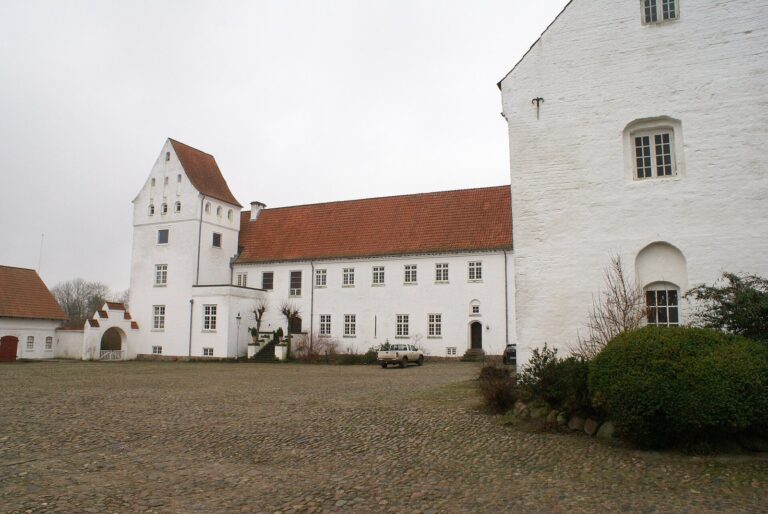
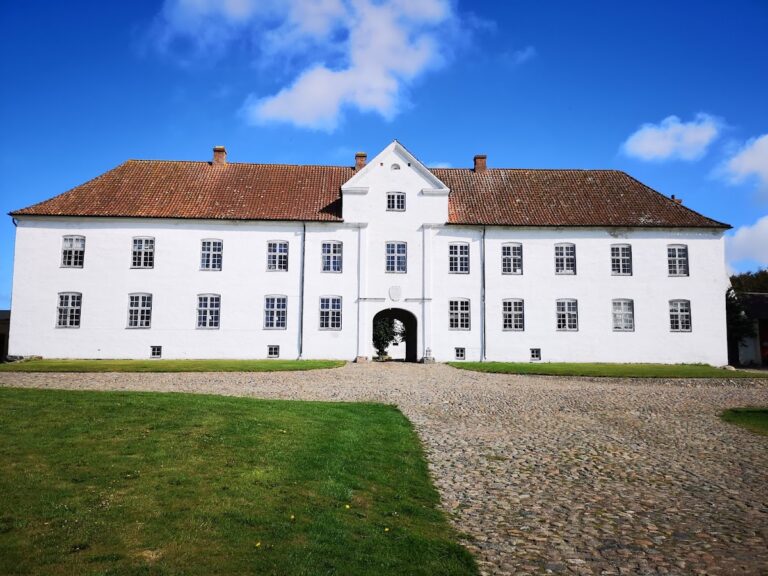
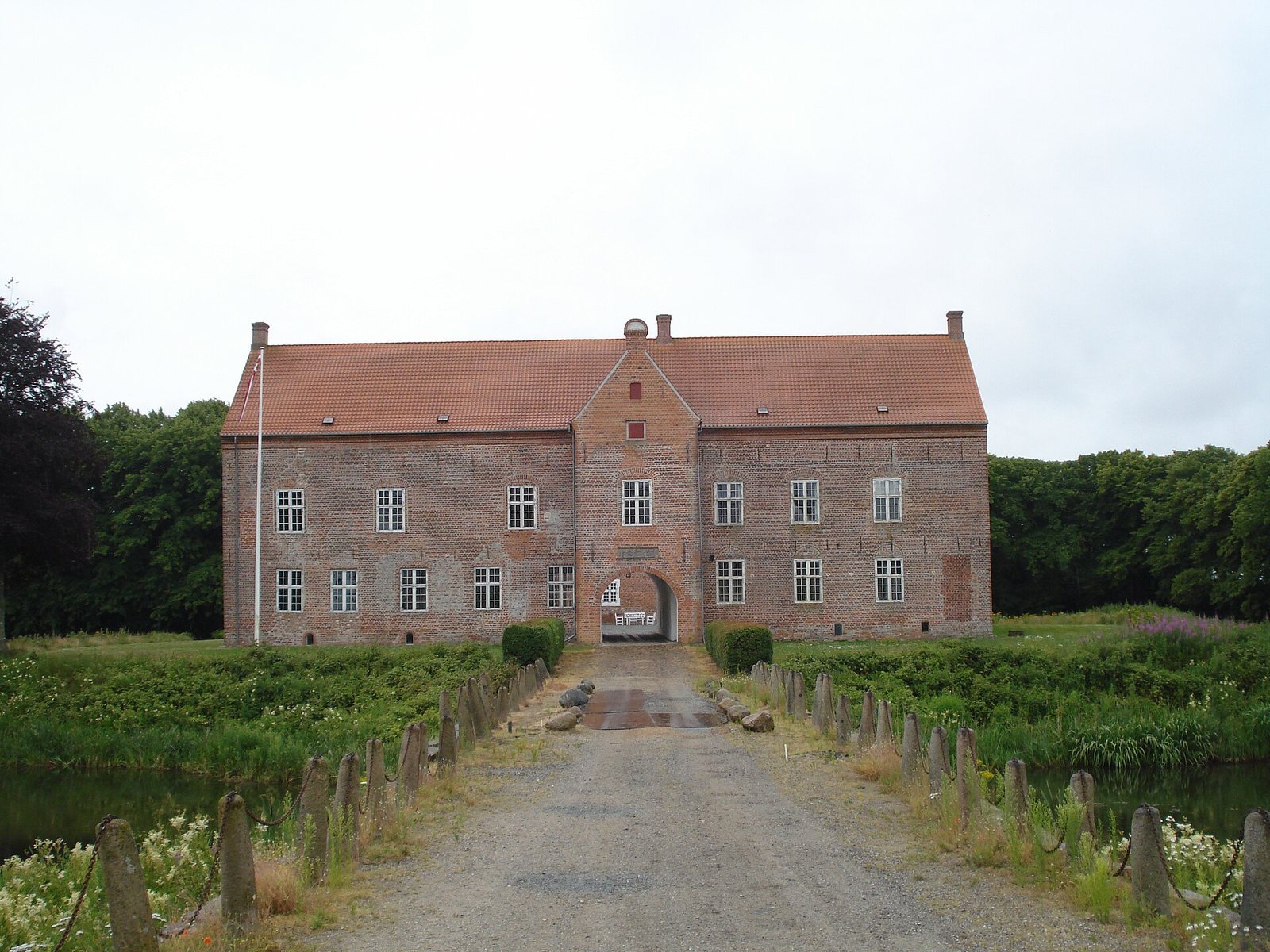
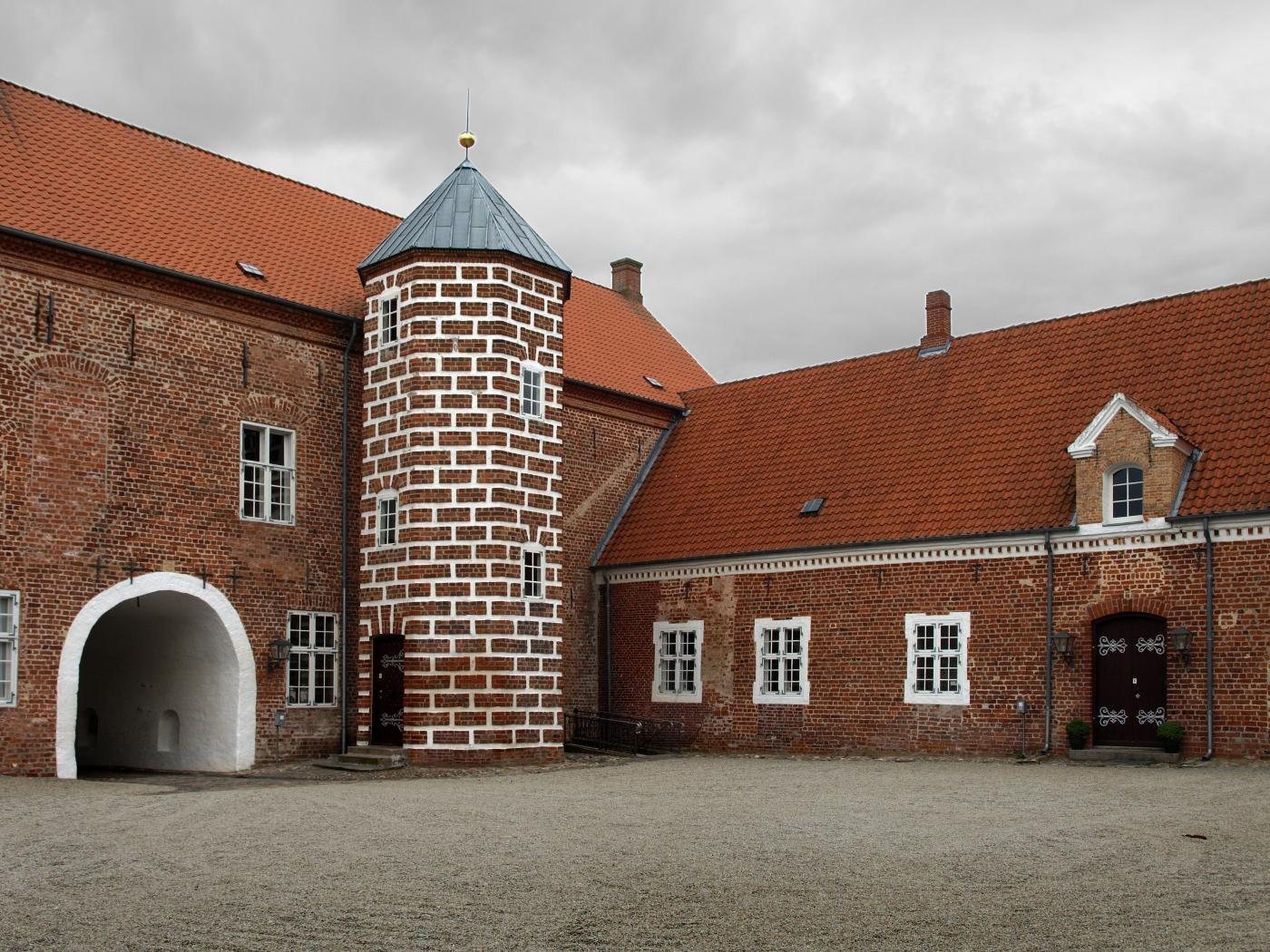
The complex occupies a square enclosure defined by ramparts, with its buildings and a brick wall enclosing a partly paved courtyard. Access is from the farmyard on the north side. A stone bridge, built around 1800, crosses the moat and replaced an earlier wooden drawbridge. Of the Renaissance complex, only the main house survives; the two lower buildings around the courtyard date from later periods.
Main house
The main house is built of unplastered brick and has a projecting central section. A stair tower stands on the courtyard side. It is probably the work of Dutch master builder Hercules Midow. Some of its bricks project in squared shapes to imitate ashlar masonry, made from carefully shaped blocks laid in regular courses. The museum interiors contain portraits and furnishings dating from the preceding three centuries.