Marktkreuz Trier: The Medieval Market Cross of Trier
Site at a Glance
- Popularity
- Medium
- Country
- Germany
- Primary era
- Medieval
- Eras represented
- Classical, Medieval
- Civilizations
- Carolingian, Roman
- Site type
- Civic
- Remains
- Monument
On this page6 sections
History
Foundation and medieval use
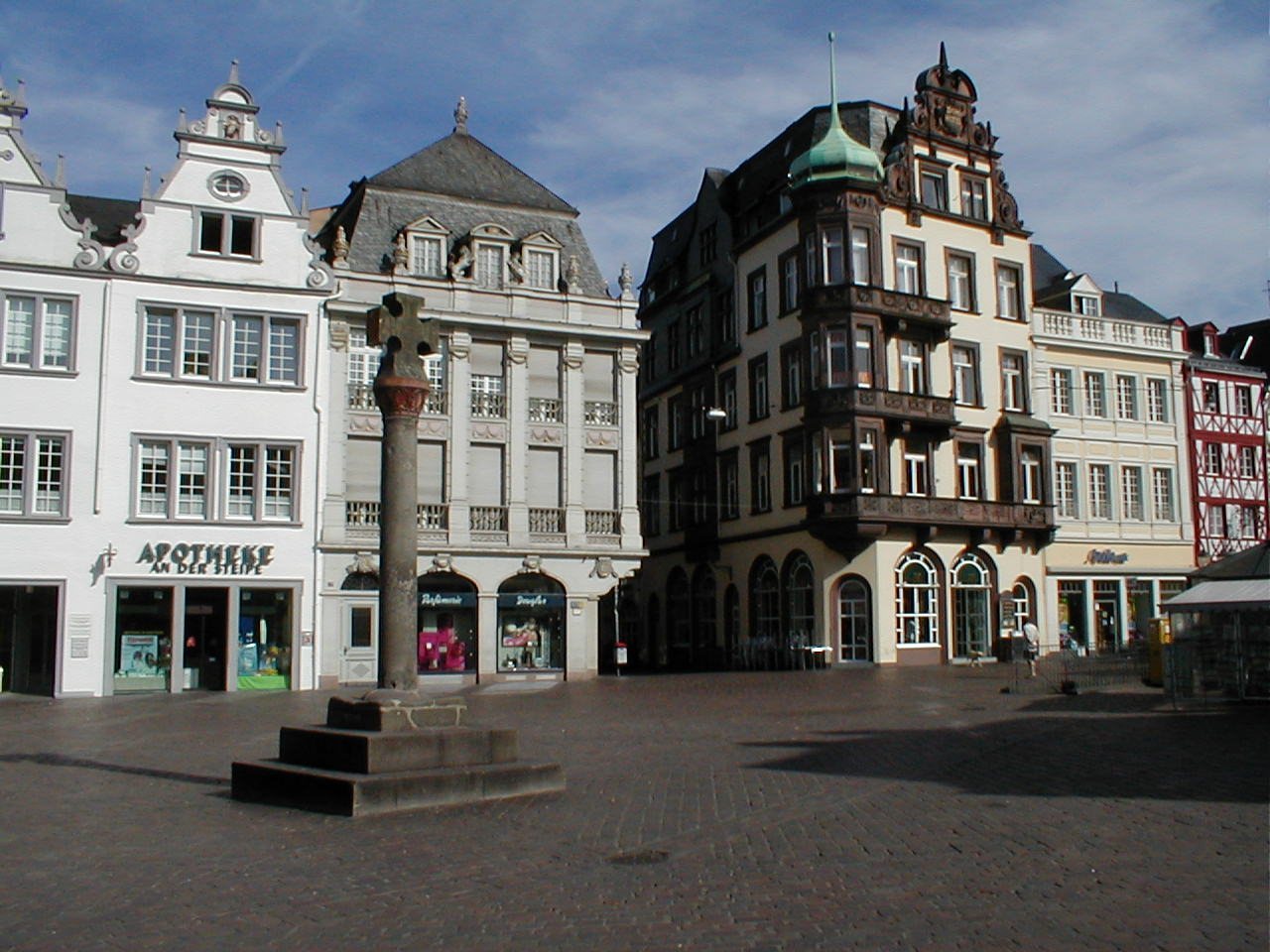
The Marktkreuz Trier is a medieval market cross in Trier, Germany, commissioned around 958 by Archbishop Heinrich I. He established the city’s central marketplace in front of the western gate of the cathedral precinct, the area around the cathedral, and placed the cross there. King Otto I, a tenth-century East Frankish king who later became Holy Roman Emperor, had granted Trier its market rights. The cross marked the marketplace and expressed the archbishop’s authority, as well as market peace, the protection associated with a market. It has been described as apparently the oldest surviving medieval market cross in Europe, especially in comparison with examples preserved in Belgium and France.
The cross first appears in a written record in 1261. Historian Richard Laufner proposed that it was later used as a pillory, a place where offenders were publicly restrained and punished. Holes cut into the stone after the cross was erected may have been used to attach chains, foot shackles, and neck rings.
Relocation and preservation
Around 1906, the cross was moved from farther south in the marketplace to its present central position. In 1943, during the Second World War, it was taken to a rock bunker for protection from air raids and re-erected on June 29, 1945. In 1964, the original capital and cross top were removed from exposure to the weather. The artificial-stone copy on the marketplace was replaced with a sandstone replica in 1988.
Remains
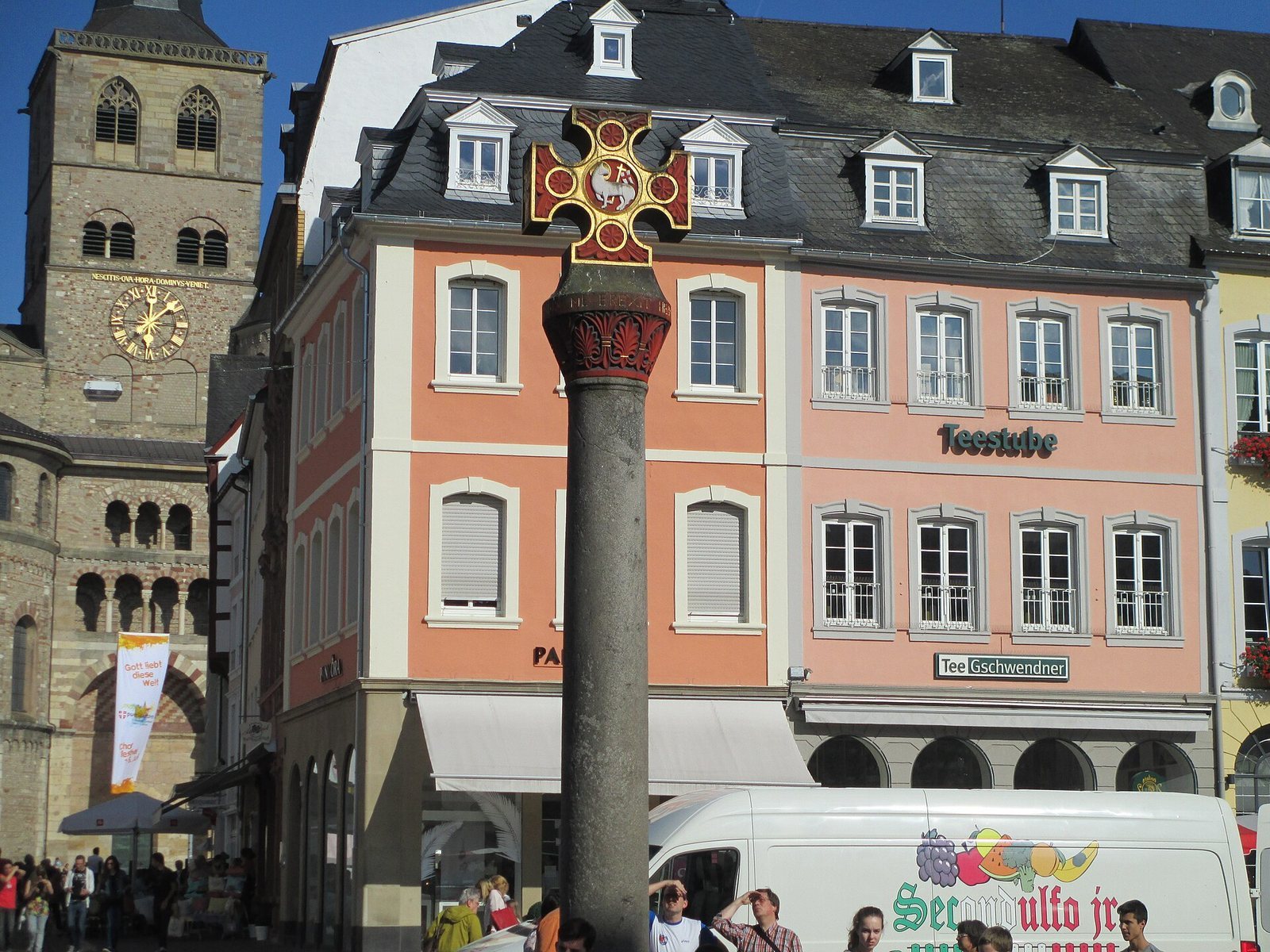
The monument is 5.22 m high and consists of a column set on a three-step stone base, topped by a capital and a cross. Its surviving form brings together stonework from several periods, from a column probably of late Roman origin to upper elements associated with the Carolingian and Ottonian periods.
Base and column
The column is 3.25 m high and made of Odenwald granite, from a low mountain range in southwestern Germany. It narrows from 47.5 cm in diameter at its base to 44 cm at the top. Its origin is very probably late Roman, and it is likely to date to the fourth century. Accumulated fill concealed the two lower steps of the base from 1820 until a marketplace redesign in 1979 revealed the full base again. The lower steps were renewed, while the original upper step is worn and eroded.
Capital and cross top
The 44.5-cm-high capital has a double-conical form and carved floral decoration; it dates to the Carolingian period. The capital, its 10-cm-thick upper slab, and the 20-cm-high base of the cross top were carved from one block of light sandstone. An inscription that once ran around the slab has weathered away. Its text named Heinrich as the archbishop who erected the monument. The cross top appears to date to the Ottonian period. Its arms widen toward their ends. The west face depicts the Lamb of God, a Christian image of Christ, with a cross and a victory banner; the east face names Heinrich I as donor and gives the date 958. A separate inscription on the east side records a restoration in 1724. Reliefs at the ends of the arms show the apostle Peter on the north and a sundial on the south. The original capital and cross top are preserved at City Museum Simeonstift.