Krkavče Stone: An Ancient Carved Monument in Slovenia
Site at a Glance
- Popularity
- Low
- Country
- Slovenia
- Primary era
- Classical
- Eras represented
- Classical
- Civilizations
- Roman
- Site type
- Religious
- Remains
- Sanctuary
On this page6 sections
History
Krkavče Stone is a carved upright monument near Krkavče in Slovenia. Its date is uncertain but is generally placed in the first centuries AD. It is regarded as one of the region’s few surviving monuments associated with pre-Christian belief.
Origins and interpretations
The carved figure has been explained in several ways. Local interpretations identify it as a sun deity. Other readings connect it with Mithras, a deity worshipped in a Roman mystery religion; Koled, a pagan figure associated with winter-solstice observance; Belenus, a Celtic deity often linked with Apollo; or Triglav, a Slavic pagan deity. One proposal is that different communities saw and worshipped different beings in the stone, linking it with several religious traditions.
Local accounts also differ over the damaged top. One tradition says it once bore a head; other versions describe three heads or faces and associate the monument with the name Stone of Troglav.
Local traditions and later history
People were said to touch the stone on Saint Vitus’s Day, named for an early Christian martyr. Another custom involved burning an oak trunk beside it throughout Christmas night. At dawn, villagers gathered to toast one another. The stone was also believed to influence fertility. After a parish priest condemned these practices as idolatry, they continued in secret.
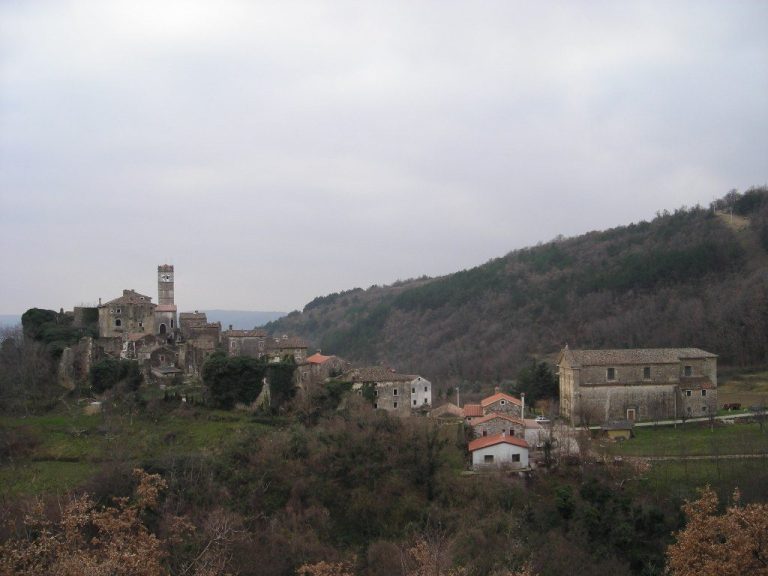
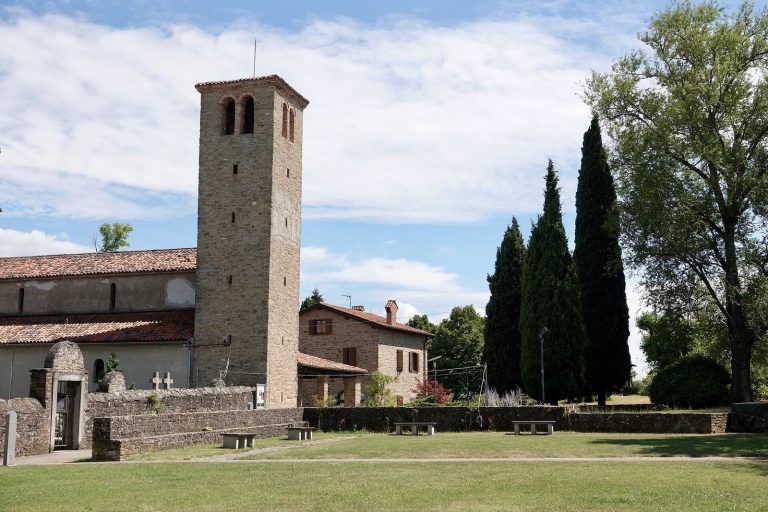
During wartime the stone was buried, and later it was erected again at a different nearby location. Archaeologists Pleterski and Puhar connected the surrounding churches with beliefs about the stone’s power. One belief held that church bells were intended to overcome its supposed demonic force, and that bells from all four churches could be heard at the stone. Rodnovers, adherents of modern Slavic Native Faith movements, regard it as a sacred place.
Remains
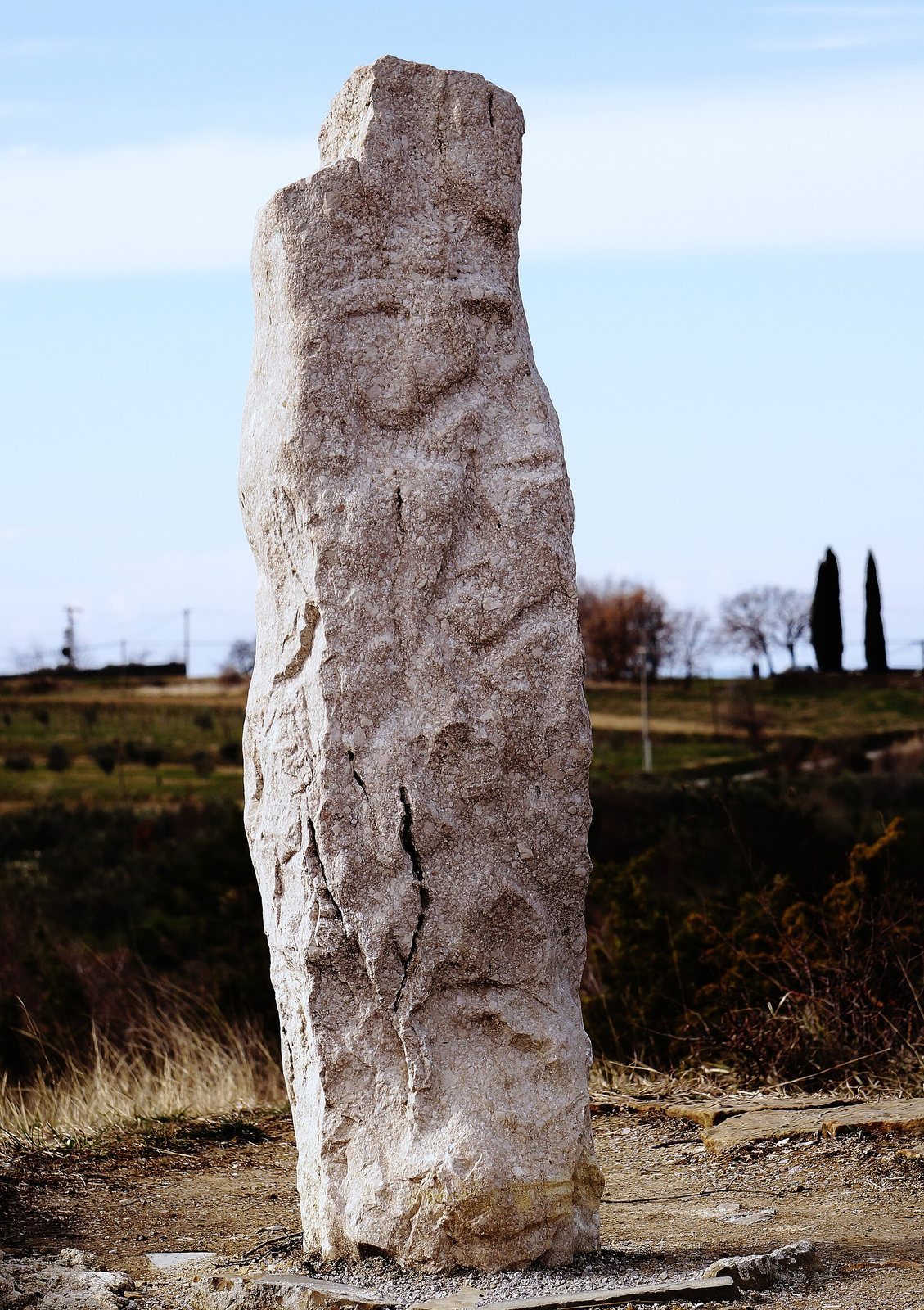
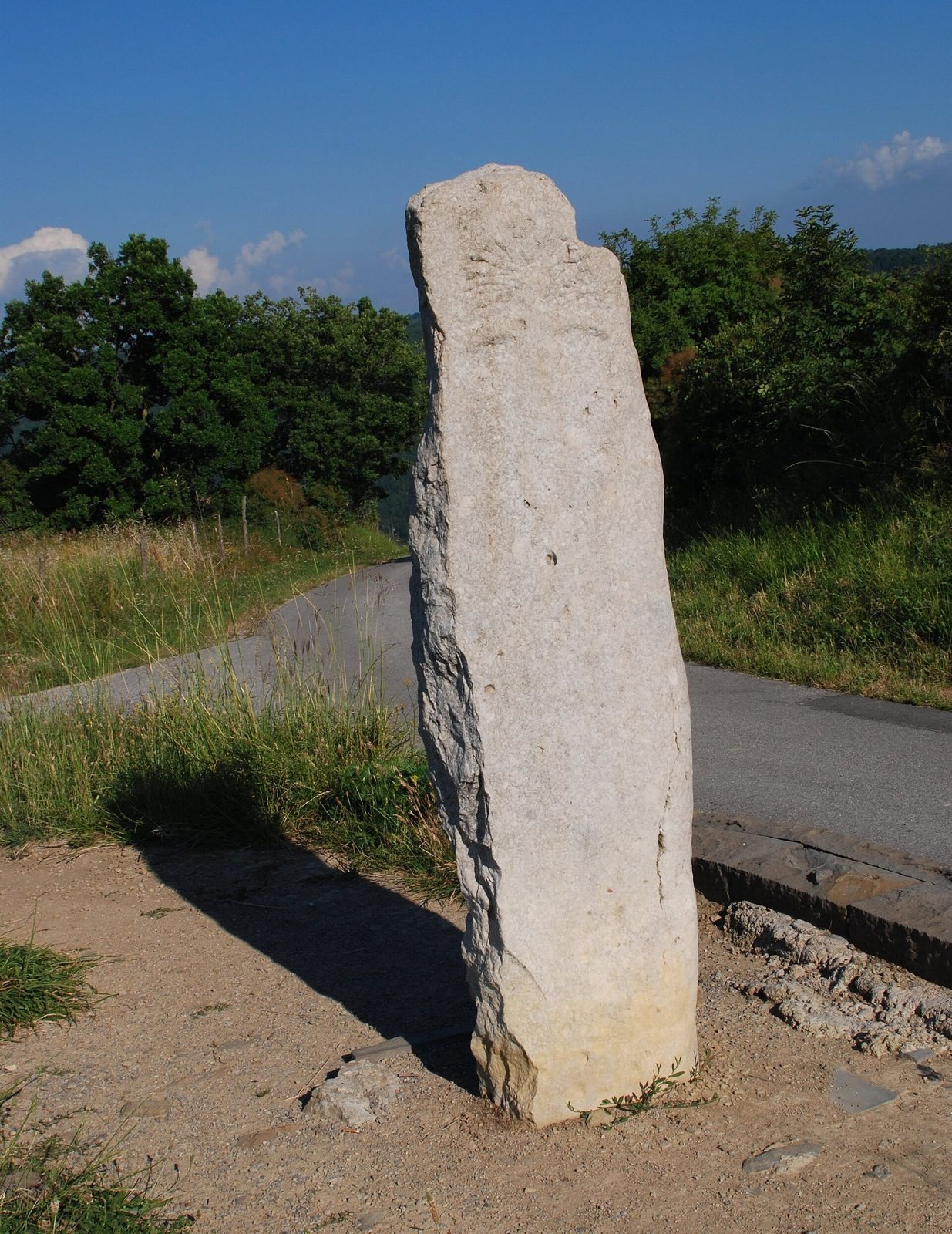
The remains center on a single upright stone, with a broader landscape arrangement connected to it. The monument is rough and unpolished.
The carved stone
The stone measures about 2.5 metres in total height. Roughly 1.5 metres rises above ground, while nearly half its height remains buried. Its top is broken and damaged, and the monument was originally larger.
Similar carvings on both sides show a naked human figure with arms spread outward and a solar halo around its head. A replica stands at the site, while the original is preserved at the Koper Regional Museum.
Churches in the landscape
Four churches in the surrounding landscape are arranged as a Latin cross, with a longer upright arm and shorter crossbar. The stone occupies the center of this pattern, which Pleterski and Puhar interpreted in their reading of the landscape.