Momjan Castle: A Medieval Residential Fortress in Croatia

Site at a Glance
- Rating
- 4.5
- Popularity
- Low
- Country
- Croatia
- Primary era
- Medieval
- External website
- Open
- Eras represented
- Medieval
- Civilizations
- Holy Roman Empire
- Site type
- Military
- Remains
- Castle
On this page9 sections
History
Momjan Castle is a medieval castle in Croatia, situated near Momjan in northern Istria above the Poganja stream valley. It is described as having been built by the middle of the eleventh century, although another tradition attributes its construction, probably in the thirteenth century, to Vošalk Devinski. The conflicting accounts of its origin remain unresolved. Until its abandonment, the castle served a residential function and included a parish church dedicated to Saint Stephen.
Early medieval setting
The area formed part of the Istrian March, a medieval frontier territory within the Holy Roman Empire established by Emperor Henry IV in 1035. The place was known by names including Momiano and Mimilianum. Momiano appears in an imperial diploma of 1035, while the settlement of Mimiliano was mentioned again in 1102.
During the medieval period, the Patriarchate of Aquileia exercised ecclesiastical and feudal authority in parts of northeastern Italy and Istria. Its patriarchs appointed vicars and stewards from among their ministerials and vassals. These dependent officials and military retainers collected dues and administered the patriarchate’s possessions.
The Devinski lords
Vošalk Devinski, a nobleman of the Devinski, or Duino, family, held Momjan as a fief, meaning land or jurisdiction granted in return for service and allegiance. He was styled “lord of Momjan” by 1234. In 1238 he acted as an arbiter in a boundary dispute and served as custodian for Patriarch Berthold of Andechs during negotiations. His branch adopted the designation de Mimiliani to distinguish it from the main Devinski line.
The first lords of Momjan held the fief for about seventy years, from approximately 1230 until the end of the thirteenth century. Vošalk’s sons Kono and Biakino expanded the family’s influence across Istria while retaining connections in Friuli and the Karst. Under their leadership, the lordship reached its greatest extent and included 48 villages in those regions. Biakino’s marriage to Gertrude of Rifemberk also strengthened the family’s links with the Counts of Gorizia, a ruling dynasty whose possessions included territories in Istria and the northeastern Adriatic.
Conflict among neighbouring lords brought violence to the castle’s history. In 1267, Kasterman and Henry, the lords of Pietrapelosa, attacked Momjan Castle and murdered Biakino in his bed. Kono then gained the support of Count Albert of Gorizia, who besieged and captured Pietrapelosa. Kasterman and Henry were beheaded in front of their estate, and Kono died soon afterward.
Gorizian and Aquileian control
A new crisis began in 1309, when the Patriarch of Aquileia and Count Henry II of Gorizia went to war against Venice. Biakino III of Momjan supported the Venetians and took part in the 1310 revolt of Friulian nobles against the patriarch. As a result, Momjan was occupied for the first time by Vikard II of Pietrapelosa, and the former owners’ fief was confiscated in 1311.
The patriarch subsequently granted Momjan to the Friulian counts of Prampero. In 1312, Henry II of Prampero sold it to the Count of Gorizia, who governed the estate through a castellan, an official responsible for administering a castle or fortified property. Momjan thereafter remained a secondary Gorizian fief. In 1320 its holder was the military official Vošalk, also called Wachspeutel.
The Istrian Demarcation of 1325 identifies Vošalk as a ministerial of Momjan. His will, written in 1327, contains the first mention of the castle church dedicated to Saint Stephen. His sons Degenhard, Perman Markvard, and Andrew succeeded him.
From Gorizia to Venice and the Habsburgs
In 1342, a division of Gorizian possessions assigned Pazin County, Momjan, and Završje to Albert IV of Gorizia. After Albert was defeated by Venice, a treaty he personally signed in Venice on 21 October 1344 required him to demolish the fortresses of Momjan and Trviž and not rebuild them. Whether Momjan was actually demolished remains uncertain.
Momjan soon lost its strategic military importance as Venice and King Louis I of Hungary and Croatia, also known as Louis the Great, contested the political balance around Istria. After Albert IV’s death in 1374, the castle passed to the Habsburgs. The later sequence of feudal holders is uncertain. Momjan has been associated with the Chiara family of Završje and with George Paradaiser, while the Raunach family held the castle and lordship from 1338 until the Venetian occupation.
Venice occupied Momjan in 1508 and in 1510 attached it to the city of Piran, which placed four soldiers in the castle. The Raunach barons recovered possession from 1535 to 1548. In that year, Jernej and Jakob Raunach sold the castle and lordship through intermediaries to Count Simon I Rota for 5,550 ducats. His representative, Alojzij de Elio of Koper, administered the estate.
The Rota estate and abandonment
The Rota family became the final owners of Momjan Castle. Simon I Rota had arrived in Istria in 1540 with his sons Horace and Giovanni. After marrying the Venetian noblewoman Adriana Venier, he established a new Pula-Venetian branch of the family, adopted the title Count Rota of Momjan, and thoroughly restored the castle and its parish church.
During the rule of Simon II Rota, who lived from 1569 to 1631, an inventory of the estate was compiled. This register, known as the Momjan cadastre, described the Rota landholdings, property, and related rights and continued to be supplemented until 1630.
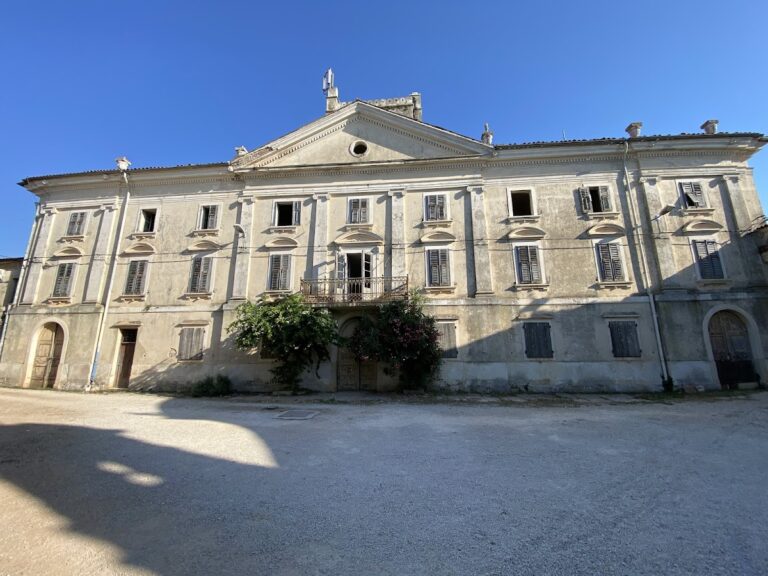
The castle was completely abandoned during the second half of the eighteenth century. Count Horace IV then built a new Rota family manor in the lower village of Momjan. Following the French abolition and Austrian restoration of the feudal system, the Austrian government reconfirmed the title Counts Rota of Momjan on 14 May 1829. The Rotas left the castle in 1835 and moved to a manor in Momjan, which they administered until 1868.
Remains
Castle setting
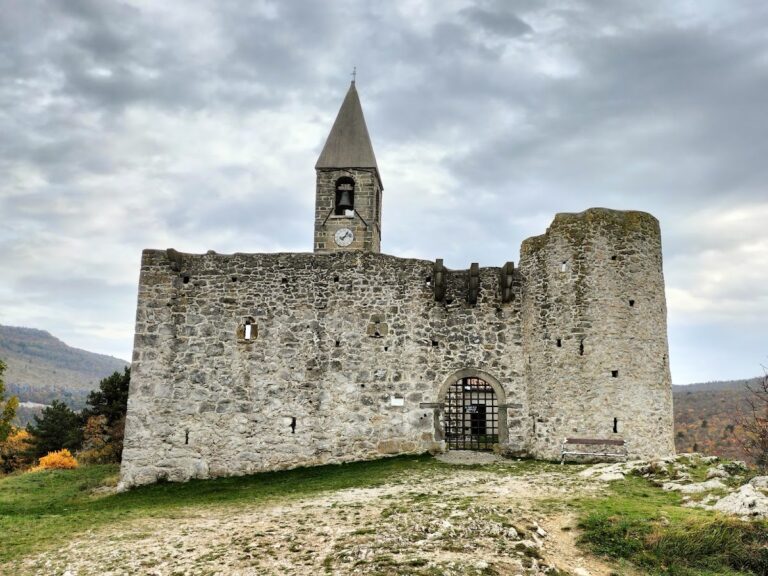
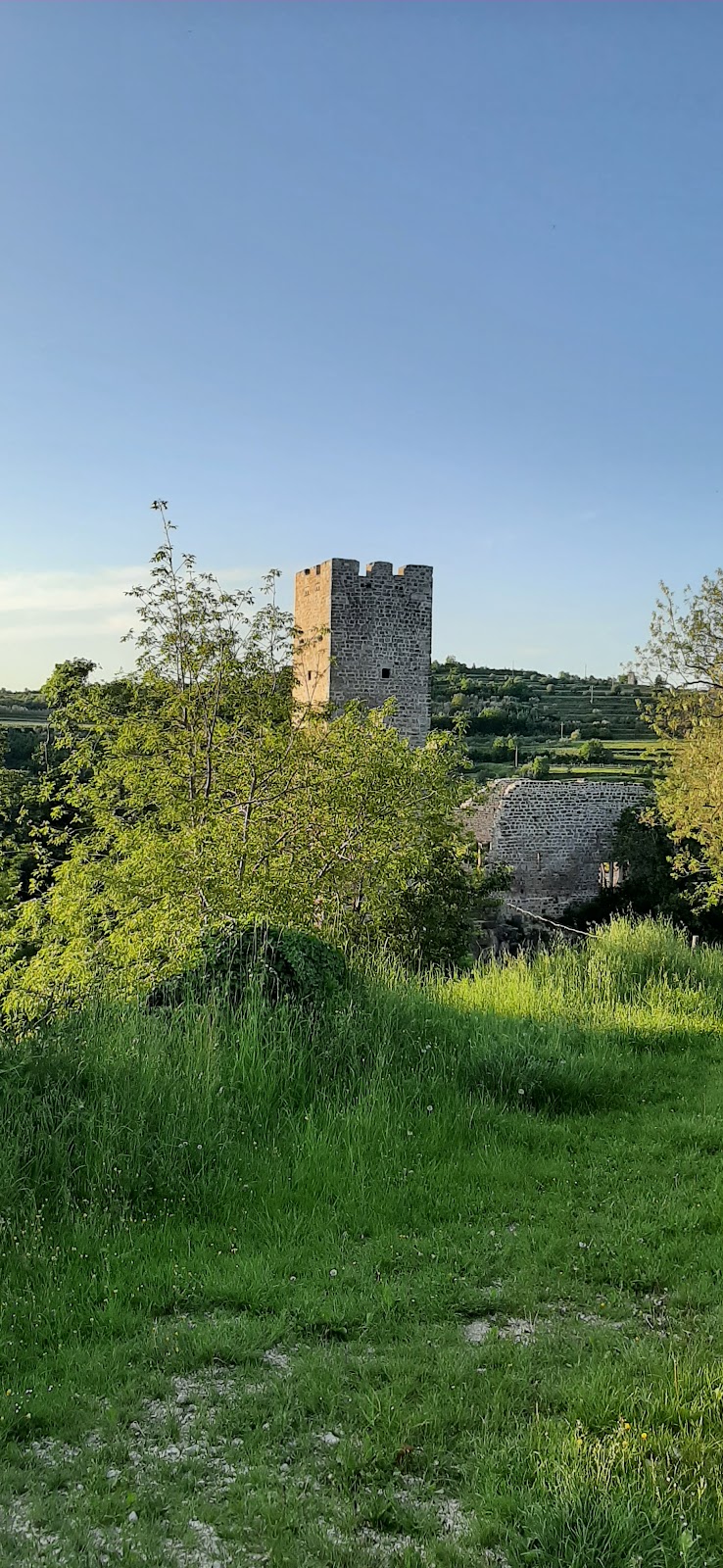
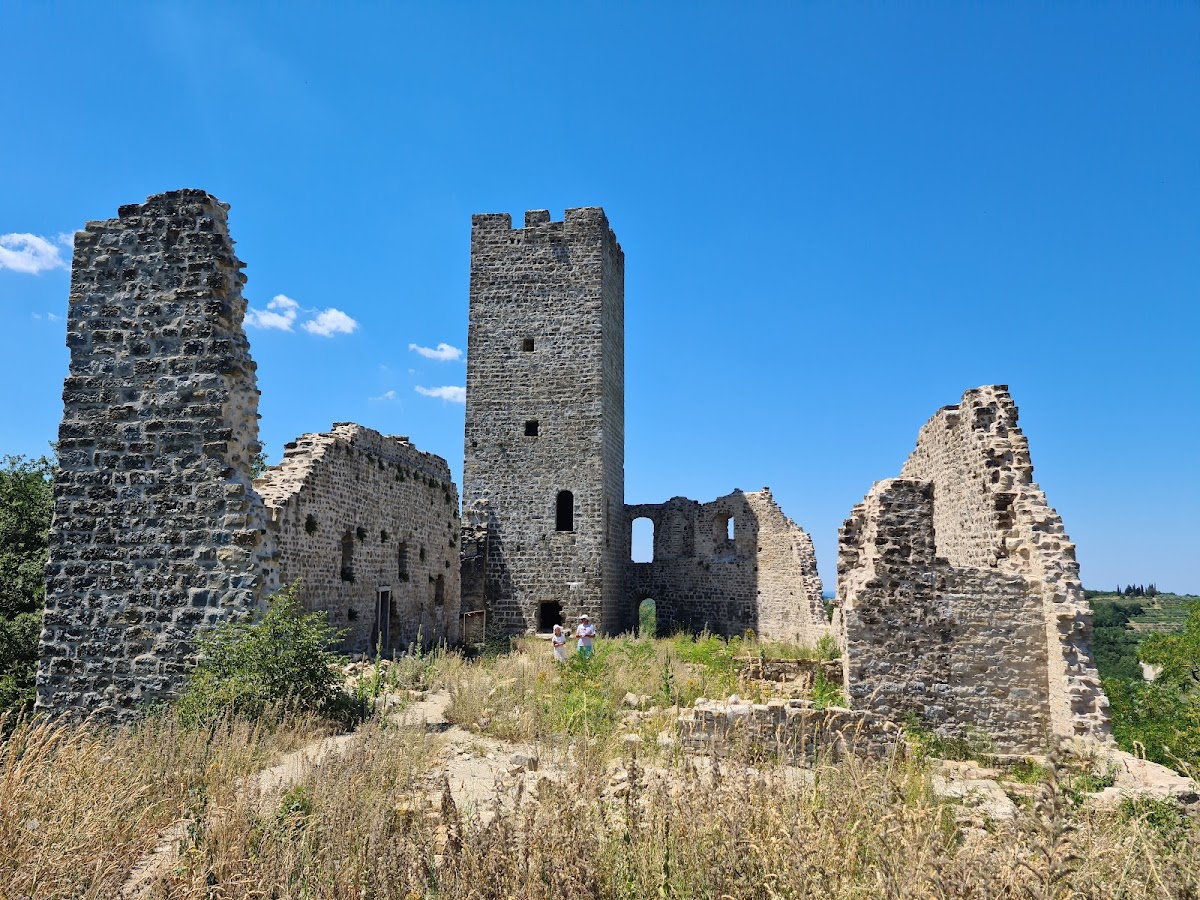
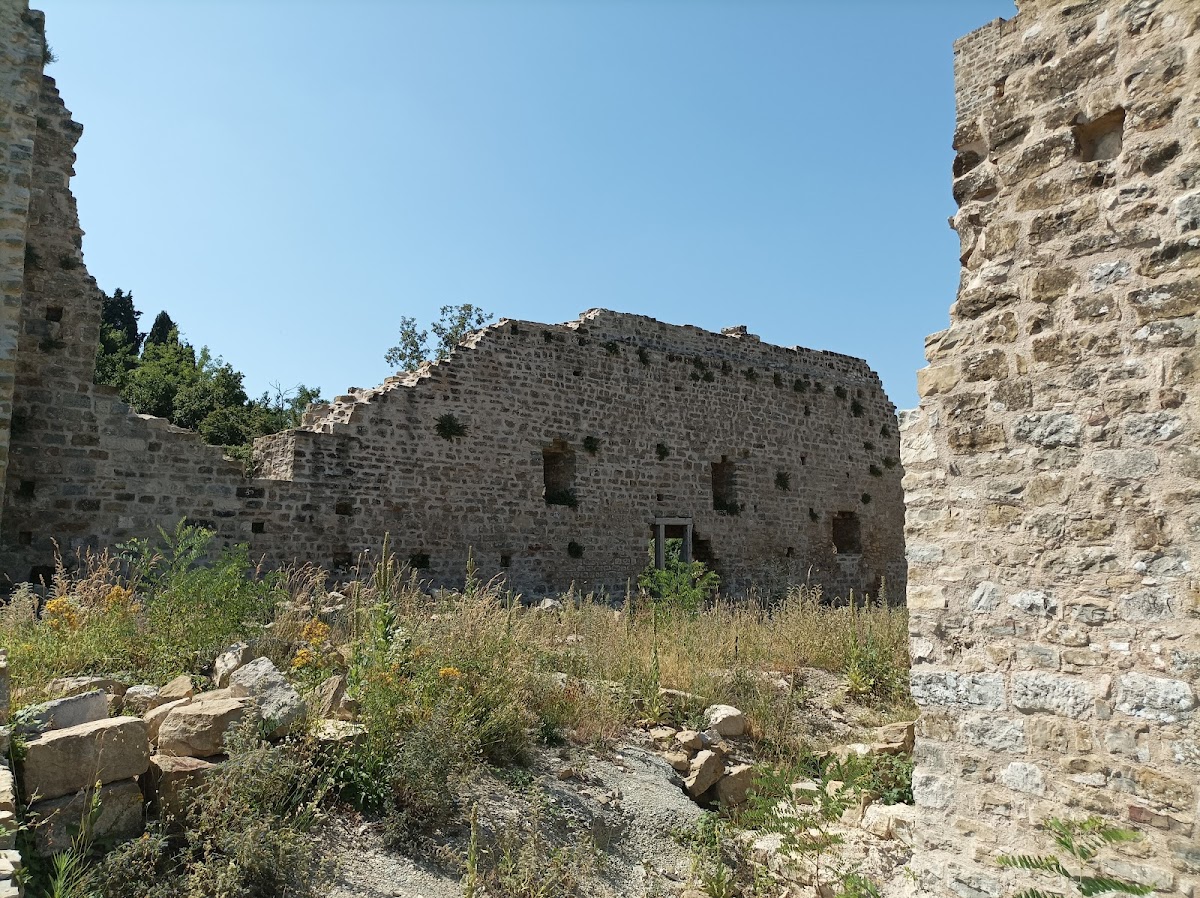
Momjan Castle occupies a rocky spur above the Poganja stream valley and overlooks the valley of the Dragonja River. The site stands at an elevation of 232 metres above sea level, approximately 5 kilometres from the Slovenian border. Its surviving physical identity is defined by this elevated castle position and by its historical use as a residential estate rather than solely as a military installation.
Parish church
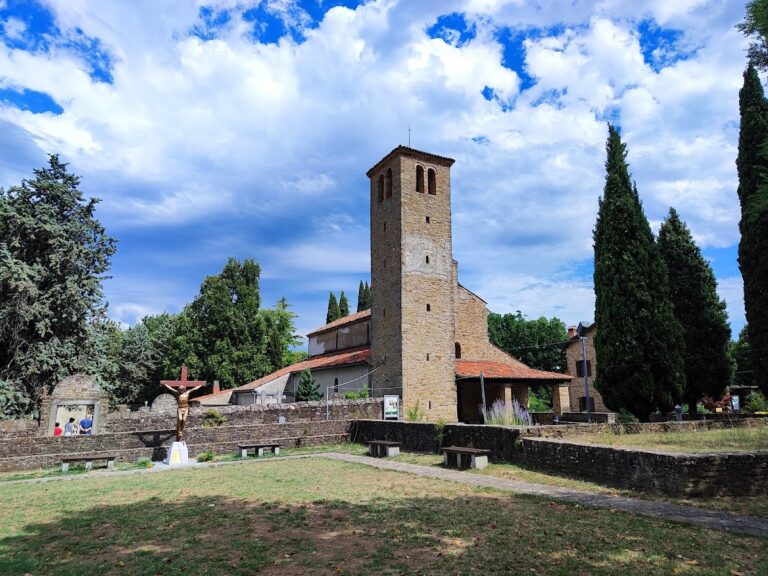
The castle complex included a parish church dedicated to Saint Stephen. The church is first mentioned in Vošalk’s will of 1327, and Simon I Rota restored it as part of his extensive work after acquiring the estate in 1548. The church therefore formed part of the residential and religious centre of the castle during the Rota period.