Castle Završje: A Medieval Castle in Croatia

Site at a Glance
- Rating
- 4.6
- Popularity
- Low
- Country
- Croatia
- Primary era
- Medieval
- External website
- Open
- Eras represented
- Medieval
- Civilizations
- Holy Roman Empire
- Site type
- Military
- Remains
- Castle
On this page8 sections
History
Castle Završje is a ruined medieval castle in Croatia, probably built with the walled settlement of the same name during the second half of the eleventh century. The castle is attributed to the Contarini family, who served as vassals and ministeriales, members of a medieval service nobility, to the Istrian margrave Ulrik I of Weimar-Orlamünde. A margrave was a frontier territorial ruler. Ulrik I received estates in this part of Istria through a donation made by King Henry IV in 1064.
Medieval Lordship
The first recorded reference to Završje dates from 1102, when the settlement was called Castrum Piemonte in a donation by the Istrian margrave Ulrik II to the Patriarchate of Aquileia. Aquileia was a major ecclesiastical principality whose patriarchs also exercised territorial and feudal authority in parts of the northeastern Adriatic. The place was known by several names over time, including Castrum Pyamont and Poymont in the Middle Ages, Pemund in German usage, and Završje in Croatian.
The patriarchs of Aquileia granted the castle, settlement, and surrounding lordship as a fief to the Contarini family. A fief was a territory held from a superior lord in return for specified obligations. Završje was also connected with the Counts of Gorizia and the rulers of the nearby Pazin region. In 1276 the lordship belonged to Ulrik of Rihemberg. By 1300 it had passed to the Counts of Pazin, who also held the title of Counts of Gorizia.
Venetian and Habsburg Rule
Venetian forces later captured Završje and defended it in 1360 against an attack by forces of the Frankopan Count of Krk. The castle was subsequently attacked without success by Patriarch Ludovico della Torre and troops led by Negri, Bishop of Trieste, during their war with the Counts of Pazin.
After the death of Count Albert IV of Gorizia in 1374, Završje became part of the County of Pazin. That county passed to the Austrian Habsburgs in the same year and was elevated to the status of a fief. The Habsburgs were the Austrian ruling dynasty that acquired the county. A captain, the official responsible for administering and defending the lordship, managed the fief with his own administration, an urbarial register recording rights, obligations, and dues, and a chief official. Austrian authorities assigned the lordship to successive holders in return for an annual fee.
Croatian families began settling in the area gradually toward the end of the fourteenth century. Venetian authorities later encouraged further Croatian settlement during the late fifteenth and sixteenth centuries, particularly by refugees from Ottoman incursions in Lika and Dalmatia. After 1412, Venice repeatedly attacked Završje during its wars against the Hungarians, Ottomans, and Austrians. Venice formally took possession in 1511, and the annexation was confirmed by the Peace of Worms, a treaty that recognized the transfer.
The Contarini Lordship
The lordship extended beyond Završje to include the villages of Vižinada, Kostanjica, and Brtonigla. In 1530 the Venetians sold the lordship in separate parts at auction. Two years later, the Venetian patrician Justinian Contarini purchased Završje together with the neighboring village of Kostanjica.
The Contarini family administered the lordship through an appointed captain and retained it for approximately three hundred years, into the nineteenth century. Završje then briefly came under Napoleonic rule before passing to Austria.
Modern Transformation and Decline
Austrian rule brought renewed development to the castle and settlement, especially through construction of the Parenzana, a narrow-gauge railway linking parts of Istria. Under the Austrian Empire and, after the First World War, the Republic of Italy, Završje had a post office, a school, two shops, an oil mill, and other craft businesses.
In 1943 the anti-fascist movement reached the Završje area. Croatian and Italian anti-fascists fought together there against the German occupation. The postwar Paris Peace Treaties assigned Završje to the Federal People’s Republic of Yugoslavia. Economic and political pressures then led to mass emigration, and the settlement declined from about ninety families to approximately forty inhabitants.
Remains
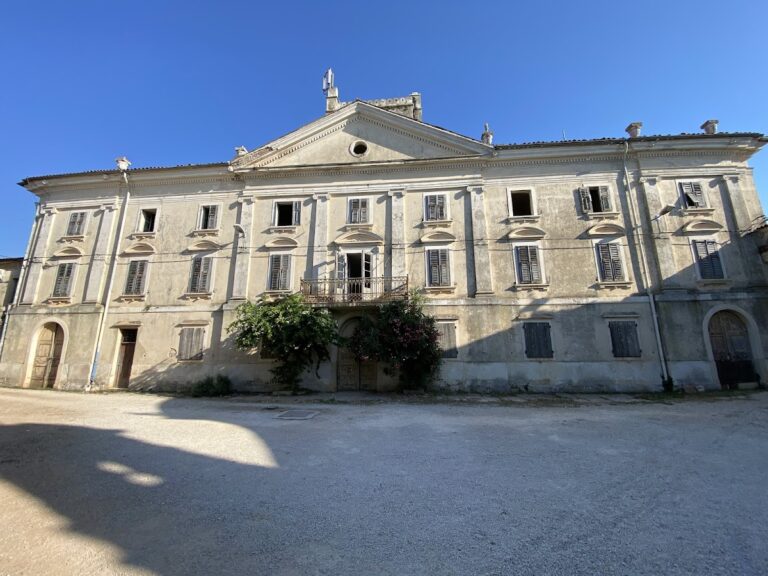
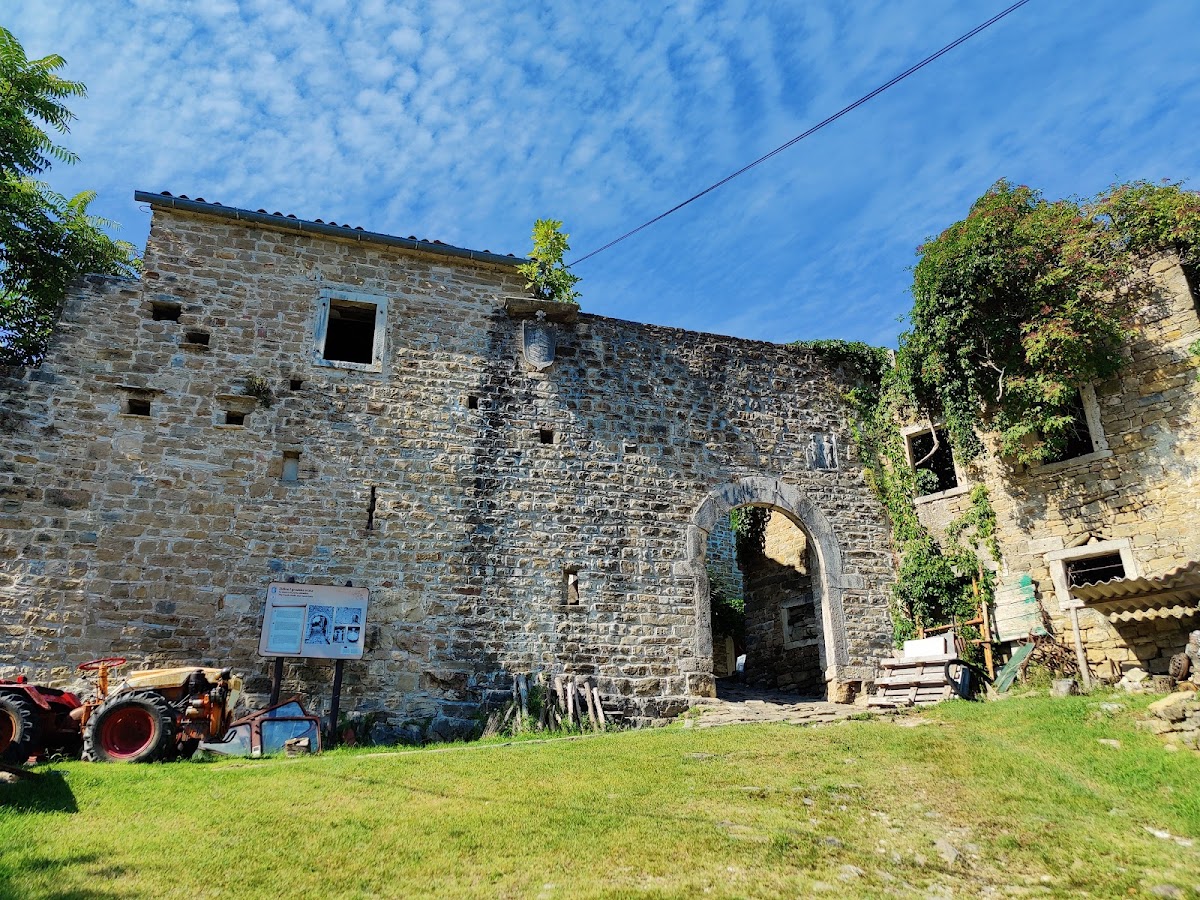
Castle Završje survives as a ruined medieval castle or palace within the former walled settlement on Završje Hill. The hill rises to approximately 240 metres and lies between Grožnjan and Oprtalj in northern Istria. The settlement formerly possessed two lines of fortifications, while the castle itself was built from limestone.
Castle and Fortifications
The surviving castle remains belong to a fortified hilltop complex whose principal material was local limestone. Its ruined condition forms part of the present physical character of the settlement, while the former double fortification line defines the defensive setting in which the castle stood.
Historical Names
The site is also identified by the forms Kaštel Završje, Piemonte d’Istria, Pyamont, Poymont, and Pemund. These names preserve the different linguistic and political contexts through which the castle and settlement were known.
Nearby sites