Agora of Smyrna: Ancient İzmir’s Administrative, Judicial, and Commercial Center
Site at a Glance
- Popularity
- High
- Country
- Turkey
- Primary era
- Classical
- Eras represented
- Classical
- Civilizations
- Ancient Greek, Roman
- Site type
- Civic
- Remains
- Forum
On this page15 sections
History
Greek foundation and Roman rebuilding
The Agora of Smyrna is an ancient public complex in the Namazgah district of İzmir, Türkiye. Greeks built it in the fourth century BC to serve as the city’s administrative, judicial, and commercial center.
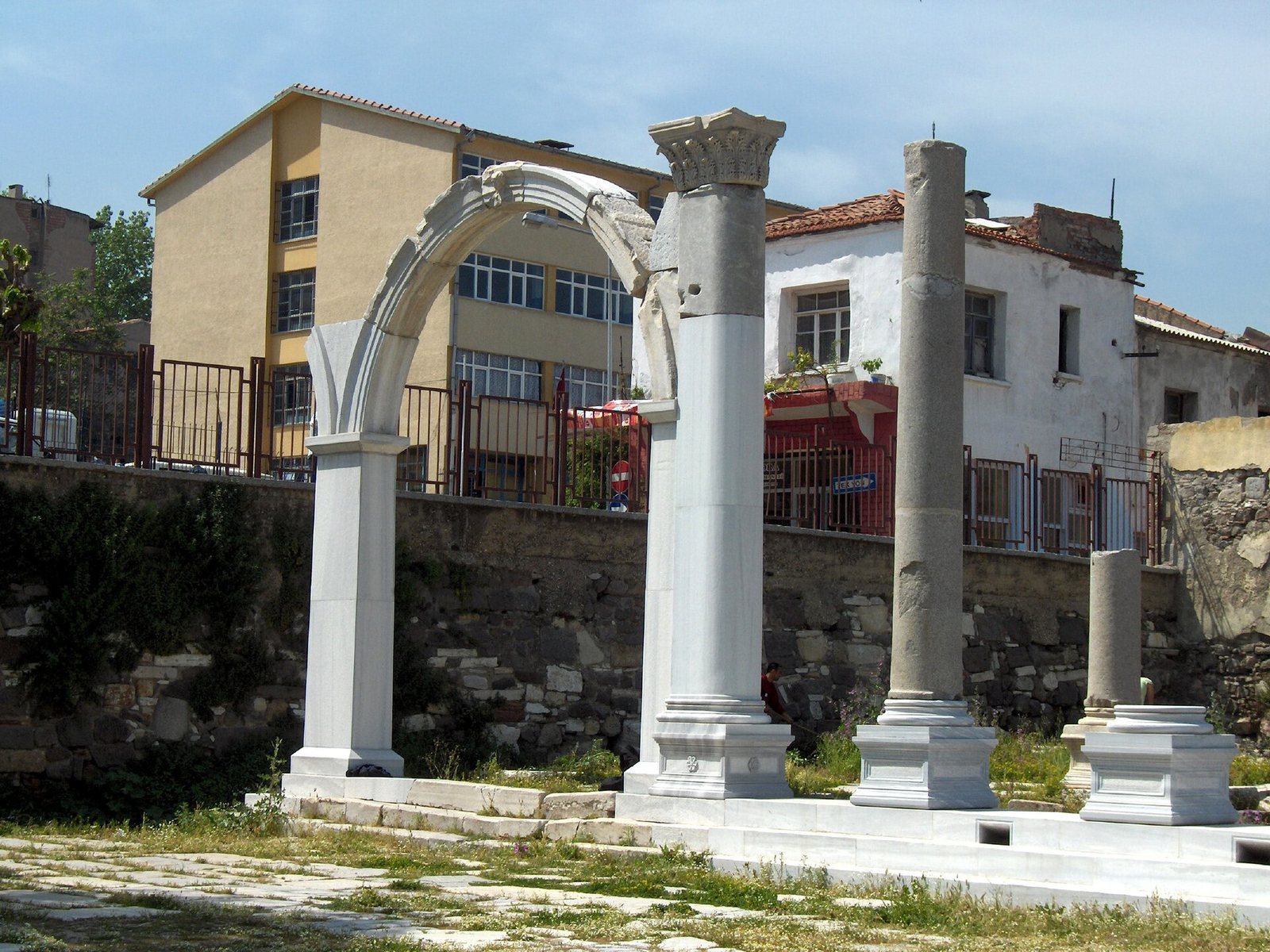
An earthquake destroyed the agora in AD 178. Marcus Aurelius, Roman emperor from AD 161 to 180, ordered its reconstruction as the city recovered. Nearly all the surviving remains belong to this Roman rebuilding. The Faustina Gate was erected in gratitude for the emperor’s support.
Excavations and heritage recognition
Excavations began in 1933 and continued until 1941 under Selahattin Kantar, director of the İzmir Museum, and Rudolf Naumann. A wider project covering the agora, Altınpark, and Kadifekale began in 2007 and has continued, with current work at the agora focused on its Ottoman-era cemetery. In 2020, the agora became part of the Tentative World Heritage listing for the Historical Port City of İzmir.
Remains
Street grid and Faustina Gate
The agora follows Smyrna’s regular street grid, with an east–west street crossing the complex. At its intersection with another street, a monumental gate divided the area into two symmetrical parts. The Faustina Gate bears a relief portrait of Faustina, wife of Marcus Aurelius, on the keystone at the north side of the arch. Restoration in the 1940s gave the gate inaccurate proportions; work in 2004 brought its appearance closer to its original form.
North Stoa and Roman basilica
Structure and front
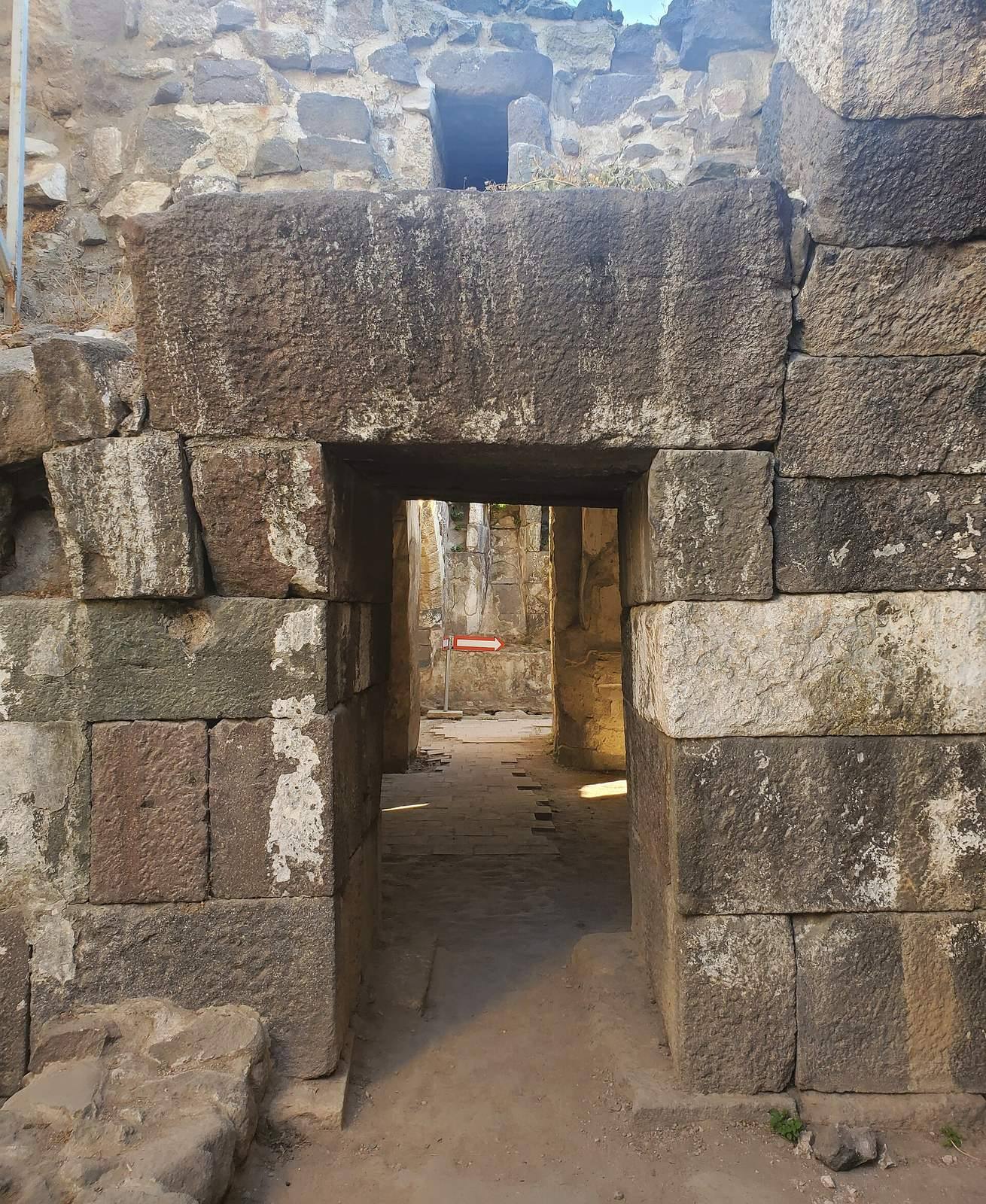
The Roman-period basilica, a large public building, occupies the site of the former northern portico. Its rectangular plan measures about 161 by 29 metres, with three levels above ground and a basement. Drainage and plumbing are built into its walls. Two large doorways mark the northern front, and the western one is now fully open. A row of vaulted shops runs along this side.
Basement galleries
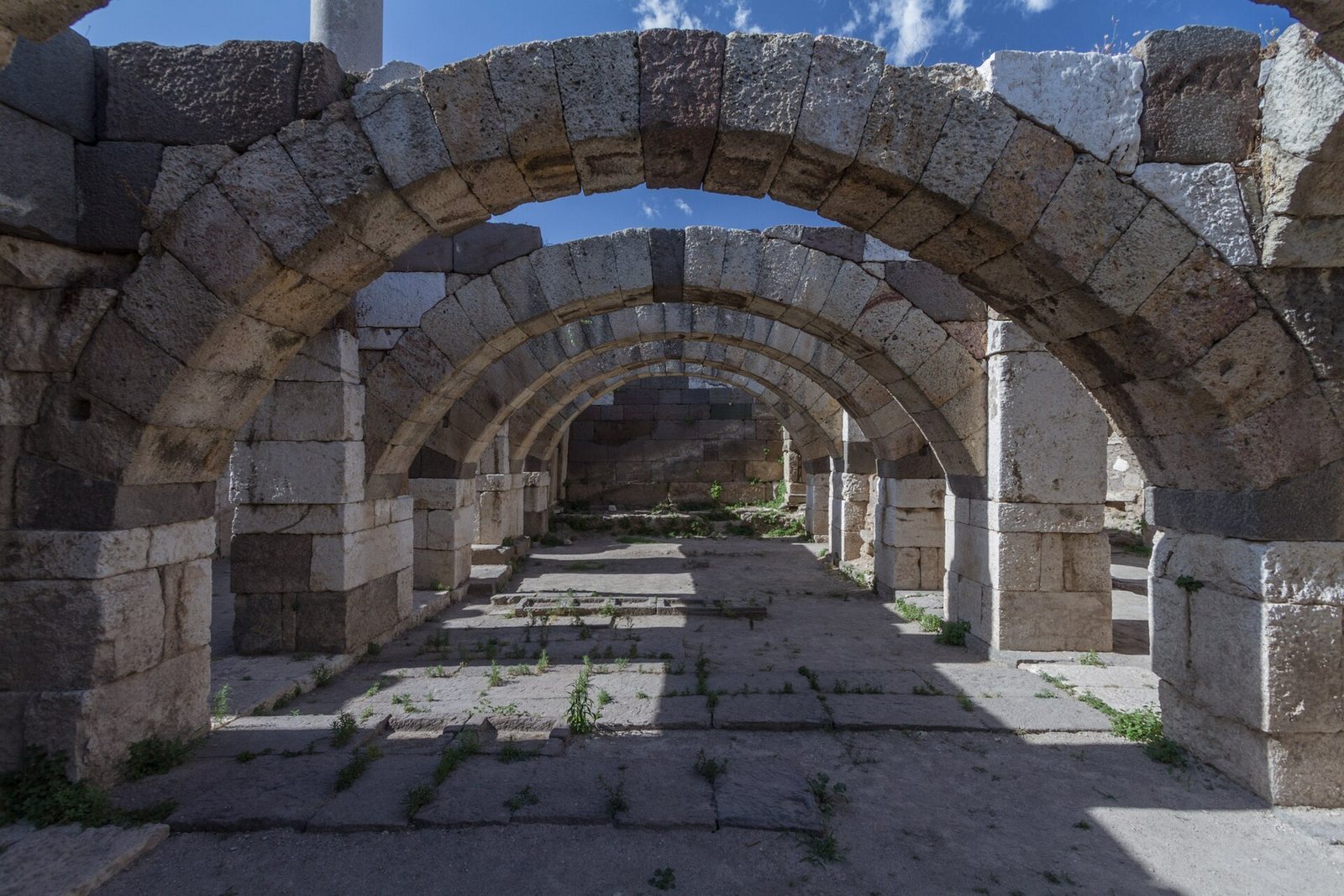
Four separate galleries lie beneath the basilica. The first three probably served as a covered market for wholesale and retail trade, as well as storage. The fourth has richer decoration, including marble facing and frescoes, and probably had a representative function. Cross-shaped vaults survive at the basement’s eastern and western ends.
West Stoa and underground water system
Colonnaded walkway
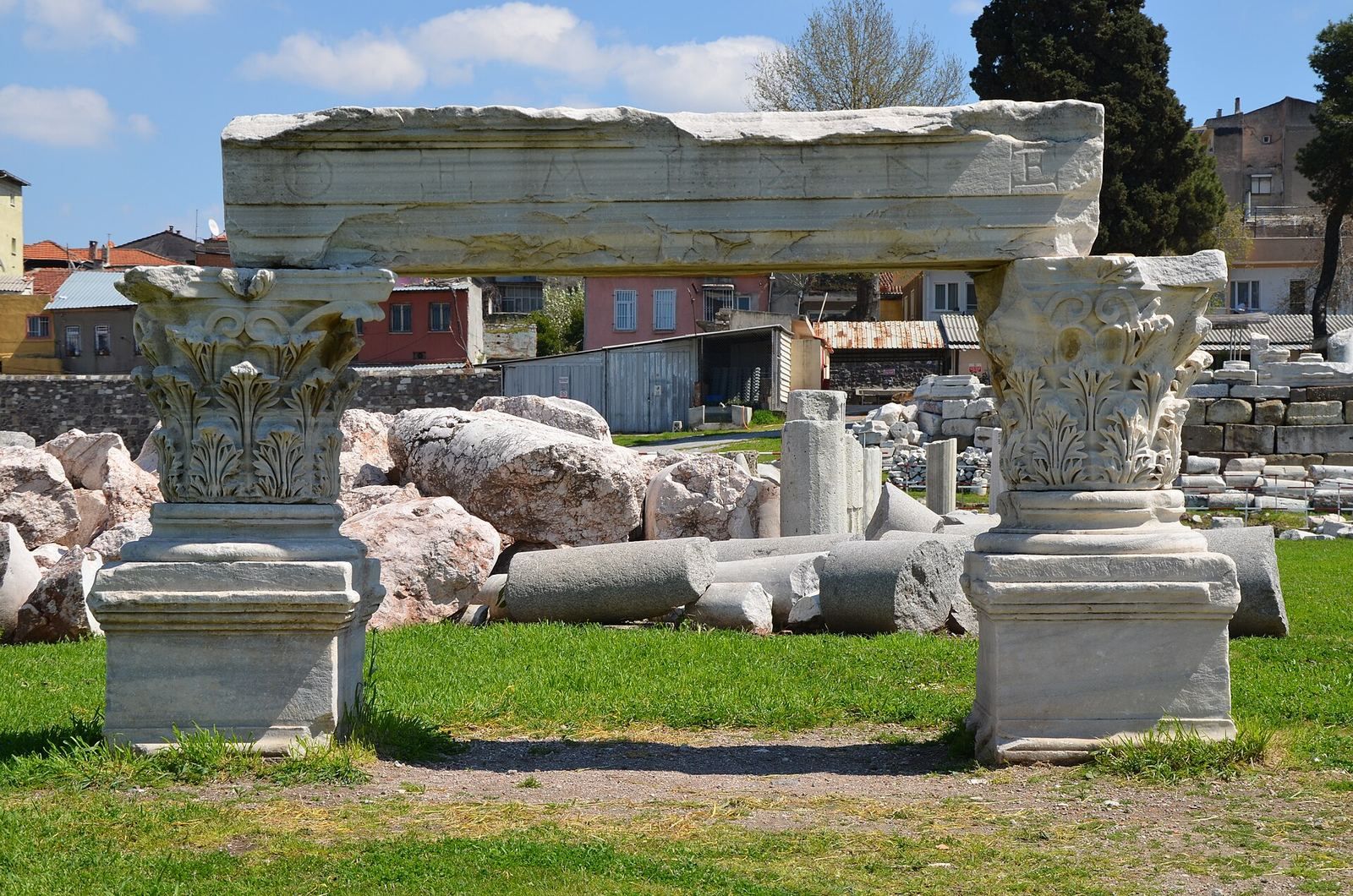
The West Stoa, a covered colonnaded walkway, is about 83 metres long and has been partly reconstructed. It began as a single-storey building in the Hellenistic period, the era after Alexander the Great and before Roman rule in the eastern Mediterranean, and was rebuilt with two storeys in the Roman period. Granite columns stand on pedestals and carry marble capitals, the decorated tops of columns, in the Corinthian style. The upper storey may have been wooden. Three stone steps led from the inner courtyard to the walkway.
Underground passages and water
The basilica’s basement connects directly with the underground level of the West Stoa, where three arched galleries form a supporting structure beneath the buildings above. There were two galleries in the Hellenistic period; the third, in the present numbering, probably served as a major route through the ancient city center. A water channel in the first gallery dates to the Hellenistic period and still supplies the agora. Numerous other channels run beneath the site, carrying water from natural springs toward lower parts of the city and places where water was hard to obtain in Roman times. Two channels remain active, and a conduit leading to the agora is connected to street fountains. A functioning watercourse found during excavation has been estimated to be about 2,000 years old.
Inscriptions, graffiti, and other finds
Inscriptions
An inscription from the first half of the third century records that a high priest of the imperial cult, religious rites honoring emperors and their families, in the province of Asia organized five days of gladiatorial games that included armed combat. A statue-base inscription dated to the late second or early third century honors a person with the title neokoros, associated with serving as guardian or custodian of a temple, including one connected with the imperial cult.
Graffiti and wall paintings
Roman-period graffiti appear in the basilica’s basement and on its arched supports. They were scratched into surfaces or made with iron-based paint and oak-gall ink. Subjects include ships, birds, love, gladiatorial combat, sexual themes, lovers’ names, riddles, and civic slogans. Some refer to rivalry among Pergamon, Ephesus, and Smyrna; others offer evidence of early Christian ideas. The graffiti form one of the largest known collections of their kind. A fresco on a basilica wall has been interpreted as depicting what may be the world’s earliest crossword.
Courtyard, cemetery, and museum
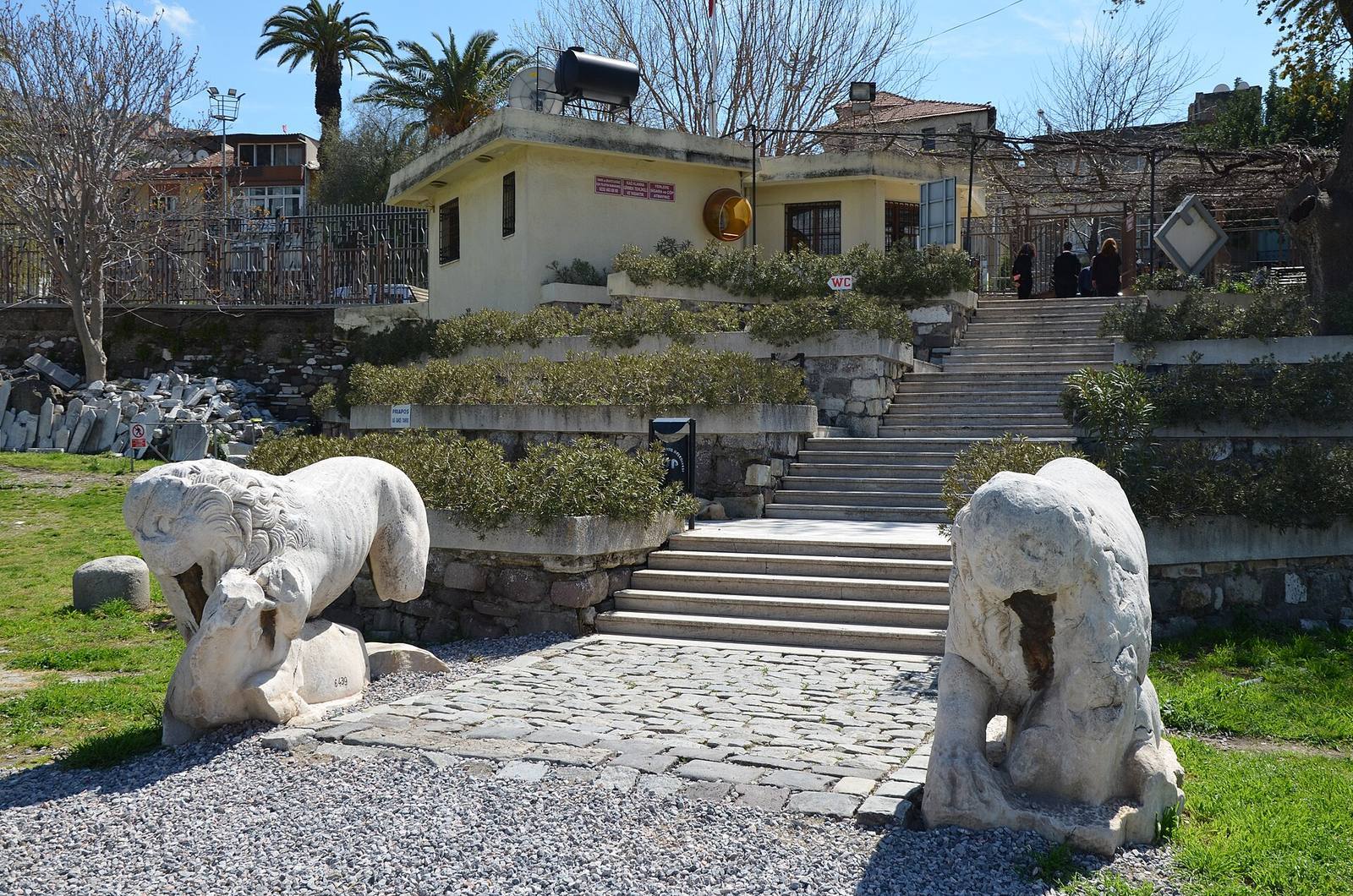
An area in the inner courtyard holds excavated objects awaiting conservation or restoration, including column fragments, pieces inscribed in Greek, and Byzantine- and Ottoman-period tombstones and stone coffins. Candles bearing the Star of David have been interpreted as evidence that Muslims, Christians, and Jews coexisted in the area. The complex also includes an Ottoman-era Muslim cemetery and the House of Sabbatai Zevi, a seventeenth-century Jewish religious figure who claimed to be the Messiah. The Agora Museum houses antiquities, statues, and marble columns.